Revision of Oxidation and Reduction (Grade 12 NSC Matric Physical Sciences): Revision Notes
📚Revision Notes
Revision of Oxidation and Reduction
Introduction to electrochemical reactions
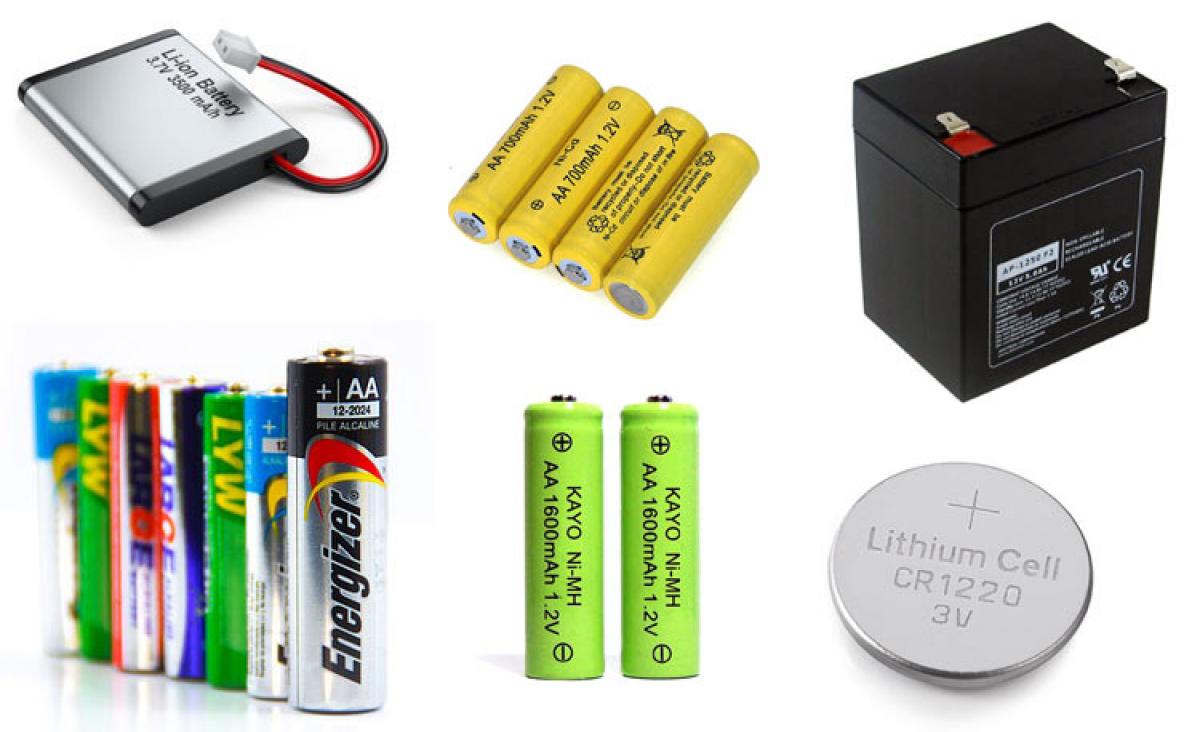
Electrochemical reactions are fundamental to how batteries work in our everyday devices. These reactions involve the transfer of electrons between different substances, which creates electrical energy. Before studying electrochemical cells in detail, it's essential to understand the basic concepts of oxidation and reduction.
A battery contains multiple electrochemical cells, and within each cell, electrochemical reactions take place. These reactions involve the movement of electrons, which produces an electrical current that powers our devices.
Note
Understanding these fundamental concepts is crucial because electrochemical reactions power virtually every portable electronic device we use daily - from smartphones and laptops to electric vehicles and medical devices.
Understanding oxidation and reduction
Oxidation and reduction are complementary processes that always occur together in chemical reactions. These concepts are crucial for understanding how electrochemical cells function.
Important
Key Definitions
Oxidation involves a loss of electrons. When a substance undergoes oxidation, it gives away electrons to another substance.
Reduction involves a gain of electrons. When a substance undergoes reduction, it accepts electrons from another substance.
These processes are inseparable - whenever oxidation occurs, reduction must also occur simultaneously.
The OIL RIG mnemonic
Note
Memory Aid: OIL RIG
An excellent way to remember these definitions is through the mnemonic OIL RIG:
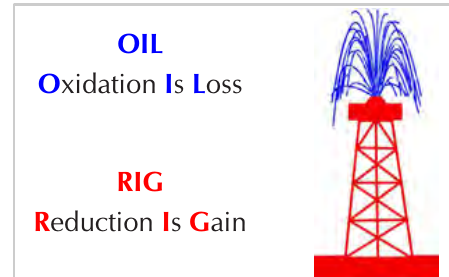
- OIL: Oxidation Is Loss (of electrons)
- RIG: Reduction Is Gain (of electrons)
This memory aid helps you quickly recall that oxidation means losing electrons, whilst reduction means gaining electrons.
Electron transfer in redox reactions
In both oxidation and reduction, a transfer of electrons occurs between substances. This electron transfer results in changes to the oxidation state of the elements involved in the reaction.
Understanding what happens during electron transfer
When an element or compound loses electrons, it becomes oxidised.
Example
Example: Zinc Oxidation
In this reaction, zinc loses two electrons and becomes oxidised.
As zinc loses electrons, it gives them to another element or compound, causing that other substance to be reduced.
When an element or compound gains electrons, it becomes reduced.
Example
Example: Copper Reduction
In this reaction, copper ions gain two electrons and become reduced.
As copper ions gain electrons, they take them from another element or compound, causing that other substance to be oxidised.
Oxidising and reducing agents
Understanding agents is crucial for identifying which substances cause oxidation and reduction in chemical reactions.
Reducing agents
A reducing agent is a substance that loses electrons and becomes oxidised in the process. The reducing agent causes another substance to be reduced by providing electrons to it.
Important
Key characteristics of reducing agents:
- They lose electrons during the reaction
- They become oxidised themselves
- They cause other substances to be reduced
Oxidising agents
An oxidising agent is a substance that gains electrons and becomes reduced in the process. The oxidising agent causes another substance to be oxidised by accepting electrons from it.
Important
Key characteristics of oxidising agents:
- They gain electrons during the reaction
- They become reduced themselves
- They cause other substances to be oxidised
Identifying redox reactions
To determine if a reaction is a redox reaction, you need to ask two important questions:
Note
Questions to identify redox reactions:
- Is there a compound or atom being oxidised?
- Is there a compound or atom being reduced?
If the answer to both questions is yes, then the reaction is a redox reaction. Remember that oxidation and reduction always occur simultaneously in electrochemical reactions.
Worked examples
Example
Worked Example 1: Identifying oxidation and reduction
Consider the reaction:
Solution:
- Zinc atoms lose electrons: (oxidation)
- Copper ions gain electrons: (reduction)
- Zinc is the reducing agent (gets oxidised)
- Copper ions are the oxidising agent (get reduced)
Example
Worked Example 2: Iron oxidation
Consider:
Solution:
- Iron atoms lose 2 electrons
- This is oxidation (loss of electrons)
- Iron acts as a reducing agent
Example
Worked Example 3: Iron reduction
Consider:
Solution:
- Iron(III) ions gain 1 electron
- This is reduction (gain of electrons)
- acts as an oxidising agent
Summary
Key Points to Remember:
- Oxidation means losing electrons - use OIL (Oxidation Is Loss) to remember this
- Reduction means gaining electrons - use RIG (Reduction Is Gain) to remember this
- Reducing agents lose electrons and become oxidised, whilst oxidising agents gain electrons and become reduced
- Redox reactions always involve both oxidation and reduction occurring simultaneously
- Electron transfer is the key process that drives all electrochemical reactions and makes batteries work