Alternative Sources of Fertilisers (Grade 12 NSC Matric Physical Sciences): Revision Notes
📚Revision Notes
Alternative Sources of Fertilisers
Introduction to alternative fertilisers
Industrial fertilisers have not always been used in agriculture. Even today, many farmers prefer to use natural fertilisers rather than manufactured ones. These alternative sources provide essential nutrients to plants whilst offering additional benefits for soil health and environmental sustainability.
Note
Alternative fertilisers offer unique advantages beyond just nutrient provision - they improve soil structure, increase water retention, and provide long-term environmental benefits that synthetic fertilisers often cannot match.
Organic fertilisers
Definition and characteristics
Organic fertilisers are not manufactured by humans but come from natural sources. These fertilisers contain lower levels of nutrients compared to industrial fertilisers and may take longer to be absorbed by plants. However, they offer several advantages:
Note
Key characteristics of organic fertilisers:
- They must degrade first before plants can absorb them
- They increase the organic component of soil, improving its physical structure
- They increase water-holding capacity of soil
- Nutrients are released slowly, reducing water pollution
- They provide long-term soil improvement
Manure
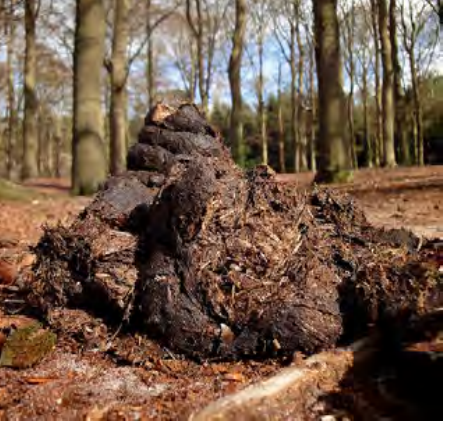
Manure is a solid waste product from animals that is widely used as an organic fertiliser in agriculture.
Composition and nutrients
Manure contains high levels of:
- Nitrogen - essential for plant growth and chlorophyll production
- Phosphorus - important for root development and energy transfer
- Potassium - helps with water regulation and disease resistance
- Other essential nutrients
How manure works
Manure decomposes over time through bacterial and microbial action. During this process, nutrients are gradually released into the soil. This slow release mechanism provides several benefits:
Important
Why slow release matters:
- Prevents nutrient leaching into groundwater
- Makes nutrients available to plants over a longer period
- Reduces environmental pollution compared to quick-release fertilisers
Additional benefits
Beyond providing nutrients, manure also:
- Adds organic matter to soil
- Increases soil quality and structure
- Improves water retention in sandy soils
- Enhances soil aeration in clay soils
Plant nutrient absorption
Plants can only absorb nutrients that are dissolved in water. When manure decomposes, nitrogen compounds are converted to water-soluble forms like nitrates (NO₃⁻). These dissolved nitrates in soil moisture can then be absorbed by plants through their root systems.
Guano
Guano is the excretion of seabirds, bats and seals that has been deposited over long periods.


Chemical composition
Guano consists of:
- Ammonia (NH₃)
- Uric acid
- Phosphoric acid
- Oxalic acid
- Carbonic acid
- High concentration of nitrates
Why guano is effective
The particularly high levels of phosphorus in guano make it an effective phosphorus fertiliser. Phosphorus is crucial for:
- Root development in plants
- Energy transfer processes
- Flowering and fruit production
Note
Historical significance of guano: Guano was extensively mined off the West Coast of South Africa as early as 1666. Large-scale mining began in the 1840s, but the reserves became depleted by the turn of the century due to over-exploitation.
Agricultural methods
Crop rotation
Crop rotation is a farming method used to manage nutrients in soil naturally without relying heavily on added fertilisers.
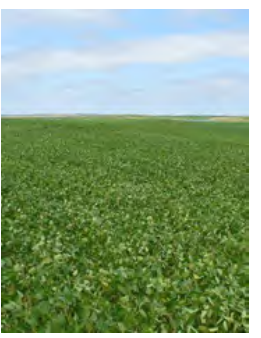
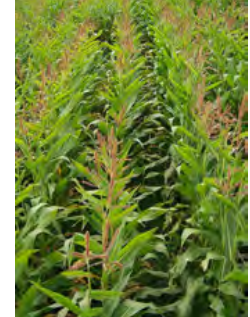
When the same crop is grown repeatedly in the same location, it eventually depletes the soil of specific nutrients that the crop requires. This leads to reduced crop yields, need for more fertiliser input, and soil degradation over time.
Example
How Crop Rotation Works:
Step 1: Plant legumes (beans, peas, soy beans) which have nodules on their roots
Step 2: These nodules contain nitrogen-fixing bacteria
Step 3: The bacteria convert atmospheric nitrogen into soluble forms
Step 4: This enriches the soil with nitrogen compounds
Step 5: Nitrogen-requiring crops (like maize) can then be planted in the enriched soil
Benefits of crop rotation:
- Maintains soil fertility naturally
- Reduces dependence on synthetic fertilisers
- Prevents soil nutrient depletion
- Improves long-term soil health
- Reduces pest and disease problems
Inorganic alternatives
Lime
Agricultural lime or crushed limestone can be used as an alternative fertiliser with specific soil conditioning properties.
Lime increases the pH of soil, making it less acidic. This chemical change has several effects:
Important
How lime improves nutrient availability:
- Makes soil more soluble for nitrogen, potassium and phosphorus compounds
- Nutrients become more readily available for absorption by plants
- Improves nutrient uptake efficiency
- Enhances overall plant growth
Benefits of lime application:
- Corrects soil acidity problems
- Increases nutrient availability without adding nutrients directly
- Improves soil structure in some soil types
- Cost-effective soil improvement method
Potash
Potash is the common name for various mined and manufactured salts that contain potassium in water-soluble form.
Origin of the name
The name comes from "pot ash" - the historical method of manufacturing potassium salts. Before the industrial era, ashes from fires were soaked in pots of water, the water was then filtered out, and the remaining water contained leached potassium salts. This water was evaporated to obtain white powder known as potash.
Types of potash
Potash is a rich source of potassium and may contain:
- Potassium carbonate (K₂CO₃)
- Potassium chloride (KCl)
- Potassium sulphate (K₂SO₄)
- Potassium nitrate (KNO₃)
Note
Historical production changes:
- Up to the 19th century, potash was manufactured in asheries using wood ashes
- Production declined in the late 19th century when large-scale mining of potash from mineral salts was established in Germany
- This shift made potash more widely available and cheaper to produce
Potassium is essential for water regulation in plants, protein synthesis, disease resistance, fruit and seed development, and overall plant vigour.
Summary
Key Points to Remember:
- Organic fertilisers come from natural sources and improve soil structure while providing nutrients slowly
- Manure releases nutrients gradually through decomposition, preventing leaching and improving soil quality
- Guano is rich in phosphorus but historical reserves have been largely depleted through mining
- Crop rotation uses nitrogen-fixing bacteria in legumes to naturally replenish soil nitrogen
- Lime increases soil pH, making nutrients more available to plants without adding nutrients directly