Fertilisers and the Environment (Grade 12 NSC Matric Physical Sciences): Revision Notes
📚Revision Notes
Fertilisers and the Environment
The fertiliser industry plays a vital role in South Africa and globally, providing essential nutrients needed for healthy crop production. However, when fertilisers are not used responsibly, they can cause significant environmental problems. Understanding these environmental impacts is crucial for sustainable agriculture.
Note
The challenge for modern agriculture is finding the right balance between meeting global food demands and protecting our environment. This requires understanding both the benefits and risks of fertiliser use.
What is eutrophication?
Eutrophication is the process where water systems become over-enriched with chemical nutrients, particularly nitrogen and phosphorus. This excess enrichment leads to rapid plant growth in aquatic environments, which ultimately depletes oxygen levels in the water and disrupts the normal functioning of ecosystems.
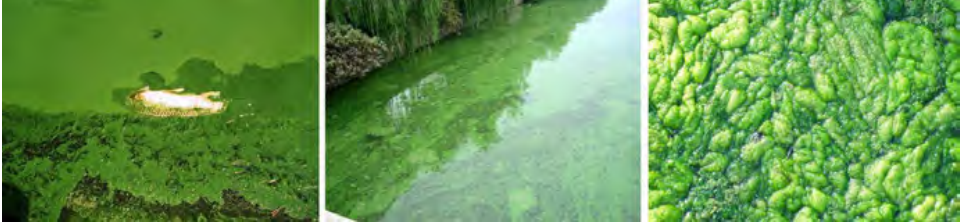
The images above show severe algal blooms caused by eutrophication in various water bodies. These green, thick algal formations demonstrate how excess nutrients create unnatural conditions that harm aquatic life.
How eutrophication occurs
Eutrophication can happen naturally over very long periods, but human activities significantly accelerate this process. The two main causes are:
- Agricultural runoff - When excess fertilisers are washed from fields into groundwater and water bodies during rainfall
- Sewage discharge - Untreated or poorly treated sewage containing high levels of nutrients
Important
While eutrophication occurs naturally over thousands of years, human activities can cause the same process to happen in just decades or even years, creating rapid and devastating environmental changes.
Environmental impacts of eutrophication
Decrease in biodiversity
When water systems become enriched with nitrogen, plant growth accelerates dramatically. In aquatic environments, this creates several problems:
- Excessive plant growth blocks sunlight from reaching deeper water areas
- Plants consume large amounts of oxygen during respiration
- Oxygen depletion causes fish and other organisms to die
- The overall number of plant and animal species in the ecosystem decreases
Note
This process creates a cascading effect through the ecosystem. As oxygen levels drop, the most sensitive species die first, followed by others, leading to a simplified ecosystem with much lower biodiversity.
Toxicity issues
Some plants that flourish during eutrophication can be toxic. These harmful substances may accumulate in the food chain, affecting both aquatic life and potentially human health when contaminated water or fish are consumed.
Important
Toxic algal blooms can make water unsafe for drinking, swimming, and fishing. The toxins can cause serious health problems for both wildlife and humans, making eutrophication not just an environmental issue but a public health concern.
Preventing eutrophication
Several strategies can help prevent eutrophication from occurring:
Clean-up measures
Direct removal of excess nutrients like nitrogen and phosphorus from water sources can help restore normal nutrient levels.
Buffer zones
Creating designated areas near farms, roads, and rivers acts as natural philtres. These zones trap nutrients and sediments before they reach aquatic systems, rather than allowing direct runoff into water bodies.
Note
Buffer zones are particularly effective because they use natural processes to philtre pollutants. Vegetation in these areas absorbs excess nutrients, while the soil acts as a physical barrier to prevent direct runoff.
Sewage treatment regulations
Laws governing the treatment and discharge of sewage help control the amount of nutrients entering water systems.
Nitrogen testing and modelling
Farmers can assess exactly how much fertiliser their crops need through soil and plant testing. This precision approach ensures:
- Only the required amount of fertiliser is applied
- No excess nutrients run off into nearby streams during rainfall
- Cost savings for farmers while protecting the environment
Note
Modern precision agriculture uses technology like GPS mapping and soil sensors to create detailed nutrient maps. This allows farmers to apply fertilisers only where and when needed, significantly reducing environmental impact while maintaining crop yields.
Connection to the fertiliser industry
The fertiliser industry produces essential nutrients through various industrial processes:
- Macronutrients (carbon, hydrogen, oxygen, potassium, nitrogen, phosphorus) are needed in large quantities
- Micronutrients (iron, chlorine, copper, zinc) are required in smaller amounts
- Key production processes include the Haber process (producing ammonia), Ostwald process (producing nitric acid), and Contact process (producing sulfuric acid and phosphoric acid)
While these fertilisers are essential for crop production, their overuse creates the environmental problems discussed above.
Note
The fertiliser industry has developed more efficient production methods and slow-release fertilisers to help reduce environmental impact. However, proper application and timing remain crucial factors in preventing environmental damage.
Summary
Key Points to Remember:
- Eutrophication occurs when water systems receive too many nutrients, leading to excessive plant growth and oxygen depletion
- Agricultural runoff and sewage are the main human causes of eutrophication
- Environmental impacts include decreased biodiversity and potential toxicity in food chains
- Prevention methods include clean-up measures, buffer zones, sewage treatment, and precise fertiliser application
- Responsible fertiliser use balances the need for crop nutrition with environmental protection