Movement of Materials in and Out of Cells (HSC SSCE Biology): Revision Notes
📚Revision Notes
Movement of Materials in and Out of Cells
Introduction to cellular transport
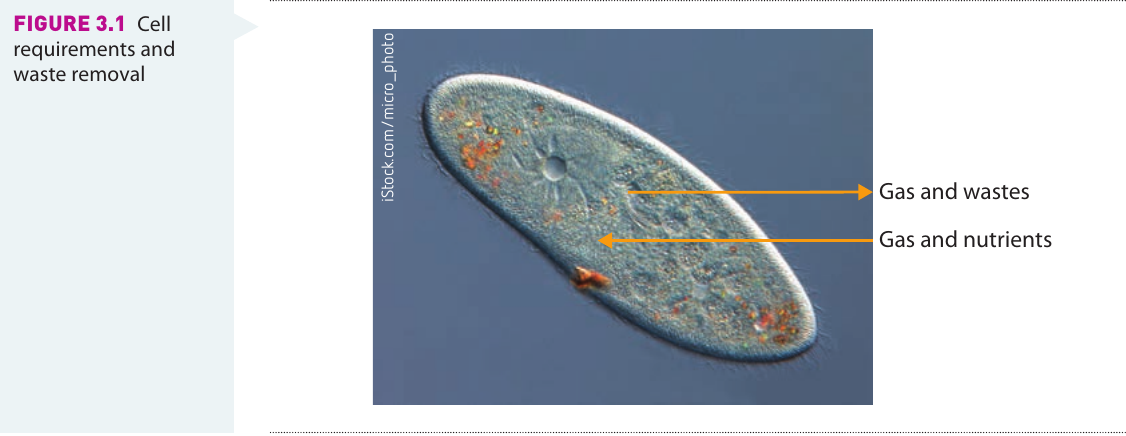
Cells must constantly interact with their environment to survive. They need to obtain essential materials such as gases (oxygen and carbon dioxide), nutrients (sugars, amino acids, fatty acids, glycerol) and water. At the same time, cells must remove waste products (urea, uric acid, excess carbon dioxide) and secrete products like mucus or hormones.
Note
The nucleus coordinates all biochemical activities within the cell, acting as the cell's control center. The cell membrane controls the movement of materials between the cell's internal environment and its external environment, functioning as the cell's selective gateway.
The cell membrane and selective permeability
Structure and function
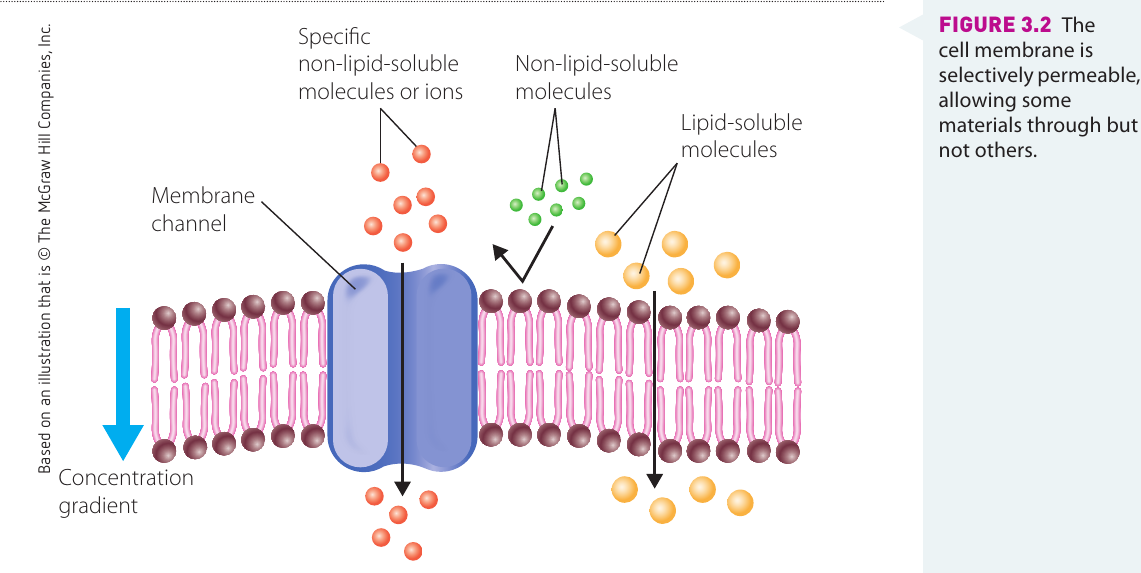
The cell membrane acts as a selective barrier between the cell's interior and exterior. It is selectively permeable (also called differentially permeable), meaning it controls which substances can pass through it.
In plant cells, the cellulose cell wall is permeable to most substances. However, the movement of molecules is only restricted when they reach the cell membrane itself. This makes the cell membrane the true selective barrier.
Factors affecting membrane permeability
Three main factors determine whether a molecule can cross the cell membrane:
1. Size
- Small molecules move across membranes quickly
- Large molecules have difficulty crossing membranes
2. Electrical charge
- Electrically charged molecules (like sodium Na⁺ and potassium K⁺ ions) are not very soluble in lipids
- These ions have low membrane permeability
- Neutral molecules (like carbon dioxide CO₂ and oxygen O₂) are lipid-soluble and have high permeability
3. Lipid solubility
- Water-soluble (hydrophilic) molecules struggle to penetrate the membrane
- Lipid-soluble molecules (like urea and ethanol) move easily through the phospholipid bilayer
- The lipid 'tails' in the membrane impede hydrophilic molecules but enhance movement of lipid-soluble molecules
Important
Special case - water: Although water is a polar molecule that is not lipid-soluble, it moves through special tiny channels called aquaporins ('water pores'). This makes cell membranes highly permeable to water through the process of osmosis.
Passive transport: diffusion
What is diffusion?
Diffusion is the net movement of any type of molecule from a region of high concentration to a region of low concentration until equilibrium is reached. This process requires no energy input from the cell.
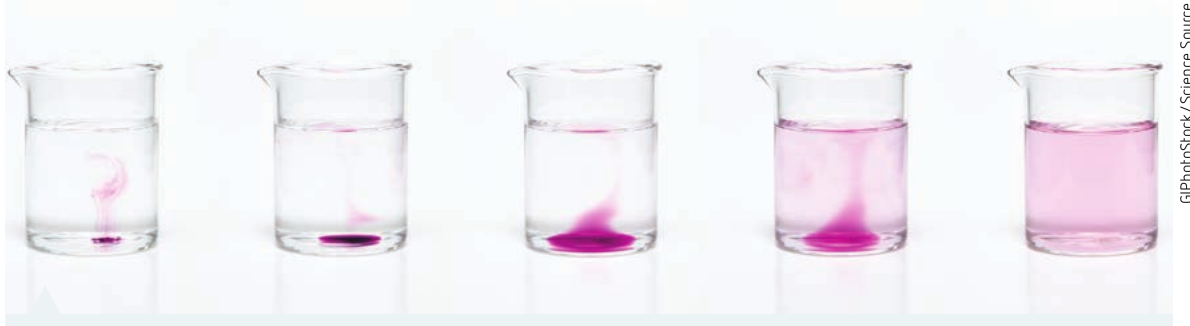
Equilibrium occurs when there is no net movement of molecules in either direction. At equilibrium, molecules continue to move, but they move equally in both directions.
Understanding concentration gradients
Movement from high concentration to low concentration is described as movement along a concentration gradient. Think of a concentration gradient like a slope or hill. Molecules moving down this gradient are like rocks rolling downhill - they need no energy input to move.
Example
Real-World Example: Perfume Diffusion in a Classroom
When perfume is sprayed in the back corner of a room, students closest to that corner smell it immediately. Students at the front of the room don't smell it until later.
The perfume molecules gradually diffuse from the area of highest concentration (back corner) to areas of lower concentration (front of room) until the concentration is equal throughout the entire room.
This demonstrates diffusion along a concentration gradient without any energy input.
Factors affecting diffusion rate
Note
Two key factors influence how quickly diffusion occurs:
- Concentration gradient: A steeper gradient (greater difference in concentrations) means faster diffusion
- Temperature: Heat increases the rate of diffusion by increasing the kinetic energy of particles
Simple diffusion across the cell membrane
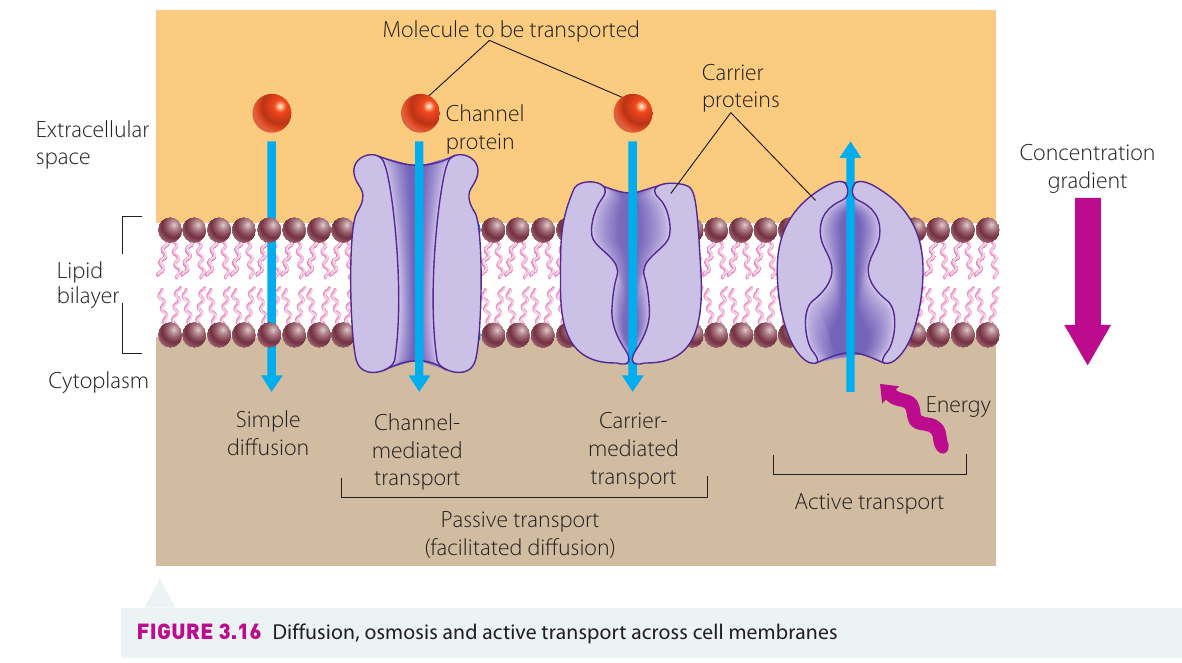
Small, uncharged particles like carbon dioxide and oxygen can move easily through the cell membrane by simple diffusion.
These particles pass directly between the phospholipid molecules, moving from high to low concentration. The concentration gradient is maintained because the cell continually uses oxygen for cellular respiration, keeping its internal oxygen concentration low. This promotes ongoing diffusion of oxygen from outside the cell (where concentration is high) to inside.
Facilitated diffusion
The need for assistance
Relatively large molecules (like glucose and amino acids) and charged particles (like sodium Na⁺ and chloride Cl⁻ ions) cannot easily pass through the phospholipid bilayer. They require help from specialised proteins.
Carrier proteins
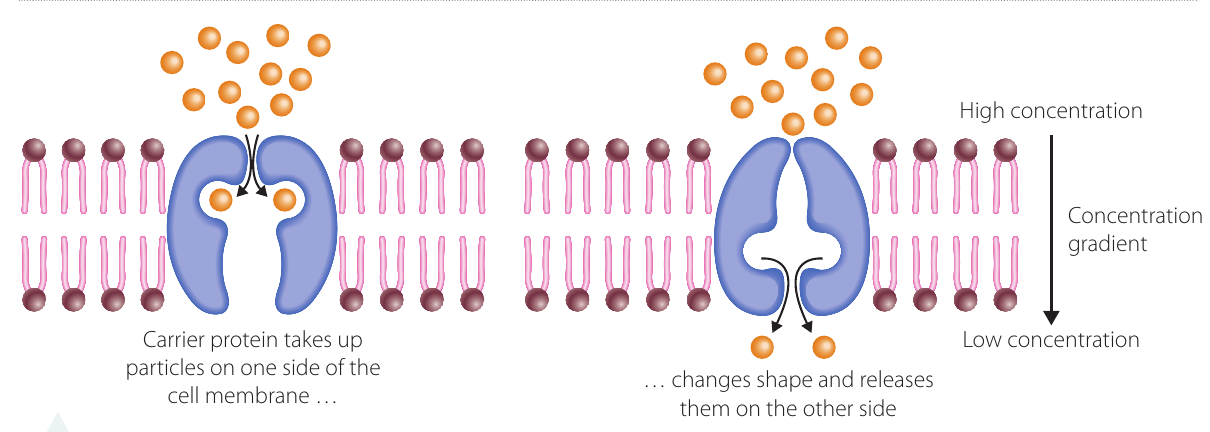
Carrier proteins bind to specific molecules on one side of the membrane, change shape, and release the substance on the other side.

The direction of movement (into or out of the cell) depends on the direction of the concentration gradient. Movement is always from high to low concentration - no energy is required.
Channel proteins
Small ions like sodium diffuse rapidly through narrow passageways called channel proteins. These channels are specific for particular ions.
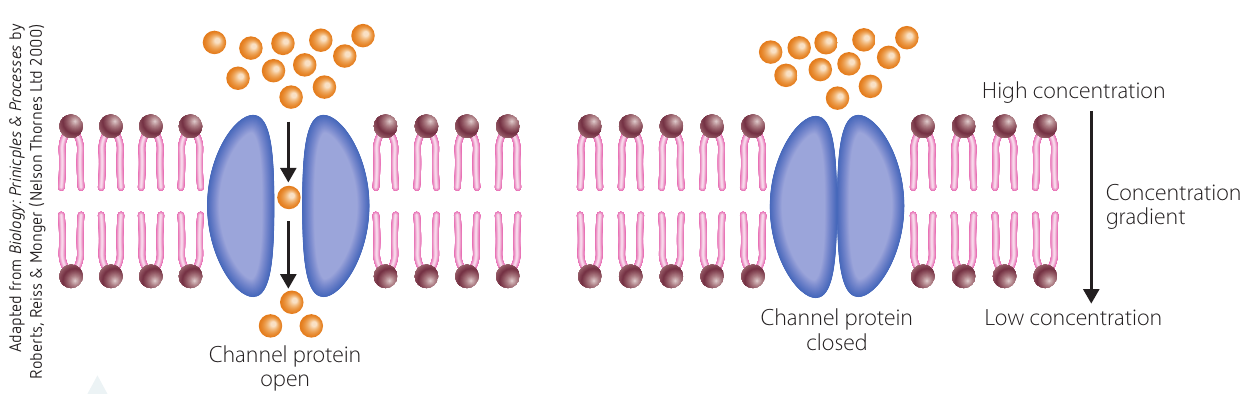
Note
Channel proteins can open and close, controlling when specific ions can pass through the membrane. Like carrier proteins, channel proteins facilitate movement along the concentration gradient without requiring energy.
Osmosis: movement of water
Definition and importance
Osmosis is a special type of diffusion. It is the net movement of water molecules from a region of high water concentration to a region of low water concentration through a selectively permeable membrane.
Like diffusion, osmosis moves along a concentration gradient and requires no energy input.
Important
Why Water is Essential for Life:
- It is the medium in which biochemical reactions occur
- It helps maintain cell shape
- It forms the fluid that bathes tissues
- It transports materials in solution
Understanding solutions
A solution forms when a solute (such as salt or sugar) dissolves in a solvent (usually water). The amount of solute dissolved in a given quantity of solvent determines the concentration of the solution.
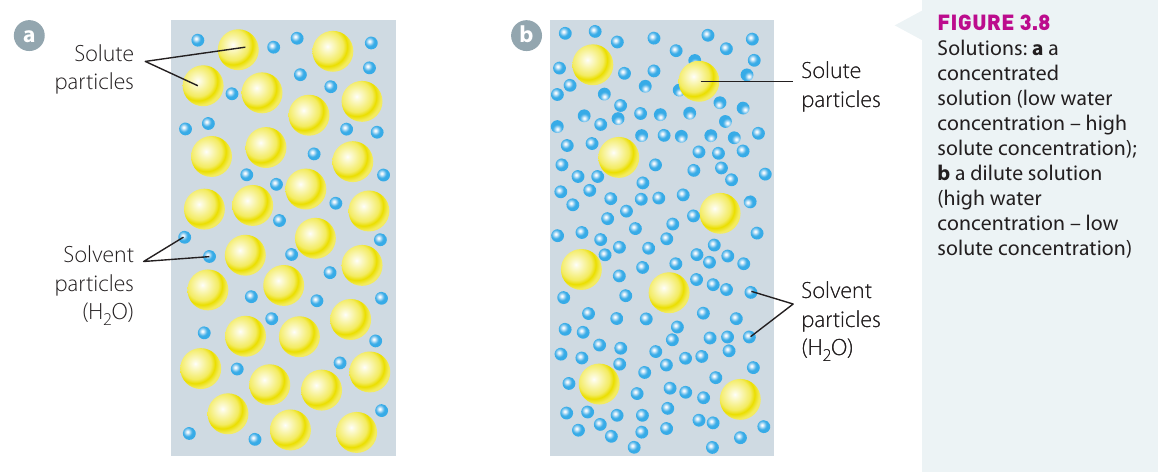
Concentrated solution: Contains a large amount of solute relative to water. The water concentration is LOW (because the solute takes up space).
Dilute solution: Contains a small amount of solute relative to water. The water concentration is HIGH.
How osmosis occurs
Water is not lipid-soluble, so it cannot move directly through the phospholipid bilayer. Instead, water moves through special protein channels called aquaporins.
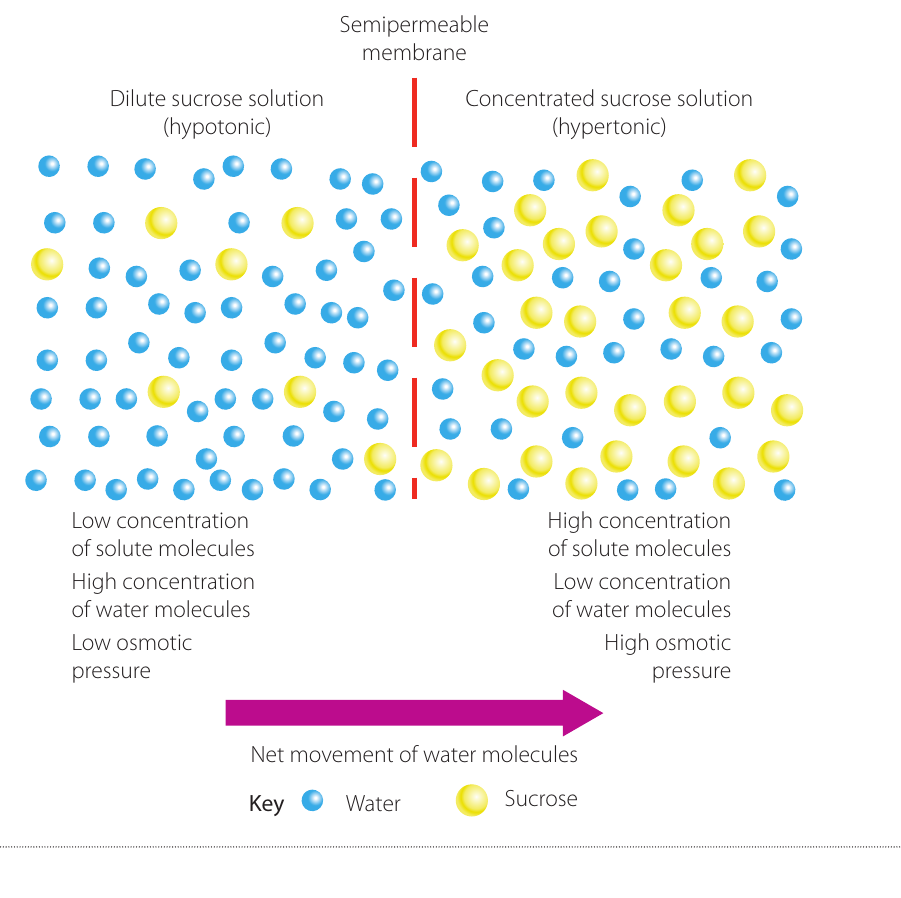
The osmotic pressure is the pressure created by water moving across a semipermeable membrane. More water movement creates higher osmotic pressure.
Tonicity: comparing solutions
Three terms describe the relative concentration of solutions separated by a semipermeable membrane:
Isotonic (iso = same)
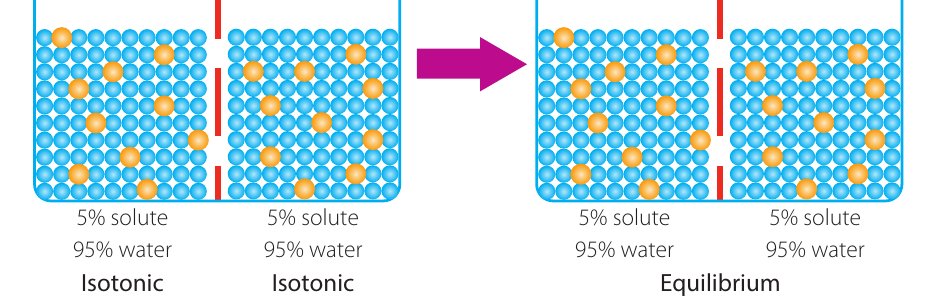
When the fluids inside and outside a cell have equal solute concentration, they are isotonic. Water molecules jostle on both sides of the membrane, moving equally in both directions. There is no net movement of water.
Hypotonic (hypo = lower)
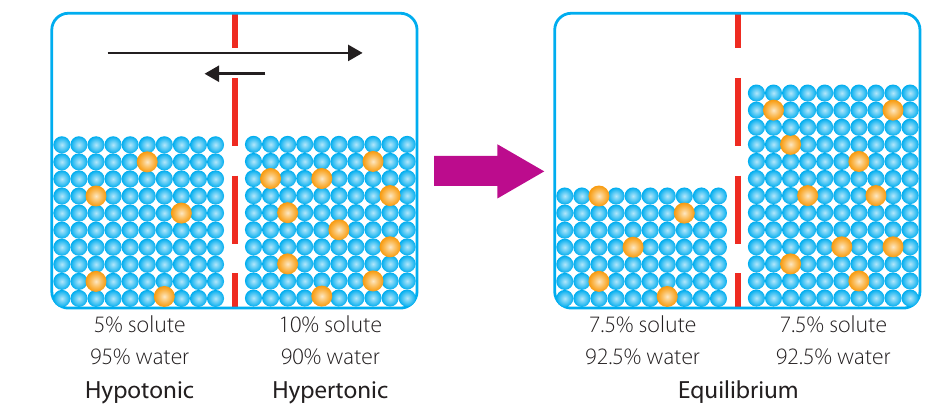
When the external solution has a lower solute concentration (higher water concentration) than the cell's cytoplasm, it is hypotonic. Water molecules move through the membrane into the cell.
Hypertonic (hyper = higher)
When the external solution has a higher solute concentration (lower water concentration) than the cell's cytoplasm, it is hypertonic. Water molecules move out of the cell.
Osmosis in animal cells
Animal cells are surrounded only by a cell membrane. They face a challenge in hypotonic solutions (like fresh water). Water moving into animal cells by osmosis can cause cells to swell and eventually burst, killing the organism.
Note
In most animals, cells are not directly exposed to the external environment. Instead, they are bathed in isotonic extracellular fluid. This means water diffuses equally in both directions, with no net movement. This constant water concentration allows cells to coordinate biochemical reactions efficiently.
Osmosis in plant cells
Plant cells behave differently from animal cells because they have two protective layers: the cell membrane and a firm cellulose cell wall.
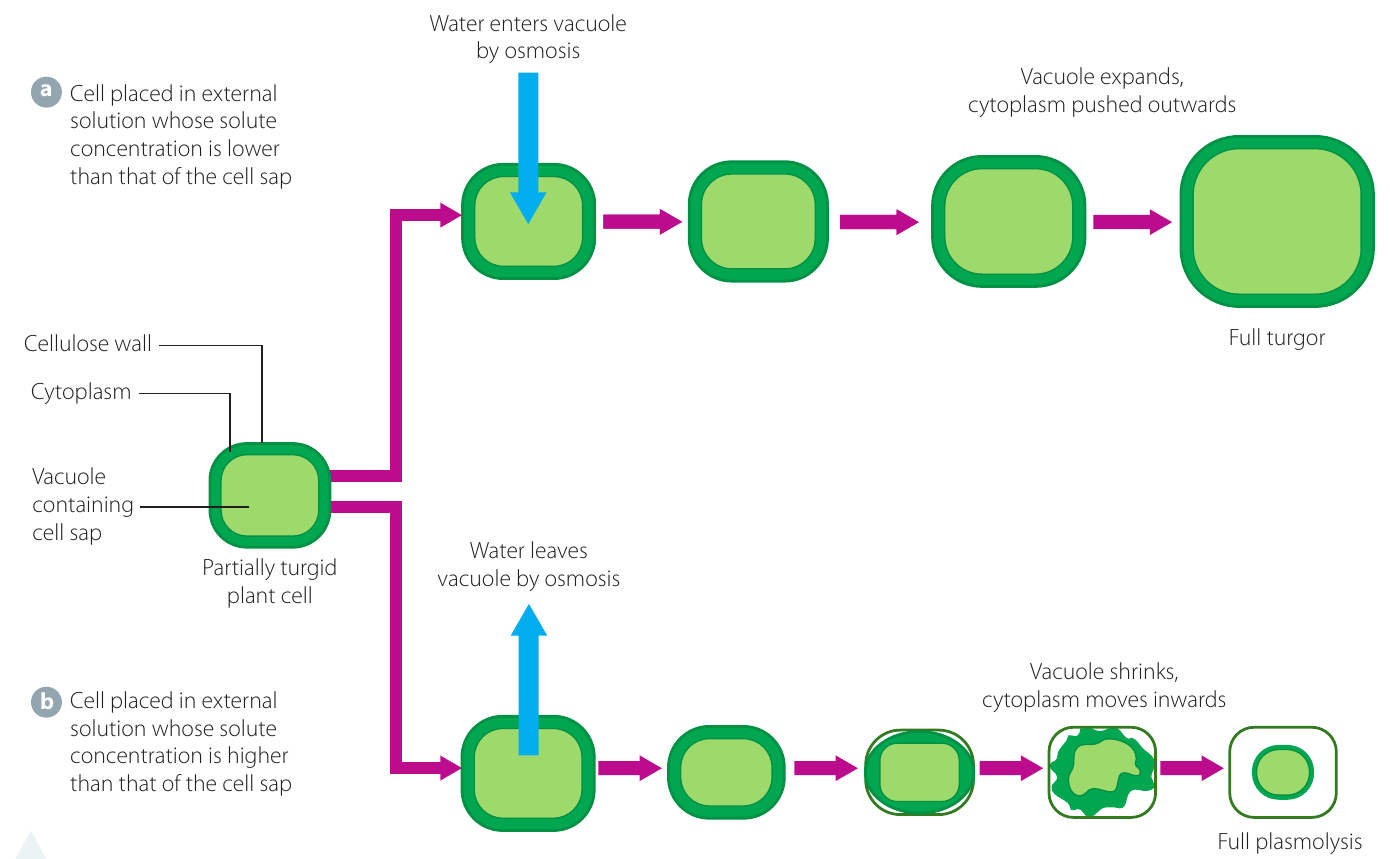
Turgor (in hypotonic solutions):
- Water moves into the plant cell by osmosis
- The vacuole swells and pushes the cell membrane outward against the cell wall
- The strong cell wall prevents the cell from bursting
- When the wall has stretched as much as possible, no more water can enter
- The cell is now turgid (firm and swollen)
- At this point, osmotic pressure inside equals the opposing pressure from the cell wall
Plasmolysis (in hypertonic solutions):
- Water moves out of the plant cell by osmosis
- The vacuole shrinks
- The cell membrane pulls away from the cell wall
- This process is called plasmolysis
Active transport
Moving against the gradient
Sometimes cells need to move substances from low concentration to high concentration - the opposite direction from diffusion. This is like pushing a rock uphill - it requires energy.
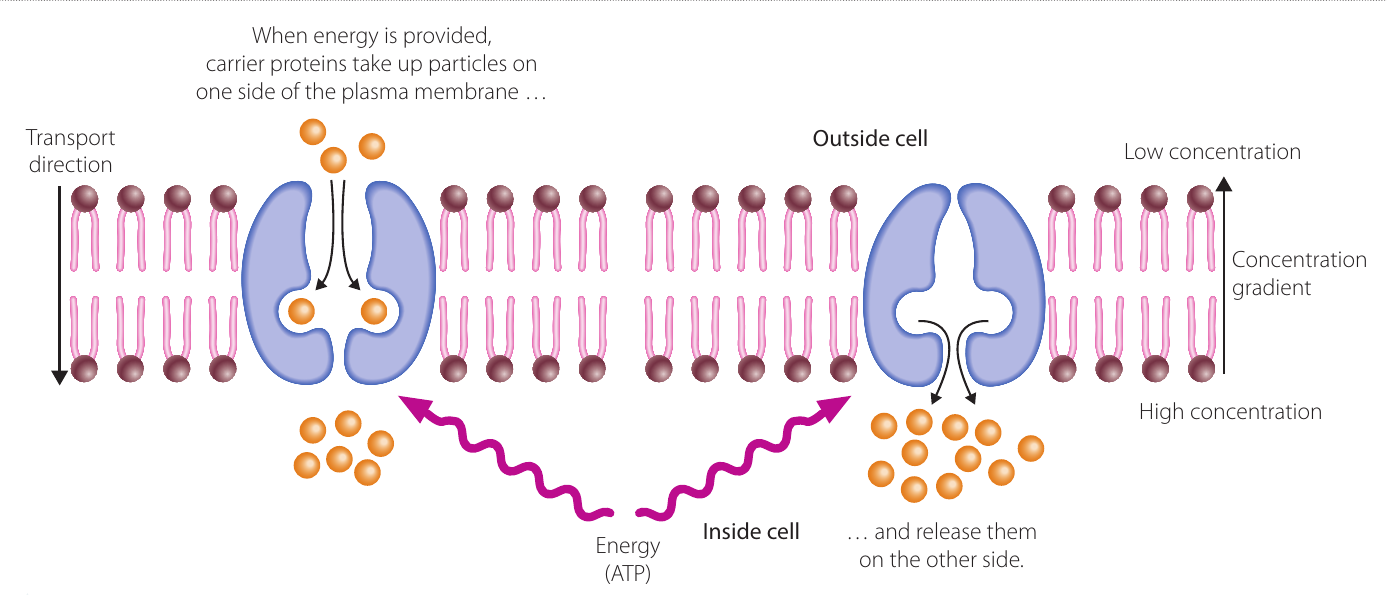
Active transport is the movement of molecules from a region of low concentration to a region of high concentration. This process:
- Moves against the concentration gradient
- Requires energy input (ATP)
- Uses carrier proteins that span the membrane
- Requires receptors on the membrane for specific molecules
Example
Example: Glucose Reabsorption in Kidneys
Kidney cells use active transport to reabsorb glucose and amino acids from the filtrate back into the bloodstream. This prevents their loss in urine.
Even when glucose concentration is higher in the blood than in the kidney tubules, active transport can still move glucose against the concentration gradient to ensure none is wasted.
Transport of large molecules
Sometimes particles are too large to cross the cell membrane through diffusion or active transport. Cells use special processes to move these large molecules.
Endocytosis: bringing materials into cells
Endocytosis occurs when the cell membrane changes shape to surround and engulf a large particle. This process requires energy.
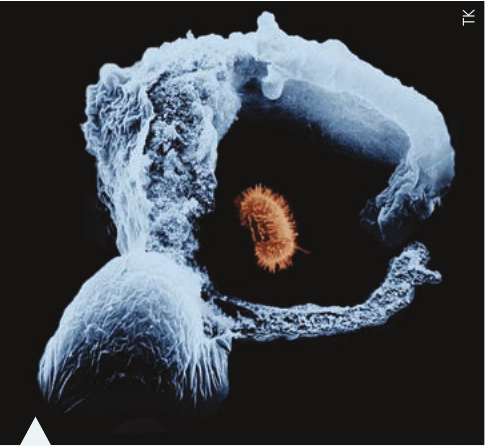
Phagocytosis ('cell eating') - engulfing solid particles
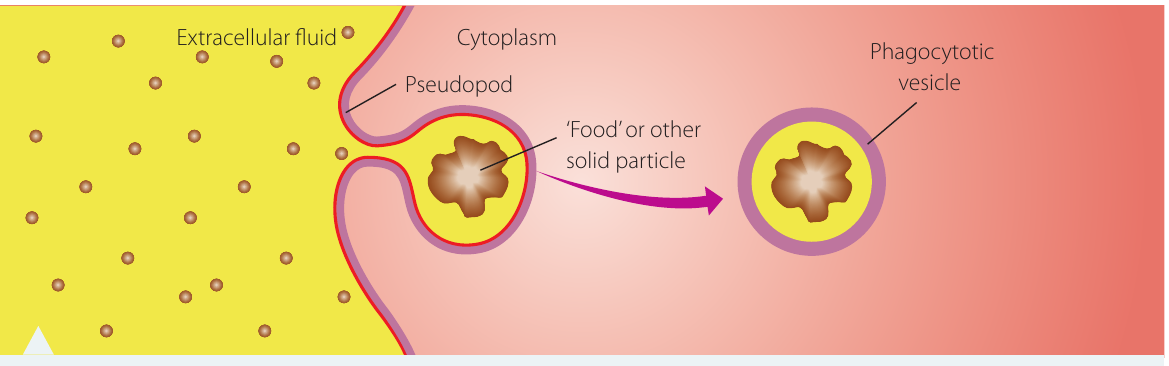
The cell sends out membrane projections (pseudopods) filled with cytoplasm that surround the particle. When the projections meet, the membrane fuses, forming a vesicle that stores or transports the material within the cytoplasm.
Example
Example: Amoeba Feeding
A unicellular amoeba uses phagocytosis to feed on smaller organisms. The amoeba extends pseudopods around its prey, completely engulfing it within a food vacuole where digestion occurs.
Pinocytosis ('cell drinking') - engulfing liquids
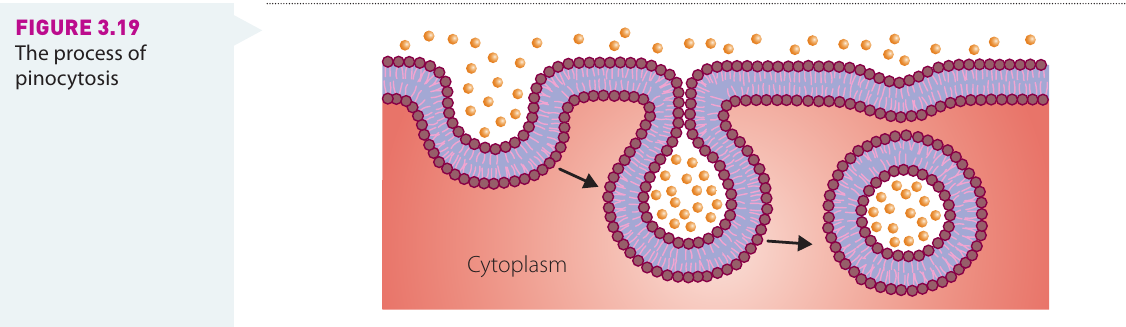
The cell membrane engulfs drops of extracellular fluid in much the same way as phagocytosis.
Example
Example: Fat Absorption in the Intestine
Fat droplets in the small intestine move into intestinal cells by pinocytosis after a meal. This allows the body to absorb dietary fats that are too large to cross the membrane by simple diffusion.
Exocytosis: removing materials from cells
Specialised cells produce substances (antibodies, neurotransmitters, enzymes) that need to function elsewhere in the organism. Cells also produce waste products that must be removed.
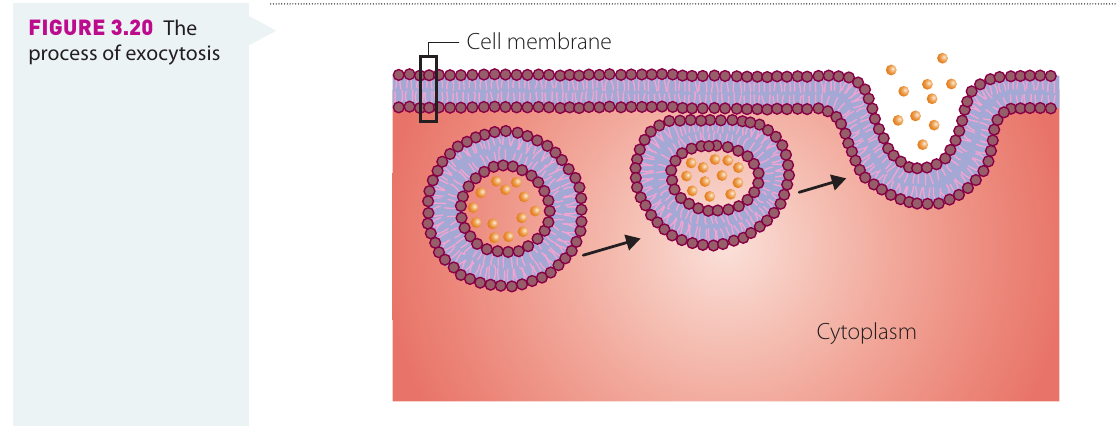
Exocytosis transports these substances out of the cell. A membrane-bound vesicle moves to the cell membrane, fuses with it, and releases its contents to the cell's exterior. The vesicle membrane becomes part of the cell membrane.
Factors affecting material exchange across membranes
Chemical factors
The chemical properties of substances affect their transport across cell membranes:
- Uncharged molecules (like ethanol) easily penetrate the membrane because they dissolve in the phospholipid bilayer
- Charged ions (like Na⁺ and K⁺) cannot cross the hydrophobic centre of the membrane and require specific channel proteins
- Water is not lipid-soluble and moves through aquaporins rather than through the phospholipid bilayer
Physical factors
Size and shape of molecules affect membrane transport:
- Small molecules diffuse easily between phospholipids
- Large molecules (like glucose and amino acids) use carrier proteins
- Very large molecules move by endocytosis or exocytosis
Concentration gradient
The relative concentration on either side of the membrane affects diffusion rate:
- A high concentration gradient (large difference) means rapid diffusion
- As the gradient decreases, diffusion slows
- At equilibrium, there is no net movement
Note
Cells maintain rapid diffusion by maintaining steep concentration gradients. Plant cells use cytoplasmic streaming (circular movement of organelles and cytosol) to maintain steeper gradients by moving materials away from the membrane.
Surface-area-to-volume ratio
This is one of the most important factors limiting cell size and affecting efficiency of substance exchange.
Surface area (SA): The total area of the cell membrane surrounding the cell
Volume (V): The space taken up by the cell's internal contents (cytoplasm and nucleus)
SA:V ratio: Surface area divided by volume
Why SA:V matters
A cell needs sufficient surface area to supply its volume with requirements and remove wastes efficiently.
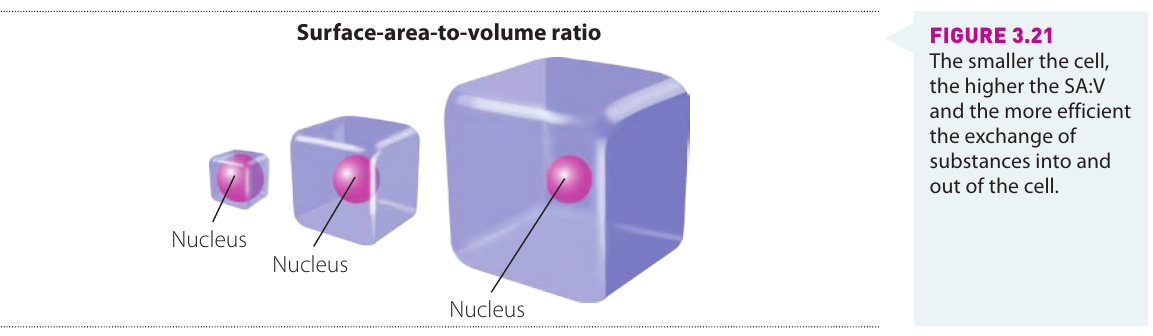
Smaller cells have more surface area relative to their volume - a higher SA:V ratio. The distance from the surface to the centre is much shorter in small cells. This allows faster movement of substances between the cell's centre and surface.
Larger cells have less surface area relative to their volume - a lower SA:V ratio. The centre of the cell is further from the surface. This makes it harder for substances to move in and out efficiently.
Example
Worked Example: Calculating SA:V Ratio
For a cube :
Step 1: Calculate Surface Area
Step 2: Calculate Volume
Step 3: Calculate SA
RatioInterpretation: For each unit of volume, there are 6 units of surface area available for exchange.
Why cells stay small
Important
As cells increase in size, they reach a point where inward movement of essential substances and outward movement of wastes cannot occur fast enough to service the increasing volume. When cells reach this critical size, they often divide if capable. This is why individual cells tend to be very small.
Cell adaptations for high SA:V
Cells often have features that maximise their SA:V:
Example
Example: Root Hair Cells
Root hairs on plant roots are long, thin extensions that greatly increase the surface area for absorbing water and mineral salts. This adaptation maximizes the SA:V ratio specifically for the function of absorption.
Shape effects on SA:V
Cell shape also affects SA:V:
- Spherical cells have relatively small SA:V
- Long, flat cells have higher SA:V than spherical cells of the same volume
- Cells often adopt shapes that maximise their SA:V for their function
Summary of transport processes
| Transport Method | Energy Required? | Direction | Examples |
|---|---|---|---|
| Simple diffusion | No | High → Low concentration | O₂, CO₂ |
| Facilitated diffusion | No | High → Low concentration | Glucose, amino acids, Na⁺, K⁺ |
| Osmosis | No | High → Low water concentration | Water through aquaporins |
| Active transport | Yes (ATP) | Low → High concentration | Glucose reabsorption in kidneys |
| Endocytosis | Yes | Into cell | Large particles, bacteria |
| Exocytosis | Yes | Out of cell | Hormones, enzymes, wastes |
Summary
Key Points to Remember:
- The cell membrane is selectively permeable, controlling what enters and leaves the cell
- Diffusion moves substances from high to low concentration without using energy - movement is along the concentration gradient
- Facilitated diffusion uses carrier or channel proteins to help larger molecules and ions cross the membrane along the concentration gradient
- Osmosis is the diffusion of water through aquaporins from high to low water concentration
- Solutions can be isotonic (equal concentrations), hypotonic (lower solute concentration), or hypertonic (higher solute concentration)
- Plant cells become turgid in hypotonic solutions and undergo plasmolysis in hypertonic solutions
- Active transport moves substances against the concentration gradient and requires energy (ATP)
- Endocytosis (phagocytosis and pinocytosis) brings large particles into cells, while exocytosis removes them
- The surface-area-to-volume ratio determines how efficiently cells exchange materials - smaller cells with higher SA:V ratios are more efficient