Genetic Technologies (HSC SSCE Biology): Revision Notes
📚Revision Notes
Genetic Technologies and Their Benefits
Introduction to genetic technologies
Genetic technologies involve manipulating the genetic material of organisms to produce desired traits or products. These technologies have revolutionised agriculture, medicine, and industry by allowing scientists to transfer genes between species and modify existing genes. Understanding how these technologies work and their applications helps us appreciate both their potential benefits and limitations.
Recombinant DNA technology
What is recombinant DNA?
Recombinant DNA is genetic material that has been created by combining DNA sequences from different sources. This technology enables scientists to insert a gene from one organism into the genome of another, creating new combinations of genetic material that would not occur naturally.
The recombinant DNA process
The process involves several carefully controlled steps that work together to create modified genetic material:
Example
Worked Example: Creating Recombinant DNA
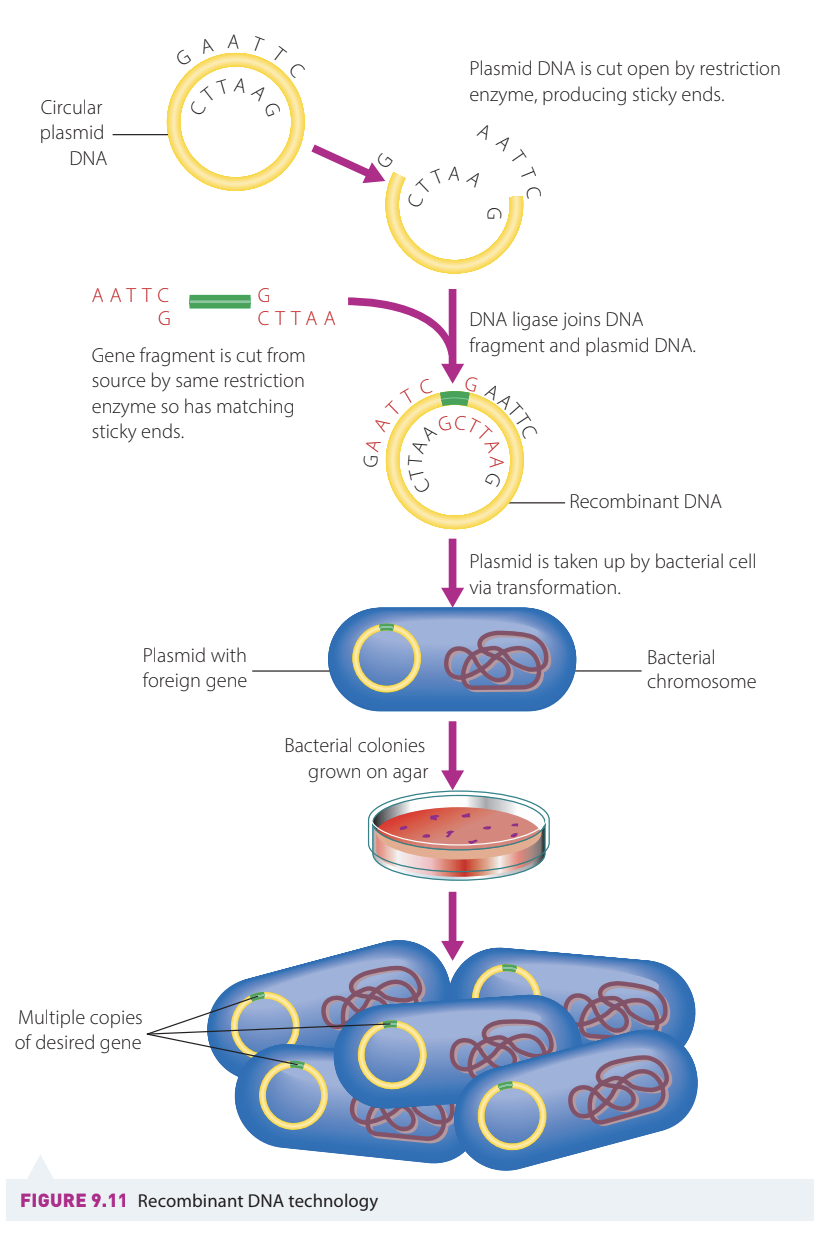
Step 1: Gene isolation Scientists identify and extract the desired gene from a donor organism's cells.
Step 2: Plasmid extraction A circular piece of DNA called a plasmid is removed from bacterial cells. Plasmids are small, self-replicating DNA molecules found naturally in bacteria.
Step 3: DNA cutting Both the donor gene and the plasmid are cut using the same restriction enzyme. These enzymes act like molecular scissors, cutting DNA at precise base sequences.
Step 4: Creating sticky ends When restriction enzymes cut DNA, they create sticky ends – short sections of single-stranded DNA with exposed nucleotide bases. These sticky ends are complementary and can bind to each other through base pairing.
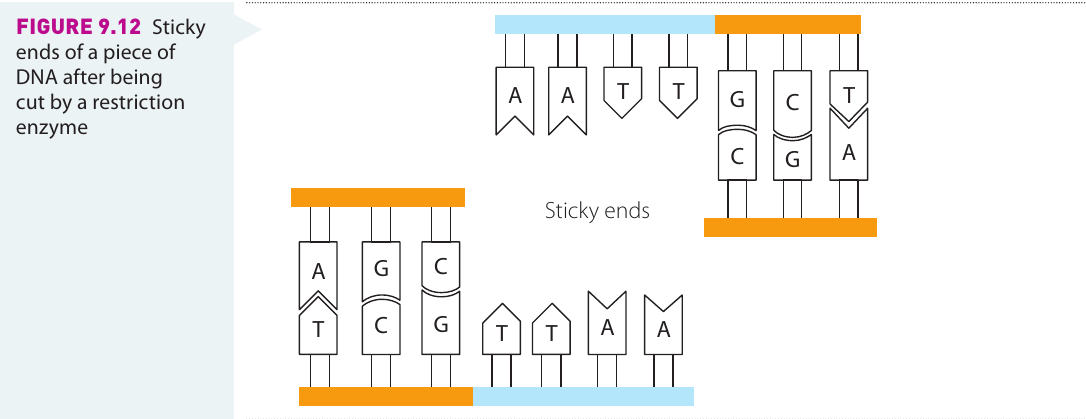
Step 5: Plasmid cutting The bacterial plasmid is cut at specific points using restriction enzymes, creating matching sticky ends.
Step 6: Annealing The sticky ends of the donor gene and the plasmid come together and bind through complementary base pairing. This joining process is called annealing.
Step 7: Ligation The enzyme DNA ligase permanently joins the DNA fragments together, creating a complete circular plasmid containing the foreign gene. This new molecule is the recombinant DNA.
Step 8: Transformation The recombinant plasmid is inserted back into bacterial cells through a process called transformation. The bacteria then multiply, producing many copies of the desired gene.
Key components
Note
Essential Components of Recombinant DNA Technology:
- Restriction enzymes: Proteins that cut DNA at specific base sequences
- DNA ligase: An enzyme that joins DNA fragments together
- Vector: A DNA molecule (such as a plasmid) used to carry foreign genetic material into a cell
- Plasmid: A small, circular piece of DNA found in bacteria
Methods of gene delivery
There are four main techniques for inserting genes into target cells, each suited to different applications and cell types.
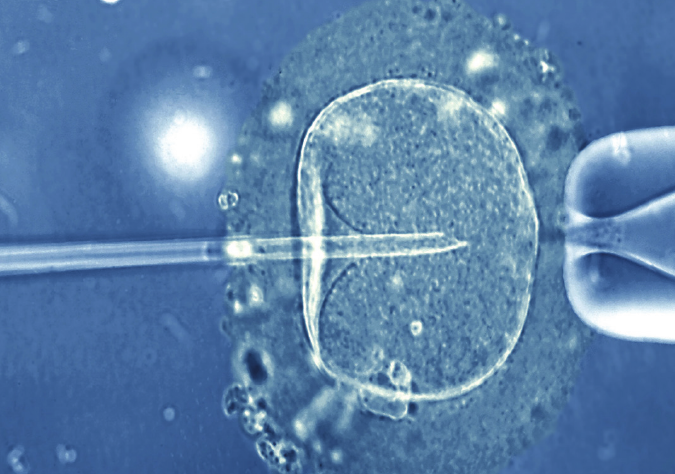
1. Micro-injection
This method involves directly injecting DNA into the nucleus of a single cell using a very fine needle. Scientists perform this delicate procedure under an optical microscope. Micro-injection is commonly used when creating transgenic organisms, particularly when introducing genes into egg cells.
2. Biolistics (gene gun)
This mechanical approach involves coating microscopic particles (typically gold) with DNA and then firing them into target tissues or cells using high pressure or voltage. The particles penetrate cell membranes, delivering the genetic material inside.
3. Electroporation
This technique uses brief electrical pulses to temporarily increase the permeability of cell membranes. When cells are exposed to an electrical current, tiny pores form in their membranes, allowing DNA molecules to enter.
4. Transduction by vector
This method uses biological carriers called vectors to transport DNA into cells.
Note
Common Vectors for Gene Delivery:
- Adenoviruses (modified viruses)
- Liposomes (small fatty spheres)
- Bacterial plasmids
Vectors can be delivered through various routes, including direct injection into the bloodstream or aerosol delivery (such as nasal sprays). This approach has been tested in gene therapy trials for conditions like cystic fibrosis.
Gene therapy
Gene therapy is a medical technique where a healthy, functional copy of a gene is inserted into an organism's cells to replace or supplement a defective gene.
Important
Critical Distinction:
Gene therapy targets non-germline tissue (body cells, not reproductive cells), which means the introduced gene will not be inherited by future generations.
This approach represents a new frontier in medicine, with potential to treat genetic disorders by correcting the underlying genetic cause rather than just managing symptoms.
Transgenic species
Definition
A transgenic species is an organism that contains genetic material from a different species. The term "transgenic" comes from "trans" (meaning "across"), referring to the movement of genes across species boundaries.
For a gene to be passed to offspring, it must be incorporated into the organism's germline genome – the DNA in reproductive cells (egg or sperm) or in a fertilised egg cell.
Distinguishing gene therapy from transgenic organisms
Important
Key Difference Between Gene Therapy and Transgenic Organisms:
While both involve genetic modification, they differ critically in inheritance:
- Gene therapy: Inserts genes into body (somatic) cells only; changes are not inherited
- Transgenic organisms: Insert genes into reproductive cells or fertilised eggs; changes are inherited by offspring
Transgenic Bt cotton plants
The problem
Cotton crops in Australia faced serious damage from caterpillars of the Helicoverpa zea moth, causing hundreds of millions of dollars in losses annually. Traditional pesticides had to be applied increasingly frequently and at higher concentrations, but the caterpillars were developing resistance through natural selection. This created both economic and environmental challenges.
The solution: Bt cotton
In the 1990s, CSIRO scientists working with the company Monsanto developed Bt cotton – a transgenic cotton plant containing a gene from the soil bacterium Bacillus thuringiensis (abbreviated as Bt).
The Bt gene produces a protein that is:
- Harmless to humans and most animals in its inactive form
- Converted to an active, toxic form when eaten by specific caterpillars
- Lethal to the target pest caterpillars
Production process
Example
Worked Example: Creating Bt Cotton
The creation of Bt cotton involves several stages:
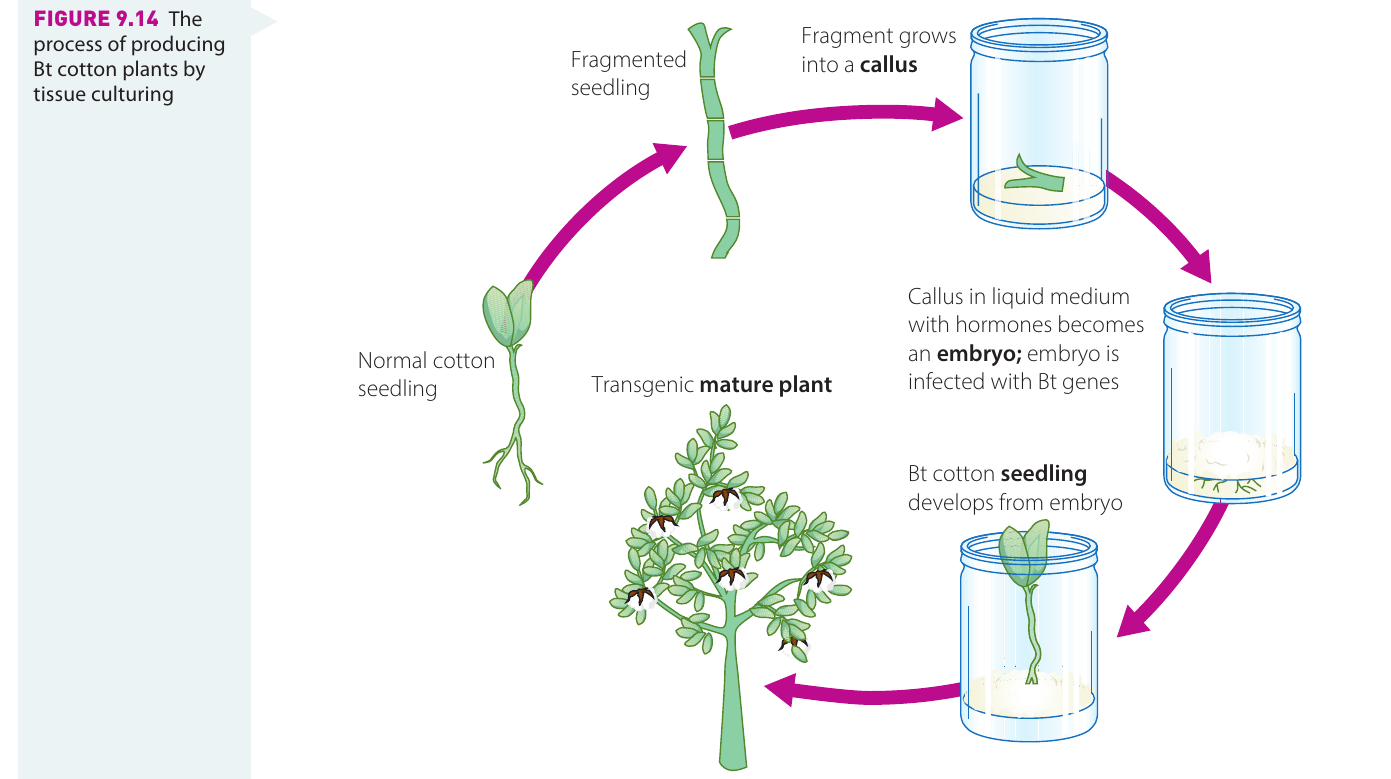
Stage 1: Tissue culture initiation Scientists cut normal cotton seedlings into small pieces and place them on a solid growth medium. After approximately six weeks, these pieces develop into masses of undifferentiated cells called calluses.
Stage 2: Embryo formation The callus cells are transferred to a liquid medium containing hormones that stimulate them to develop into cotton plant embryos.
Stage 3: Gene extraction Using restriction enzymes, scientists extract the Bt gene from the genome of Bacillus thuringiensis bacteria.
Stage 4: Vector preparation A second bacterium, Agrobacterium tumefaciens, serves as the vector. This bacterium naturally causes crown gall disease in plants and has the ability to inject genes into plant cells.
Stage 5: Gene transfer Cotton embryos are dipped in a solution containing Agrobacterium bacteria carrying the Bt gene. The vector bacteria inject the Bt gene into the cotton cells.
Stage 6: Selection and growth Embryos that successfully incorporated the Bt gene are grown in tissue culture, then transferred to solid medium where they germinate. The resulting seedlings are planted in pots and grown in glasshouses, producing the first generation of transgenic cotton plants.
Benefits of Bt cotton
Note
Advantages of Bt Cotton Technology:
- Reduced pesticide use: Cotton growers in New South Wales and Queensland now spray occasionally rather than numerous times per season
- Narrow-spectrum control: Only targeted pests are affected, not beneficial insects like ladybirds and wasps
- Reduced resistance development: Bollgard II cotton contains two different toxic proteins, making it highly unlikely that caterpillars will develop resistance to both
- Environmental protection: Less chemical pesticide in the environment
Resistance management
Note
Preventing Resistance Development:
To prevent resistance development, farmers implement several strategies:
- Growing Bollgard II cotton with two different insecticidal genes
- Planting "refuge crops" (such as pea plants) nearby, allowing moths with one resistance allele to breed with non-resistant moths
- This maintains genetic diversity and prevents the accumulation of double-recessive resistance alleles
Impact on genetic diversity
In the short term, creating transgenic species increases genetic diversity by introducing new gene combinations across species boundaries. This can help organisms survive previously lethal conditions. However, long-term concerns exist about potential reduction in genetic diversity if original genetic material is lost or replaced.
Medical uses of transgenic organisms
Knock-out mice
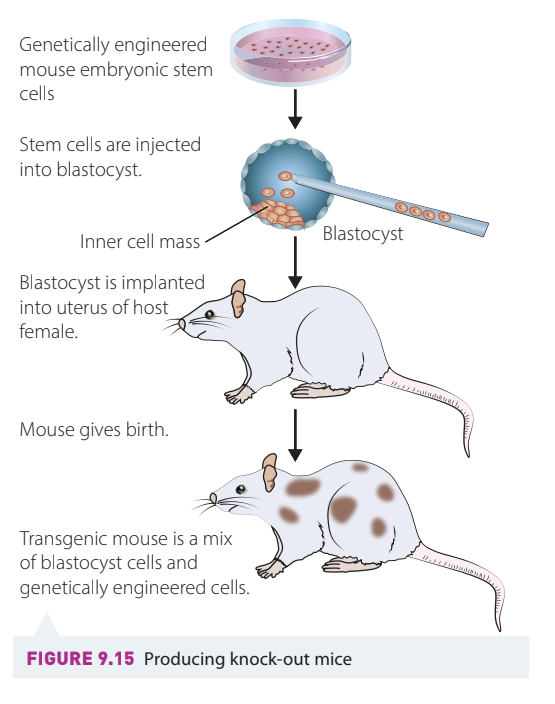
Knock-out mice are transgenic mice in which scientists have inactivated (or "knocked out") a specific gene. This technique, developed by Mario R. Capecchi (who won the 2007 Nobel Prize in Physiology or Medicine), helps researchers understand gene function.
Example
Worked Example: Producing Knock-out Mice
Step 1: Scientists genetically engineer mouse embryonic stem cells, inactivating the target gene
Step 2: These modified stem cells are injected into a mouse blastocyst (early embryo)
Step 3: The blastocyst is implanted into a surrogate mother mouse
Step 4: The resulting offspring are chimeric (containing both modified and normal cells)
Step 5: Transgenic mice with modified reproductive cells are cross-bred to produce offspring that are pure-breeding for the knocked-out gene
By observing how mice with knocked-out genes differ from normal mice in behaviour and physiology, researchers can infer the function of those genes.
Note
Research Applications of Knock-out Mice:
Knock-out mice are used to study:
- Cancer (e.g., mice lacking tumour suppression genes)
- Obesity
- Heart disease
- Diabetes
- Alzheimer's disease
- Parkinson's disease
Mice are ideal research models because their tissues, organs, and genes are similar to those of humans.
Vaccine production using recombinant DNA
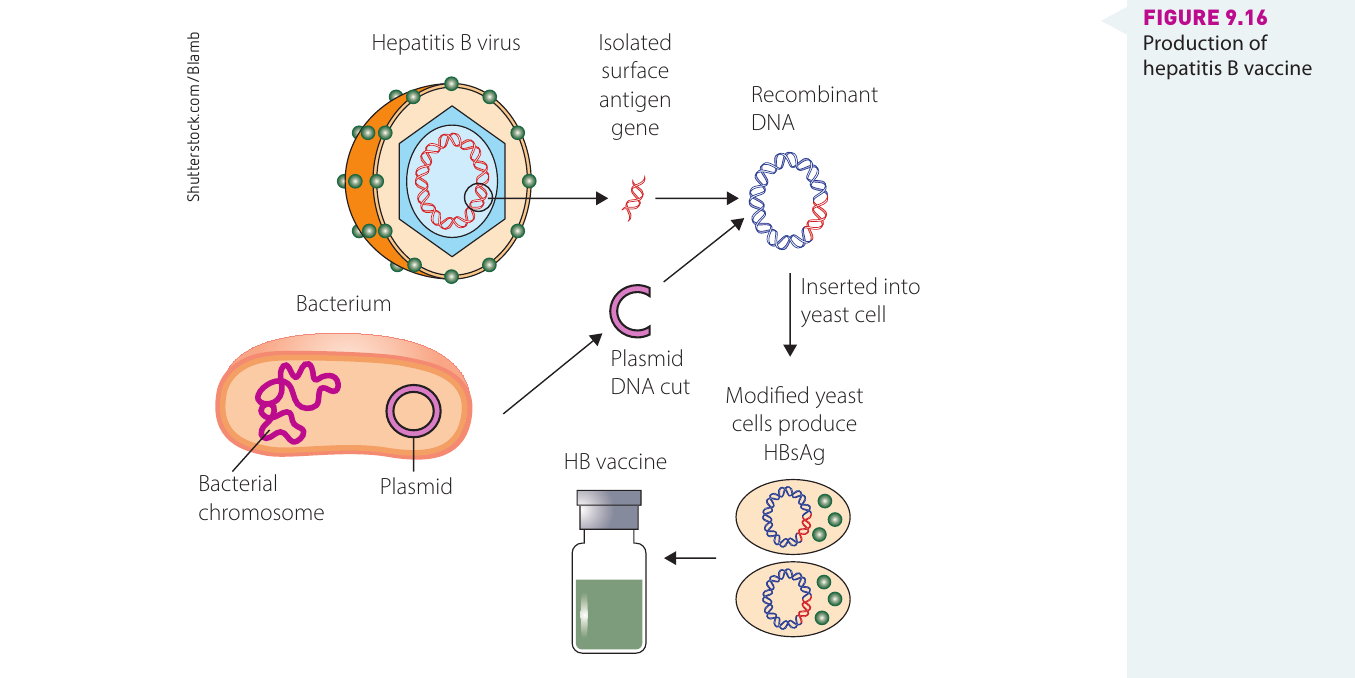
Recombinant DNA technology has revolutionised vaccine production. Instead of using whole disease-causing organisms, scientists can select and use only the gene that codes for a specific antigen.
Example
Worked Example: Hepatitis B Vaccine Production
Step 1: Scientists isolate the gene for the hepatitis B surface antigen from the virus
Step 2: This gene is inserted into a plasmid vector
Step 3: The recombinant plasmid is introduced into yeast cells
Step 4: The yeast cells are cultured and multiply
Step 5: The cells produce the hepatitis B surface antigen (HBsAg)
Step 6: The antigen is extracted and purified for use as a vaccine
Note
Advantages of Recombinant Vaccines:
- Low risk of side effects (no live virus involved)
- Relatively cheap to produce
- Suitable for use in developing countries
- Can be produced quickly and efficiently
Current research: Scientists are developing recombinant DNA vaccines against malaria and cattle tick using similar approaches.
Insulin production
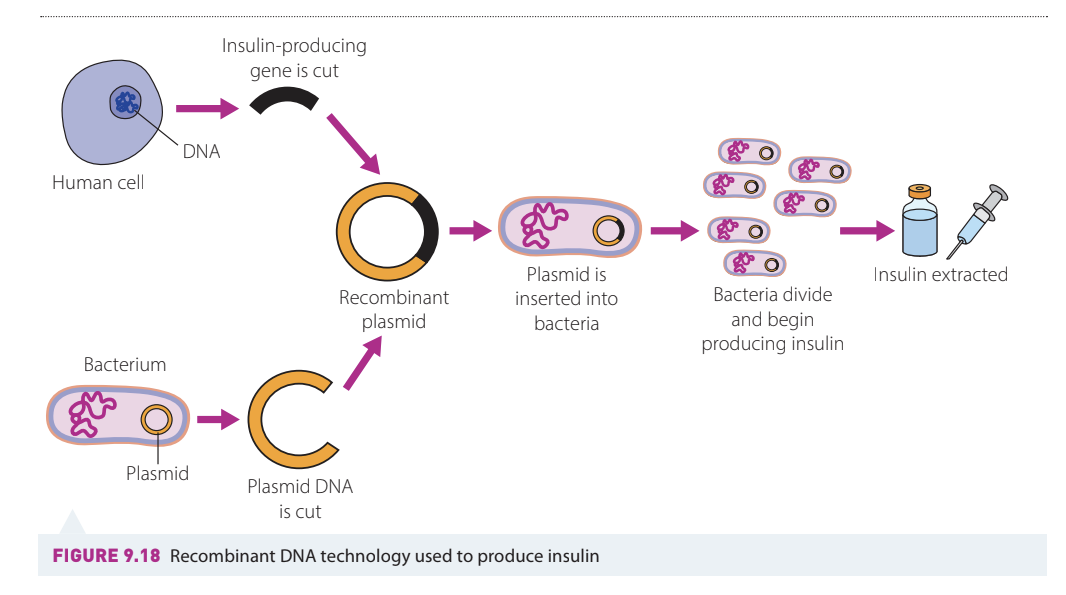
Before 1982, people with diabetes were treated with insulin extracted from pigs and cows. The development of Humulin (human insulin produced through recombinant DNA technology) transformed diabetes treatment.
Example
Worked Example: Producing Human Insulin
Step 1: The human insulin gene is extracted from human cells
Step 2: A bacterial plasmid is isolated and cut with restriction enzymes
Step 3: The insulin gene is cut with the same restriction enzyme
Step 4: The gene is inserted into the plasmid, creating recombinant DNA
Step 5: The recombinant plasmid is inserted into bacterial cells
Step 6: The bacteria multiply rapidly, producing many copies
Step 7: The bacteria express the human insulin gene, producing insulin protein
Step 8: The insulin is extracted and purified for medical use
Note
Benefits of Recombinant Human Insulin:
- Better tolerated by diabetic patients than animal insulin
- Produced quickly and efficiently
- Consistent quality
- Unlimited supply potential
Monoclonal antibodies (MABs)
Monoclonal antibodies are laboratory-produced molecules that can mimic the immune system's ability to recognise and target specific proteins. They are created by cloning a single type of antibody-producing cell.
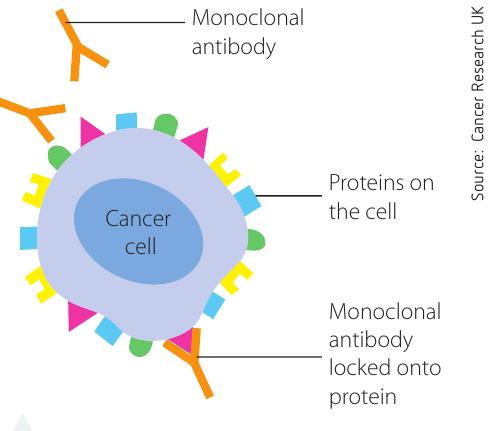
MABs are designed to recognise specific protein markers on the surface of cells. In cancer treatment, they work through multiple mechanisms:
Note
How MABs Work in Cancer Treatment:
- Some MABs activate the immune system to attack cancer cells
- Some block signals that allow cancer cells to divide
- Some deliver drugs or radiation directly to cancer cells
- Some prevent cancer cells from forming blood vessels
Production: MABs are grown either in laboratory cultures (in vitro) or in the stomach lining of mice.
Administration: Cancer patients typically receive MABs intravenously (through a vein) in combination with other treatments.
Advantages:
- Highly specific to target cells
- Can be designed for different types of cancer
- Generally better tolerated than traditional chemotherapy
- Can enhance the effectiveness of other treatments
Xenotransplantation
Xenotransplantation involves using organs from animals for transplantation into humans. This technology addresses the critical shortage of human organs available for transplantation.
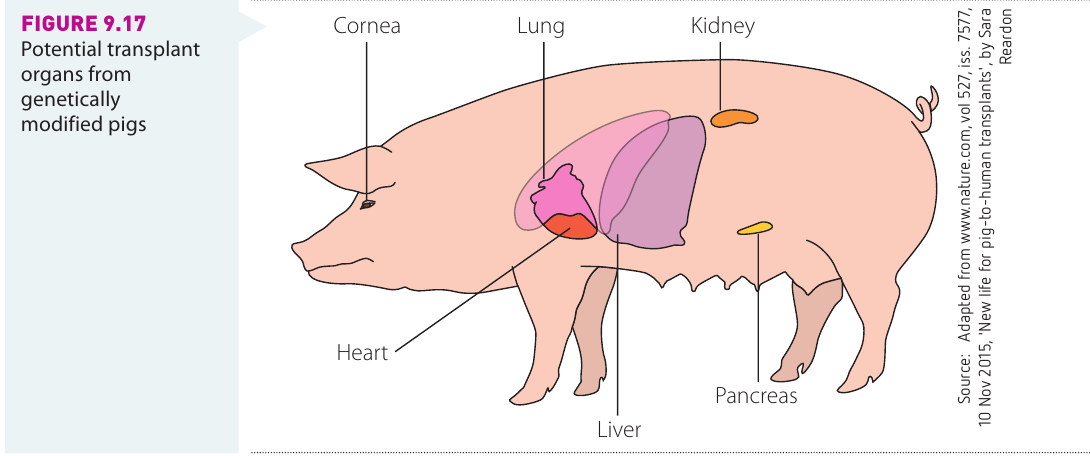
The challenge: Human immune systems recognise animal organs as foreign and attack them, causing organ rejection.
The solution: Scientists are creating transgenic pigs with human complementary surface markers (proteins on cell surfaces). These proteins help identify cells and can reduce the activation of the rejection response.
Note
Potential Organs from Transgenic Pigs:
- Corneas
- Lungs
- Heart
- Liver
- Kidneys
- Pancreas
Benefits:
- Reduced waiting times for organ transplants
- Potentially unlimited supply of organs
- Organs can be prepared in advance with genetic modifications to reduce rejection
Benefits of genetic technologies
Agricultural benefits
Genetic technologies enable the development of crops with enhanced characteristics that address global food security challenges.
Note
Improved Crop Varieties:
- Environmental adaptability: Plants suited to high salinity, drought, or extreme temperatures
- Pest resistance: Reduced need for chemical pesticides (e.g., Bt cotton)
- Increased productivity: Higher yields on marginalised land
- Reduced post-harvest losses: Better storage characteristics
Enhanced nutritional value:
Scientists have created genetically modified plants with improved nutritional profiles that can help address malnutrition in developing regions.
Note
Nutritional Enhancements:
GM plants can have:
- Higher protein content (e.g., modified rice)
- Increased iron content
- Enhanced lipid content in starch-rich plants, improving nutritional value and energy density
Multiple applications: High-lipid-content plants can be used for:
- Improved animal feed
- Biofuel production
- Industrial oil production
Animal food sources:
Genetically modified animals are being developed for food production. For example, GM Atlantic salmon has been approved for human consumption in the USA, modified to grow faster and larger than natural stock by incorporating DNA from Chinook salmon.
Medical benefits
Genomics in healthcare:
The study of genomics (analysing all DNA in a cell and how genes function) is transforming medical care through personalised approaches to treatment.
Note
Applications of Genomics in Healthcare:
- Potential for individualised treatments based on genetic profiles
- Applications in oncology (cancer treatment)
- Applications in pharmacology (drug development and selection)
- Diagnosis and treatment of rare diseases
- Improved diagnosis of infectious diseases
Pharmaceutical production:
Genetic engineering provides efficient methods to produce valuable medical products at scale.
Note
Key Medical Products from Genetic Engineering:
- Insulin (Humulin): Produced through recombinant DNA technology since 1982, better tolerated than animal-derived insulin
- Blood-clotting factors: Transgenic sheep in Australia produce clotting factors in their milk for treating haemophilia patients
- Vaccines: Recombinant vaccines for hepatitis B, with research ongoing for malaria and other diseases
Cancer treatment:
Monoclonal antibodies represent a major advance in cancer therapy, offering targeted treatment with fewer side effects than traditional chemotherapy.
Research applications:
Note
How Transgenic Organisms Aid Research:
Transgenic organisms help scientists:
- Understand how genes regulate body functions
- Test potential new drugs safely
- Study disease mechanisms
- Develop new treatments
Industrial benefits
Environmentally friendly production:
Research projects explore using GM plants to produce compounds that can replace non-renewable resources and reduce environmental impact.
Note
Industrial Applications of GM Plants:
Genetic technologies enable production of:
- Biofuels
- Biodegradable plastics
- Paints and coatings
- Paper products
- Textiles
Example
Example: CSIRO Potato Research
Scientists have developed potato plants producing modified starch useful for manufacturing:
- Paper products
- Textiles
- Adhesives
Enzyme production:
Recombinant DNA techniques enable efficient production of enzymes for the food industry with significant advantages over traditional methods.
Note
Benefits of Recombinant Enzyme Production:
- Used in dairy production
- Used in brewing
- Advantages include purity (no contaminating substances) and specificity (targeted to particular substrates)
- Faster production than traditional methods
Environmental remediation:
Researchers are developing genetically engineered plants and bacteria (such as E. coli) that can help clean up contaminated environments.
Note
Applications in Environmental Cleanup:
GM organisms can:
- Absorb heavy metals like mercury from contaminated sites
- Aid in cleaning up polluted mine sites
- Reduce harm to local ecosystems
- Provide cost-effective remediation solutions
Remember!
Summary
Key Points to Remember:
-
Recombinant DNA technology combines genetic material from different sources by using restriction enzymes to cut DNA, creating sticky ends that can join together with DNA ligase.
-
Four methods deliver genes into cells: micro-injection (direct injection into nucleus), biolistics (gene gun using coated particles), electroporation (electrical pulses creating pores), and transduction (using viral or bacterial vectors).
-
Transgenic organisms contain genes from other species and pass these to offspring, while gene therapy inserts healthy genes into body cells only, without affecting future generations.
-
Agricultural applications include pest-resistant crops like Bt cotton, drought-tolerant plants, and nutritionally enhanced food sources, all contributing to sustainable food production.
-
Medical applications range from producing pharmaceuticals like insulin and vaccines to developing monoclonal antibodies for cancer treatment and creating knock-out mice for disease research.