Cloning (HSC SSCE Biology): Revision Notes
📚Revision Notes
Cloning
Cloning represents a significant advancement in genetic technology, offering a more precise alternative to traditional selective breeding methods. Unlike selective breeding, which relies on unpredictable outcomes when crossing organisms, cloning allows scientists to create exact genetic copies with complete certainty.
What is cloning?
Cloning is the process of creating a genetically identical copy of an organism or gene. This technology eliminates the uncertainty inherent in selective breeding by producing organisms or genetic material that are exact replicas of the original. The key difference is that whilst selective breeding combines genes from two parents with unpredictable results, cloning produces organisms with identical DNA to a single source.
Note
The term "genetically identical" means that the cloned organism shares the exact same DNA sequence as its parent organism, making them genetic twins rather than parent and offspring.
Types of cloning
There are two primary forms of cloning used in modern biotechnology, each serving different purposes in research and agriculture.
Gene cloning
Gene cloning operates at the cellular level, focusing on creating multiple identical copies of a specific gene rather than an entire organism. Scientists use this technique when they need large quantities of a particular gene for research purposes or biotechnological applications, such as producing insulin on an industrial scale.
The technique is essential for genetic engineering because researchers require numerous copies of genes to study their function, create genetically modified organisms, or manufacture important proteins for medical use.
Note
Industrial Applications
Gene cloning has revolutionised medicine by enabling mass production of vital proteins like insulin, growth hormones, and clotting factors that were previously difficult and expensive to obtain.
Whole-organism cloning
Whole-organism cloning, also known as reproductive cloning, creates an entire organism that is genetically identical to another. This process uses somatic cells (body cells, not sex cells) from a mature organism as the genetic source. Because the offspring develops from a single parent's genetic material without fertilisation, this represents an artificial form of asexual reproduction and is classified as a reproductive technology.
Important
Key Distinction
Whole-organism cloning is fundamentally different from sexual reproduction because it produces offspring from only one parent without fertilisation, resulting in organisms that are genetically identical to the parent rather than a unique combination of two parents' genes.
Other specialised forms include cell cloning for unicellular organisms and molecular cloning used in recombinant DNA research, but these are less commonly discussed in basic biology.
Gene cloning process
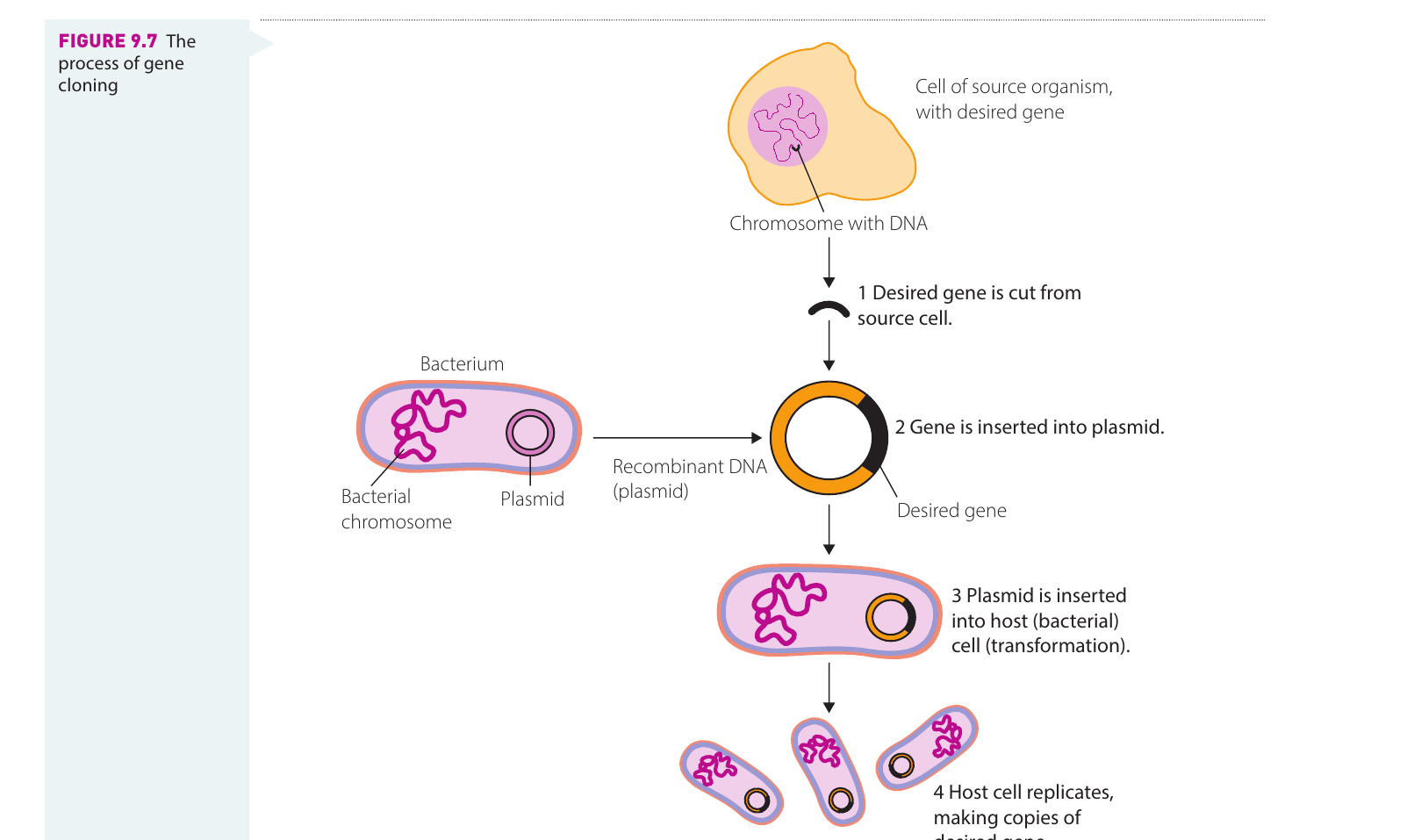
The gene cloning process involves carefully extracting a desired gene from one organism and inserting it into another, where it can be replicated many times. This technique has revolutionised biotechnology by enabling mass production of important proteins and hormones.
The process follows four main steps:
Step 1: Gene extraction - Scientists identify and remove the desired section of DNA from the source organism using restriction enzymes. These specialised enzymes, naturally produced by bacteria, act like molecular scissors to cut DNA at specific sequences.
Step 2: Insertion into vector - The extracted gene is joined to a vector DNA molecule, typically a plasmid (a small circular piece of DNA found in bacteria). This joining process, called ligation, uses ligase enzymes to chemically bond the gene to the plasmid, creating what scientists call recombinant DNA.
Step 3: Transformation - The modified plasmid carrying the desired gene is introduced into a host cell, usually a bacterium. This introduction process is called transformation. The host cell accepts the plasmid into its cytoplasm.
Step 4: Replication - As the host cell divides and multiplies, it copies both its own DNA and the vector DNA containing the desired gene. This results in numerous bacterial cells, each carrying copies of the target gene, effectively amplifying the gene many times over.
Example
Worked Example: Gene Cloning for Insulin Production
- Extraction: Scientists isolate the human insulin gene from pancreatic cells using restriction enzymes that cut at specific DNA sequences
- Vector preparation: A bacterial plasmid is cut open using the same restriction enzymes, creating complementary "sticky ends"
- Ligation: The insulin gene is inserted into the plasmid and sealed with ligase enzymes, creating recombinant DNA
- Transformation: The recombinant plasmid is introduced into bacterial cells
- Replication: As bacteria multiply, they produce millions of copies of the insulin gene and synthesise insulin protein
- Harvest: The insulin is collected and purified for medical use
Result: Millions of bacteria, each producing human insulin, providing a sustainable and ethical source of this life-saving medication.
Polymerase chain reaction (PCR)
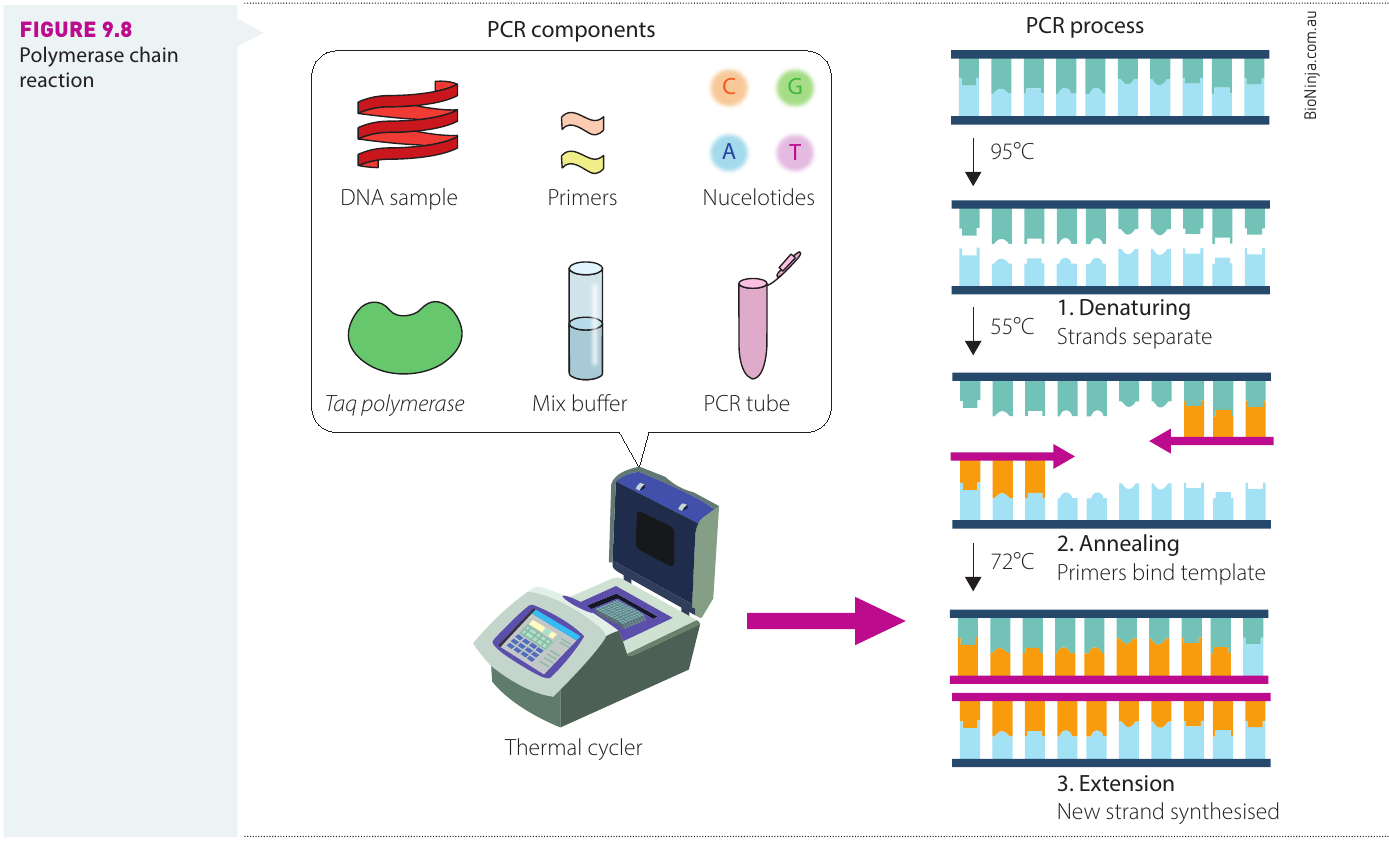
Polymerase chain reaction represents an alternative approach to gene cloning that occurs in vitro (in a test tube) rather than inside living organisms. PCR has become widely used in research laboratories because it can rapidly amplify specific DNA sequences, creating millions of copies from a tiny sample. The technique finds applications in forensic science, medical diagnostics, and evolutionary research.
The PCR process requires several components: the original DNA sample, short DNA sequences called primers that mark the region to be copied, free nucleotides (, , , ) to build new DNA strands, and a special heat-resistant enzyme called Taq polymerase. These components are placed in a thermal cycler machine that repeatedly changes temperature to drive the reaction.
Note
Why Taq Polymerase?
Taq polymerase comes from Thermus aquaticus, a bacterium that lives in hot springs. This enzyme remains functional at high temperatures, making it perfect for PCR where temperatures reach . Regular enzymes would denature and stop working at these temperatures.
PCR operates through three distinct stages that repeat in cycles:
Denaturing () - The high temperature breaks the hydrogen bonds holding the two DNA strands together, separating them into single strands. This exposes the genetic sequence that needs to be copied.
Annealing () - At this lower temperature, the primers attach to complementary sequences on the single DNA strands, marking the specific region to be amplified.
Extension () - The Taq polymerase enzyme works at this temperature, using the free nucleotides to build new complementary DNA strands, starting from the primers and extending along the template.
Each complete cycle doubles the amount of target DNA, so after cycles, the original sequence has been amplified over a million times. After cycles, amplification exceeds a billion copies.
Important
Exponential Amplification
PCR amplification is exponential, not linear. The formula is where is the number of cycles:
- After 10 cycles: copies
- After 20 cycles: copies
- After 30 cycles: copies
This exponential growth is what makes PCR so powerful for amplifying tiny DNA samples.
Whole-organism cloning
The development of whole-organism cloning marked a revolutionary moment in biotechnology. The birth of Dolly the sheep on 5 July 1996 at the Roslin Institute in Edinburgh, Scotland, represented the first time scientists successfully cloned a mammal from an adult cell. What made this achievement particularly remarkable was that Dolly developed from cells taken from the udder of a six-year-old sheep, not from an embryo.
Whilst embryo-splitting to create identical twins occurs naturally and can be replicated relatively easily in laboratories, cloning from adult cells presents significant technical challenges. The main difficulty lies in the fact that adult cells have already undergone differentiation – they have become specialised for specific functions. During this specialisation, certain genes, particularly those controlling early development, become permanently 'switched off'. To clone from adult cells, scientists must reprogram these differentiated cells, reactivating the developmental genes that have been shut down.
Important
The Differentiation Challenge
Adult cells are specialised – a skin cell cannot naturally become a brain cell because developmental genes are switched off during differentiation. Cloning from adult cells requires reversing this process, essentially "reprogramming" the cell to behave like an embryonic cell again. This is extremely difficult and explains why cloning from adult cells has such low success rates.
Examples of cloned organisms
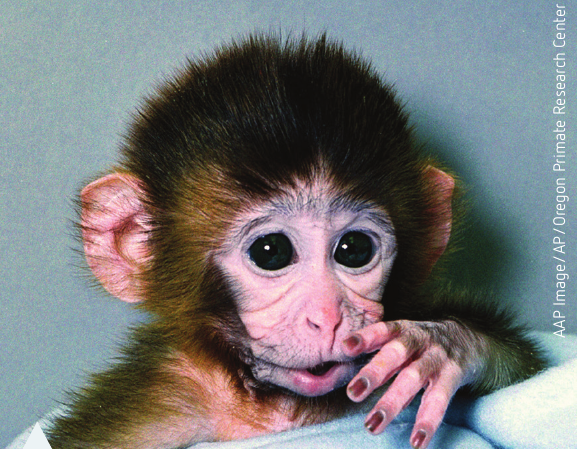
Following the success with Dolly, which required approximately 276 attempts, scientists have cloned numerous other mammals. Tetra, a rhesus macaque born in , became the first primate to be cloned, achieved through embryo-splitting rather than adult cell cloning.
In , Prometea became the first cloned horse, born in Italy. However, cloning remains controversial in horse racing, where international rules prohibit artificial insemination and fertility treatments for breeding, making it unlikely that cloned horses will be accepted in competitive racing.
Agriculture represents the most common application for animal cloning. Japanese supermarkets stock beef from cloned cattle, whilst cloned plants like seedless grapes are consumed worldwide, demonstrating how cloning has already entered commercial food production.
Note
Cloning Success Rates
The low success rate of cloning (Dolly required 276 attempts) reflects the technical difficulty of reprogramming adult cells. Many cloned embryos fail to develop properly, and those that do often experience health problems. This is why cloning remains expensive and controversial.
Somatic cell nuclear transfer (SCNT)
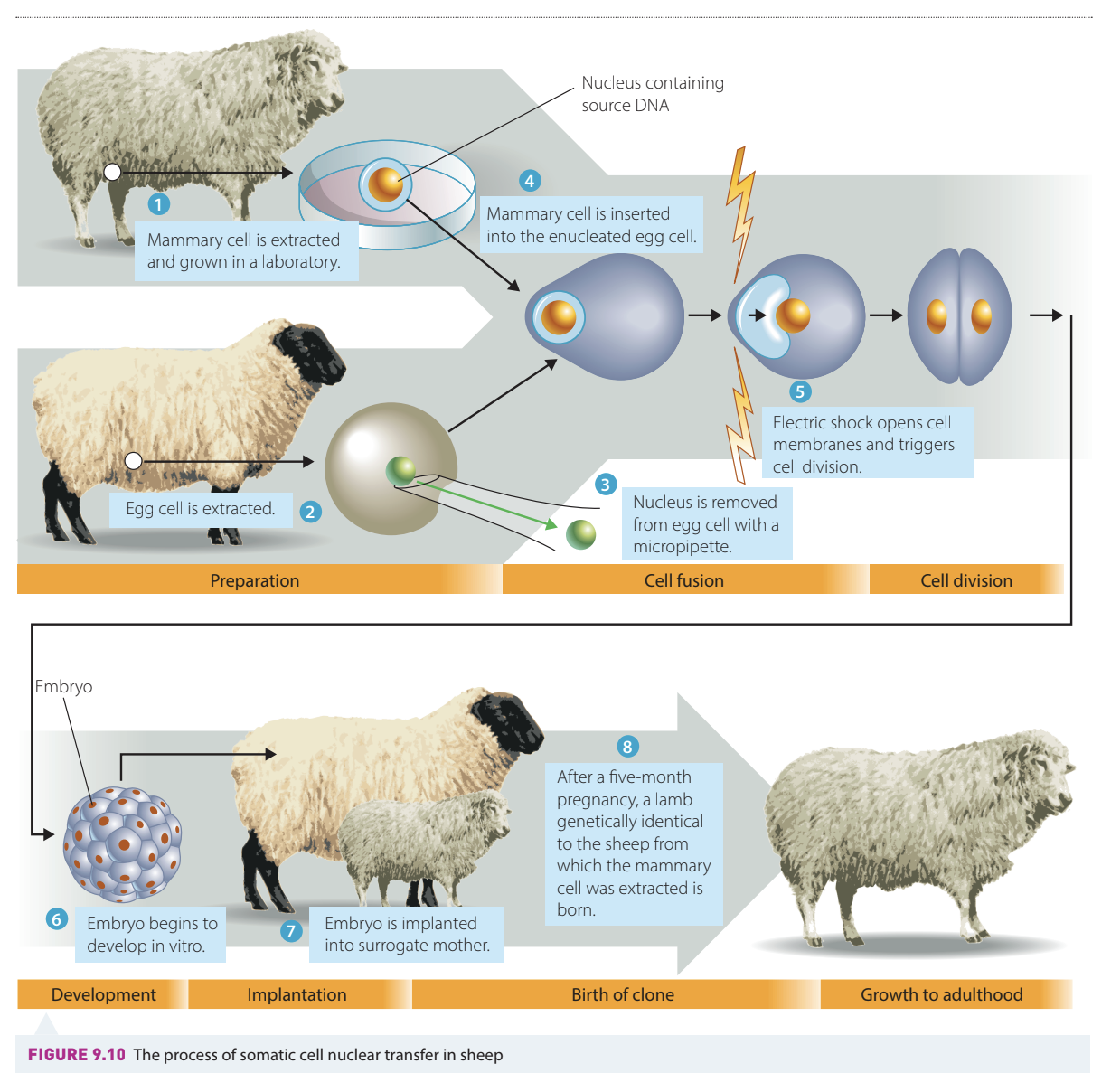
The technique used to create Dolly, known as somatic cell nuclear transfer or SCNT, requires three different animals to produce one clone: a nucleus donor, an egg donor, and a surrogate mother.
Ian Wilmut and his research team at the Roslin Institute developed the following SCNT procedure:
Cell extraction and preparation - Cells were removed from the mammary gland (udder) of a six-year-old ewe, designated as sheep . These cells were deliberately starved of nutrients to halt their division cycle, preparing them for the cloning process.
Enucleation - An unfertilised egg cell was taken from a second sheep (sheep ). The nucleus of this egg, containing the egg donor's genetic material, was carefully removed using a micropipette. This process is called enucleation, leaving an empty egg cell with cytoplasm but no nuclear DNA.
Cell fusion - The complete udder cell from sheep (containing its nucleus) was injected into the enucleated egg from sheep . Scientists then applied an electric shock to the combined cells. This electrical stimulus caused the cell membranes to fuse together and triggered the cell to begin dividing, just as a fertilised egg would.
Embryo development and implantation - The fused cell began dividing through mitosis, developing into an embryo. When the embryo reached the appropriate stage, it was implanted into the uterus of a third sheep (sheep ), who served as the surrogate mother.
Birth and genetic identity - After a normal five-month pregnancy, the surrogate gave birth to Dolly. Critically, Dolly was genetically identical to sheep 1 (the nucleus donor), not to the egg donor or surrogate mother. This is why Dolly was considered a genetic twin of sheep rather than her offspring – they shared identical nuclear DNA.
Important
Understanding Genetic Identity in SCNT
In SCNT, the cloned organism inherits its nuclear DNA from the nucleus donor (sheep 1), NOT from the egg donor (sheep 2) or surrogate mother (sheep 3). This is because:
- The egg donor's nucleus (containing her DNA) was removed during enucleation
- The surrogate mother only provides the environment for development
- All nuclear DNA comes from the nucleus donor's somatic cell
Therefore, Dolly was a genetic twin of the nucleus donor, sharing 100% of her nuclear DNA with sheep 1.
Artificial embryo twinning
An alternative and less expensive cloning technique involves artificial embryo twinning. Shortly after an egg is fertilised naturally, but before the embryonic cells begin specialising, scientists split the early embryo into two separate groups of cells in the laboratory. Each group is then implanted into a surrogate mother, where they develop independently. Because both embryos originated from the same fertilised egg before cell differentiation occurred, the resulting offspring are genetically identical twins.
This technique is extensively used in cattle breeding because it is more economical than SCNT and has a higher success rate, allowing farmers to produce multiple copies of animals with desirable characteristics.
Note
Natural vs Artificial Twinning
Artificial embryo twinning mimics what happens naturally when identical twins form – an early embryo splits into two groups of cells that develop separately. The key difference is that scientists control when and how the splitting occurs, ensuring both embryos can develop successfully.
Plant cloning
Plant cloning has a much longer history than animal cloning and remains common practice in horticulture. The simplest method involves taking a cutting from an existing plant and encouraging it to develop roots and grow into a new, independent plant. Both the original plant and the new plant are genetically identical because they share the same DNA. This technique, called plant propagation, has been used for centuries, with grape vine propagation dating back to early European civilisation. Plant propagation offers several advantages: it preserves desirable varieties exactly and often produces mature plants faster than growing from seeds.
Tissue culture, also known as micropropagation, represents a more sophisticated plant cloning technique. Scientists remove small pieces of plant tissue and culture them in sterile conditions on solid growth medium or in nutrient-rich liquid broth. Under carefully controlled conditions, these tissue samples develop into complete plants that are genetically identical to the parent. This method allows mass production of plants with specific characteristics.
Note
Why Plant Cloning is Easier
Plant cells retain the ability to develop into complete organisms throughout the plant's life – this property is called totipotency. Unlike animal cells, which become highly specialised and lose their developmental flexibility, plant cells can be relatively easily reprogrammed to grow into new plants. This is why plant cloning has been successful for centuries while animal cloning remains technically challenging.
Ethical considerations in cloning
Cloning raises important ethical questions that society must address. It is essential to recognise that ethical concerns vary depending on which type of cloning is being considered, as gene cloning and whole-organism cloning have quite different implications. Most ethical debates centre on whole-organism and potential human cloning rather than gene or cell cloning.
Important
Context Matters
Not all cloning raises the same ethical concerns. Gene cloning to produce insulin or other medical treatments is widely accepted, whilst whole-organism cloning, especially the potential for human cloning, raises profound moral and ethical questions that society continues to debate.
Animal welfare concerns - Many people already have concerns about how animals are treated in large-scale farming operations. Cloning animals for food production could potentially intensify these welfare issues, as cloned animals may experience health problems and the process itself can be stressful.
Human cloning potential - The same techniques used to clone animals could theoretically be applied to humans. This possibility raises profound moral questions about human identity and individuality, as well as serious legal questions about the rights and status of clones. Religious communities also express concerns about human cloning conflicting with their beliefs about the sanctity of human life.
Religious objections - Some religious groups argue that cloning represents humans "playing God" by artificially creating life. They contend that this crosses ethical boundaries and interferes with natural processes that should remain beyond human control.
Health risks - Cloned animals often experience unforeseen health complications. Dolly the sheep, for instance, developed arthritis and lung disease at a relatively young age. Scientists still don't fully understand all the health risks associated with cloning, making it difficult to predict long-term outcomes.
Economic accessibility - Reproductive cloning remains an extremely expensive procedure due to its low success rate and technical complexity. This high cost means that only wealthy individuals and organisations can access the technology, raising questions about fairness and equal access to potentially beneficial treatments.
Note
Dolly's Health Problems
Dolly developed arthritis at age 5 and lung disease at age 6, dying at age 6.5 years – roughly half the typical lifespan of her breed. While some scientists questioned whether her health problems were due to being cloned from a 6-year-old sheep's cells (suggesting she might have been "born old"), others argued her problems could have been coincidental. This uncertainty highlights how much we still don't understand about cloning's long-term effects.
Impact on genetic diversity
Cloning significantly affects the genetic composition of populations, with both advantages and disadvantages that must be carefully considered.
Advantages of cloning
In agricultural contexts, cloning serves as a powerful form of selective breeding once breeders have identified an "ideal" hybrid organism. The primary advantage lies in eliminating uncertainty – breeders can precisely control which characteristics are reproduced rather than hoping favourable gene combinations appear in offspring. This precision makes cloning more reliable than traditional selective breeding methods.
Cloning also offers efficiency benefits. Desired characteristics can be reproduced rapidly and in large numbers, significantly reducing the time required to establish a population with specific traits. This speed is particularly valuable in commercial agriculture where quick production of high-quality livestock or crops is economically important.
Disadvantages and risks
However, cloning creates serious concerns about genetic diversity. Organisms produced through reproductive cloning derive from only one parent, representing an artificial form of asexual reproduction. This means every clone has identical DNA to its parent. When farmers or breeders clone only a few superior parent organisms to produce many offspring, genetic diversity within the population decreases dramatically.
This reduction in genetic diversity creates vulnerability. If all members of a cloned population are genetically identical, they share the same susceptibilities to diseases and environmental stresses. A pathogen that can infect one individual can potentially infect the entire population equally effectively. Similarly, if environmental conditions change suddenly, the entire population may lack the genetic variation needed to adapt and survive.
Important
The Genetic Diversity Trade-off
Cloning creates a fundamental trade-off between short-term efficiency and long-term resilience:
Short-term benefits: Predictable traits, rapid production, consistent quality
Long-term risks: Reduced adaptability, increased disease vulnerability, potential population collapse
This is why maintaining genetic diversity is crucial – populations need variation to survive unpredictable future challenges.
Through continued cloning and selection, the cloned organisms gradually become predominant in the population whilst natural genetic combinations that weren't selected disappear. This concentrates specific gene combinations within the population, effectively reducing the gene pool. In nature, evolution conserves essential genes – for example, genes coding for cytochromes (proteins crucial for cellular respiration) are preserved because organisms cannot survive without them. However, artificial selection through cloning may eliminate genetic variation that could prove valuable under different circumstances.
The fundamental risk is that genetically uniform populations lack resilience. Natural populations maintain genetic diversity as a form of insurance against unpredictable threats. Cloning, whilst offering short-term advantages in productivity and consistency, potentially compromises long-term survival by creating populations that cannot adapt to new challenges.
Note
Historical Example: The Irish Potato Famine
The Irish Potato Famine (1845-1852) demonstrates the danger of low genetic diversity. Irish farmers relied heavily on a single potato variety that was propagated by cloning (planting pieces of potato). When a disease (potato blight) struck, this genetically uniform population had no resistance, leading to widespread crop failure and famine. This historical tragedy illustrates why genetic diversity matters for population survival.
Summary
Key Points to Remember:
-
Cloning creates genetically identical copies of organisms or genes, eliminating the unpredictability of selective breeding
-
Gene cloning produces multiple copies of specific genes for research and biotechnology applications, whilst whole-organism cloning creates complete organisms genetically identical to a single parent
-
The gene cloning process involves four steps: cutting the gene with restriction enzymes, inserting it into a plasmid vector through ligation, transforming a host cell with the recombinant plasmid, and allowing the host cell to replicate and produce multiple gene copies
-
PCR amplifies DNA exponentially – after cycles, DNA is amplified times, allowing millions of copies to be created from tiny samples
-
Somatic cell nuclear transfer (SCNT) requires three animals – a nucleus donor, egg donor, and surrogate mother – and involves removing the nucleus from an egg cell and replacing it with a nucleus from a somatic cell of the organism to be cloned
-
The cloned organism inherits its nuclear DNA from the nucleus donor only, not from the egg donor or surrogate mother
-
Cloning raises significant ethical concerns including animal welfare, the potential for human cloning, religious objections, unforeseen health risks, and questions about equal access to expensive technology
-
Whilst cloning offers advantages in agricultural efficiency and precision breeding, it reduces genetic diversity within populations, making them vulnerable to diseases and environmental changes that could threaten their survival
-
The trade-off between short-term efficiency and long-term resilience is fundamental to understanding both the benefits and risks of cloning technology