Koch and Pasteur's Contributions (HSC SSCE Biology): Revision Notes
📚Revision Notes
Koch and Pasteur's Contributions
Introduction
During the second half of the 19th century, two scientists revolutionised our understanding of infectious diseases. Robert Koch and Louis Pasteur worked separately but made invaluable contributions to microbiology. Although they used aspects of each other's work in their research, they did not collaborate closely or communicate frequently.
Historical understanding of disease
Before Koch and Pasteur's groundbreaking work, people believed in the theory of spontaneous generation. This theory suggested that life, such as maggots in rotting flesh, arose spontaneously from non-living matter. Although early scientists like Redi and Spallanzani performed experiments showing that living matter must be present before other living things could appear, their work was not widely accepted at the time.
The theory of spontaneous generation remained the most popular explanation for disease and decay until Pasteur successfully disproved it. He established the germ theory of disease, which states that:
- Germs (microbes) cause disease
- All micro-organisms come from pre-existing micro-organisms
Note
This fundamental shift from believing in spontaneous generation to accepting the germ theory of disease marked one of the most significant paradigm changes in medical history. It transformed how scientists understood the origin and transmission of diseases.
Robert Koch's contributions
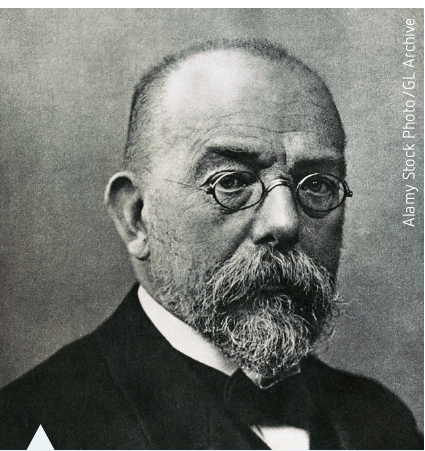
Robert Koch (1843-1910) was a German scientist who trained as a doctor at Göttingen University. He became an expert in bacteriological techniques and made numerous contributions to microbiology that are still relevant today.
The agar plate technique
Koch developed the agar plate technique for growing micro-organisms in laboratory conditions. This method allowed scientists to culture isolated microbes and study them systematically. This technique remains a fundamental tool in microbiology laboratories today.
Note
The agar plate technique was revolutionary because it enabled scientists to grow pure cultures of bacteria in controlled conditions. This meant they could study individual bacterial species in isolation, making it possible to link specific microbes to specific diseases.
Research on anthrax
Koch conducted extensive research on anthrax, a deadly disease affecting livestock. His systematic approach involved:
- Examining blood from sheep that had died from anthrax
- Identifying rod-shaped bacteria in the blood
- Isolating and growing these bacteria in pure cultures
- Injecting the cultured bacteria into healthy sheep
- Observing that these sheep subsequently developed anthrax
- Demonstrating that anthrax spores from pure cultures could cause disease in other animals
This research provided strong evidence for the germ theory of disease by showing that a micro-organism grown outside the body could cause disease when introduced to a healthy host.
Koch's postulates
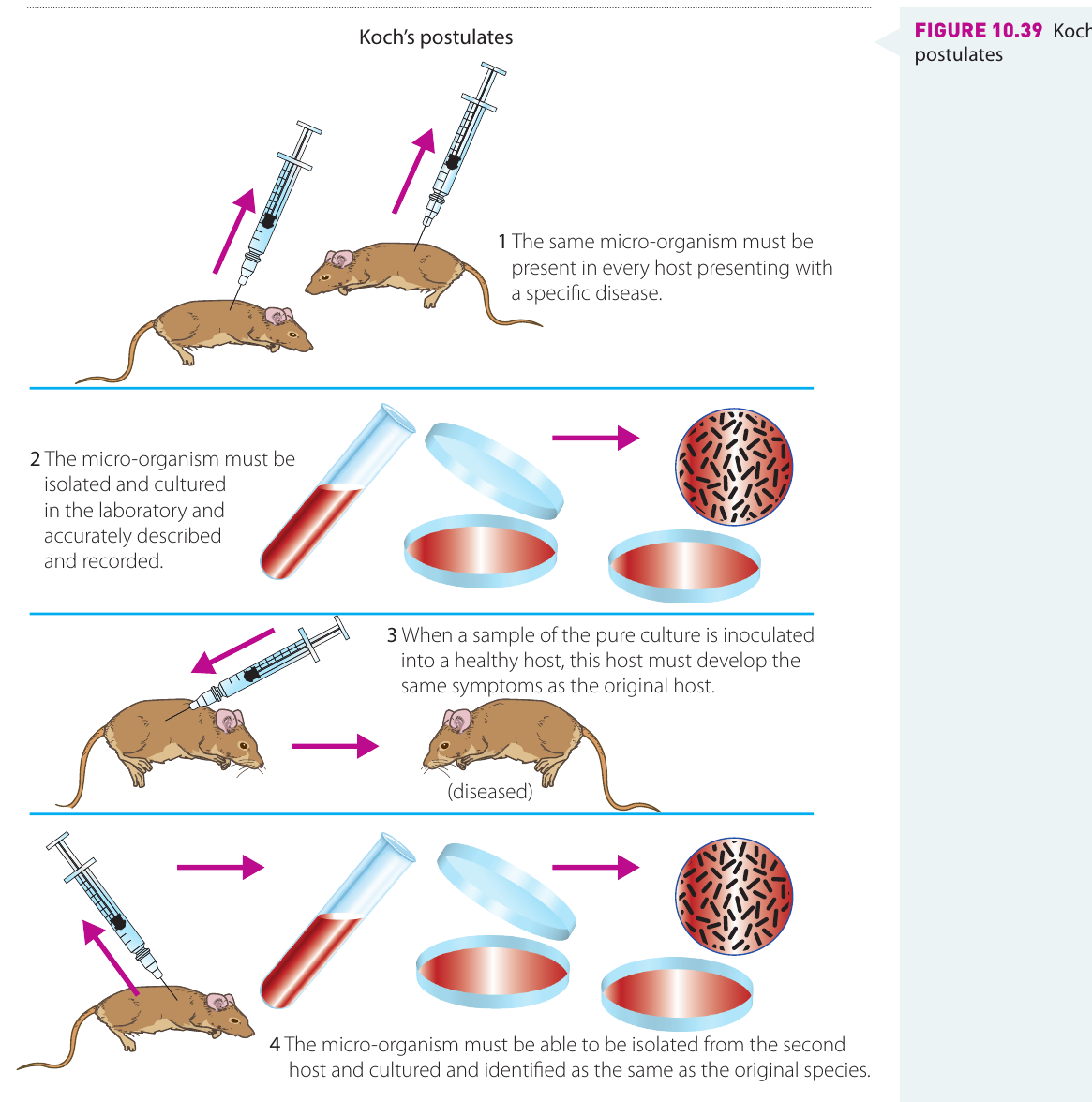
From his anthrax research, Koch determined that each disease is caused by a specific micro-organism. He developed a set of criteria, now called Koch's postulates, to identify the specific micro-organism responsible for a particular disease.
Important
Koch's postulates are four critical criteria still used today in microbiology to establish a causal relationship between a microbe and a disease:
- The same micro-organism must be present in every diseased host
- The micro-organism must be isolated and cultured in the laboratory and accurately described and recorded
- When a sample of the pure culture is inoculated into a healthy host, this host must develop the same symptoms as the original host
- The micro-organism must be able to be isolated from the second host and cultured and identified as the same as the original species
These postulates provide a systematic framework for proving that a specific pathogen causes a specific disease.
Other discoveries
Koch made several other major breakthroughs in identifying disease-causing bacteria:
- He discovered Mycobacterium tuberculosis, the bacterium responsible for tuberculosis
- He identified the bacterium that causes cholera
- He travelled extensively later in his career to study diseases such as bubonic plague and African sleeping sickness
Louis Pasteur's contributions
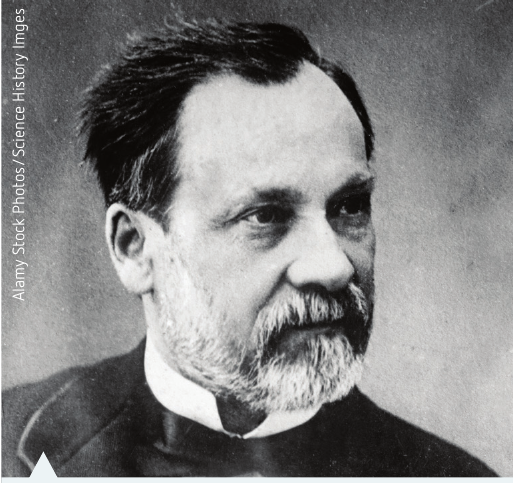
Louis Pasteur (1822-1895) was born in France. Although microbiology was not his original field of study, he is credited with creating the science of microbiology through his rigorous experimental work.
Work on fermentation
At the request of an industrialist named Bigo, Pasteur studied the fermentation of beet juice. He discovered that fermentation was caused by the presence of living organisms - microbes called yeasts. He also found that other micro-organisms were responsible for the souring of alcohol produced during fermentation.
Pasteur was instrumental in discovering that micro-organisms (bacteria) caused wine, beer, and vinegar spoilage. He found that heating these solutions long enough to kill the contaminating bacteria after fermentation prevented spoilage.
Development of pasteurisation
Pasteur's discoveries led to the development of pasteurisation, a process still widely used today. Pasteurisation involves heating products to kill disease-causing micro-organisms, making them safe to consume. This process was initially used in milk production to destroy the tuberculosis bacterium and is now used for many food and beverage products.
Note
Modern applications of pasteurisation:
Pasteurisation has become one of the most important food safety processes in the modern world. Beyond milk, it is now used for fruit juices, beer, wine, canned foods, and many other products. The process typically involves heating to specific temperatures (such as 72°C for 15 seconds for milk) to kill harmful pathogens while preserving nutritional value and taste.
The swan-necked flask experiments
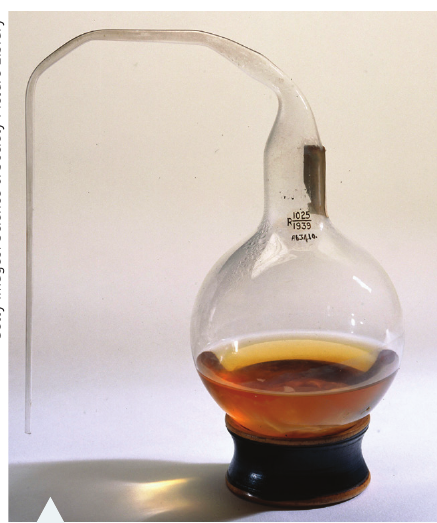
Pasteur discovered that food rotting was due to the activity of living organisms. To provide evidence for the germ theory of disease and disprove spontaneous generation, he designed his famous swan-necked flask experiments.
Example
Worked Example: Pasteur's Swan-Necked Flask Experiment
The experimental setup and procedure:
- Pasteur used flasks with long, drawn-out necks (shaped like swan necks) that were not sealed
- He boiled meat broth in these flasks
- As the flasks cooled, air was drawn in from outside
- Any micro-organisms in the air were trapped in the narrow neck and curve of the glass, unable to reach the broth
- No bacterial or fungal growth occurred in these flasks
- When the curved neck was broken off, exposing the contents to air, bacterial growth occurred
- When a flask was tipped to allow the solution to reach the curve where micro-organisms were trapped, bacterial growth occurred
Conclusion: This experiment demonstrated that organisms that contaminated the broth must be carried in the air and were not spontaneously generated. Remarkably, Pasteur's original flasks are on display at the Pasteur Institute in Paris, and after more than 150 years, the broth in the swan-necked flasks remains free of bacterial growth.
Establishing the germ theory of disease
Through his experiments, Pasteur uncovered the relationship between micro-organisms and disease. As specific bacteria became associated with specific diseases, the spontaneous generation theory became less supported, and the germ theory of disease gained wider acceptance.
Pasteur also:
- Discovered the cause of silkworm disease and devised a test for selecting healthy eggs, saving the silkworm industry
- Investigated anthrax and discovered that animals were contracting the disease from spores in the carcasses of animals that had died from anthrax, even when buried in fields
Development of vaccines
While studying fowl cholera, Pasteur developed a method to attenuate (weaken) bacteria so that when introduced into a host, they prepare the body to recognise and fight the real infection. This led to the development of vaccines.
Important
Key vaccine developments by Pasteur:
- Fowl cholera vaccine: Prevented chickens from developing the disease
- Anthrax vaccine: Successfully tested in a public field trial where all vaccinated animals survived exposure to anthrax, while unvaccinated animals died
- Rabies vaccine: Used on humans for the first time
The principle of immunity: Pasteur established that introducing weakened pathogens into the body could provide protection against disease. This principle of immunity provided an effective way to prevent infectious diseases and forms the basis of modern vaccination programmes.
Summary
Key Points to Remember:
- Koch and Pasteur revolutionised microbiology in the 19th century by establishing that specific microbes cause specific diseases
- Koch's postulates provide four criteria for determining which micro-organism causes a particular disease: the pathogen must be found in all diseased hosts, isolated and cultured, cause disease when introduced to healthy hosts, and be re-isolated from these newly infected hosts
- Pasteur's swan-necked flask experiments disproved spontaneous generation and supported the germ theory of disease by showing that microbes in the air, not spontaneous generation, cause contamination
- Pasteurisation, developed by Pasteur, uses heat to kill disease-causing micro-organisms in food and beverages, making them safe to consume
- Vaccination, pioneered by Pasteur, uses weakened pathogens to establish immunity and prevent infectious diseases