Environmental and Quarantine Methods (HSC SSCE Biology): Revision Notes
📚Revision Notes
Environmental and Quarantine Methods
Introduction to outbreak management
When an infectious disease outbreak occurs, health authorities must carefully evaluate their response strategies. This evaluation process involves collecting detailed data and making systematic observations about several important areas:
- Standard procedures and routines used during the outbreak
- How well medications worked
- Training quality for healthcare staff
- Other practical challenges that arose
This careful analysis helps scientists and health officials improve their response when similar outbreaks happen in the future. The goal is to make disease control more efficient and successful each time.
Note
Why evaluation matters: Learning from past outbreaks helps public health officials develop better protocols, train staff more effectively, and allocate resources more efficiently in future disease emergencies.
What are environmental and quarantine methods?
Environmental methods involve managing and controlling the physical environment to reduce the number of pathogens available for transmission. This includes cleaning, disinfection, proper ventilation, waste disposal, and maintaining hygiene facilities.
Quarantine methods focus on separating infected individuals from healthy people to prevent pathogen transmission. This can involve isolation rooms, restricted movement, and dedicated healthcare staff for infected patients.
Together, these approaches form the foundation of outbreak control - systematic procedures designed to stop disease spread during an epidemic.
Case study: Ebola virus disease 2014-2016
Understanding Ebola virus
Ebola virus disease is a severe and highly contagious illness that causes rapid death. The disease is caused by the Ebola virus, which is a single-stranded RNA (ssRNA) virus with several different subtypes. Despite being extremely dangerous, Ebola is relatively easy to prevent through proper control measures.
Important
Key characteristic: Despite its deadly nature, Ebola is relatively easy to prevent with appropriate control measures, making environmental and quarantine methods highly effective against this disease.
The virus spreads when people have close, direct contact with:
- Body fluids from infected individuals (blood, saliva, vomit, urine, faeces)
- Mucous membranes of infected people
- Items contaminated by these fluids
- Infected individuals during sexual contact
How the 2014-2016 outbreak began
Ebola virus first appeared in Africa in . The large outbreak in West Africa during 2014-2016 appears to have started with Patient Zero - a two-year-old child who died in southern Guinea in December .
The virus most likely transmitted to humans through close contact with wild animals that serve as natural reservoirs for the disease. These reservoir animals include:
- Fruit bats (suspected primary natural reservoir)
- Apes
- Antelope
- Porcupines
Transmission from animals to humans typically occurs when people:
- Consume meat from infected animals
- Handle tissues and fluids from these animals
Note
Cultural transmission factor: Traditional burial rituals involving direct contact with deceased infected individuals became a significant route of transmission during the outbreak. Understanding and addressing cultural practices is crucial for effective disease control.
Incubation period and symptoms
The incubation period (time from infection to symptom onset) ranges from to days.
Initial symptoms include:
- Fever
- Tiredness
- Headache
- Sore throat
The disease then progresses to more severe symptoms:
- Vomiting
- Skin rash
- Diarrhoea
- Bleeding from mucous membranes
- Blood in stools
Note
Why bleeding occurs: The bleeding happens because the Ebola virus damages the liver. A healthy liver produces clotting factors needed for blood coagulation, but when the liver is damaged, these factors aren't produced properly, leading to uncontrolled bleeding.
Clinical management
There is no specific cure for Ebola, so treatment focuses on supportive care - keeping the patient alive while their immune system fights the infection. This includes:
- Fluid replacement: Intravenous or oral fluids to replace losses from vomiting and diarrhoea and maintain blood circulation
- Broad-spectrum antibiotics: Given preventatively to manage potential secondary bacterial infections
- Antipyretics: Medications to reduce fever
- Analgesia: Pain relief medications
The death rate for the 2014-2016 outbreak was approximately 50% among the confirmed cases. Cases were also documented in six countries outside Africa, highlighting the global threat posed by the outbreak.
Control of the epidemic
Preventing pathogen transmission during a serious epidemic requires strict procedures called controls. For the Ebola outbreak, these fell into three main categories.
Administrative controls
These involved the initial organizational response:
- Establishing who was responsible for different aspects of the management strategy
- Coordinating the overall response effort
- Securing funding for the outbreak response
- Setting up command structures for decision-making
Note
First line of defense: Administrative controls provide the organizational foundation that enables all other control measures to function effectively. Without proper coordination and funding, environmental and quarantine measures cannot be implemented successfully.
Environmental and engineering controls
These physical measures helped create safe healthcare environments and reduce pathogen transmission.
Facility provisions:
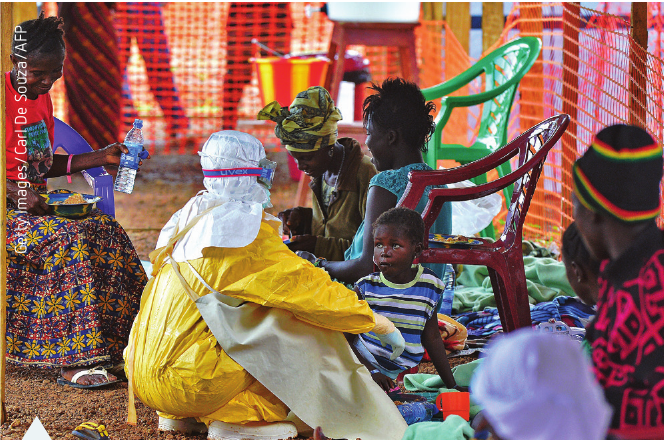
- Creating spaces for barrier nursing (providing patient care under strict infection control conditions)
- Establishing separate work areas for different functions
- Setting up water supplies and hygiene facilities
Hygiene and waste management:
- Hand hygiene stations and protocols
- Safe waste disposal systems using leak-proof bags
- Covered bins for contaminated materials
- Proper ventilation control
- Sterilization procedures for patient care equipment and linen
Personal protective equipment (PPE):
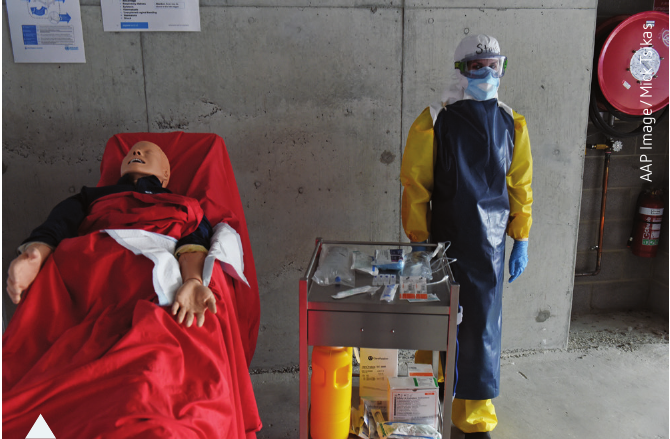
Healthcare workers and visitors needed complete protective gear, including:
- Gown and coveralls
- Gloves
- Face shield
- Waterproof boots
- Head cover
- Respirator
Important
Critical training requirement: All personnel received thorough training on how to correctly put on (don) and remove (doff) this equipment. Improper removal of PPE is a major risk for infection, making this training absolutely crucial for healthcare worker safety.
Quarantine and isolation procedures
These measures separated infected individuals from healthy people to prevent transmission.
Patient isolation:
- Isolating patients in single rooms when possible
- When single rooms weren't available, maintaining at least three metres of space between patient beds
- Assigning the same clinical staff to care for individual patients throughout their illness
- Dedicating medical equipment (such as stethoscopes) to individual patients rather than sharing between patients
Visitor restrictions:
- Limiting all visits except for parents of child patients
- Requiring all visitors to wear appropriate PPE
Safe disposal of sharps:
- Placing all needles and scalpels in puncture-proof containers immediately after use
- This prevented dangerous needle-stick injuries that could transmit the virus to healthcare workers
Important
Common mistake to avoid: Never recap needles or place sharps in regular waste bins. A single needle-stick injury from contaminated equipment can transmit the virus to healthcare workers, potentially causing fatal infection.
Surface decontamination:
- Cleaning and disinfecting contaminated environmental surfaces with 0.5% chlorine solution as soon as possible after patient contact
- Cleaning all surfaces with detergent at least once daily
- Ensuring cleaning staff also wore full PPE during decontamination work
Laboratory safety:
- Healthcare workers wore respirators when using equipment that could aerosolise (disperse through the air) the virus, such as when centrifuging blood samples
- Only trained staff handled samples from infected humans and animals
- Processing all samples in properly equipped laboratories
Disposal of infectious materials:
- Placing all tissues and body fluids in clearly marked, sealed bags
- Incinerating these materials to destroy the virus
Monitoring exposed individuals:
- Isolating any person exposed to the virus
- Monitoring them for 21 days after exposure
- This helped catch new infections early and reduce further transmission
Longer-term prevention measures
Beyond immediate outbreak response, authorities implemented measures to prevent future outbreaks and reduce long-term transmission risks.
Reducing wildlife-to-human transmission
Since wild animals serve as reservoirs for Ebola virus, preventing transmission from animals to humans is crucial:
- Ensuring all meat from potential reservoir animals is thoroughly cooked before consumption
- Wearing gloves when handling these animals
- Addressing poverty, which drives people to hunt reservoir animals for food and to sell as pets
Note
Addressing root causes: Poverty reduction is essential for long-term prevention. When people have alternative food and income sources, they're less likely to hunt and consume reservoir animals, reducing the risk of spillover events from wildlife to humans.
Managing cultural challenges
Cultural beliefs and practices presented significant obstacles to outbreak control:
- Some people avoided hospitals and instead consulted traditional and spiritual healers
- Working with community leaders helped address these concerns and encourage people to seek proper medical care
- Mistrust of governments and foreign healthcare workers led to:
- Destruction of treatment units in some areas
- Attacks on and even murder of healthcare staff
- This remains a major challenge that must be addressed in future outbreaks
Important
Critical lesson: Community engagement and trust-building are as important as medical interventions. Without addressing cultural beliefs and building relationships with local communities, even the best medical responses can fail.
Border control measures
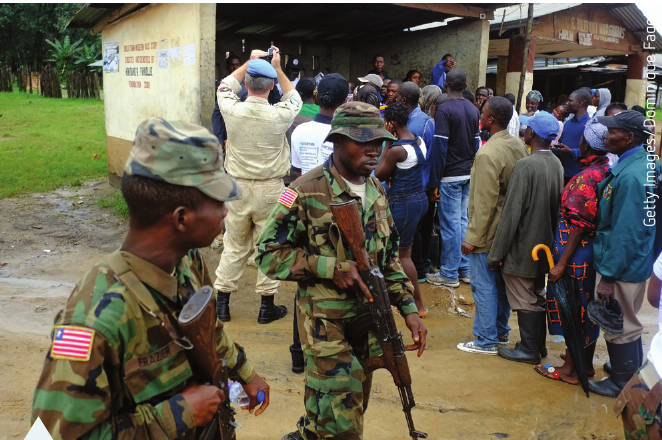
Authorities established border checkpoints with armed guards to prevent people moving in and out of quarantine zones. This helped contain the outbreak to specific geographic areas.
Safe burial practices
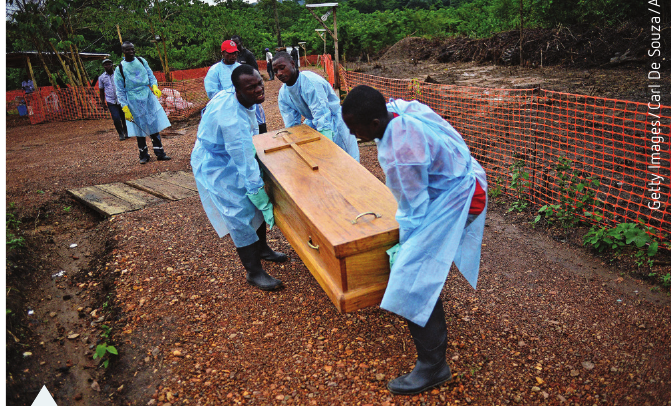
Burial rituals that involved direct contact with infected bodies contributed significantly to disease spread. New protocols established safe burial procedures:
- Trained burial teams wearing full PPE
- Prompt burial of deceased individuals
- Minimizing direct contact with bodies during funeral practices
Post-outbreak measures
Sexual transmission prevention:
Ebola virus can persist in body tissues after recovery, particularly in:
- Testes (in males)
- Eyes
- Nervous system
- Breast milk (can be shed for up to nine months after infection)
- Semen (where virus may persist)
All Ebola survivors and their sexual partners received counselling. They were advised to:
- Use condoms until two negative test results confirmed no virus in semen
- Practice safe sex and good hygiene for 12 months after infection
Quarantine for returning workers:
- Healthcare workers and others returning from Ebola-affected countries underwent mandatory quarantine
- This helped prevent the virus spreading to new countries
Lessons learned
The 2014-2016 Ebola outbreak taught important lessons about epidemic response:
Important
Key lesson for future outbreaks: An earlier and more robust international response might have controlled the epidemic sooner. The appearance of cases in the United States and Europe prompted the international community to respond more vigorously, suggesting that global health threats require immediate, coordinated international action regardless of where cases first appear.
Remember!
Summary
Key Points to Remember:
-
Environmental management reduces the pool of available pathogens by controlling the physical environment through cleaning, disinfection, proper ventilation, and waste disposal.
-
Quarantine measures prevent pathogen transmission from infected to non-infected individuals through isolation, dedicated staff and equipment, and restricted movement.
-
Successful outbreak management requires meticulous planning, including comprehensive education and training for all staff involved in the response.
-
Community cooperation is essential - effective pandemic management needs goodwill and cooperation between the population and health workers, addressing cultural beliefs and building trust.
-
The Ebola epidemic of 2014-2016 demonstrates how combining environmental controls, quarantine measures, and community engagement can successfully limit the spread of even highly infectious viral diseases.