Pharmaceuticals for Infectious Disease (HSC SSCE Biology): Revision Notes
📚Revision Notes
Pharmaceuticals for Infectious Disease
Introduction to chemotherapy and antimicrobial agents
When people hear the word chemotherapy, they often think of cancer treatment. However, in medical terminology, chemotherapy has a broader meaning: it refers to the use of any medication to treat any disease. This approach is particularly important in managing infectious diseases.
Note
While most people associate chemotherapy with cancer treatment, the term actually encompasses all forms of drug-based disease treatment, including the management of infectious diseases.
The chemotherapeutic method for controlling infectious diseases involves using medications to treat infections in humans, animals, and plants. Antimicrobial agents are specially designed drugs that target and control diseases caused by microorganisms (microbes). These agents work by reducing the number of pathogens in infected hosts, which helps limit disease transmission.
Classes of antimicrobial medications
There are four main categories of antimicrobial drugs, each targeting different types of pathogens:
| Class of medication | Pathogens targeted | Examples |
|---|---|---|
| Antibiotics (antibacterials) | Bacteria | Penicillins, tetracyclines, polymixins, sulfonamides, cephalosporins |
| Antivirals/antiretrovirals | Viruses | Tamiflu® (oseltamivir) for influenza (antiviral); Abacavir for HIV/AIDS treatment (antiretroviral) |
| Antifungals | Fungi | Fluconazole, amphotericin B, caspofungin |
| Antiprotozoals | Protozoa | Doxycycline, metronidazole, mefloquine |
Note
Each class of antimicrobial medication has been specifically developed to target the unique biological characteristics of different pathogen types. This specificity is crucial for effective treatment and minimizing side effects on host cells.
Antiviral medications
How antiviral medications work
Antiviral drugs are used to manage viral infections, but it's important to understand that they don't actually kill viruses. Instead, they work by preventing viruses from developing and reproducing inside infected cells. These medications don't cure viral diseases; rather, they slow down the disease progression, giving your body's immune system time to fight the infection effectively.
When taken early in the disease course, antiviral medications can reduce symptom severity and shorten illness duration. They also help prevent viral diseases from spreading to other people, making them valuable tools for controlling epidemics and pandemics.
Managing viral infections in developing countries
In many developing countries, people may carry multiple viruses simultaneously, including hepatitis B, hepatitis C, and HIV. Managing these viral infections presents challenges beyond simply prescribing antiviral drugs.
Important
Major Obstacles to Effective Viral Treatment:
Two critical challenges limit the effectiveness of antiviral therapy in developing countries:
- Access to medications - many people cannot afford or obtain the necessary drugs
- Compliance with treatment regimens - many antiviral drugs must be taken consistently for months or even for life
These barriers significantly impact treatment outcomes and disease control efforts in resource-limited settings.
Development of antiviral drugs
Compared to antibiotics, antiviral medications are relatively recent developments in medical science. The viruses most commonly targeted by antiviral drugs include:
- HIV (Human Immunodeficiency Virus - note that HIV is the virus, while AIDS is the disease it causes)
- Seasonal influenza A
- Herpes viruses
- Hepatitis B and C viruses
Note
Developing antiviral drugs presents unique challenges because viruses use the host's own cells to reproduce. This makes it difficult to create drugs that stop viral replication without also damaging or killing the host cells.
The HIV epidemic in the 1980s sparked a coordinated global research effort that significantly advanced our understanding of viral biology. This research led to breakthroughs in antiviral drug development.
Viral genetics
Understanding viral genetics is essential for developing effective antiviral medications. Viruses vary genetically in the following ways:
- Their genetic material can be either DNA or RNA
- The genetic material can be single-stranded (ss) or double-stranded (ds)
Example
Genetic Material in Common Viruses:
Different viruses contain different types of genetic material:
- The hepatitis B virus contains double-stranded DNA (dsDNA)
- HIV contains single-stranded RNA (ssRNA)
This genetic variation affects how viruses replicate and which antiviral strategies can effectively target them.
Viral replication in host cells
Once scientists better understood the life cycle and genetics of viruses, they identified several stages where antiviral drugs could potentially intervene. The diagram below shows the five main stages of viral replication in a host cell:
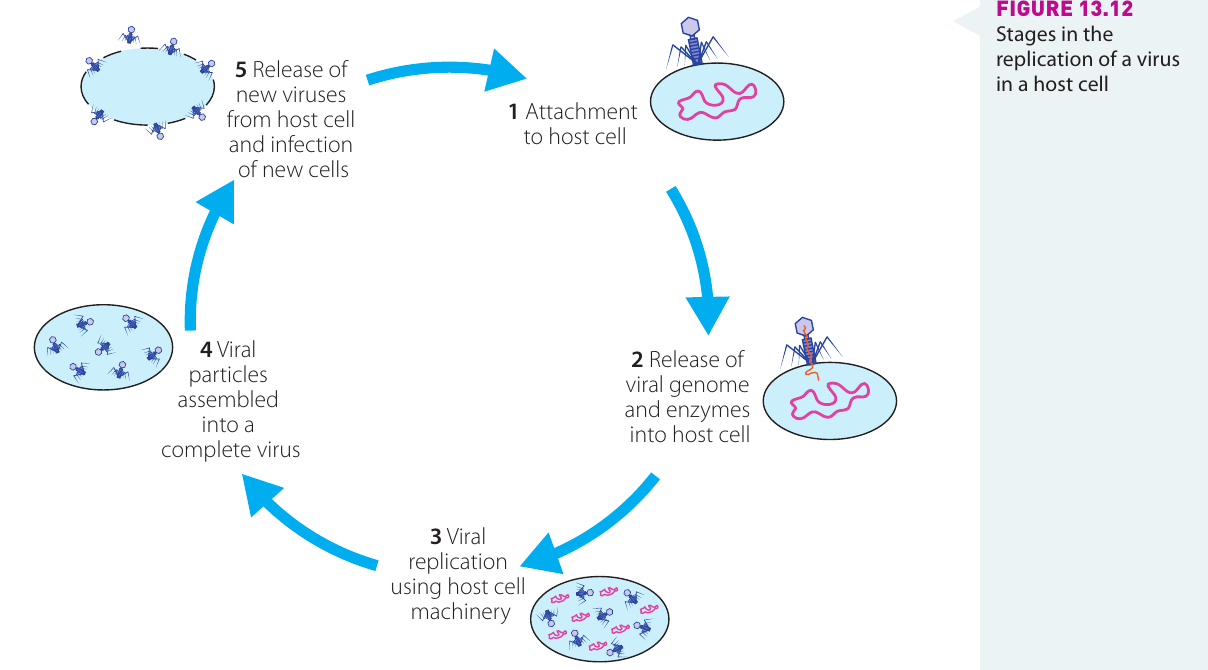
The viral replication cycle consists of:
- Attachment to host cell: The virus binds to specific receptors on the host cell membrane
- Release of viral genome: The virus injects its genetic material and enzymes into the host cell
- Viral replication: The virus uses the host cell's machinery to make multiple copies of its genome
- Assembly: Viral particles are assembled into complete viruses inside the cell
- Release: New viruses burst out of the host cell and go on to infect additional cells
Note
Combination Therapy for Enhanced Effectiveness
Combination therapy (using drugs that target different stages of the viral life cycle) can enhance the effectiveness of antiviral treatment. By attacking the virus at multiple points in its replication cycle, this approach reduces the likelihood of viral resistance developing and improves overall treatment outcomes.
Influenza antivirals available in Australia
Three antiviral medications are registered in Australia for treating influenza:
- Oseltamivir (Tamiflu®)
- Zanamivir (Relenza®)
- Amantadine (Symmetrel®)
These drugs are effective against seasonal influenza A strains. However, scientists remain cautious about their effectiveness against pandemic influenza strains, such as the H1N1 subtype. Research has shown beneficial effects in patients with lower respiratory complications like pneumonia. Studies from the 2009-2011 pandemics showed that Tamiflu® and Relenza® were associated with reduced death rates.
Drug efficacy and timing
The efficacy of a medication refers to its ability to produce the desired outcome. For influenza antivirals, efficacy is greatest when the drugs are taken early in the illness.
Important
Timing is Critical for Antiviral Effectiveness
The timing consideration is important because many countries stockpile these medications in preparation for potential pandemics. However, concerns exist about the safety of administering these drugs widely to large populations during outbreaks. Maximum effectiveness requires early administration, ideally within 48 hours of symptom onset.
Antibiotics
How antibiotics work
Antibiotics are medications designed to control bacterial infections. They work through two main mechanisms:
- Killing bacteria directly (bactericidal action)
- Slowing down bacterial growth (bacteriostatic action)
Important
Critical Point About Antibiotic Use
Antibiotics are not effective against viruses. Using antibiotics to treat viral infections is ineffective and can contribute to antibiotic resistance. This is one of the most common misunderstandings about antimicrobial therapy.
When antibiotics are most effective
Antibiotics work best under the following conditions:
- Appropriate use: They are used only for bacterial infections, not viral infections
- Bactericidal action: Bactericidal antibiotics (such as penicillins and cephalosporins) that kill bacteria are chosen rather than bacteriostatic ones that only inhibit growth
- Narrow-spectrum selection: Narrow-spectrum antibiotics that specifically target the pathogenic bacterium are used
- Drug delivery: The antibiotic can reach the infection site and kill the bacteria (barriers like the blood-brain barrier or damaged tissue may prevent this)
- Therapeutic levels: Appropriate blood concentrations are maintained throughout treatment
- Complete course: The entire course of antibiotics is taken to reduce bacterial resistance risk (though recent research has begun questioning this long-held principle, and further studies are needed before practice changes)
- Proper identification: A Gram stain, culture, and sensitivity tests are performed to ensure the correct antibiotic has been chosen and the bacterium has been correctly identified as the disease-causing agent
Impact of antibiotics on death rates
The discovery of penicillin by Alexander Fleming in 1928 and the subsequent commercial development of antibiotics dramatically changed infectious disease outcomes. Antibiotics have had their most notable effect in reducing infant mortality and maternal deaths during childbirth.
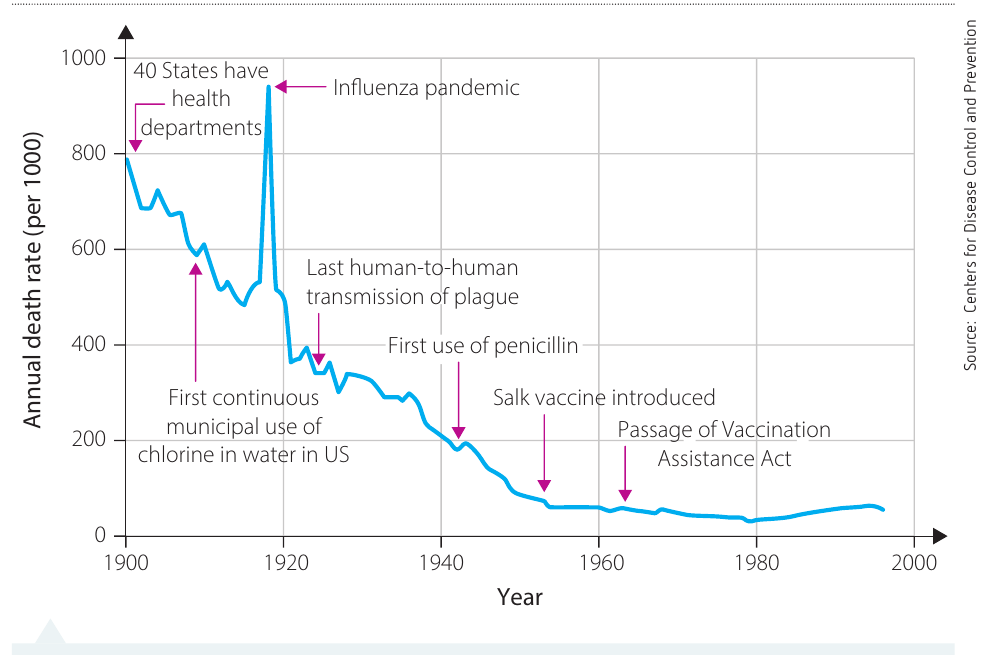
The graph above shows death rates from infectious diseases in the USA from 1900 to 1996. Key milestones marked on the graph include:
- Establishment of state health departments
- Introduction of water chlorination
- The 1918 influenza pandemic (visible as a spike)
- First use of penicillin
- Introduction of the Salk polio vaccine
- Passage of the Vaccination Assistance Act
The overall trend shows a dramatic decline in death rates throughout the 20th century, with the introduction of penicillin in the early 1940s contributing significantly to this reduction.
Antibiotic resistance
The problem of resistance
Bacterial resistance to antibiotics significantly limits their effectiveness in controlling infectious disease outbreaks. This problem occurs when an antibiotic becomes less effective over time at treating a particular bacterial disease.
Important
MRSA: A Serious Example of Antibiotic Resistance
A concerning example is MRSA (methicillin-resistant Staphylococcus aureus, also known as 'golden staph'), which has become a serious problem in hospitals. MRSA infections are difficult to treat because the bacteria have developed resistance to multiple antibiotics that were once effective.
How resistance develops
You should be familiar with the concept of selection pressure on populations. When a mutation or gene (genotype) gives bacteria resistance to an antimicrobial substance, those bacteria can survive or grow in higher antimicrobial concentrations than most other strains of the same species. This results in a resistant phenotype.
Note
The Role of Antibiotic Overuse
The overuse of antibiotics during the 20th century has created this serious problem. Each time antibiotics are used unnecessarily or incompletely, resistant bacteria have a survival advantage and can multiply, passing on their resistance genes to future generations.
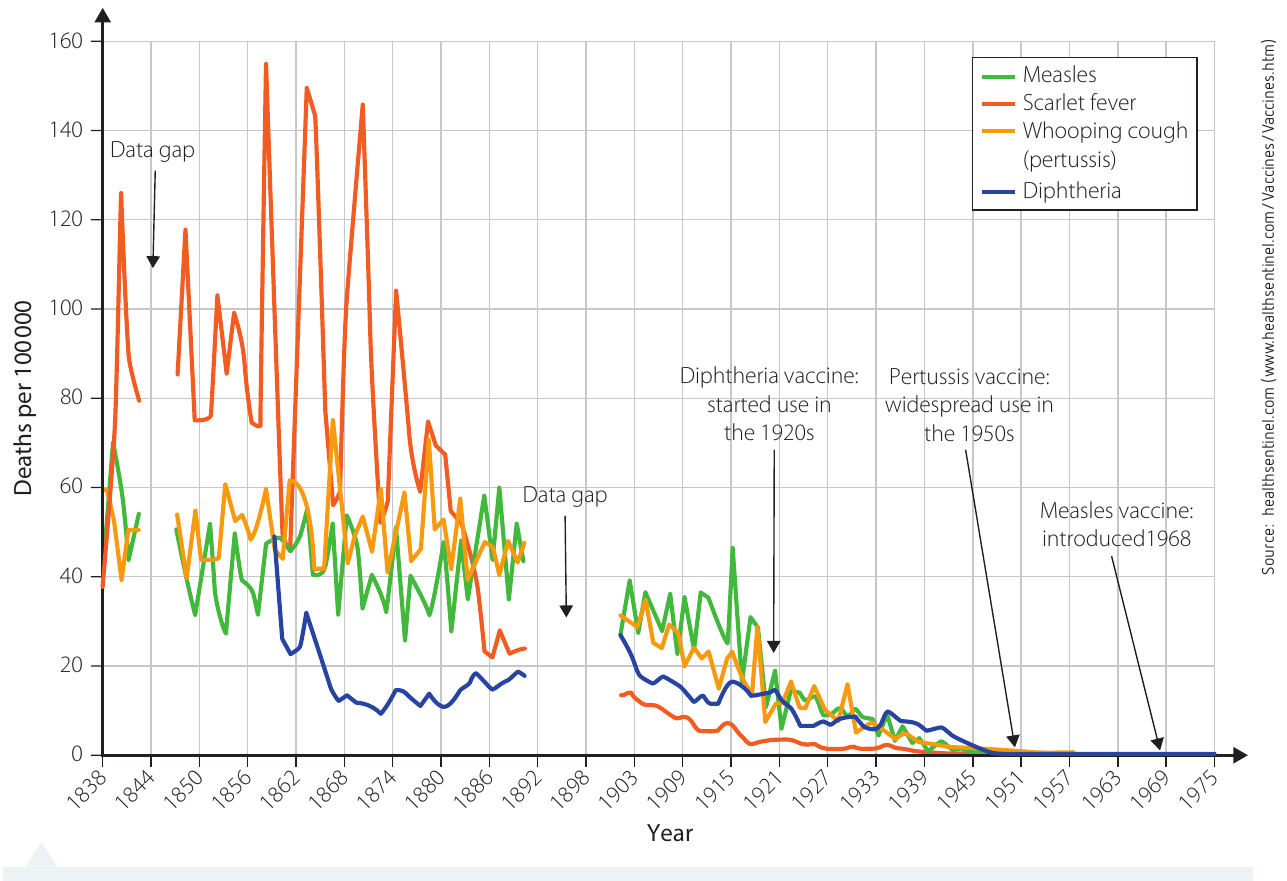
The graph above shows mortality rates from infectious diseases in England and Wales before and after vaccination introduction. Notice the general decline in deaths from diseases like measles, scarlet fever, whooping cough (pertussis), and diphtheria. The graph illustrates how multiple interventions (including both vaccines and antibiotics) have contributed to reducing infectious disease deaths.
Summary
Key Points to Remember:
-
Pharmaceuticals treat infectious diseases by targeting pathogens and reducing their numbers in infected hosts, which limits disease transmission
-
Antibiotics specifically target bacterial pathogens, either killing them directly or slowing their multiplication rate. They are ineffective against viruses
-
Antivirals are a relatively new class of drugs used to treat viral diseases such as influenza and HIV/AIDS. They don't kill viruses but slow their replication
-
Understanding viral life cycles and genetics is essential for developing effective antiviral treatments
-
Antibiotic resistance is a major challenge in modern medicine, primarily caused by the overuse of antibiotics during the 20th century
-
Both antibiotics and antivirals work by reducing the pool of pathogens available for transmission, helping to control disease spread