Plant Defences (HSC SSCE Biology): Revision Notes
📚Revision Notes
Plant Defences
Introduction to plant immune responses
When observing plants in nature, they may appear relatively inactive, but beneath this calm exterior lies a sophisticated defence system. Plants constantly face threats from pathogens present in soil and water, yet most plant populations successfully survive and thrive under appropriate conditions. A dramatic example of plant disease can be seen in Australian bushland, where patches of dead eucalypts mark the presence of dieback disease, caused by the water-borne fungus Phytophthora cinnamomi. This fungus spreads through warm, moist soil and infects tree roots, releasing spores that swim through water to attack healthy root tissue. Infected trees gradually die from dehydration as their damaged roots can no longer absorb sufficient water.
Note
Unlike animals, plants do not possess a mobile immune system with specialised cells that travel throughout the body. They cannot develop a fever or produce antibodies. However, plants have evolved highly effective defence mechanisms that respond both chemically and physically to pathogen presence.
These defence systems operate through multiple layers, providing robust protection against fungal, bacterial, and viral pathogens.
Important
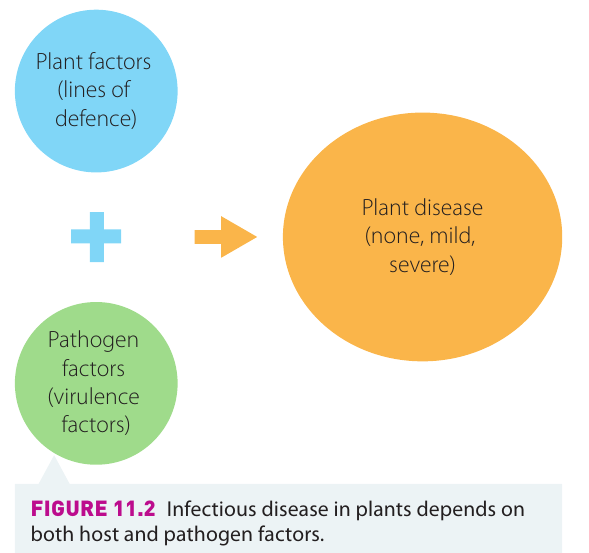
The outcome of a plant-pathogen interaction depends on two key factors working in opposition:
- Plant factors: including various lines of defence
- Pathogen factors: such as virulence mechanisms
When plant defences successfully counteract pathogen invasion, the plant remains healthy or experiences only mild symptoms. However, if pathogen virulence factors overwhelm plant defences, severe disease results.
Passive defences
Passive defences represent the plant's first line of protection against pathogens. These defences exist continuously, even before any pathogen attack occurs. Plants employ two major categories of passive defence: physical barriers and chemical barriers.
Physical barriers
Structural features of plants create formidable obstacles that prevent or slow pathogen entry into plant tissues. These physical barriers work by blocking access to the plant's internal environment where pathogens could cause damage.
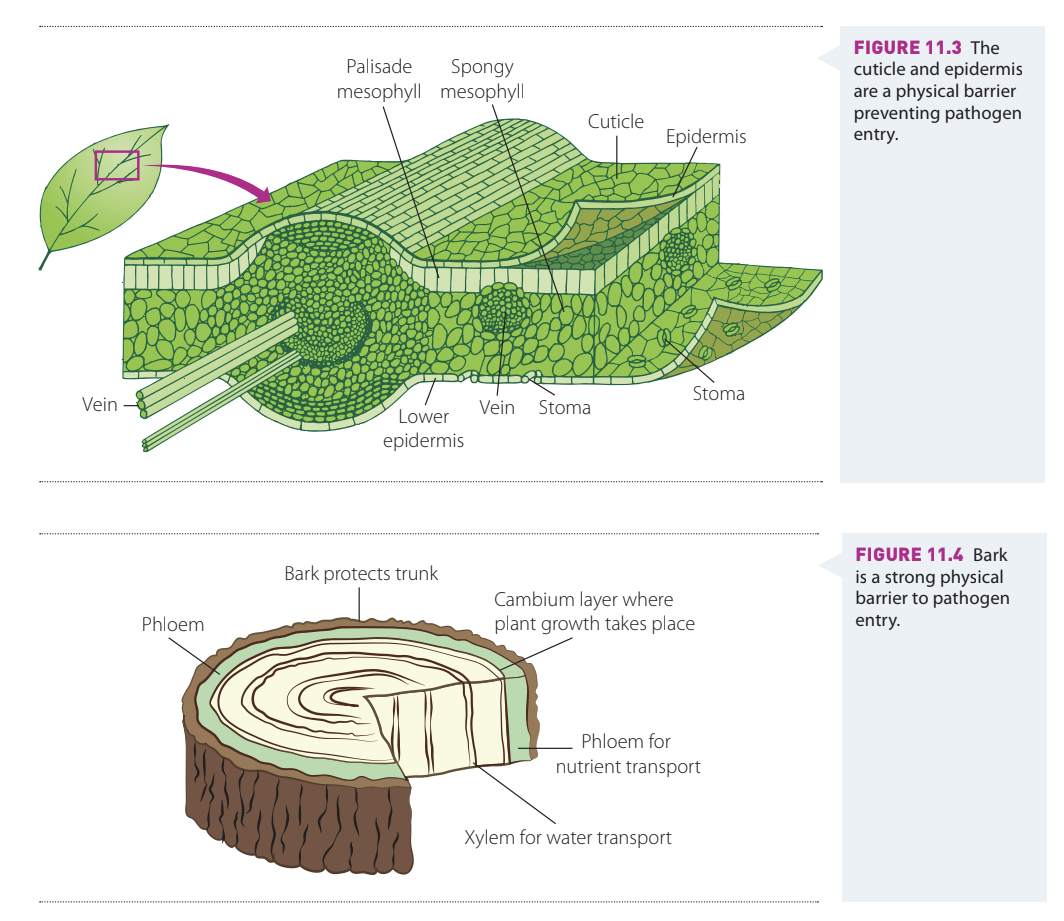
The cuticle forms a waxy, water-repellent outer coating on leaves and stems. This layer presents a significant challenge to many pathogens attempting to penetrate the plant surface. Some pathogens produce enzymes capable of breaking down the cuticle, but plants with thicker cuticles demonstrate greater resistance to this enzymatic attack. The cuticle's effectiveness depends partly on its thickness and chemical composition.
Cell walls provide another crucial structural barrier. Made primarily of cellulose, these rigid structures surround every plant cell and must be breached before pathogens can access the cell's interior. The strength and thickness of cell walls vary between plant species and tissue types, with some plants possessing particularly robust walls that resist pathogen penetration.
Stomata (singular: stoma) are small pores in leaf surfaces that allow gas exchange necessary for photosynthesis and respiration. Plants with smaller stomatal openings reduce the potential entry points available to pathogens. Additionally, plants can regulate stomatal opening and closing in response to environmental conditions. During humid weather and rainstorms, stomata tend to open wider to regulate water balance, but this unfortunately coincides with conditions favouring pathogen spread.
Bark offers woody plants substantial protection, particularly for the vital transport tissues beneath. The phloem, which transports sugars and nutrients throughout the plant, represents a valuable food source for pathogens. The thick, tough bark layer prevents pathogens from reaching this nutritious target. Additionally, bark protects the xylem (water transport tissue) and the cambium (growth layer).
Leaf orientation also influences disease susceptibility. Plants with vertically hanging leaves prevent water films from accumulating on leaf surfaces. Since many pathogens require moisture to establish infections, this adaptation reduces the likelihood of pathogen reservoirs building up on the plant exterior.
Chemical barriers
Beyond physical obstacles, plants produce and maintain various chemical compounds that inhibit pathogen growth and reproduction. These chemical defences operate continuously, providing protection even before pathogen invasion.
Plants synthesise numerous antimicrobial compounds, including glucosides and saponins. These substances interfere with fungal and bacterial metabolism, reducing their ability to grow and reproduce within plant tissues. Different plant species produce distinct combinations of defensive chemicals, contributing to variation in disease resistance between species.
Enzymes represent another important chemical defence. Plants produce enzymes capable of breaking down toxins released by pathogens. By neutralising pathogen-produced toxins, plants reduce the damage these harmful substances might otherwise cause to plant cells and tissues.
Note
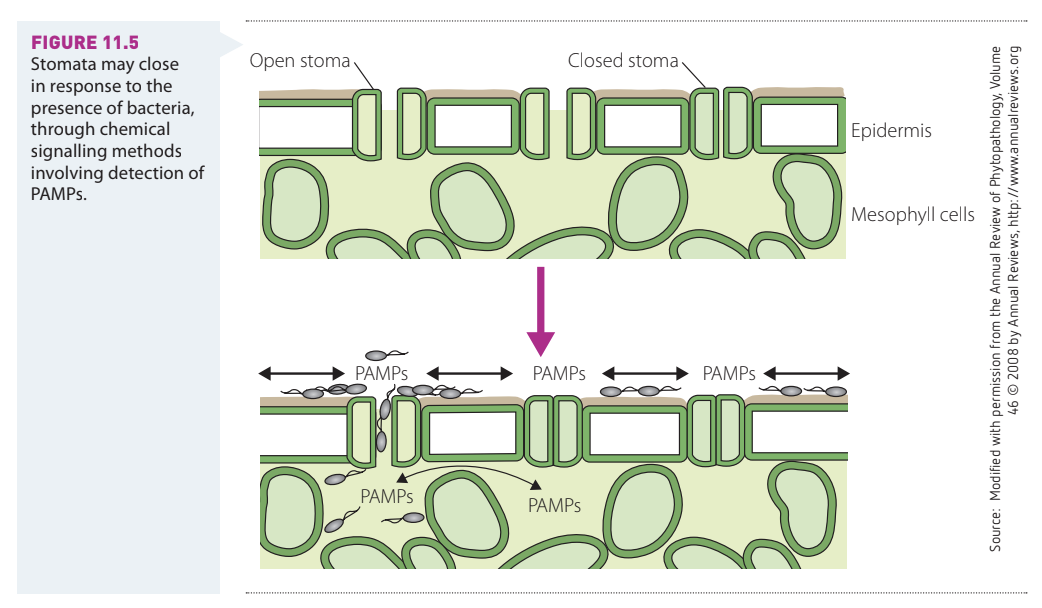
A particularly sophisticated aspect of chemical defence involves chemical receptors located on plant cell surfaces. These receptors can detect specific molecular patterns associated with pathogens. For example, plants can recognise pathogen-associated molecular patterns (PAMPs), which are distinctive molecules secreted by bacteria and other pathogens. When these receptors detect PAMPs, they trigger the activation of active defence mechanisms, representing the transition from passive to active defence responses.
Example
Example: Stomatal Detection and Response
When plant cells detect PAMPs from bacteria, chemical signalling pathways trigger stomatal closure. By closing these potential entry points, the plant limits the pathogen's ability to invade internal tissues. This represents an elegant integration of passive structural features (stomata) with active detection and response mechanisms.
Active defences
When passive barriers fail to prevent pathogen invasion, plants activate more targeted and energetically costly defence responses. Active defences operate through three major mechanisms: pathogen recognition, rapid active responses, and delayed active responses.
Pathogen recognition
Before plants can mount an effective active defence, they must first recognise that a pathogen has invaded. Plants detect pathogens by identifying specific physical and chemical signals that indicate foreign presence. These signals include fragments from bacterial and fungal cell walls, which differ structurally from plant cell components.
Recognition occurs primarily through specialised receptor proteins located on plant cell surfaces. These receptors bind to pathogen-specific molecules, triggering signalling cascades within the plant cell. Genes within the plant genome regulate these recognition and response pathways, determining the speed and strength of the plant's defensive reaction.
Rapid active responses (minutes to hours)
Once a pathogen is recognised, plants can initiate rapid defensive responses within minutes to hours of initial detection. These quick responses aim to kill or contain the pathogen before it can establish a widespread infection.
Membrane permeability changes occur immediately following pathogen recognition. The plant cell membrane undergoes alterations that allow specific ions, particularly calcium ions (), to flow into the cell. This ion movement serves as an internal signal that activates defensive gene expression, triggering the production of antimicrobial compounds and defensive proteins.
Important
The Oxidative Burst
The oxidative burst represents one of the most powerful rapid responses. During this process, plant cells rapidly produce and release hydrogen peroxide (), a reactive oxygen species. Hydrogen peroxide has direct antimicrobial properties, meaning it can kill bacteria, fungi, and other microbes on contact.
Scientists frequently measure hydrogen peroxide production in experiments as a chemical indicator of plant immune response activation. The oxidative burst must be carefully controlled, however, as excessive hydrogen peroxide can also damage plant cells.
Cell wall apposition provides rapid structural reinforcement at infection sites. When a pathogen breaches the cell wall, the plant responds by mobilising aggregates of material from the cytoplasm to the damaged area. These materials accumulate near the defect, creating a reinforced barrier that seals the breach and prevents further pathogen penetration. This response effectively plugs holes in the plant's physical defences.
Programmed cell death, also called apoptosis, represents a dramatic but effective defensive strategy. Rather than allowing infected cells to serve as pathogen breeding grounds, the plant deliberately kills cells surrounding the infection site. This creates a barrier of dead tissue that isolates the pathogen, preventing its spread to healthy tissues. Following cell death, the plant secretes antimicrobial compounds into the dead tissue zone, creating a hostile environment that further inhibits pathogen growth and reproduction.
Delayed active responses (days)
While rapid responses provide immediate protection, delayed responses operate over days to weeks, limiting pathogen spread and preparing the plant for potential future infections with the same pathogen.
Wound repair becomes essential after physical damage from pathogens or their vectors. Plants heal bark wounds through the production of cork cells, which form new protective layers over damaged areas. Additionally, plants secrete gums and resins that seal wounds, preventing pathogen entry through damaged tissue. These mechanical barriers restore the plant's physical defences.
The production of lysozyme-like chemicals provides sustained antimicrobial action. These substances continue working over extended periods, suppressing pathogen growth and reproduction in infected and surrounding tissues.
Note
Systemic Acquired Resistance: Plant Immunological Memory
Perhaps most remarkably, plants can develop a form of immunological memory through systemic acquired resistance (SAR). Following an initial infection, plants produce salicylic acid, a signalling molecule that travels throughout the plant. Salicylic acid triggers long-lasting changes in gene expression that enhance the plant's defensive capabilities.
If the plant encounters the same pathogen again in the future, this "memory" enables a faster and stronger defensive response, limiting the severity of subsequent infections. While not as sophisticated as vertebrate immunological memory, systemic acquired resistance demonstrates that plants can adapt their defences based on previous pathogen exposure.
Summary of plant defence strategies
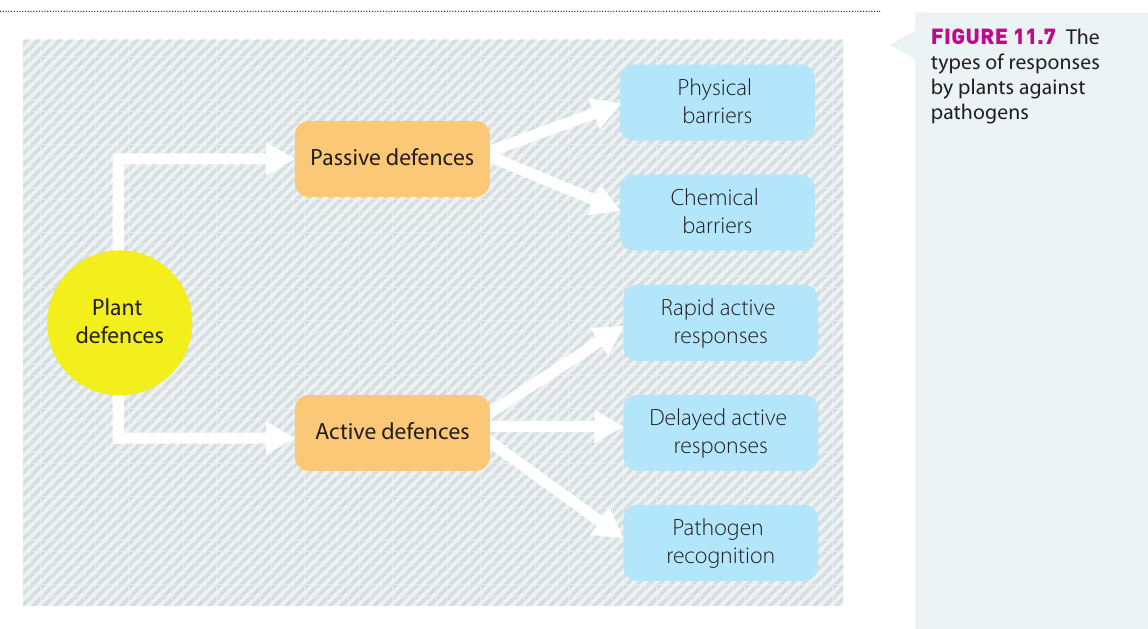
Plant defences operate through multiple, integrated layers. Passive defences, including physical barriers (cuticle, cell walls, stomata, bark) and chemical barriers (antimicrobial compounds, enzymes, chemical receptors), provide continuous protection. When these passive defences are breached, active defences engage through pathogen recognition, followed by rapid responses (membrane changes, oxidative burst, cell wall reinforcement, programmed cell death) and delayed responses (wound repair, antimicrobial secretion, systemic acquired resistance). The effectiveness of these defence mechanisms determines whether the plant succumbs to disease or successfully repels the pathogen invasion.
Summary
Key Points to Remember:
-
Plants have multiple lines of defence against pathogens, including both passive (pre-existing) and active (induced) mechanisms.
-
Passive physical defences include the cuticle, cell walls, small stomata, bark, and vertical leaf orientation - all working to prevent pathogen entry.
-
Passive chemical defences involve antimicrobial compounds (glucosides, saponins), enzymes that neutralise toxins, and receptors that detect pathogen-associated molecular patterns (PAMPs).
-
Active defences begin with pathogen recognition and proceed through rapid responses (oxidative burst releasing , cell wall apposition, programmed cell death) occurring within minutes to hours.
-
Systemic acquired resistance provides plants with immunological memory, allowing stronger defensive responses to previously encountered pathogens through salicylic acid signalling.