Epidemiological Studies: Methods and Benefits (HSC SSCE Biology): Revision Notes
📚Revision Notes
Epidemiological Studies: Methods and Benefits
Overview of epidemiological study types
Epidemiological studies help us understand the patterns and causes of diseases in populations. There are three major types of epidemiological studies:
- Descriptive studies: provide information about disease patterns
- Analytical studies: test hypotheses about disease causes
- Intervention studies: test effectiveness of treatments or public health campaigns
Note
Descriptive and analytical studies are both observational studies, meaning researchers observe and collect data without interfering with what happens naturally. This distinguishes them from intervention studies where researchers actively introduce treatments or interventions.
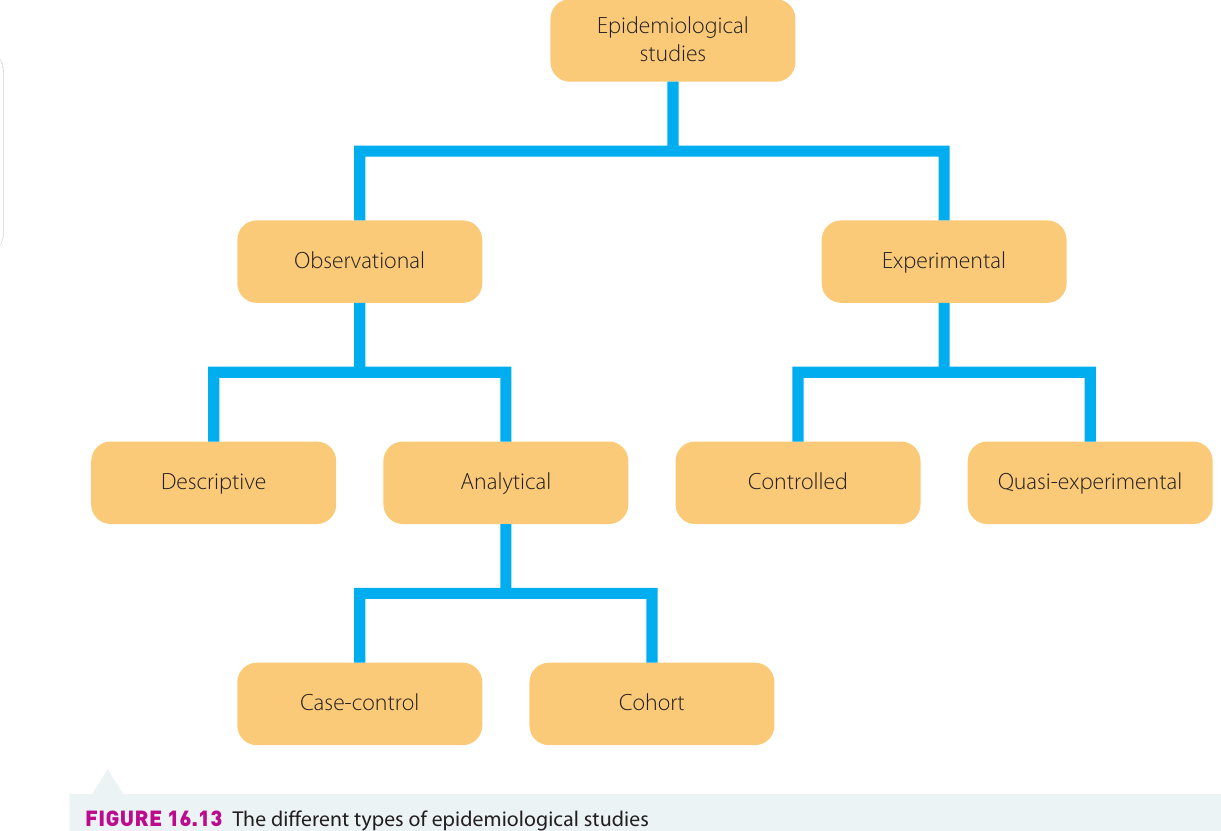
Descriptive studies are usually the first investigation carried out when examining the cause of a disease. These studies help answer the questions: who, what, where and when?
Purpose and methods
Descriptive studies collect information about:
- The frequency of the disease
- Which groups are affected (age, gender, occupation, socioeconomic status)
- Geographical location of cases
- Time periods when individuals were affected
Researchers gather data from people with the disease and look for common factors to identify possible causes. This information is used to develop hypotheses about what might be causing the disease.
Example
Example: Early Investigation of Lung Cancer
In an early study investigating lung cancer, researchers collected information about age, sex, smoking habits, diet, occupation and drinking habits from both people with lung cancer and people without lung cancer. This helped identify patterns that could explain the disease.
Analytical studies
Once a descriptive study has been completed, analytical studies collect more detailed data to test hypotheses about the likely cause of a disease. These studies help answer the questions: why and how?
Key measures used
Analytical studies examine several important indicators:
- Morbidity: the number of cases of the disease
- Mortality: the percentage of the population that dies from the disease
- Incidence: the number of new cases occurring in a specific time period
- Prevalence: the total number of people affected at any one time
The data is then statistically analysed to identify the most likely causes of the disease.
Types of analytical studies
There are two main types of analytical studies: case-control studies and cohort studies.
Case-control studies
Case-control studies compare two groups of people:
- Cases: people who have the disease
- Controls: people who do not have the disease
Method
Researchers collect a wide range of data from both groups, including:
- Age and sex
- Diet and lifestyle
- Location and occupation
- Exercise habits
The data is then analysed to find differences between the two groups that might explain why one group developed the disease.
Example
Example: Smoking and Lung Cancer
In 1947, Richard Doll conducted a case-control study in London comparing patients with lung cancer to patients with other conditions. He collected information about many factors in their lives, including smoking habits. The results showed that most individuals with lung cancer were smokers. This was the first study to suggest a link between smoking and lung cancer.
Cohort studies
Cohort studies follow two or more similar groups of people over a long period of time. All participants are free of the disease at the start of the study.
Method
The groups differ in one main factor: their exposure to a potential cause of the disease:
- One group is exposed to the possible cause (test group)
- The other group is not exposed (control group)
Researchers track both groups over many years and compare how many people in each group develop the disease.
Example
Example: Smoking and Lung Cancer Continued
After Doll's 1947 case-control study, A.B. Hill conducted a cohort study in England in 1951. This study followed more than 40,000 doctors over 10 years:
- One group were smokers (test group)
- The other group were non-smokers (control group)
At the end of the study, the test group had a much higher incidence of lung cancer than the control group. The study also revealed that the more cigarettes smoked daily, the greater the chance of developing lung cancer.
Intervention studies
Intervention studies test whether a particular treatment or public health campaign is effective. The aim is to change behaviour across a population to reduce disease incidence.
Experimental studies
In experimental studies, researchers test the effectiveness of new treatments:
- Participants with a particular condition are randomly placed into two groups
- One group receives the trial drug or treatment
- The other group receives a placebo (an inactive substance that looks like the real treatment)
- The effects on both groups are recorded and statistically analysed
Note
The use of placebos is essential in experimental studies because it helps researchers determine whether improvements are due to the actual treatment or simply the participants' belief that they are being treated (the placebo effect).
This helps determine whether the new treatment is actually effective.
Quasi-experimental studies
When it is not possible to randomly assign participants, a quasi-experimental study is carried out. In this type of study, the researcher chooses which subjects receive the treatment.
Examples
- Testing a new vaccine for influenza in hospital workers (one department receives the vaccine, another does not)
- Evaluating campaigns like 'Quit now – smoking while pregnant' to reduce the number of pregnant women who smoke
Requirements for valid epidemiological studies
Good epidemiological studies should meet several important criteria:
Time and sample size
- Be conducted over a long period of time (often many years)
- Study very large sample sizes (thousands of participants)
Important
Critical Requirements for Valid Studies
Large sample sizes and long study periods are essential because:
- They reduce the impact of random variation
- They allow time for diseases to develop
- They provide statistically significant results
- They help ensure findings represent the true population
Data collection
- Collect a range of relevant data from both affected and unaffected people
- Include information about age, sex, diet, occupation, lifestyle and exercise habits
- Ensure participants represent the wider population
Study design
- Use control groups who are not exposed to the potential cause but are similar in all other ways
- Collect data on incidence, prevalence, mortality and morbidity rates
Analysis and outcomes
- Statistically analyse data to identify patterns and trends
- Identify possible causes and risk factors
- Develop management plans with strategies to control or eliminate the disease
- Educate the public about findings
- Evaluate the effectiveness of control and treatment programmes
Errors in epidemiological studies
Even well-designed studies can contain errors that affect the reliability of results. There are two major types of errors:
- Random errors
- Systematic errors
Random errors
Random errors are unpredictable variations in data that have an inconsistent effect on measurements within a study.
Characteristics
- Make the study less precise
- Do not shift results in a particular direction
- Can usually be corrected using statistics
Note
Think of random errors as "noise" in the data – they create variability but don't push results consistently in one direction. With enough data points, random errors tend to cancel each other out.
Reducing random errors
- Ensure groups being studied are similar (homogenous)
- Use large sample sizes
Systematic errors (bias)
Systematic errors, also called bias, occur when any process during the study causes a consistent deviation from the true value. These errors result in incorrect estimates of how exposure to a factor affects disease risk.
Important
Understanding Bias
Unlike random errors, systematic errors (bias) consistently shift results in one direction, making them much more serious. They cannot simply be corrected with statistics and must be prevented through careful study design.
Selection bias
Selection bias occurs when the subjects chosen for the study do not properly represent the population being studied.
Types of selection bias include:
- Sampling bias: the method of choosing subjects does not lead to a representative sample
- Volunteer bias: volunteers may have a vested interest and already be at higher risk than non-volunteers
- Healthy worker bias: employed participants are generally healthier than those not working, which can skew results in workplace studies
- Prevalence/incidence bias: only current cases are included, while those who have recovered or died are excluded
Information bias
Information bias involves errors in measurement or recording information. This affects study groups differently.
Types of information bias include:
- Misclassification bias: some subjects already have the undiagnosed condition at the start
- Recall bias: people with the condition remember factors better than those without it
- Ascertainment bias: not all study participants are followed up equally
- Interviewer bias: the interviewer unintentionally leads participants to particular answers
- Measurement bias: measurements are consistently wrong (always too high or too low)
- Loss to follow-up bias: not all subjects who began the study are available at the end
Confounding factors
A confounding factor is an unrecognised factor that may be affecting study results and leading to bias. A particular factor may appear to cause a disease, but another factor could also be contributing.
Note
Example of Confounding
When studying lung cancer in asbestos workers versus non-asbestos workers, smoking is a confounding factor because it can also cause lung cancer. This makes it difficult to determine whether lung cancer is caused by asbestos exposure, smoking, or both.
Evaluating an epidemiological study
To evaluate means to make a judgement about something and use evidence to support that judgement. When evaluating epidemiological studies, we assess whether they follow accepted scientific principles.
Criteria for evaluation
The validity of an epidemiological study depends on:
- Whether it follows accepted epidemiological principles for that type of study
- Consideration of any errors and bias, including confounding variables
- Large sample size and long study period
- Use of scientifically approved methods for conducting the study, collecting data and analysing results
- Appropriate study design (case-control, cohort or experimental)
Case study: The Pima Indian population study
An excellent example of evaluating a study is the cohort study of the Pima Indian population in Arizona, which examined the role of physical activity in developing type 2 diabetes.

Example
Case Study: Evaluating the Pima Indian Population Study
Study details
- Conducted between 1987 and 2000
- Included 1,728 non-diabetic Pima individuals
- Age range: 15-59 years
- Part of a larger longitudinal study since 1965
Method
- Participants interviewed about physical activity over the past year
- Both leisure and occupational activity assessed
- Activities weighted according to intensity
- Each individual classified as having either high or low activity levels
- Participants followed over time until diabetes developed or study ended
- Incidence rates calculated by age group, gender and physical activity level
Results
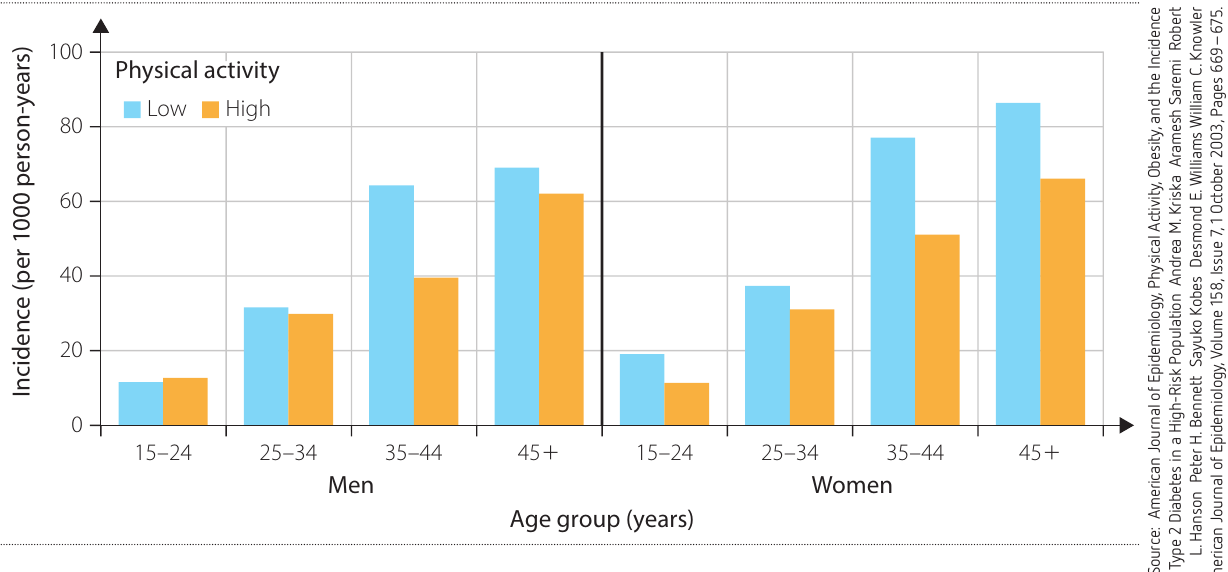
The results showed that in most age groups, for both males and females, the incidence of diabetes was lower in people with higher levels of physical activity compared to those with low activity levels.
Evaluation of validity
This study meets the criteria for a valid epidemiological study because:
Sample size and time: The study included 1,728 individuals over 13 years, satisfying requirements for large sample size and long study period. This reduced sampling bias.
Cohort study requirements: The study examined similar groups (non-diabetic Pima Indians from the same area, aged 15-59) who differed mainly in physical activity levels, which is appropriate for a cohort study.
Objective diagnosis: Diabetes was diagnosed using scientifically approved testing at each visit, reducing measurement bias.
Valid data collection: Trained interviewers used a scientifically valid questionnaire to assess activity levels, reducing interviewer and measurement bias.
Mathematical modelling: Physical activities were weighted for intensity using accepted models, and results were analysed using scientifically tested models.
Quality control: Data was excluded if participants were thought to have incorrectly reported activity levels, reducing recall bias.
Peer review: The written report was peer reviewed before publication.
Note
The methodology used in this study is judged to be valid because it follows established epidemiological principles and takes steps to minimize multiple sources of bias.
Benefits of epidemiological studies
Epidemiological studies provide numerous benefits that can be classified in different ways:
Types of benefits
Benefits can be:
- Short-term: advantages received immediately
- Long-term: advantages that may take many years to realise
- Direct: benefits that can be quantified or measured
- Indirect: benefits that cannot be directly quantified but still have an impact
Major benefits
Epidemiological studies provide several important advantages:
- Identify disease causes: Studies help determine what factors contribute to disease development, allowing for better prevention strategies
- Inform public health policy: Results guide government decisions about health campaigns, funding and resource allocation
- Develop treatment strategies: Understanding disease causes helps researchers develop more effective treatments and interventions
- Educate the public: Study findings can be used to inform communities about risk factors and prevention methods
- Track disease patterns: Studies help monitor how diseases spread through populations over time
- Evaluate interventions: Research can assess whether treatments or public health campaigns are working effectively
Who benefits?
Different groups benefit from epidemiological studies:
- Individuals: gain knowledge to make healthier lifestyle choices
- Communities: receive targeted health interventions
- Healthcare providers: get evidence-based treatment guidelines
- Governments: can develop effective public health policies
- Future generations: benefit from long-term prevention strategies
Summary
Key Points to Remember:
- Three main types of epidemiological studies: descriptive (identify patterns), analytical (test causes) and intervention (test effectiveness)
- Descriptive studies are conducted first to generate hypotheses about disease causes
- Analytical studies include case-control studies (compare people with and without disease) and cohort studies (follow groups over time)
- Valid studies require large sample sizes, long time periods, representative participants and scientifically approved methods
- Two types of errors: random errors (reduce precision) and systematic errors/bias (shift results in one direction)
- Evaluation involves judging whether a study follows accepted epidemiological principles and considering potential sources of bias
- Benefits of epidemiological studies can be short-term or long-term, direct or indirect, and help individuals, communities and governments make better health decisions