Treatment, Management, and Future Directions (HSC SSCE Biology): Revision Notes
📚Revision Notes
Treatment, Management, and Future Directions
Introduction to disease treatment
Different diseases require different treatment approaches depending on their underlying causes and mechanisms. Understanding these differences helps medical professionals provide the most effective care for patients.
Some non-infectious diseases have relatively simple treatments. Nutritional diseases, such as vitamin or mineral deficiencies, can often be corrected by ensuring adequate intake of the missing nutrient.
Example
Worked Example: Treating Scurvy
Scurvy results from vitamin C deficiency and demonstrates a straightforward treatment approach:
Step 1: Identify the deficiency
- Patient presents with symptoms of scurvy (bleeding gums, weakness, bruising)
- Diagnosis confirms vitamin C deficiency
Step 2: Correct the deficiency
- Add vitamin C-rich foods to the diet (citrus fruits, berries, leafy greens)
- Or prescribe vitamin C supplements
Result: Symptoms typically improve within days to weeks of adequate vitamin C intake
Other diseases, particularly cancer, require much more complex treatment strategies. These may involve multiple approaches working together to eliminate the disease from the body.
Important
Challenges of Genetic Diseases
Genetic diseases present unique challenges because they often have limited treatment options available. In these cases, screening programmes, early diagnosis, and symptom management become the primary strategies for helping patients maintain the best possible quality of life. Ongoing research continues to explore new possibilities, such as gene therapy for conditions like cystic fibrosis, which currently has no cure.
Research advances in understanding how diseases develop and progress in the body contribute to developing more effective treatments. As scientists learn more about body systems and disease mechanisms, they can design better therapeutic approaches.
Melanoma: treatment approaches for an environmentally-caused disease
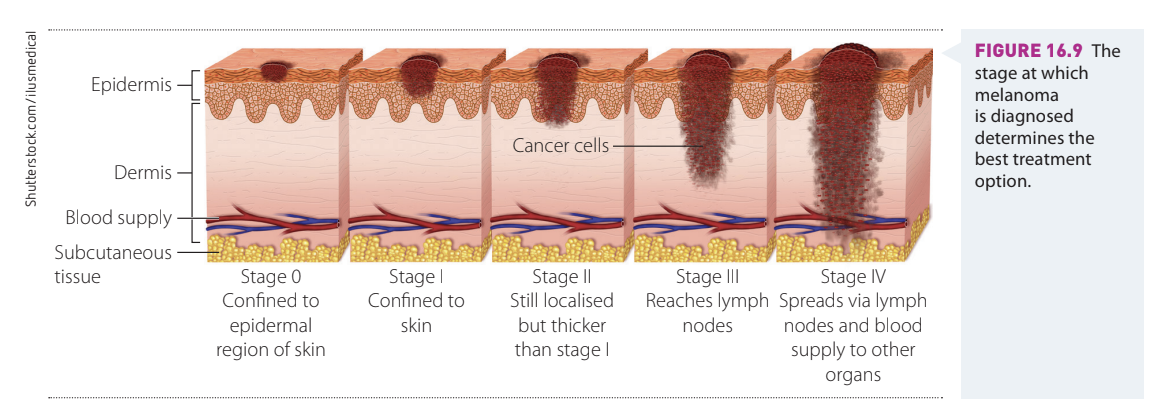
Melanoma serves as an important example of how treatment options depend on the stage at which a disease is detected. The progression of melanoma occurs in distinct stages, from Stage 0 (confined to the epidermal region) through to Stage IV (where cancer has spread to other organs via lymph nodes and blood supply).
Note
The Importance of Early Detection
Early-stage melanoma detection significantly improves treatment outcomes and survival rates. Regular skin checks and awareness of changes in moles or skin lesions are crucial for catching melanoma at its most treatable stages.
Surgery
Surgical removal represents the most common treatment for melanoma detected in its early stages. In many cases, surgery alone provides sufficient treatment. The procedure involves removing the cancerous tumour along with surrounding skin tissue. This margin of healthy tissue removal helps ensure that no cancer cells remain, reducing the likelihood of the melanoma returning.
Radiation therapy
Radiation treatment exploits the difference between normal cells and cancer cells in their ability to repair DNA damage. When exposed to X-rays, cancer cells struggle to repair the damage to their DNA and die as a result, whilst normal cells can repair themselves more effectively.
Important
Precise Targeting in Radiation Therapy
Careful targeting ensures the radiation affects only the intended cancer cells. Radiation can be delivered:
- Externally: Directing X-rays from outside the body
- Internally: Placing a radioactive source near the cancer cells inside the body
This precision is essential to minimize damage to healthy tissues while effectively destroying cancer cells.
Chemotherapy
Chemotherapy uses drugs designed to slow cancer cell growth. However, these drugs have shown limited effectiveness specifically against melanoma compared to other cancer types. Consequently, chemotherapy is used less frequently as a melanoma treatment than for other cancers.
Targeted therapies
Targeted therapy drugs work by affecting specific molecules that control tumour cell growth. By interrupting these molecular pathways, the drugs effectively stop tumours from growing and spreading to other organs.
Melanoma cells contain mutations that drive uncontrolled cell division, leading to tumour formation. Targeted therapy drugs identify and interrupt the specific pathways responsible for this abnormal division in melanoma cells.
Immunotherapy
Immunotherapy represents an innovative approach that harnesses the body's own immune system to fight melanoma. Two main approaches are currently in early development stages and showing promising results.
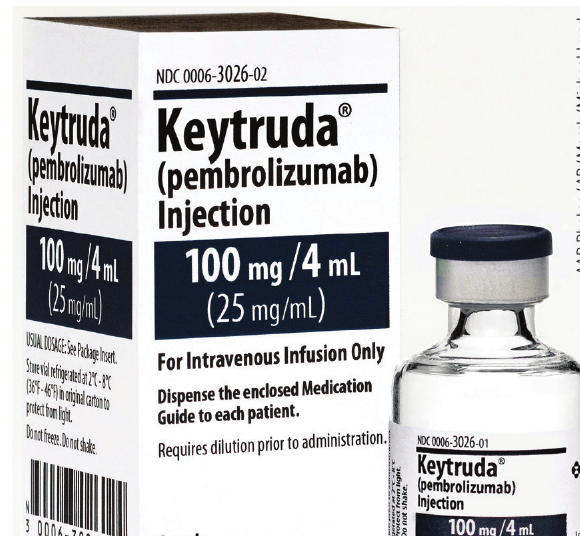
Checkpoint inhibitors are drugs that enable the immune system to recognize and destroy melanoma cells. Cancer cells normally manipulate the immune system to ignore them, effectively becoming invisible to the body's natural defences. Checkpoint inhibitors reverse this effect, allowing the immune system to identify and attack the cancer. This approach has proven successful for a number of melanoma patients.
Note
Vaccine-Based Immunotherapy
The second approach uses vaccines as a treatment method rather than for prevention. Scientists create an antigen using melanoma cells, which, when injected, helps the immune system more readily identify and destroy melanoma cells throughout the body. This approach differs from traditional preventive vaccines by treating existing disease rather than preventing future infection.
Future directions in melanoma research
Advancing targeted therapies
Further research into targeted therapies focuses on understanding the various mutations that cause uncontrolled cell division in melanoma. Scientists have already developed drugs to interrupt several specific pathways, but they recognize that numerous other mutations remain unidentified.
Ongoing research aims to identify these additional mutations so that pharmaceutical developers can create new drugs to interrupt even more cancer-promoting pathways. This will expand treatment options and potentially help more patients.
Expanding immunotherapy options
Currently, only two immunotherapy drugs are available for melanoma treatment, and these do not work effectively for all patients. Research continues to develop a broader range of immunotherapy drugs so that more patients can benefit from this promising treatment approach.
Note
Personalized Treatment Approaches
As more immunotherapy options become available, doctors will be better equipped to match specific drugs to individual patients based on their unique cancer characteristics and immune system responses, leading to more personalized and effective treatment plans.
Refining vaccine treatments
Vaccine-based treatment for melanoma remains in its early developmental stages. Researchers need to conduct more studies to refine the process and achieve consistent effectiveness across different patients. Future research may also investigate connections between melanoma and other cancer types, potentially leading to broader applications of successful treatments.
Summary
Key Points to Remember:
-
Treatment approaches must match the disease type: nutritional deficiencies may require only dietary changes, whilst cancer demands complex, multi-faceted treatments.
-
Melanoma treatment depends heavily on the stage at which the disease is diagnosed, with early detection allowing for simpler surgical treatment.
-
Modern melanoma treatments include surgery, radiation, targeted therapies, and immunotherapy, with the choice depending on disease progression and patient factors.
-
Immunotherapy using checkpoint inhibitors represents a promising advancement, enabling the immune system to recognize and destroy cancer cells that would normally evade detection.
-
Future research focuses on identifying additional genetic mutations in melanoma, developing more immunotherapy drugs, and refining vaccine-based treatments to improve outcomes for more patients.