Educational Programs and Campaigns (HSC SSCE Biology): Revision Notes
📚Revision Notes
Educational Programs and Campaigns
Why prevention matters
Preventing disease is always better than treating it after symptoms develop. Many treatments involve medications that can cause unwanted side effects, creating additional health problems. Some diseases, like cystic fibrosis, have no effective cure, meaning doctors can only manage symptoms rather than eliminate the disease itself. When people develop chronic diseases, their quality of life suffers, and both they and their families face ongoing financial burdens alongside the broader health system.
Note
Prevention strategies for non-infectious diseases are crucial because they:
- Reduce individual suffering and improve quality of life
- Enhance overall population health and wellbeing
- Decrease financial strain on individuals, families and the healthcare system
- Free up resources that can be directed to other health priorities
Understanding educational programs and campaigns
Most preventable non-infectious diseases result from nutritional imbalances or exposure to environmental factors, particularly lifestyle choices. Epidemiological studies help identify which diseases are most common in populations and which groups face the highest risk. This data helps health authorities and governments create targeted prevention strategies focused on diseases with the highest incidence, prevalence and mortality rates.
Educational programs and campaigns are prevention strategies designed to inform and educate the population about:
- The effects of specific diseases
- Risk factors that increase disease likelihood
- Practical ways to avoid these risk factors
The goal is to motivate people to change their behaviour, reducing their exposure to risk factors and lowering their chances of developing disease.
Key criteria for successful public health campaigns
Effective public health campaigns share six essential components:
Important
Six Essential Components for Campaign Success:
-
Evidence base - Campaigns must be founded on solid scientific research demonstrating which interventions actually work
-
Technical package - A focused set of high-priority, evidence-based interventions rather than trying to address too many things at once
-
Management - Effective performance monitoring with real-time evaluation and continuous program improvement
-
Partnerships - Collaboration between public and private sectors to maximise reach and resources
-
Communication - Clear, accurate information delivery to both healthcare workers and the general public
-
Political commitment - Strong government support to ensure adequate funding and policy backing
Components of public health campaigns in practice
Successful campaigns typically include multiple elements working together to reach and educate the population effectively.
Awareness activities:
- National awareness days or weeks (e.g., National Diabetes Week, Skin Cancer Action Week, Heart Week)
- Advertising campaigns across all media platforms, including social media, television, radio and print
- Catchy slogans and sometimes graphic images showing disease effects on the body
- Posters and advertising boards in high-traffic public places (bus stops, sporting stadiums, railway stations)
Educational resources:
- Online resources helping individuals and groups implement lifestyle changes
- Mobile apps for tracking and reducing risk factor exposure
- National helplines providing support and information (e.g., Quitline)
Targeted engagement:
- Messages tailored to specific audiences for maximum impact (e.g., sporting teams promoting 'Quit B Fit')
- Screening programs for at-risk groups to detect early warning signs (e.g., pre-diabetes screening)
- Support programs offering dietary and physical activity advice
Organisational support:
- Funding for organisations providing education and support services (Heart Foundation, Diabetes Australia, Cancer Council Australia)
Examples of Australian health campaigns
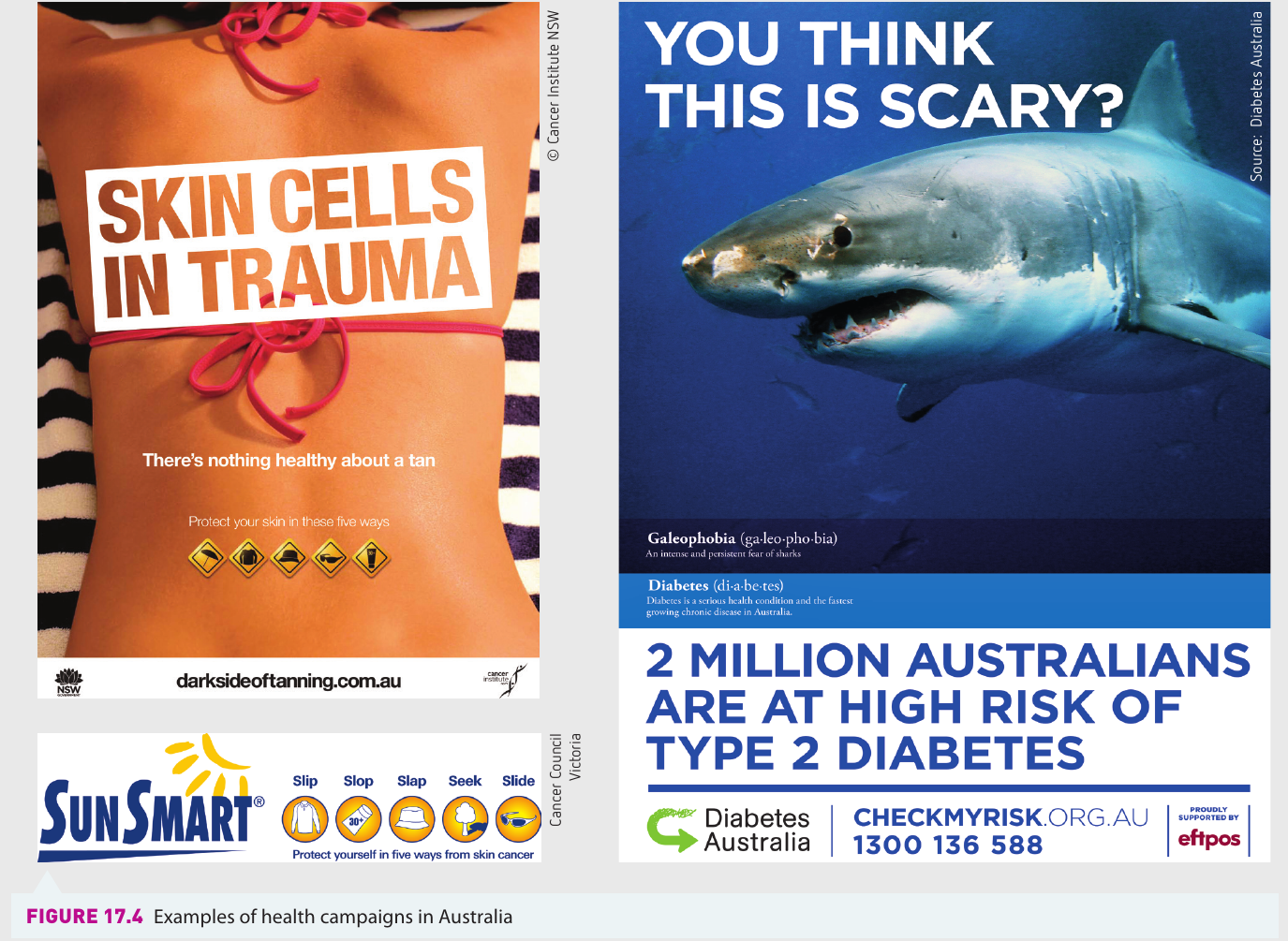
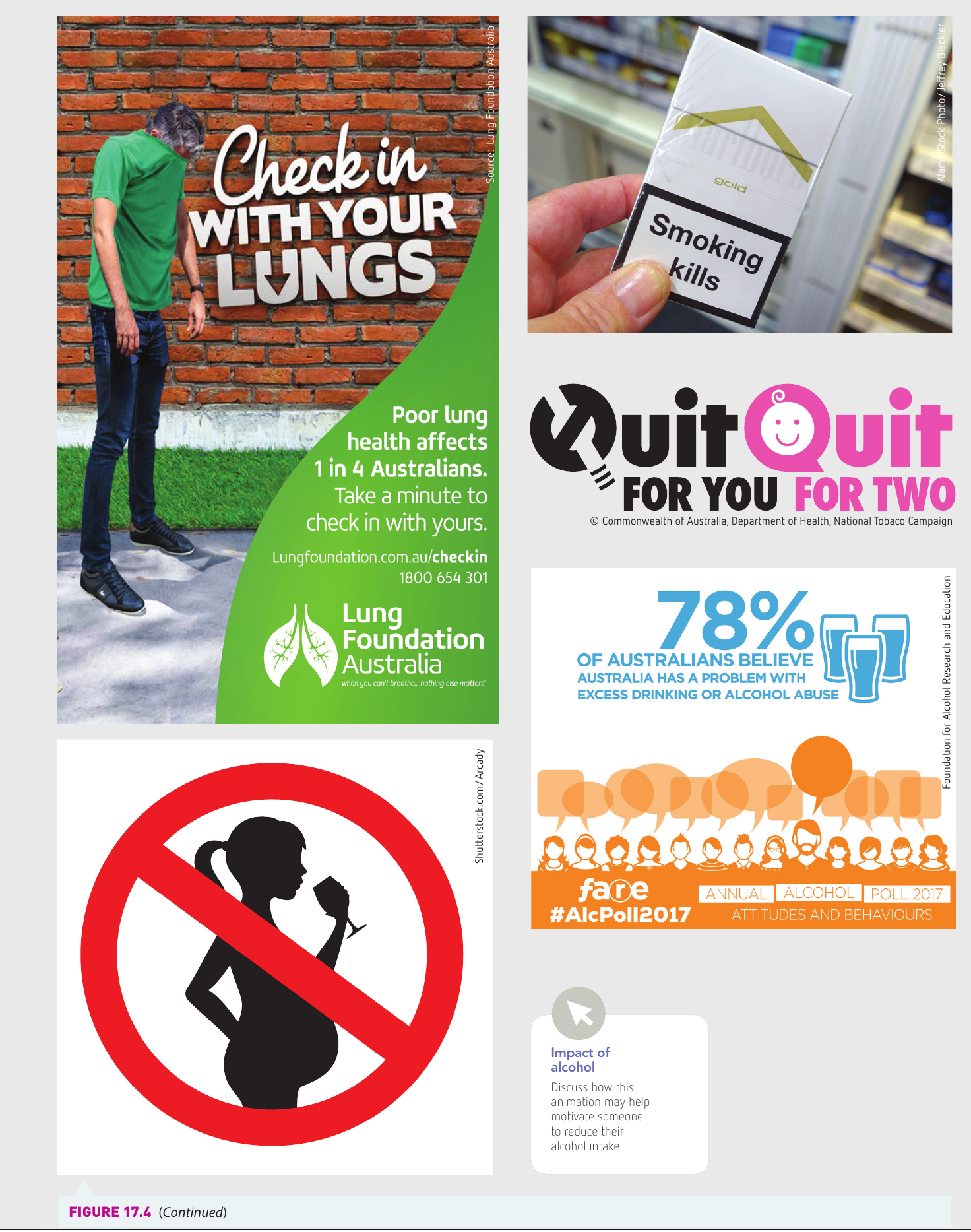
Australia has implemented numerous successful educational programs and public health campaigns based on epidemiological evidence and national strategic planning.
Note
Major campaigns include:
- QUIT program - Anti-smoking campaign
- National Alcohol Strategy - Reducing harmful alcohol consumption
- Diabetes Helpline - Support for diabetes prevention and management
- 'Slip, Slop, Slap, Seek, Slide' - Sun protection and skin cancer prevention
- 'Kids Matter' - Children's mental health
- 'Jump Rope For Heart' - Physical activity promotion
- 'Alcohol. Think again' - Responsible drinking education
- Needle and Syringe Program - Harm reduction for injecting drug users
- Pregnancy, Birth and Baby helpline - Support for expectant and new parents
These campaigns were developed following national strategic plans aimed at preventing common and emerging diseases based on epidemiological evidence.
The role of legislation in prevention
Educational programs and campaigns alone often cannot change population behaviour, especially when risk factors are addictive. Non-infectious diseases cause significant death, disease and disability, straining health systems and affecting economic development and individual wellbeing.
Important
The main risk factors for non-infectious diseases are:
- Tobacco use
- Alcohol consumption
- Unhealthy diet
- Lack of physical activity
Legislative approaches can target different aspects of risk factors to strengthen prevention efforts when education alone is insufficient.
Prohibition of promotion:
- Banning advertising and sponsorship
- Restricting marketing of harmful products
Financial deterrents:
- Increasing taxes (levies) on products like alcohol and tobacco
- Proposed sugar taxes on sugary soft drinks
Usage restrictions:
- Banning alcohol consumption in certain areas
- Limiting operating hours for bars and bottle shops
- Prohibiting smoking in workplaces and public places
Consumer information:
- Requiring clear labelling on food products
- Mandating kilojoule content display on takeaway foods
- Enforcing graphic health warnings on tobacco packaging
Note
Tobacco control legislation in Australia includes:
- Complete ban on tobacco advertising, promotion and sponsorship
- Smoke-free workplaces and public places
- Plain paper packaging with graphic warnings and no branding
- Increased tobacco taxes
Evaluating campaign effectiveness: The QUIT campaign case study
We can measure the effectiveness of educational programs and public health campaigns by comparing incidence and prevalence data before and after implementation.
The QUIT campaign
Smoking remains the leading preventable cause of death in Australia, causing approximately smoking-related deaths annually. The QUIT campaign was developed to reduce the prevalence of smoking-related diseases in the population.
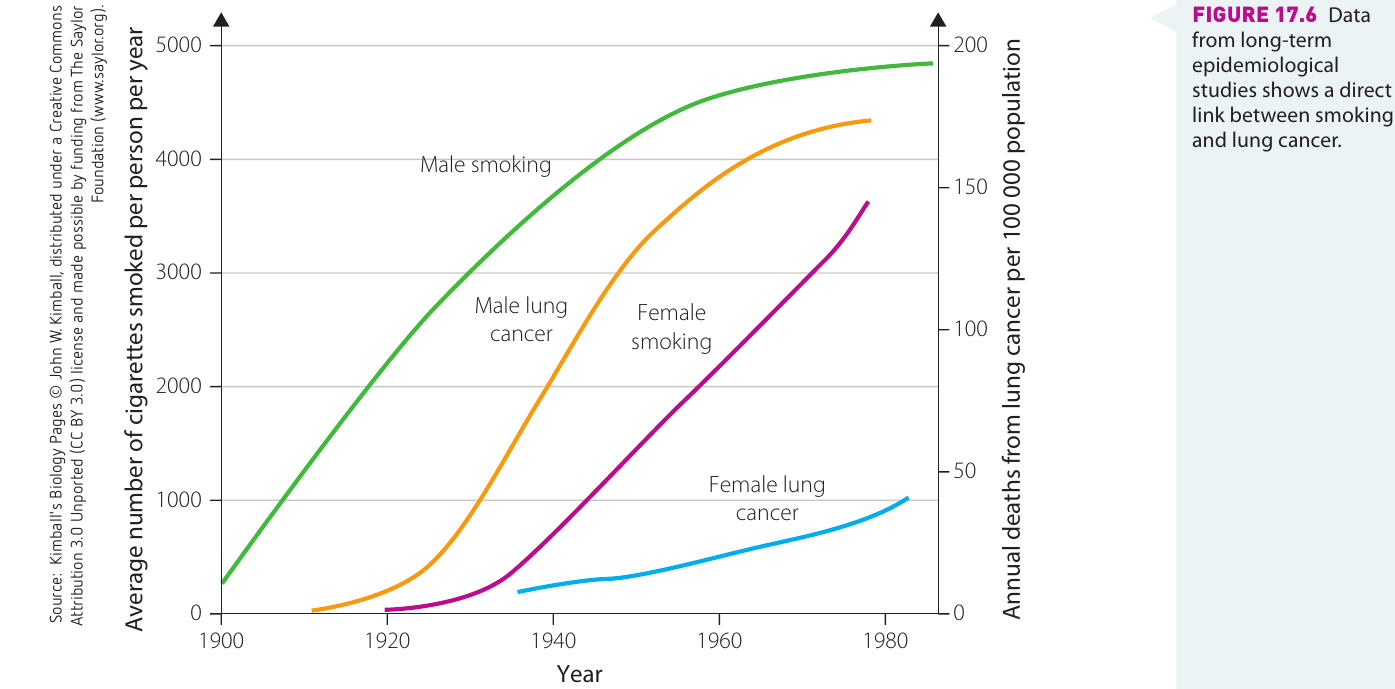
The link between smoking and lung cancer:
Epidemiological studies have consistently demonstrated a clear connection between smoking and increased lung cancer incidence. These studies also show a direct relationship between cigarette smoking and reduced life expectancy.
Important
Key research findings:
- Smokers have a times greater chance of dying from lung cancer compared to non-smokers
- More cigarettes smoked daily = higher lung cancer incidence
- Longer smoking duration = greater lung cancer risk
- Passive smoking exposure also increases lung cancer risk
QUIT campaign strategies
The multifaceted QUIT program combines education and legislation to create a comprehensive approach to reducing smoking rates.
Educational elements:
- Memorable slogans ('Quit for life', 'Quit B fit', 'iCanQuit')
- Graphic images in media and on cigarette packets highlighting smoking dangers
- Real stories from lung cancer patients expressing regret about not quitting earlier
- National Quitline helpline supporting smokers trying to quit
Legislative timeline (1973-2017):
The campaign to reduce smoking has evolved over more than years:
Early measures (1970s-1990s):
- 1973: Mandatory health warnings on cigarette packs
- 1976: Radio and television advertising ban
- 1986-2006: Phased workplace and public place smoking bans
- 1990: Newspaper and magazine advertising ban
- 1992: Tobacco excise increase
- 1993: Tobacco Advertising Prohibition Act
- 1994-2003: Restaurant smoking bans
Strengthening measures (2000s-2010s):
- 2006: Graphic health warnings on packaging
- 2010: tobacco excise increase
- 2011: Point-of-sale tobacco display ban
- 2012: Plain packaging with expanded graphic warnings
- 2012: Internet tobacco advertising ban
- 2012: Duty-free allowance reduced from to cigarettes
Recent intensification (2013-2017):
- 2013-2020: Annual excise increases
- 2017: Duty-free allowance further reduced to grams
- 2017: Tax harmonisation across tobacco products
Evidence of effectiveness
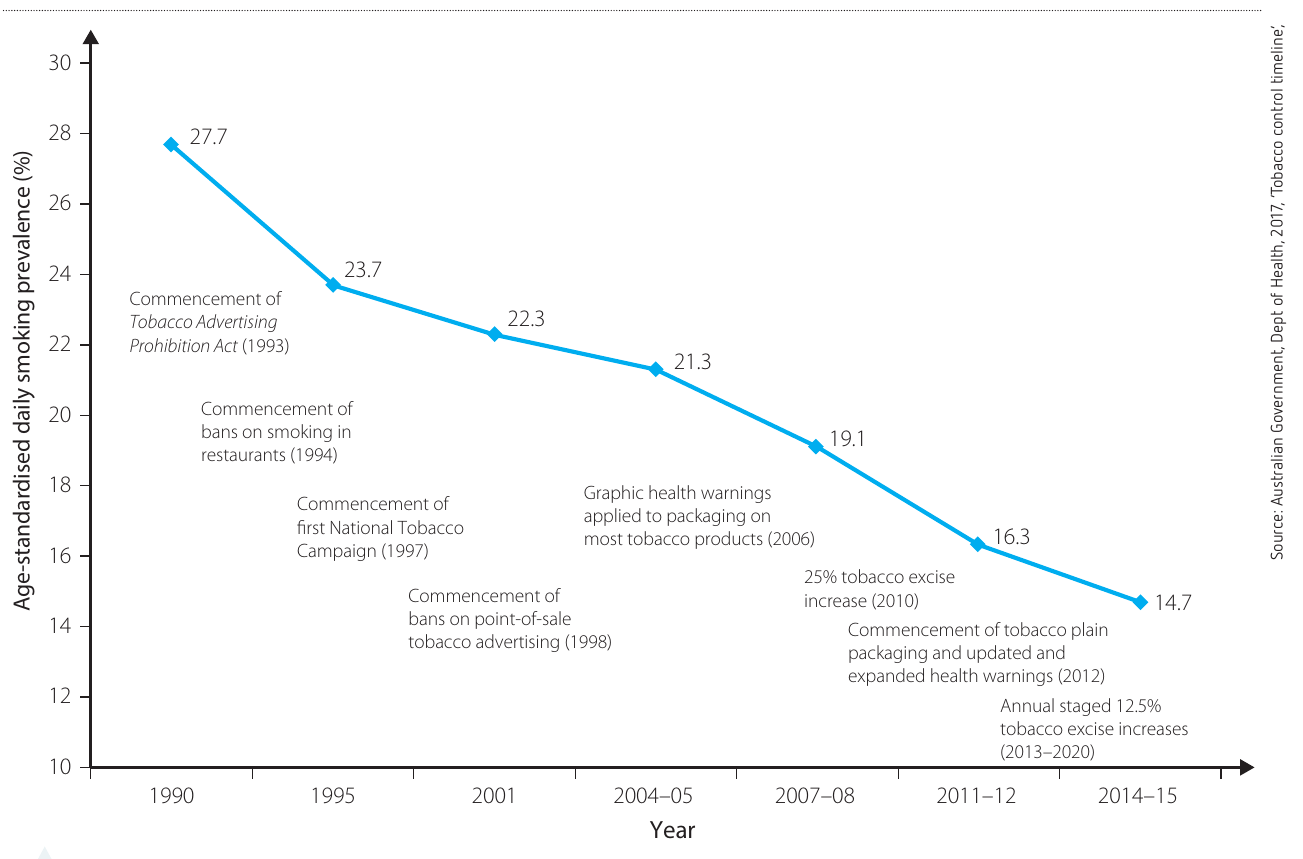
Smoking prevalence data:
Example
Evaluating Campaign Success: Smoking Prevalence Reduction
The graph demonstrates significant success. From 1990 to 2014-15:
- Smoking prevalence decreased from to
- This represents almost a reduction in smoking rates
- Each major intervention coincided with further declines
Predictions suggest smoking prevalence will continue decreasing with ongoing strategy implementation.
Lung cancer incidence and mortality:
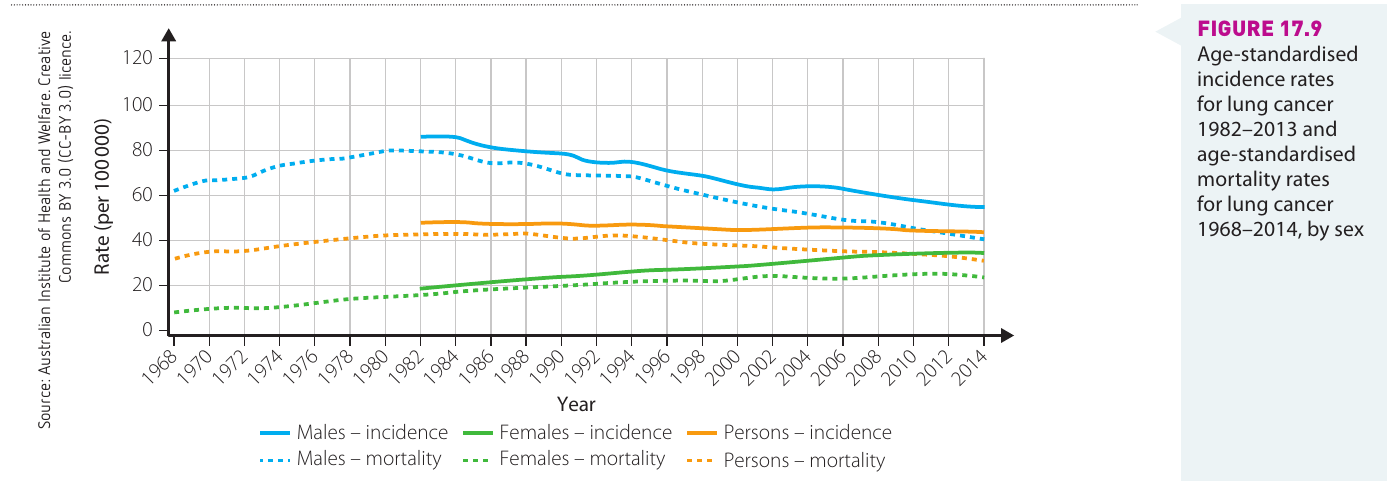
The data reveals important trends that demonstrate the long-term impact of smoking behaviour on disease outcomes.
Males:
- Initial increase in mortality from 1968 to 1982
- Steady decrease from 1982 to 2014
- Incidence rates declining since 1982
- Continued decline predicted
Females:
- Gradual increase from 1968 onwards
- Rate stabilised around 2002
- Much lower rates than males in 1968, but gap narrowed by 2014
- Mortality rates showing similar pattern to incidence
Note
Gender difference explanation:
Lung cancer takes several decades to develop after smoking begins. While smoking rates are now decreasing for both sexes, the decline occurred earlier in males (1960s) than females (late 1970s). This time lag explains why:
- Male lung cancer rates are now decreasing
- Female rates are still catching up to the earlier smoking patterns
- Female rates are predicted to increase slightly before eventually decreasing
Overall evaluation:
The statistics demonstrate that education, campaigns and legislation have successfully reduced smoking rates in both males and females. Consequently, lung cancer incidence and mortality in males have decreased and are predicted to eventually decrease for females as well.
The e-cigarette concern
While smoking rates have decreased, e-cigarette use has increased, particularly among young people. Many believe e-cigarettes are safer than tobacco products or that they help with quitting smoking.
What are e-cigarettes?
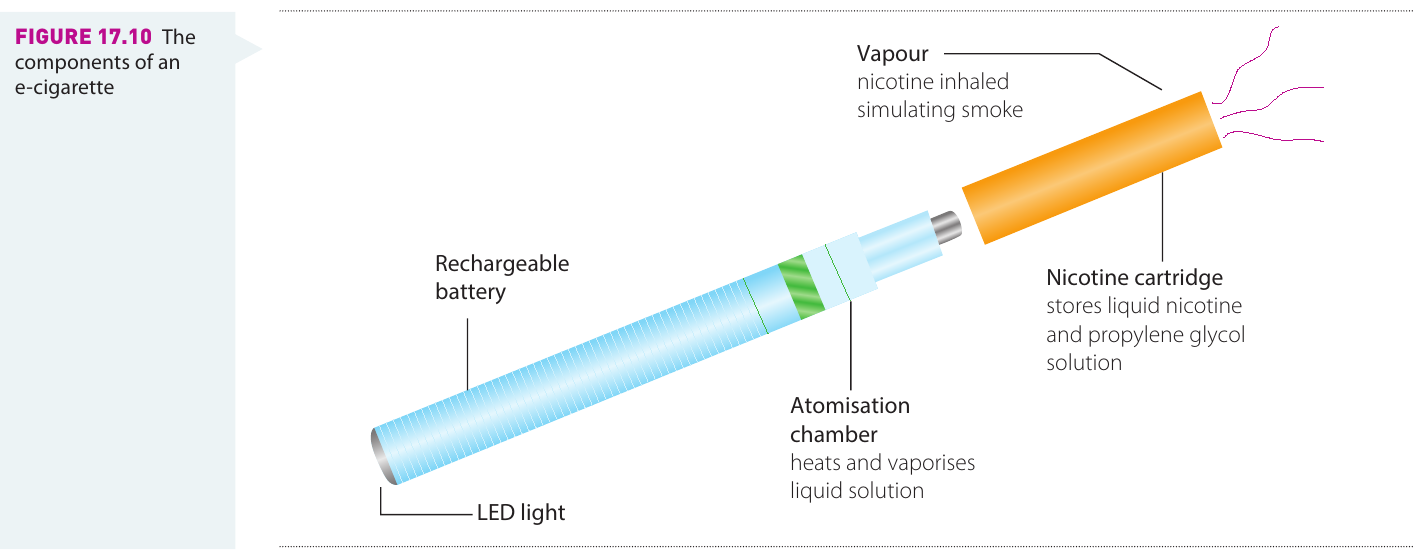
An electronic cigarette (e-cigarette) is a battery-powered device that converts liquid (e-liquid) into an aerosol that users inhale. Unlike conventional cigarettes that produce smoke from burning tobacco, e-cigarettes create a vapour containing liquefied nicotine or other chemicals.
Current regulations
Note
Australian law prohibits:
- Selling e-cigarettes and accessories to people under years old
- Buying e-cigarettes for minors
- Smoking e-cigarettes in cars with children under present
- Selling liquid nicotine, including nicotine-containing e-liquids
Safety concerns
The safety of e-cigarettes remains uncertain due to limited available research.
Important
Known issues:
- Many "nicotine-free" e-liquids actually contain varying amounts of nicotine when tested
- Nicotine has numerous harmful short-term and long-term effects on the body
- Ingesting liquid nicotine can cause poisoning
- Effects of other chemicals in e-liquids are still unclear
Unproven claims:
- Some manufacturers claim e-cigarettes help people quit smoking
- This has not been scientifically demonstrated
- Health authorities have not approved e-cigarettes as smoking cessation aids or nicotine replacement therapy
Note
Exam tip: When evaluating prevention strategies, always look for evidence of effectiveness through comparing epidemiological data before and after implementation. Consider both intended effects (like reduced smoking rates) and unintended consequences (like the rise of e-cigarettes).
Remember!
Summary
Key Points to Remember:
-
Prevention is always preferable - It reduces suffering, improves quality of life, and decreases financial burden on individuals and the health system
-
Behaviour change prevents many non-infectious diseases - Educational programs and campaigns aim to modify lifestyle choices that increase disease risk
-
Successful campaigns require six key elements - Evidence base, technical package, management, partnerships, communication, and political commitment
-
Legislation strengthens prevention efforts - Laws regulate advertising, increase taxes, restrict usage, and require clear product labelling when education alone is insufficient
-
Epidemiological data measures effectiveness - Comparing incidence, prevalence and mortality rates before and after interventions shows whether strategies work