Hydrocarbon Reactions (HSC SSCE Chemistry): Revision Notes
📚Revision Notes
Implications of Obtaining and Using Hydrocarbons
Introduction
Hydrocarbons play a central role in modern life. We encounter them daily in many forms, from the plastics in our electronic devices to the fibres in our clothing. Hydrocarbon-based fuels power our vehicles, heat our homes, and cook our food. Many everyday products including paints, adhesives, solvents, medicines, and cosmetics originate from simple alkanes, alkenes, and alkynes. However, obtaining and using these valuable compounds comes with significant environmental and social implications.
Sources of hydrocarbons
Crude oil
The primary source of hydrocarbons is crude oil, a fossil fuel formed by the decomposition of prehistoric living organisms. This process takes millions of years, making crude oil a non-renewable resource. Crude oil is a complex mixture of many different hydrocarbons, ranging from small molecules with just a few carbon atoms to large molecules containing dozens of carbon atoms.
Note
The formation of crude oil requires very specific geological conditions maintained over millions of years. This extended timeframe explains why crude oil deposits are limited and why consumption rates far exceed natural replenishment - making it effectively non-renewable on human timescales.
Fractional distillation
Because crude oil is a mixture, it must be separated into useful components through a process called fractional distillation. This technique separates substances based on their different boiling points.
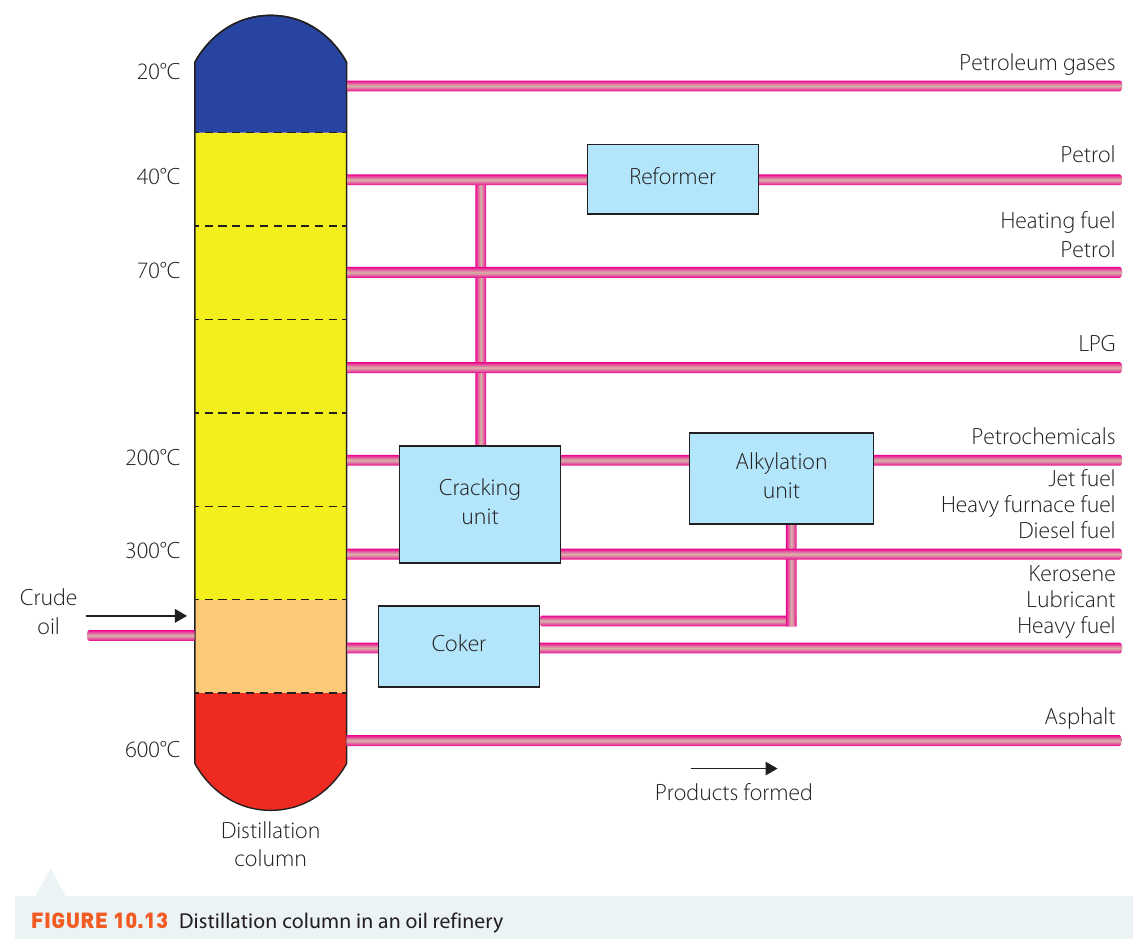
The fractional distillation process works as follows:
- Crude oil is heated to approximately at the bottom of a tall distillation column
- The hot mixture vaporises and rises up the fractionating tower
- The tower has a temperature gradient, being hottest at the bottom and coolest at the top
- As the vapours rise and cool, different fractions condense at different heights
- Each fraction condenses when it reaches the part of the tower matching its boiling point
- The condensed liquids collect in trays at various levels and are drawn off
Note
Key principle: Substances with higher boiling points condense at lower, hotter levels of the tower. Low boiling point gases rise to the top and remain gaseous, exiting from the top of the column. This continuous process efficiently separates crude oil into valuable fractions including petroleum gases, petrol, kerosene, diesel fuel, lubricants, and asphalt.
Catalytic cracking
Many heavier fractions from crude oil can be further processed to increase the yield of lighter, more valuable fractions that are in highest demand. In Australia, heavier fractions with carbon chains of 15-25 carbon atoms undergo catalytic cracking.
Catalytic cracking is a decomposition reaction where larger hydrocarbon molecules break down into smaller, more useful molecules. This process uses:
- A catalyst (typically zeolites, which are aluminosilicate compounds containing aluminium, silicon, and oxygen)
- A temperature of approximately
- Moderately low pressure
Example
Worked Example: Catalytic Cracking Reaction
An example of a catalytic cracking reaction is:
In this reaction, pentadecane breaks down into:
- Octane () - used primarily as automobile fuel
- Ethene () - a common feedstock for polymer production
- Propene () - used in chemical manufacturing
This demonstrates how one large molecule can be converted into multiple valuable smaller products, each with important industrial applications.
Thermal cracking
Thermal cracking is an alternative method that also breaks down large hydrocarbons into more useful products. This process uses:
- High temperatures ranging from to
- High pressure (approximately 70 atmospheres)
- No catalyst
The reactions in thermal cracking and catalytic cracking often produce the same products, but the mechanism by which the reactions occur differs.
Note
Comparison: While both cracking methods break down large hydrocarbons, catalytic cracking operates at lower temperatures (around ) using a catalyst, whereas thermal cracking uses much higher temperatures () and pressure without a catalyst. The choice between methods depends on economic factors and desired product distribution.
Mining and transporting crude oil and natural gas
Extraction locations
Mining for crude oil and natural gas frequently occurs in ocean environments, where millions of years of sedimentation have created ideal conditions for fossil fuel formation. Natural gas is a mixture of simple alkanes, predominantly methane (), with smaller amounts of ethane, propane, butane, and pentane.
Crude oil extraction also takes place on land, sometimes in remote areas of significant environmental importance. Long-standing controversy surrounds mining operations in Alaska, the Arctic, and Antarctic regions due to the potential environmental impacts of extraction and transport activities.
Oil spills and their impacts
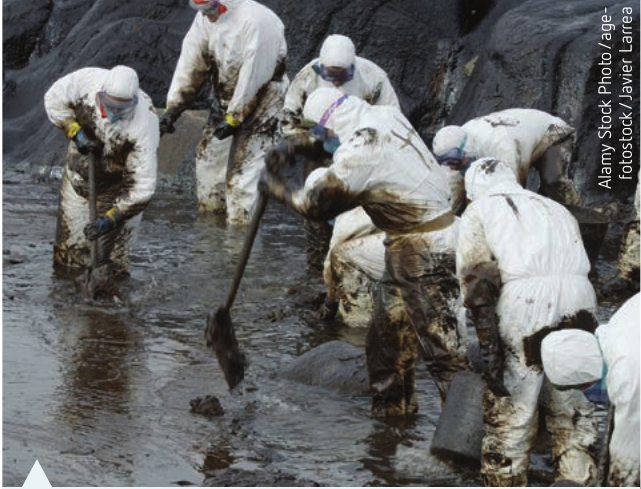
One of the most serious environmental risks associated with crude oil is the possibility of spills during transport. Several major incidents demonstrate the devastating consequences:
Important
Major Oil Spill Case Study: Exxon Valdez (1989)
The Exxon Valdez oil tanker ran aground in Prince William Sound, Alaska, causing massive environmental damage. The spill released approximately 41 million litres of oil, contaminating over 1,800 km of coastline.
Immediate impacts included:
- Four human deaths in the weeks following the spill
- 140 eagles killed
- 300 seals killed
- 3,000 sea otters killed
- Over 250,000 sea birds killed
Long-term impacts included:
- Poisoning and depletion of fish stocks
- Disruption to breeding patterns and hunting behaviour
- Destruction of animal habitats
- 26,000 jobs lost in tourism
- 10,000 jobs lost or affected in fishing
- $2.4 billion in lost income from fishing and tourism
Sociocultural effects included psychological stress from job loss, mortgage stress, and legal disputes over compensation.
Important
Major Oil Spill Case Study: Deepwater Horizon (2010)
This offshore oil rig exploded in April 2010, causing:
- 11 human deaths
- The largest oil spill in US history
- Severe long-term effects on plant and animal life for years after the event
- Thousands of people unemployed for years
- Collapse of local fishing, seafood, and tourism businesses
- Significant strain on welfare systems and communities
Note
Australian Context: Regina Oil Spill (2015)
In July 2015, the tanker Regina ran aground in the Great Barrier Reef Marine Park off Queensland. While 15 tonnes of oil reached the Australian mainland and cost millions of dollars to clean up, environmental damage was limited. However, this incident highlighted the potential for much more serious damage in environmentally sensitive areas like the Great Barrier Reef.
These examples demonstrate that oil spills have severe consequences across multiple dimensions:
- Environmental damage: Destruction of ecosystems and wildlife
- Economic losses: Job losses and business failures
- Social impacts: Community stress and displacement
- Long-term effects: Recovery can take many years or even decades
The greenhouse effect
Carbon dioxide as a greenhouse gas
One of the primary uses of organic compounds is as fuel. Common hydrocarbon fuels include:
- Octane and ethanol for automobiles
- Methane and ethane for domestic heating and cooking
- Butane for portable BBQ gas bottles
When these fuels undergo combustion, they produce carbon dioxide (), a greenhouse gas that absorbs infrared radiation in the atmosphere. This trapped heat contributes to the enhanced greenhouse effect, where human activities increase the natural warming of Earth's atmosphere beyond normal levels.
Evidence of increasing carbon dioxide
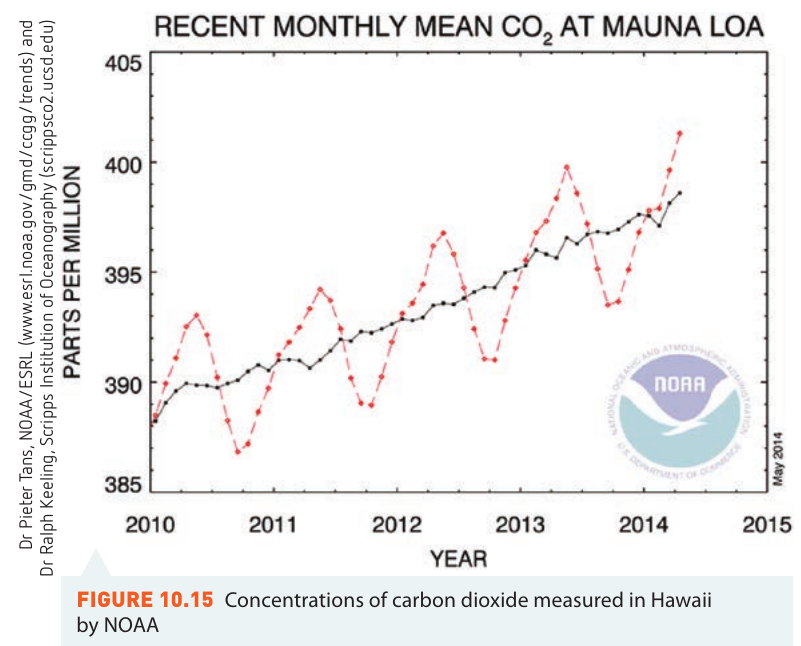
The increase in atmospheric carbon dioxide over the past 50 years is undeniable. The US National Oceanic and Atmospheric Administration (NOAA) has maintained measurements at the Mauna Loa Observatory in Hawaii, showing a steady and significant increase in levels.
Important
This extra is being released from coal reserves where it had been locked away for millions of years. Life on Earth evolved in an atmosphere without these elevated levels. The increase in carbon dioxide means more infrared radiation is absorbed and trapped in the atmosphere, leading to a rise in global temperature.
International response
Recognition of the climate change threat has led to international cooperation:
Intergovernmental Panel on Climate Change (IPCC)
The IPCC was established in 1988 as an international body to provide clear, scientific information on climate change. It is open to all member countries of the United Nations and the World Meteorological Organisation. The IPCC's knowledge is highly respected due to the range of contributing scientists and rigorous review processes.
United Nations Framework Convention on Climate Change (1992)
In 1992, Australia and 150 other countries signed this agreement at the United Nations Conference on Environment and Development in Rio de Janeiro, Brazil. Countries recognised the importance of working together to reduce greenhouse gas emissions and combat climate change.
Kyoto Protocol (1997)
This international agreement set emission reduction targets:
- First commitment period (2008-2012): 37 industrialised countries committed to reducing greenhouse gas emissions to an average of 5% below 1990 levels
- Second commitment period (2013-2020): Target increased to 18% below 1990 levels
Consequences of the enhanced greenhouse effect
The enhanced greenhouse effect produces numerous observable and measurable environmental changes:
Physical changes to ice and water
- Glacier shrinkage: Glaciers in the Arctic and other regions have experienced significant reduction in size
- Changed ice formation patterns: In polar regions, ice now forms later in winter and breaks up earlier in spring, affecting animal feeding behaviour and plant flowering and breeding cycles
- Declining Arctic sea ice: NASA satellite data shows the area of Arctic sea ice has fallen from approximately 7 million square kilometres in 1980 to just over 4 million square kilometres recently
- Rising sea levels: NASA satellite readings show an average rise of 85 mm since 1993, while ground-based measurements indicate a rise of nearly 200 mm since 1870. In the long term, this will result in land loss and flooding of coastal cities
Weather pattern changes
While harder to link definitively to increased carbon dioxide and global temperatures, several trends are occurring:
- More frequent and prolonged heat waves and droughts in summer
- More severe snowstorms in winter
- Increased frequency and intensity of hurricanes, severe storms, and cyclones
Ocean acidification
Measurements show a decrease in pH in the world's oceans since the industrial revolution. This phenomenon can be attributed to increased atmospheric carbon dioxide through a series of chemical equilibria.
Important
Chemistry of Ocean Acidification
When atmospheric increases, more carbon dioxide dissolves in the ocean:
The dissolved carbon dioxide then reacts with water:
This carbonic acid then ionises:
With an increase in atmospheric carbon dioxide, Le Chatelier's principle predicts that these equilibria shift to the right to oppose the change. This increases the concentration of hydronium ions (), thereby decreasing the ocean's pH and making it more acidic.
Temperature effects on carbon dioxide solubility
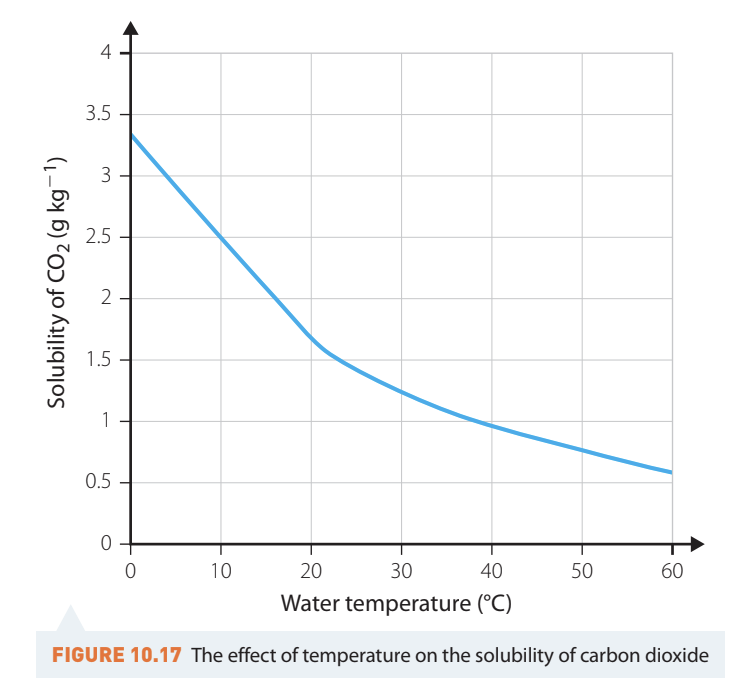
The solubility of carbon dioxide in water depends on both concentration and temperature. As temperature increases, carbon dioxide molecules gain enough energy to overcome attractive forces with water molecules and escape as gas.
Note
Temperature and CO₂ Solubility Relationship
This temperature effect has several important consequences:
- Water bodies in colder climates have greater concentrations of dissolved than those in warmer climates
- More carbon dioxide dissolves in winter than in summer
- As ocean temperatures rise due to global warming, less can dissolve, potentially accelerating atmospheric increases
This creates a dangerous positive feedback loop where warming reduces the ocean's capacity to absorb , leading to more atmospheric and further warming.
Impact on coral reefs
One of the most visible impacts of decreasing pH and increased water temperatures is damage to coral reefs. The Great Barrier Reef in Australia has been the subject of significant study, showing increasing acidity and obvious coral damage over the past 10-15 years.
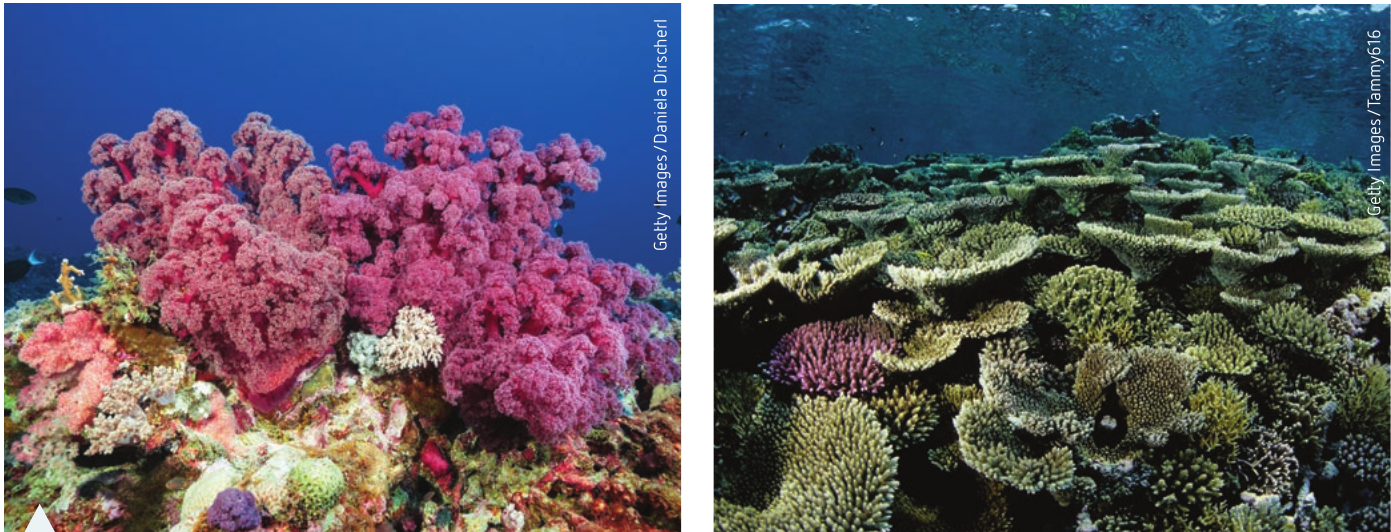
The comparison shows healthy, vibrant coral (left) versus damaged, bleached coral (right). Coral bleaching and death result from the combined stresses of warmer temperatures and more acidic conditions, threatening these vital marine ecosystems.
Dealing with the problem
Post-combustion carbon capture
There are several methods for reducing carbon dioxide emissions from combustion. Coal-fired power stations currently produce 40% of Australia's greenhouse gas emissions. One promising approach is post-combustion capture, already widely used in the oil, gas, and chemical industries.
Note
The Commonwealth Scientific and Industrial Research Organisation (CSIRO) in Australia is a world leader in developing this technology, collaborating with scientists and energy companies in Australia and China to construct and test post-combustion capture plants.
How post-combustion capture works
Normally in a coal-fired power station, exhaust gases containing 10-15% carbon dioxide are released directly to the atmosphere. Post-combustion capture can reduce up to 85% of this before release.
The process works as follows:
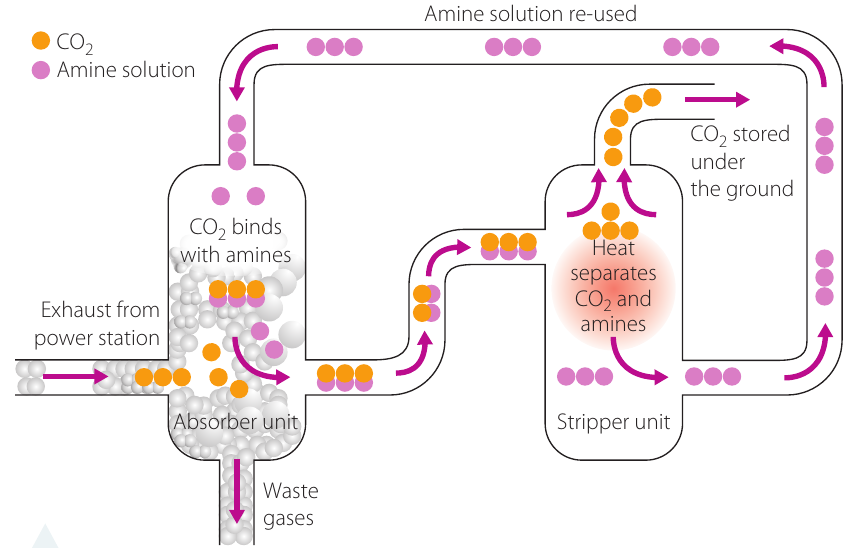
- Exhaust gases pass through an absorber unit containing a liquid (typically an amine solution)
- The amine chemically binds with , removing it from the gas stream
- The -rich amine solution moves to a stripper unit
- Heat separates the from the amine
- The cleaned amine solution returns to the absorber for reuse
- The captured is cooled and compressed into liquid form
- Waste gases with greatly reduced are released to the atmosphere
Carbon sequestration
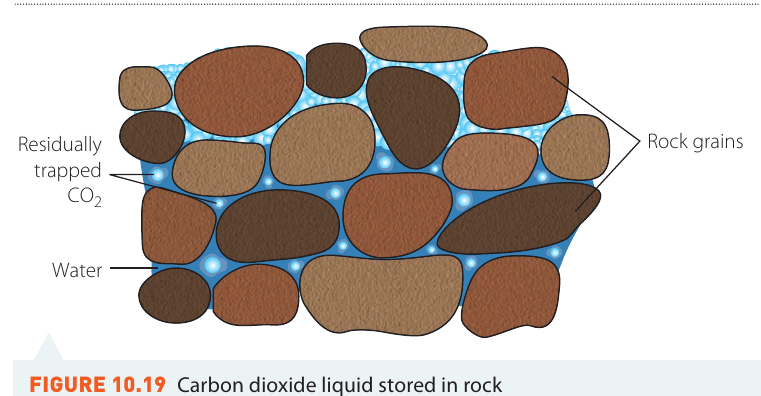
The captured liquid carbon dioxide must be stored to prevent its release into the atmosphere. This storage process is called carbon sequestration. The liquid is injected into suitable geological formations deep underground, where it becomes trapped in porous rock layers.
Note
The diagram shows how carbon dioxide liquid (blue areas) becomes residually trapped between rock grains (brown) in water-saturated rock formations. This geological storage is designed to keep the isolated from the atmosphere for thousands of years, helping to slow the effects of the enhanced greenhouse effect.
Polymer pollution
Plastic production and consumption
Many organic compounds, including alkenes, alcohols, carboxylic acids, and amines, are used to create polymers - large molecules formed by linking many small molecules (monomers) in repeating units. Common polymers include plastics, resins, coatings like teflon, and fibres like nylon and rayon.
The scale of plastic production has grown dramatically:
- By the 21st century, global plastic production exceeded total metal production by volume
- Worldwide plastic production now exceeds 300 million tonnes per year
- The amount of plastic manufactured in the first 10 years of this century equalled the total produced during the entire previous century
- Only about 10% of all plastic is recycled
- Australia ranks in the top five waste-producing nations per capita
Note
Australian Plastic Consumption
Australia's contribution to plastic pollution is significant:
- Almost 1.3 million tonnes of plastic produced annually
- Equivalent to 71 kg per person
- Packaging accounts for over one-third of plastic consumption (approximately 37,000 tonnes per year)
- Australians use annually:
- Over 15,000 tonnes of soft drink bottles
- 30,000 tonnes of milk bottles
- Nearly 7 billion plastic bags
Recycling challenges
While plastic packaging provides excellent protection and is lightweight compared to metal or cardboard alternatives, it creates major environmental problems. In the past, more than one-third of plastic consumed in Australia went to landfill. Today, many local councils offer recycling facilities for plastic materials.
Plastic identification codes
Since most plastics are incompatible when mixed, different types must be separated before recycling. Manufacturers use a plastic identification code - a triangle with a number inside - to help identify plastic types. This differs from the recycling symbol, which is a triangle made of three arrows with no number inside.
Important
Critical Understanding: Identification vs. Recyclability
It's important to understand that the identification code does not mean the plastic can be recycled - it only identifies the plastic type. Although all plastic packaging is technically recyclable, not all types are accepted in kerbside recycling schemes.
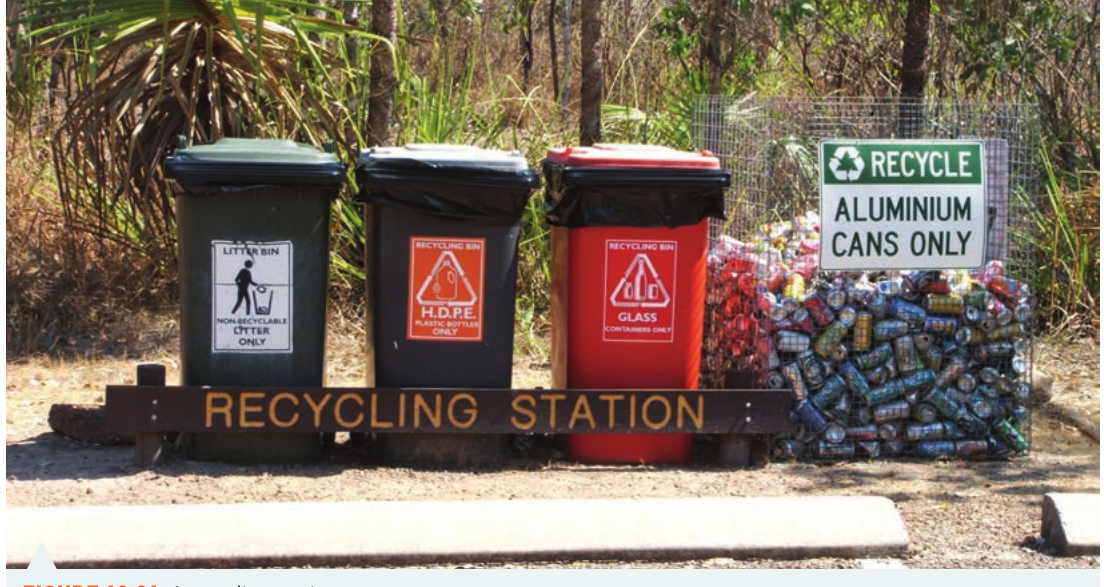
Most councils can recycle only plastic codes 1, 2, and 4:
- Code 1: Polyethylene terephthalate (PET)
- Code 2: High-density polyethylene (HDPE)
- Code 4: Low-density polyethylene (LDPE)
If unsure what plastics your local council accepts, contact them or visit the Recycling Near You website.
Benefits of recycling
Recycling benefits the environment in several important ways:
- Reduces landfill: Less plastic waste accumulates in dumps
- Energy efficiency: Recycling plastic uses only 30% of the energy needed to make the original product
- Energy savings: Recycling 1 tonne of plastic saves enough energy to run a refrigerator for a month
- Resource conservation: Reduces raw materials needed for plastic production
- Product creation: It takes 125 recycled plastic milk bottles to manufacture one 140-litre wheelie bin
Current recycling rates and environmental impacts
Currently, Australians recycle approximately 23% of plastic packaging products. The majority goes to landfill, creating a major waste management problem. Plastic debris has accumulated in natural habitats from the poles to the equator, with substantial quantities in marine environments.
Important
Research shows that plastics are fragmenting in the environment into smaller pieces. This increases the likelihood that organisms will ingest these fragments, potentially transferring toxic chemicals into wildlife and up the food chain. This pollution threatens ecosystems and wildlife health on a global scale.
Summary
Key Points to Remember:
-
Crude oil is a non-renewable resource formed over millions of years from prehistoric organisms and separated by fractional distillation based on boiling points.
-
Oil spills cause devastating multi-dimensional impacts including massive environmental damage, significant economic losses, job destruction, and long-term sociocultural stress on affected communities.
-
Carbon dioxide from hydrocarbon combustion is a major contributor to the enhanced greenhouse effect, with measurable increases in atmospheric leading to global temperature rise, glacier melting, sea level rise, and ocean acidification.
-
Ocean acidification occurs through chemical equilibria where increased atmospheric dissolves in water, forming carbonic acid that increases hydronium ion concentration and decreases pH, threatening coral reefs and marine ecosystems.
-
Post-combustion carbon capture and sequestration technologies can remove up to 85% of from power station emissions by using amine solutions to absorb , then storing the captured gas underground in geological formations.
-
Plastic pollution is a growing global crisis, with over 300 million tonnes produced annually and only 10% recycled, leading to accumulation in landfills and marine environments, fragmentation into smaller particles, and potential toxic chemical transfer to wildlife.