Safe Use of Organic Substances (HSC SSCE Chemistry): Revision Notes
📚Revision Notes
Safe Use of Organic Substances
Introduction
Organic compounds play an important role in chemistry and industry, but they also present significant safety challenges. Understanding how to work safely with these substances is essential for both laboratory work and industrial applications.
Alkenes and alkynes contain double and triple bonds that make them highly reactive. They can undergo reactions with halogens, water, and hydrogen. Alkanes are less reactive but still undergo combustion and substitution reactions. When these organic chemicals are used in reactions, they can create various hazards that need to be carefully managed.
Note
Many alkanes are used as fuels. When they burn (combust), they release carbon dioxide () and other products like nitrogen dioxide (). These chemical releases contribute to environmental problems including the enhanced greenhouse effect, polymer pollution, and increasing ocean acidity.

Using organic substances safely
Organic substances in laboratories and industry
In high school chemistry laboratories, you will encounter small amounts of organic substances that present manageable risks. However, in industrial settings, these same chemicals are used in much larger quantities, which creates greater challenges for risk management and safe handling.
Common products that contain potentially dangerous organic substances include:
- Paints and lacquers
- Adhesives and glues
- Degreasing materials
- Dry cleaning chemicals
- Printing materials
These everyday products often contain organic substances such as:
- Ethanal (acetaldehyde)
- Propanone (acetone)
- Pentyl acetate
- Benzene
- Tetrachloromethane (carbon tetrachloride)
- Dichloromethane
- Ethanol
- 1,2-ethanediol
Common hazardous organic substances
The table below shows some widely used organic solvents, their names, industrial uses, and associated health hazards.
| IUPAC name | Other common names | Uses | Hazards |
|---|---|---|---|
| Ethanal | Acetaldehyde, acetic aldehyde, ethyl aldehyde | Polymer production, perfume production | Inhaled vapours are toxic. Long-term exposure can cause nervous system damage and pulmonary oedema. Short-term irritant to skin, eyes and mucous membranes. |
| Benzene | Coal naphtha, mineral naphtha, pyrobenzol | Production of plastics, resins, synthetic fibres, dyes, detergents, medicines and pesticides | Inhaled vapours are toxic. Long-term exposure can cause nervous system damage. Is an anaesthetic. Causes damage to blood components, anaemia and bleeding. |
| Propanone | Acetone, dimethyl ketone, methyl ketone, dimethylformaldehyde | Used as nail polish remover and paint thinner | Inhalation of vapours causes irritation to eyes, nose and throat. Not harmful if ingested. |
| Tetrachloromethane | Carbon tetrachloride, perchloromethane | Used in dry cleaning, as a degreaser, in fire extinguishers and as a pesticide | Toxic by inhalation, absorption or ingestion. Causes nervous system damage, irritates eyes and skin. Long-term skin contact causes dermatitis, and long-term liver and kidney damage. |
The challenge of chemical naming
One significant safety challenge is that organic compounds often have multiple names. Many industries and laboratories use common names that don't describe the chemical structure. For example, benzene might be called "coal naphtha" or "mineral naphtha." From these alternative names alone, it's difficult to identify that the substance contains benzene and therefore requires appropriate safety precautions.
Important
The use of multiple names for the same chemical can lead to confusion and potentially dangerous situations. Always verify the IUPAC name before working with any substance, even if you recognize the common name.
Safety Data Sheets (SDS)
To reduce confusion about chemical names and improve safety, Safety Data Sheets (SDS) are used. An SDS is a document that provides comprehensive safety information about a chemical substance.
Every chemical has an SDS. These documents are:
- Available online
- Kept in all chemical laboratories
- Maintained at manufacturing and industrial sites that use chemicals
Note
Each SDS provides the following information:
- The official IUPAC name of the chemical
- Other possible common names the chemical is known by
- Properties of the chemical
- Possible hazards
- Precautions for safe use and handling
- First aid steps to take if someone comes into contact with, inhales, or ingests the chemical
Important
Exam tip: When conducting any practical work with chemicals, always consult the SDS first to understand the risks and necessary precautions.
Chemical labeling
Another important method of preventing accidental contact with hazardous chemicals is proper labeling. Chemical labels must clearly indicate:
- The name of the chemical
- The concentration
- Possible hazards (using standardized warning symbols)
Proper labeling procedures are covered by local regulations to ensure consistency and safety across all settings.
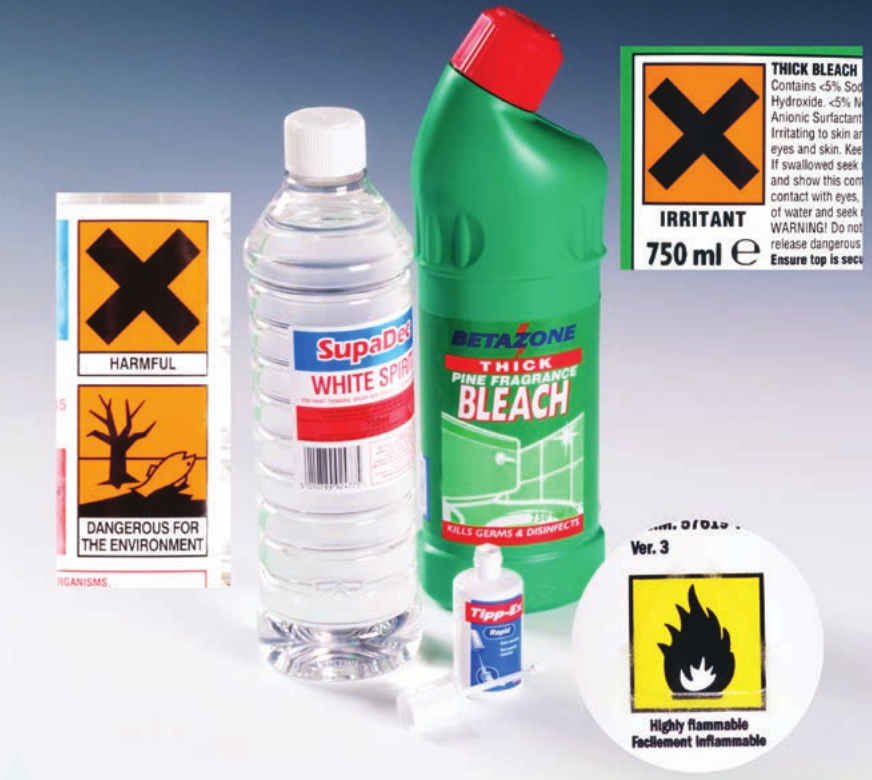
Note
The image above shows examples of proper chemical labels featuring different hazard warning symbols including:
- Harmful/irritant symbols (black X on orange background)
- Environmental hazard symbols (dead tree and fish)
- Flammable warning symbols (flame)
Risks of organic chemicals related to physical properties
Understanding the physical properties of organic compounds helps us identify safe ways to use them. Three key properties create particular hazards: volatility, flammability, and reactivity.
Volatility
Many organic compounds are volatile, meaning they have weak intermolecular forces and evaporate easily at room temperature to form vapour.
Important characteristics of organic vapours:
- Can be less dense than air (will rise and fill the room)
- Can be denser than air (will settle at lower levels)
- Usually colourless and therefore not easily visible
- Almost all have pungent (strong) smells, making them detectable
Important
Because vapours are invisible, they present a significant inhalation risk if proper precautions aren't taken.
Flammability and flashpoint
Most organic compounds are highly flammable, especially when in vapour form. This hazard is related to a property called flashpoint.
Flashpoint is the lowest temperature at which a liquid can form an ignitable mixture in air near the surface of the liquid.
Key points about flashpoint:
- The lower the flashpoint, the easier it is to ignite the substance
- Any organic substance with a flashpoint below is considered highly flammable
- Chemicals with flashpoints below include cyclohexane, cyclohexene, ethanol, propanone, pentane, propanol, and methanol
Important
Remember: Room temperature is typically around , so substances with flashpoints below can ignite at normal room conditions!
Reactivity
Many organic compounds are highly reactive and will readily react with:
- Substances in the air
- Water
- Other nearby chemicals
This reactivity increases the risk of unexpected or dangerous reactions occurring if chemicals are not stored and handled properly.
Exposure methods and effects
There are three main ways that organic compounds can enter the human body, each with different mechanisms and risks.
Routes of exposure
1. Inhalation through the lungs
This is the most common exposure method because:
- Vapours are the easiest form of chemical to encounter
- Gases can be breathed in without being noticed
- The organic compound dissolves into the bloodstream through the lung walls
- It then travels around the body to various internal organs where it accumulates over time
2. Absorption through the skin
This method is less common but uses the same mechanism as inhalation:
- Compounds dissolve through the skin
- They make their way into the bloodstream
- They then travel to internal organs
3. Ingestion (swallowing)
This usually happens accidentally when:
- Chemicals remain on hands or clothes
- They are later ingested along with food or drinks
- They enter the digestive system and are absorbed
Important
Always wash hands thoroughly after working with chemicals and never eat or drink in a laboratory!
Effects of exposure
The effects of contact with organic compounds vary depending on:
- Length of exposure
- Type of chemical
- Health of the person exposed
Contact effects (absorption through skin)
When organic solvents contact the skin, they dissolve the fats that form the protective barrier. This allows chemicals to enter the bloodstream more easily.
Symptoms of skin contact include:
- Burning or tingling sensation
- Presence of welts or rashes
- Chemical burns (similar to burns from heat or flame)
Acute poisoning
Acute poisoning occurs immediately upon contact or develops within a few hours. This often happens upon exposure to organic vapours.
Note
Symptoms of acute poisoning include:
- Headaches and dizziness
- Affected reaction time or vision
- Poor coordination
- Loss of consciousness in severe cases
Chronic poisoning
Chronic poisoning occurs after repeated exposure, often over years or decades. This is commonly found in industries where workers are exposed to chemicals daily.
Note
Symptoms of chronic poisoning include:
- Chronic fatigue
- Physical weakness
- Mood changes
- Liver and kidney damage
- Damage to the central nervous system
Example
Case study - Benzene exposure:
Long-term effects of benzene exposure include:
- Damage to bone marrow cells, resulting in anaemia and blood disorders
- Immune system disorders where white blood cells are destroyed and antibody production decreases
- Effects on unborn foetuses, causing birth defects and premature births
Prevention methods
Various methods are used in laboratories and industry to prevent or minimise exposure to organic compounds. These can be remembered using the acronym SIV: Substitution, Isolation, Ventilation.
Substitution and elimination
Many industries have moved to eliminate or substitute harmful chemicals with safer alternatives.
Example
Example - Benzene substitution:
Benzene was used for many years with little protection for workers. Due to its severe health effects, benzene has now been phased out of many industries and products like paints and glues. Alternative products such as cyclohexane are now used in processes like:
- Electroplating
- Rubber manufacture
- Chemical production
When possible, using less toxic alternatives is the most effective way to reduce risk.
Isolation
Isolation means creating physical separation between people and chemicals. This can be achieved at different scales:
Simple isolation:
- Wearing a lab coat
- Using safety glasses
- Wearing gloves to prevent absorption through skin
Advanced isolation:
- Physical barriers or containers
- Automated systems that handle chemicals without human contact
- Sealed glove boxes or containment systems
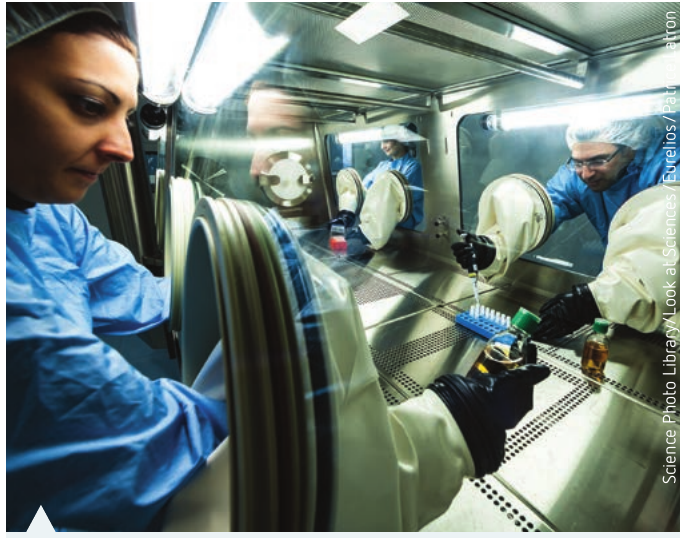
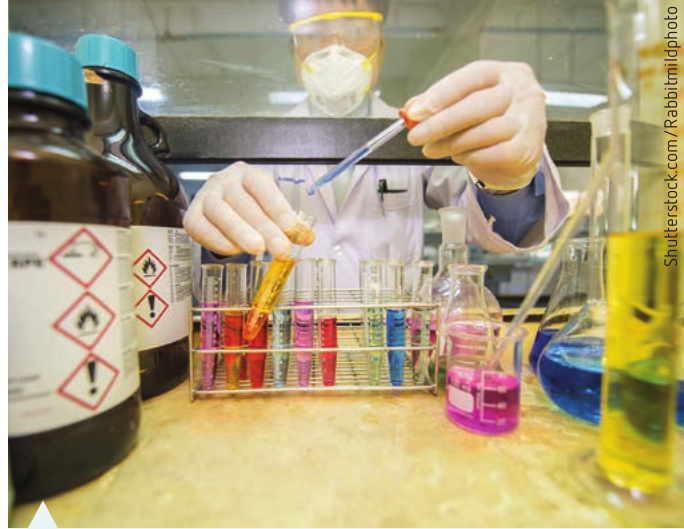
Note
These images show examples of advanced isolation techniques, including sealed containment systems and proper use of personal protective equipment (PPE) with safety barriers.
Ventilation and fume extraction
Proper ventilation systems remove chemical vapours from the breathing zone, significantly reducing inhalation risks.
In the laboratory:
A fume cupboard is a ventilation system that uses fans to draw fumes upward and away from the user. All work with volatile organic compounds should be conducted in a fume cupboard.
In industry:
Giant extractor systems clear entire rooms and factories of vapours, reducing the chance of chemical inhalation for all workers in the area.
Disposal of organic compounds
Proper disposal of organic compounds is strictly governed by legislation in Australia to protect both human health and the environment.
Disposal procedures
In both laboratory and industrial contexts:
- Waste is collected in designated containers
- Waste is dealt with by specialised chemical waste disposal companies
- Waste is often treated first to:
- Remove acids or bases (by neutralisation)
- Filter out metal solids or other solid materials
Separating different types of waste
Different types of organic waste are kept separate because they:
- Pose different hazards and risks
- Require different treatment methods
- May react dangerously if mixed together
Note
For example, halogen-based organic substances (containing chlorine, bromine, etc.) are often collected separately from simple hydrocarbons or alcohols/aldehydes.
The "sink rule"
Important
As a general rule, no organic waste should be washed down the sink, no matter how dilute.
Reasons for this rule:
- Organic chemicals end up in the sewage system
- They eventually reach river systems
- The toxic nature of these chemicals results in poisoning of plants, animals, and humans who use these waterways
Waste reduction in the laboratory
In your classroom, there should always be a designated waste container for organic chemicals. Always empty all organic waste into this container, never down the sink.
Practical investigations involving organic substances use very small amounts because:
- Reduction of waste volume is important
- Smaller amounts are safer to handle
- Less waste needs to be disposed of
Note
Best practice: Always use the smallest volume possible when conducting practical investigations with any chemical, especially organic materials.
Remember!
Summary
Key Points to Remember:
-
Safety Data Sheets (SDS) provide standardized information about chemicals including IUPAC names, hazards, safe handling procedures, and first aid information. Always consult the SDS before using any chemical.
-
Physical properties create hazards: Volatility allows chemicals to evaporate and be inhaled; flammability (especially substances with flashpoints below ) creates fire risks; reactivity can cause unexpected dangerous reactions.
-
Exposure occurs through three routes (IAI): Inhalation (most common), Absorption through skin, and Ingestion (usually accidental). Each route allows chemicals to enter the bloodstream and affect internal organs.
-
Prevention methods (SIV): Substitution with safer alternatives, Isolation using PPE and containment systems, and Ventilation using fume cupboards and extraction systems all work together to minimise exposure risks.
-
Proper disposal is essential: Never wash organic waste down the sink. Always use designated waste containers and use the smallest possible volumes of chemicals in experiments to minimise waste production.