Distance, Speed, and Time (HSC SSCE Mathematics Standard): Revision Notes
📚Revision Notes
Distance, Speed, and Time
Understanding speed
Speed measures how fast something moves by comparing the distance covered with the time it takes. When we talk about the speed of a car, we typically express it in kilometres per hour (km/h). This tells us how many kilometres the car would travel if it continued at that speed for one hour.
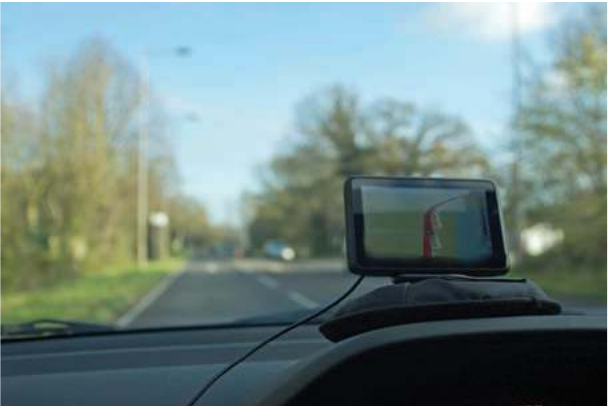
Modern vehicles use several instruments to measure speed and distance. A speedometer displays the current speed of a vehicle at any given moment. While speedometers are useful, they aren't completely accurate and typically have a tolerance of approximately 5%. GPS devices can also display speed readings. Additionally, most cars have an odometer, which records the total distance the vehicle has travelled.
Note
Speedometers typically have a tolerance of approximately 5%, meaning the displayed speed may not be perfectly accurate. This is why GPS devices are often used for more precise speed measurements.
The distance, speed and time relationship
Three quantities are connected when dealing with motion: distance, speed, and time. Understanding how these relate to each other is fundamental to solving many practical problems.
The three key formulas that link these quantities are:
Where:
- represents distance
- represents speed
- represents time
Each formula allows you to calculate one quantity when you know the other two. For example, if you know how fast you're travelling and for how long, you can calculate the distance covered.
Important
To use these formulas effectively, you must know any two of the three quantities (distance, speed, or time) to calculate the third. Always identify which values you have and which value you need to find.
Triangle memory aid
A helpful way to remember which formula to use is the triangle diagram. This visual tool makes it easy to recall the correct relationship between distance, speed, and time.
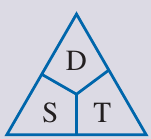
To use this triangle:
- Cover the quantity you want to find
- The remaining visible parts show you the formula to use
For example, if you cover (distance), you see and side by side, indicating that . If you cover (speed), you see over , showing that .
Note
Quick Tip: The triangle method is particularly useful during exams when you need to quickly recall which formula to use. Practice covering each variable to become familiar with the resulting formulas.
Worked example: Finding distance
Let's work through a practical problem to see how these formulas apply in real situations.
Example
Worked Example: Finding Distance
Question: Find the distance travelled by a car whose average speed is 65 km/h if the journey lasts 5 hours. Answer correct to the nearest kilometre.
Solution:
Write the formula:
Substitute the values ( and ):
Evaluate:
The car travels 325 kilometres during the 5-hour journey.
Worked example: Finding time
Now let's look at calculating time when we know distance and speed.
Example
Worked Example: Finding Time
Question: How long will it take a vehicle to travel 150 km at a speed of 60 km/h?
Solution:
Write the formula:
Substitute the values ( and ):
Evaluate:
The journey will take 2.5 hours (or 2 hours and 30 minutes).
Understanding stopping distance
Stopping distance is a critical safety concept in road transport. It represents the total distance a vehicle travels from the moment a driver sees a hazard until the vehicle comes to a complete stop.
Stopping distance consists of two components:
Stopping distance = Reaction distance + Braking distance
Reaction distance (also called thinking distance) is how far a vehicle moves during the time between when a driver sees a hazard and when they start applying the brakes. For example, if a pedestrian steps onto the road, the reaction distance is how far the car travels before the driver's foot touches the brake pedal. For a fit and alert driver, reaction time averages 0.75 seconds.
Braking distance is how far the vehicle continues to move while the brakes are being applied until it stops completely. This distance is influenced by several factors:
- Road surface conditions (wet, slippery, uneven or unsealed roads increase braking distance)
- Road gradient (travelling uphill or downhill)
- Vehicle weight (heavier vehicles take longer to stop)
- Condition of brakes and tyres (worn brakes or tyres increase stopping distance)
Important
Critical Safety Information:
Stopping distance is NOT just about how quickly you can brake! Many drivers underestimate stopping distances, especially at higher speeds. Always maintain a safe following distance, and remember that poor road conditions, fatigue, or distractions can significantly increase your reaction time and total stopping distance.
Note
Factors Affecting Stopping Distance:
Several conditions can dramatically increase your stopping distance:
- Wet or icy roads can double or even triple braking distance
- Worn tyres or brakes reduce stopping efficiency
- Heavier vehicles require more distance to stop
- Downhill slopes increase the distance needed to stop
- Driver alertness - fatigue or distractions increase reaction time
Stopping distance formula
The stopping distance can be calculated using a formula that takes into account both the reaction distance and the braking distance. This formula provides an approximation based on average conditions.
Where:
- represents stopping distance in metres
- represents velocity or speed of the vehicle in km/h
- represents reaction time in seconds
The first part of the formula () calculates the reaction distance, while the second part () calculates the braking distance.
Note
This formula provides an approximation using average conditions. Real-world stopping distances may vary depending on road conditions, vehicle condition, and driver factors. Always allow extra distance in poor conditions or when tired.
Worked example: Calculating stopping distance
Let's apply the stopping distance formula to a real scenario.
Example
Worked Example: Calculating Stopping Distance
Question: Trevor was driving at a speed of 45 km/h and he had a reaction time of 0.75 seconds when a hazard occurred. Calculate the stopping distance using the formula. Answer correct to the nearest whole metre.
Solution:
Write the stopping distance formula:
Substitute the values ( and ):
Evaluate:
Express the answer as required (nearest whole metre):
Trevor's stopping distance is 21 metres.
Remember!
Summary
Key Points to Remember:
-
Speed is a rate that compares distance travelled with time taken, typically measured in km/h.
-
The three key formulas are: , , and . Use the triangle diagram to help remember which formula to apply.
-
Stopping distance has two parts: reaction distance (distance travelled while the driver reacts) and braking distance (distance travelled while braking).
-
The stopping distance formula gives an approximation under average conditions.
-
Many factors affect stopping distance, including road conditions, vehicle weight, and the condition of brakes and tyres. Always allow extra distance in poor conditions.