Language of Probability (HSC SSCE Mathematics Standard): Revision Notes
📚Revision Notes
Language of Probability
What is probability?
Probability is a way of measuring how likely something is to happen. We use probability to talk about the chances of different events occurring in our daily lives.
Note
Key concept:
- Probability measures the chance that something will happen
- Certain events have a probability of (they will definitely happen)
- Impossible events have a probability of (they cannot happen)
- All other events have probabilities between and
Using words to describe probability
When we talk about probability in everyday conversation, we use descriptive words rather than numbers. These words help us quickly communicate how likely we think something is.
Common probability language includes statements like:
- "There's a 50% chance of rain tomorrow"
- "It's impossible for me to finish this by tonight"
- "Winning the lottery is very unlikely"
- "I have an even chance of passing this test"
Categories of probability terms
Events are described using different words depending on their likelihood:
Certain events must occur. They have no alternative outcome.
Likely events have better than an even chance of occurring. Other words with similar meaning include: often, probable, sure, or expected.
Even chance events are equally likely to occur or not occur. This can also be described as 50-50 or a 50% chance. The probability is exactly .
Unlikely events have less than an even chance of occurring. Similar terms include: doubtful, improbable, rarely, or unexpected.
Impossible events cannot occur under any circumstances. There is no chance of them happening.
Note
Understanding these probability terms helps you communicate about likelihood more precisely. The key is to recognize whether an event has no chance (impossible), less than half a chance (unlikely), exactly half a chance (even), more than half a chance (likely), or complete certainty (certain).
The probability scale
We can represent probability on a number line that runs from to . This helps us see where different probability terms fit numerically.

The scale shows:
- represents impossible events
- Values between and represent unlikely events
- represents an even chance
- Values between and represent likely events
- represents certain events
This scale helps us connect everyday language about probability with precise numerical values.
Important
Probability is always a number between and (inclusive). You cannot have a probability less than or greater than . This is a fundamental rule of probability that you should always remember.
Sample space
When we conduct an experiment or observe a random event, we need to identify all the possible results. This complete set of possibilities is called the sample space.
Sample space is the set of all possible outcomes that could occur in an experiment.
Each individual possible result is called an element or outcome of the sample space.
Writing sample space
We write sample spaces using curly brackets to list all possible outcomes. For example:
- When tossing a coin, the sample space is
- When rolling a standard die, the sample space is
The number of elements in a sample space tells us how many different outcomes are possible.
Note
Remember the curly brackets!
Sample spaces are always written using curly brackets to show that you're listing a complete set of all possibilities. Each possible outcome is separated by a comma inside the brackets.
Worked examples
Example
Worked Example 1: Using the language of probability
Ying has three pieces of fruit: a pear, an apple, and an orange. She randomly selects one piece of fruit.

Describe the chance of the following events using the words 'certain', 'likely', 'even', 'unlikely', or 'impossible'.
a) Ying selects a banana
There is no banana available to select.
Since a banana is not among the three fruits, there is no way this event can occur.
Answer: Impossible
b) Ying selects an orange
There is one orange among the three fruits.
This gives Ying one chance out of three possible choices to select the orange.
One out of three is less than half, so this event has less than an even chance.
Answer: Unlikely
c) Ying selects a piece of fruit
All three options (pear, apple, orange) are pieces of fruit.
No matter which one Ying selects, she must select a piece of fruit.
This event must happen with no other possibility.
Answer: Certain
d) Ying selects a pear or an apple
There are two fruits that satisfy this condition: the pear and the apple.
This gives Ying two chances out of three possible choices.
Two out of three is more than half, so this event has better than an even chance.
Answer: Likely
Example
Worked Example 2: Identifying the sample space
Daniel is choosing a day of the week to start his holiday.
a) List the sample space
We need to identify all possible days Daniel could choose.
The days of the week are: Monday, Tuesday, Wednesday, Thursday, Friday, Saturday, and Sunday.
Each of these days is a possible outcome.
We list them using curly brackets with abbreviated names:
Answer: Sample space
b) How many elements are in the sample space?
We count each possible outcome listed in the sample space.
There are seven days of the week, so there are seven possible choices.
Answer: There are elements in the sample space.
Example
Worked Example 3: Identifying the sample space
Two unbiased coins are tossed.
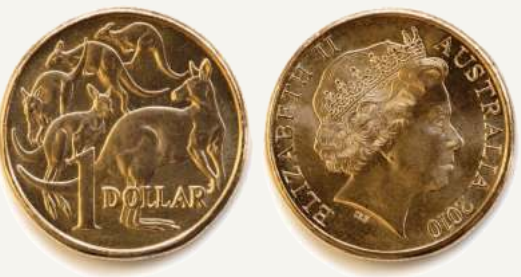
a) What is the sample space?
Each coin can land on either heads (H) or tails (T).
Let's think systematically about all possible combinations:
If the first coin shows heads:
- The second coin could show heads: HH
- The second coin could show tails: HT
If the first coin shows tails:
- The second coin could show heads: TH
- The second coin could show tails: TT
These are all the possible outcomes when tossing two coins.
Answer: Sample space
b) How many possible outcomes are there?
We count the elements in the sample space.
There are four different combinations listed.
Answer: There are possible outcomes.
Important
Common mistake to avoid:
When working with multiple coins or dice, students often forget to list all possible combinations. For two coins, remember that HT (first coin heads, second coin tails) is different from TH (first coin tails, second coin heads), even though both have one head and one tail.
Summary
Key Points to Remember:
- Probability measures chance using numbers from to , where means impossible and means certain
- Use descriptive words to communicate probability: impossible, unlikely, even chance, likely, and certain
- Even chance means a probability of exactly (or 50-50, or 50%)
- Sample space is the complete set of all possible outcomes, written using curly brackets
- Count the elements in a sample space to find how many different outcomes are possible