The Digestive System (VCE SSCE Biology): Revision Notes
📚Revision Notes
The Digestive System
Purpose of the digestive system
Animals are heterotrophs, meaning they cannot produce their own food and must consume other organisms to obtain nutrition. The digestive system breaks down the food we eat into small molecules that our cells can absorb and use for energy, growth, and reproduction.
Organic molecules in the body
Food contains five main types of organic molecules that our bodies need:
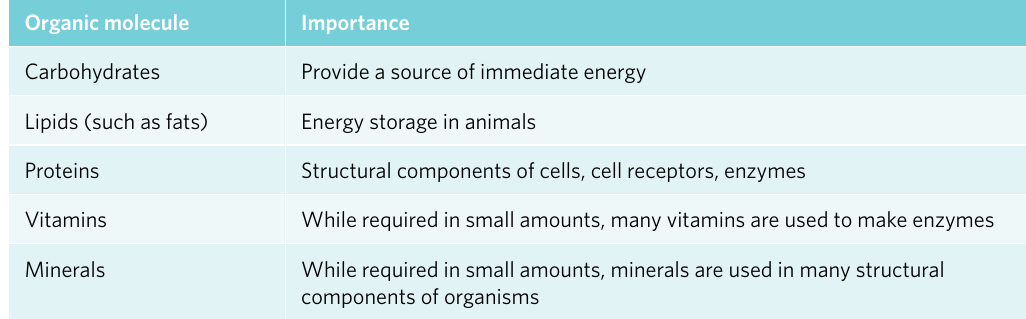
These large food molecules cannot pass directly through cell membranes. Digestion is the process of breaking down large food molecules into smaller forms that can cross plasma membranes and be used by the body.
Note
The organic molecules in our food - carbohydrates, lipids, proteins, vitamins, and minerals - each serve unique and essential roles in maintaining our body's functions. Without proper digestion, these vital nutrients would remain too large to be absorbed and utilized by our cells.
The digestion process
Digestion occurs through two complementary methods working together to break down food efficiently.
Physical digestion
Physical digestion (also called mechanical digestion) involves breaking food into smaller pieces through mechanical movements. This increases the surface area of food, making it easier for enzymes to access and break down molecules. Physical digestion includes:
- Chewing with teeth in the mouth
- Muscle contractions that move and mix food
- Churning movements in the stomach
- Peristalsis (wave-like muscular contractions that push food along the digestive tract)
Chemical digestion
Chemical digestion uses enzymes and stomach acid to break food molecules into smaller components through chemical reactions. Most digestive enzymes work through hydrolysis reactions, adding water molecules to split larger molecules apart.
Note
The Three Major Enzyme Types
The digestive system employs three specialized enzyme categories, each targeting a specific type of nutrient:
- Amylases - break down carbohydrates into simple sugars
- Proteases - break down proteins into amino acids
- Lipases - break down lipids (fats) into fatty acids and glycerol
Remember the mnemonic "APL" to recall these three essential enzyme families!
The four stages of digestion
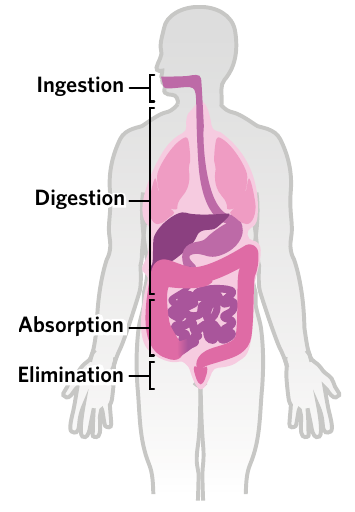
Digestion follows four main stages that work sequentially to process food:
1. Ingestion
Food enters the body through the mouth. Teeth physically break food into smaller pieces, whilst enzymes in saliva begin chemical breakdown. The tongue helps form food into a soft mass that can be swallowed.
2. Digestion
The food mass travels through the digestive tract (also called the alimentary canal or gastrointestinal tract). Along this pathway, various organs continue breaking down food both physically and chemically.
3. Absorption
Once food molecules are small enough, they are absorbed across the plasma membranes of cells lining the digestive tract. These nutrients enter the bloodstream and can be transported to cells throughout the body.
4. Elimination (egestion)
Undigested food material that has not been absorbed passes through the digestive tract and is eliminated from the body as faeces.
Important
Why Both Types of Digestion Matter
Physical and chemical digestion must work together. Physical digestion increases surface area, creating more sites where chemical digestion can occur. Without physical breakdown, digestive enzymes would struggle to access the interior of food particles. Without chemical digestion, even finely ground food particles would remain too large to cross cell membranes and be absorbed.
Organs of the human digestive system
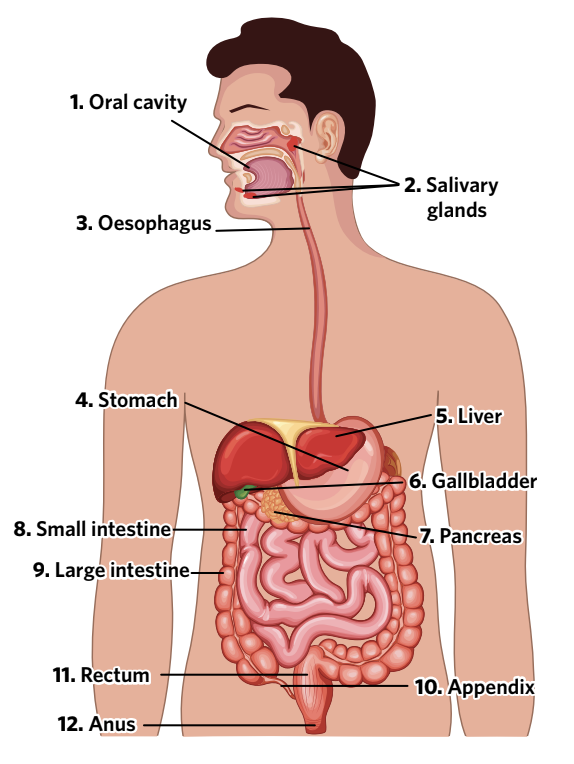
The human digestive system consists of the alimentary canal (the tube through which food passes) and several accessory organs that aid digestion. Each organ has specialised cells and tissues that perform specific functions.
The oral cavity (mouth)
The mouth is where ingestion begins. Key features include:
- Teeth mechanically break food into small pieces
- Salivary glands produce saliva containing amylase enzymes that start breaking down carbohydrates
- Lipase enzymes begin breaking down fats
- The tongue helps mix food with saliva and forms it into a swallowable mass
- pH ranges from 6-8 (slightly acidic to neutral)
The oesophagus
The oesophagus is a muscular tube connecting the mouth to the stomach. Food travels down this tube after being swallowed. Saliva continues to mix with food as it moves. The movement of food is aided by peristalsis - coordinated wave-like contractions of the tube's muscles.
The stomach
The stomach is a muscular sac that temporarily stores food and continues digestion. Important functions include:
- Muscular churning movements mix food thoroughly
- Protease enzymes begin breaking down proteins
- The stomach lining releases digestive juices creating a highly acidic environment (pH 1-3)
- Peristaltic contractions help push food toward the small intestine
- Partially digested food leaving the stomach is called chyme
The liver
The liver is a large organ with many important roles:
- Produces bile, which helps break down fats into smaller droplets
- Regulates metabolism
- Removes toxins from the blood
- Processes and stores nutrients
- Stores excess glucose as glycogen, which can be converted back to glucose when energy is needed
The gallbladder
After being produced in the liver, bile is stored and concentrated in the gallbladder. When fatty food reaches the small intestine, the gallbladder releases bile to aid fat digestion.
The pancreas
The pancreas has both digestive and hormonal functions:
- Produces digestive enzymes that are released into the small intestine
- Secretes bicarbonate to neutralise acidic chyme coming from the stomach
- Produces insulin and glucagon hormones that regulate blood glucose levels
The small intestine
The small intestine is the main site of nutrient absorption. It consists of three sections:
- Duodenum (first section, where most chemical digestion occurs)
- Jejunum (middle section)
- Ileum (final section)
Note
Remember the Small Intestine Sections
Use the mnemonic "Don't Jump In" to recall the three sections in order: Duodenum, Jejunum, Ileum.
Key functions include:
- Continued breakdown of carbohydrates and proteins
- Majority of fat breakdown occurs here
- Enzymes from the small intestine, pancreas, and bile from the gallbladder work together
- Cells lining the small intestine absorb nutrients and deliver them to the circulatory system
The large intestine
The large intestine consists of the cecum, colon, and rectum. Its main functions are:
- Final absorption of water, vitamins, and minerals
- Contains large populations of beneficial bacteria
- As water is reabsorbed, undigested food becomes more solid, forming faeces
The appendix
A small sac of tissue at the junction between the small and large intestines. It is believed to play a role in immune functions.
The rectum
The final section of the large intestine that stores faeces before elimination.
The anus
The opening at the end of the digestive tract through which faeces are expelled from the body.
Cells and tissues of the digestive system
The digestive tract is not simply a hollow tube - it is a complex structure composed of multiple specialized tissue layers working in harmony.
Structure of the oesophagus
The digestive tract is composed of multiple tissue layers working together. The oesophagus provides a good example of this organisation:
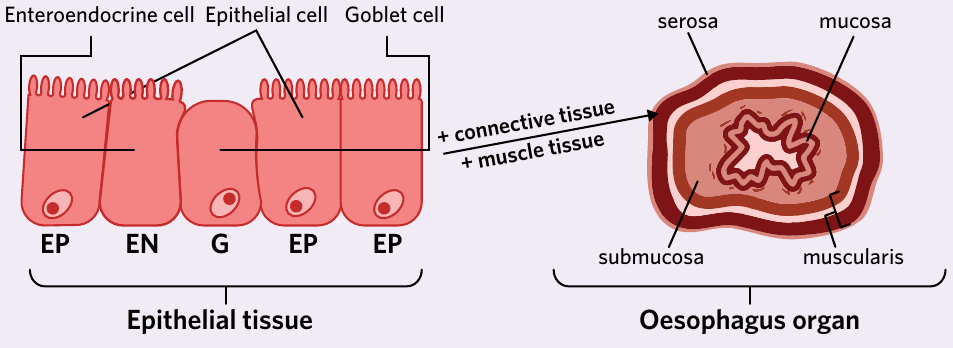
Different cell types combine to form tissues:
- Epithelial cells line the inner surface
- Goblet cells secrete mucus and fluid into the lumen (inside space) of the tube
- Enteroendocrine cells secrete hormones
These cells combine to form epithelial tissue. The epithelial tissue then combines with connective tissue and muscle tissue to form the mucosa layer.
Note
The Four Tissue Layers
The complete oesophagus wall consists of four tissue layers (from inside to outside):
- Mucosa - innermost layer that secretes mucus
- Submucosa - contains blood vessels and nerves
- Muscularis - muscle layer responsible for peristalsis
- Serosa - outer protective layer
Remember them with: "My Special Mouse Smiled" (Mucosa, Submucosa, Muscularis, Serosa)
Peristalsis
Peristalsis consists of coordinated muscular contractions and relaxations that push food along the digestive tract:
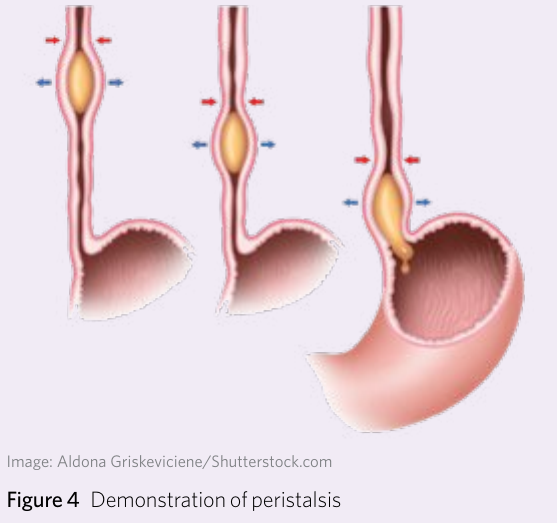
These wave-like contractions occur throughout the entire digestive system, from the oesophagus through to the large intestine. Peristalsis not only moves food along but also helps mix chyme with digestive enzymes and bile, improving nutrient breakdown and absorption.
Note
Diet and Peristalsis
Dietary fibre aids peristalsis in two ways:
- Insoluble fibre increases the bulk of material in the intestines, making it easier to push along
- Soluble fibre increases water absorption, creating softer material that moves more easily through the digestive tract
Both types of fibre are essential for maintaining healthy digestive function.
Surface area in the small intestine
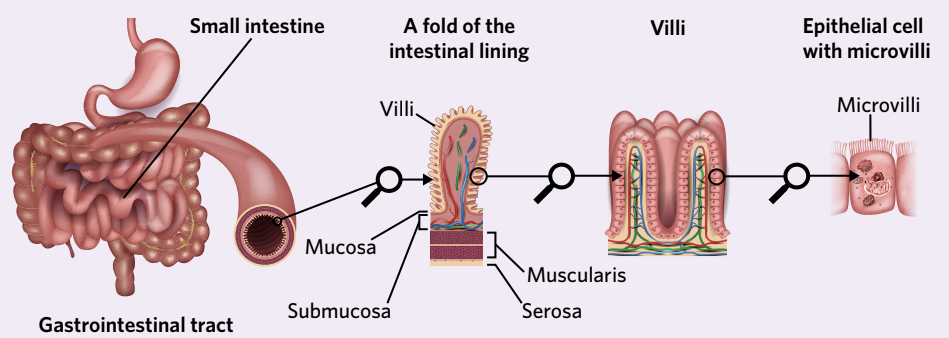
The small intestine is specialised to maximise nutrient absorption through its large surface area. This is achieved through multiple structural features:
-
The small intestine is very long (approximately 6-7 metres)
-
The inner surface is folded into millions of tiny finger-like projections called villi
-
Each villus contains epithelial cells with even smaller projections called microvilli on their surface
Important
The Power of Surface Area
This three-level organisation (length, villi, microvilli) creates an enormous surface area for absorption. The increased surface area allows greater exposure of digested food to the intestinal lining, where nutrients are absorbed into the bloodstream.
Without these structural adaptations, the small intestine would absorb nutrients far too slowly to meet the body's energy demands.
Example: Digesting a slice of pizza
Example
Worked Example: Following Pizza Through the Digestive System
Following a slice of pizza through the digestive system illustrates how the organs work together:
Ingestion: In the mouth, teeth break down the pizza crust whilst salivary amylase begins digesting carbohydrates in the base and lipase starts breaking down fats in the cheese. After swallowing, peristalsis moves the food down the oesophagus to the stomach.
Digestion: In the stomach, protease enzymes chemically break down proteins in the meat toppings. Acidic juices and churning further aid digestion. The partially digested pizza becomes chyme and moves to the small intestine. When chyme reaches the duodenum, it triggers several secretions:
- Bile from the gallbladder breaks down fat molecules
- Digestive enzymes from the pancreas continue breaking down all nutrient types
- Bicarbonate from the pancreas neutralises the acidic chyme
Absorption: With all carbohydrates, proteins, and fats now broken down into small molecules, the small intestine absorbs these nutrients. Villi and microvilli provide a large surface area for maximum absorption.
Elimination: In the large intestine, final water and nutrient absorption occurs. Undigested food material is pushed to the rectum where it solidifies into faeces for elimination.
Digestive systems of other animals
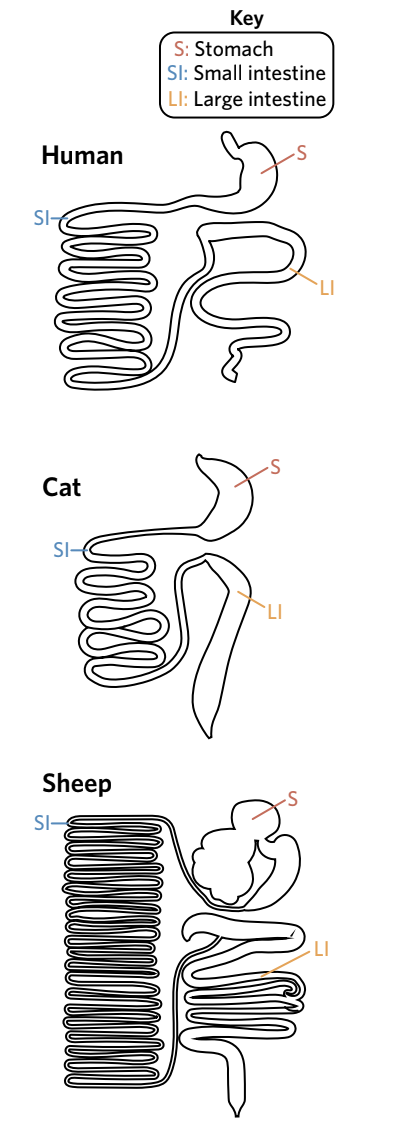
Animal digestive systems have evolved to suit different diets and feeding behaviours. Diet is a key factor determining the structure and specialisation of an animal's digestive system.
Omnivores (humans)
Humans are omnivores, meaning we consume a wide variety of both plant and animal foods. Key features include:
- Combination of sharp and blunt teeth for eating both meat and plant material
- Moderate length digestive tract
- Large populations of beneficial bacteria (gut microbiota) throughout the digestive system, especially in the large intestine
- The microbiota help break down undigested food through fermentation, aiding our digestion
Carnivores (cats)
Cats are carnivores that primarily eat meat. Their digestive system reflects this diet:
- Sharp teeth, including large canines, for tearing flesh
- Jaws that move up and down for cutting and tearing
- Relatively short digestive tract (meat is dense and easier to digest than plant material)
- Simple digestive system overall
- Still contain gut microbiota, but in smaller amounts than omnivores
Herbivores (sheep)
Herbivores feed almost exclusively on plant material, which is much harder to digest than meat. This is because cellulose (the main molecule in plant cell walls) is difficult to break down. Herbivore digestive systems show several specialisations:
-
Very long digestive tracts to allow more time for digestion
-
Large flat teeth and jaws that move side-to-side for grinding plant material
-
Much greater concentrations of gut microbiota than carnivores or omnivores
-
Specialised fermentation site containing extremely high concentrations of microbiota for breaking down cellulose
Note
Foregut vs Hindgut Fermenters
Herbivores are classified into two types based on fermentation site location:
Hindgut fermenters:
- Single-chambered stomach
- Extremely large cecum (part of large intestine) serves as fermentation site
Foregut fermenters:
- Multi-chambered, complex stomach
- Very large first stomach chamber serves as fermentation site
Important
Why Herbivores Must Eat Constantly
Because breaking down cellulose requires so much time and energy, herbivores must graze or browse constantly throughout the day to obtain sufficient energy. Their digestive systems work continuously to extract nutrients from tough plant material that would be indigestible to carnivores or omnivores.
Birds (avian anatomy)
Birds face unique digestive challenges:
- No teeth, so they cannot chew food
- Need to keep body weight low for flight
- Must digest food very quickly (a full stomach would make flying difficult)
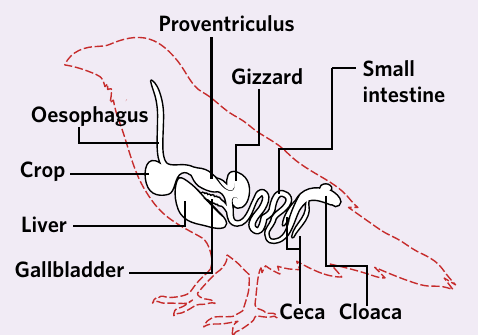
Bird digestive systems have several specialisations to meet these challenges:
The crop: An area before the stomach where food is temporarily stored until ready for digestion.
Two-chambered stomach:
- Proventriculus - gastric juices aid chemical digestion
- Gizzard - food is stored and mechanically ground. Many birds swallow small rocks and stones (called gastroliths) that remain in the gizzard to help grind food
The cloaca: Single opening where waste is eliminated.
Rapid digestion: Birds have much faster metabolic rates than other animals, allowing them to digest food quickly and maintain a light body weight suitable for flight.
Supporting healthy digestion
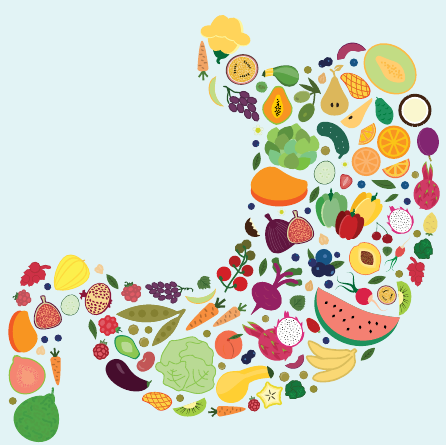
Understanding how the digestive system works helps explain which foods support or hinder digestion.
Note
Foods That Aid Digestion
- Lean meats and fish (low fat content, easier to digest)
- Fruits and vegetables (high in vitamins, minerals, and fibre)
- Plenty of fluids (help move waste through the system)
- Dietary fibre (aids peristalsis and waste movement)
Foods to limit:
- Fatty foods (take longer to break down, can cause cramping and diarrhoea)
- Sugary foods (excess sugar converts to fat)
- Heavily processed foods (harder to digest)
- Caffeine and alcohol (can upset stomach acid balance)
Other factors:
- Regular exercise strengthens abdominal muscles responsible for physical digestion
- Avoid binge eating to maintain digestive functioning
- Eat slowly and chew thoroughly to aid the digestive process
Summary
Key Points to Remember:
-
The digestive system breaks down food into small molecules that can be absorbed and used by cells throughout the body.
-
Digestion involves both physical breakdown (chewing, peristalsis, churning) and chemical breakdown (enzymes and stomach acid).
-
The four stages of digestion are: Ingestion, Digestion, Absorption, and Elimination. Remember: "I Did All Exercises"!
-
Different organs have specialised functions: the stomach stores and begins protein digestion, the liver produces bile, the pancreas produces enzymes and neutralises acid, and the small intestine is the main site of nutrient absorption.
-
Animal digestive systems are adapted to their diet - carnivores have short, simple systems for digesting meat, whilst herbivores have long, complex systems with large populations of microbiota to break down tough plant material.