Genetic Drift and Gene Flow (VCE SSCE Biology): Revision Notes
📚Revision Notes
Genetic Drift and Gene Flow
Introduction: The Irish potato famine
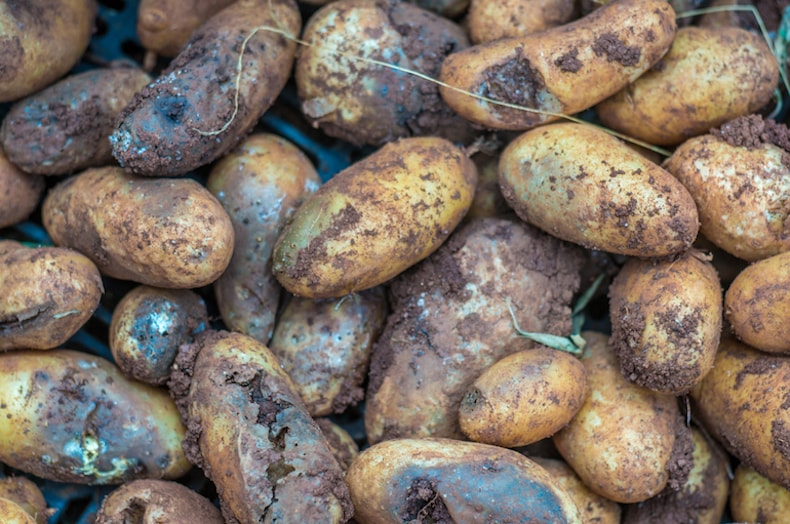
In the 1800s, Ireland faced a growing population and food shortage crisis. The solution seemed simple: grow enough potatoes to feed everyone at every meal. This worked well for several decades until disaster struck in the 1840s. A fungus called Phytophthora infestans infected the potato crops, turning them into rotten slime. This catastrophe led to approximately one million deaths from starvation and another two million people emigrating from Ireland. The question we need to understand is: why were the potatoes so vulnerable to this fungus?
Note
The Irish potato famine is a powerful real-world example of what happens when a population lacks genetic diversity. By the end of these notes, you'll understand exactly why this tragedy occurred and how it relates to fundamental concepts in population genetics.
What is genetic drift?
Genetic drift is a random event that dramatically alters a population's gene pool. Unlike natural selection, which favours certain traits, genetic drift happens by chance and can drastically change allele frequencies in a population.
Important
Key Distinction: Genetic Drift vs Natural Selection
Genetic drift is fundamentally different from natural selection:
- Natural selection favours individuals with advantageous traits
- Genetic drift occurs purely by random chance, with no relationship to fitness or adaptation
Genetic drift occurs through two main mechanisms:
- The bottleneck effect
- The founder effect
Before we explore these mechanisms, let's clarify some important terms:
- Genetic diversity: the variation in genetic makeup or alleles within a population
- Population: a group of individuals of the same species living in the same location
- Gene pool: the complete set of alleles present within a particular population
- Allele frequency: the proportion of certain alleles in a gene pool
The bottleneck effect
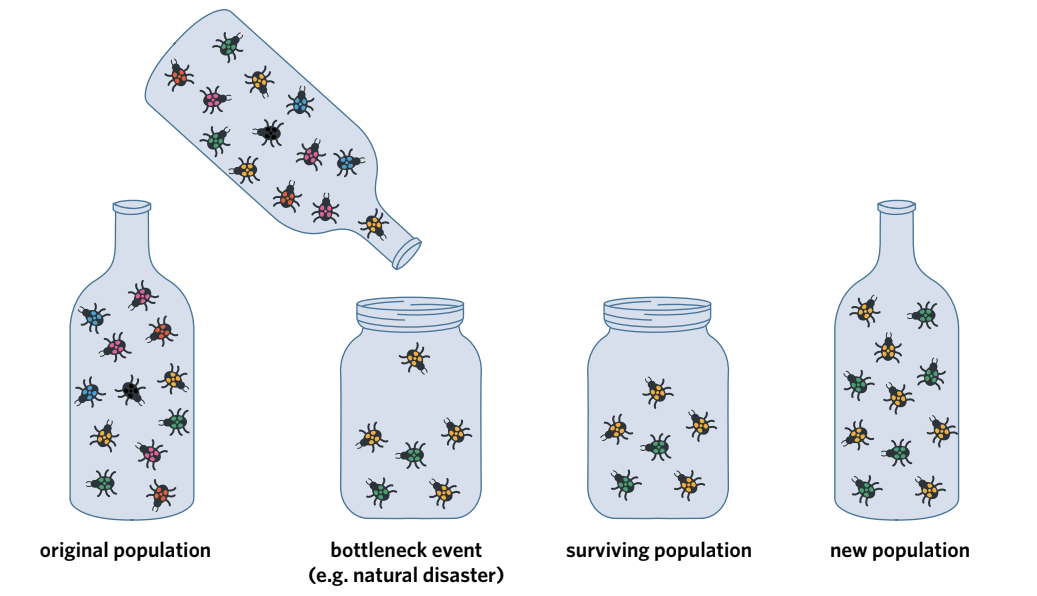
Natural disasters or chance events can eliminate most individuals in a population. When a large proportion of a population is wiped out randomly, this dramatic reduction is called the bottleneck effect.
Bottleneck effect: the reduction in genetic diversity that occurs when a large proportion of a population is removed due to a chance event.
Here's how the bottleneck effect works:
- A population exists with high genetic diversity (many different alleles present)
- A random event like a natural disaster, disease outbreak, or fire kills most individuals
- Only a small number survive by chance, not because they're better adapted
- The surviving population has much lower genetic diversity
- Future generations inherit only the limited alleles from survivors
Example
Worked Example: The Beetle Population Bottleneck
Imagine a beetle population with individuals of many colours: red, orange, yellow, green, blue, and black. If a flood randomly kills most beetles, only a few survive by chance.
Before the flood:
- Population has 6 different colour alleles
- High genetic diversity
The random event:
- A flood occurs (purely by chance)
- Most beetles die regardless of their colour
After the flood:
- Perhaps only green and yellow beetles happen to survive, simply because they were on higher ground by luck
- All future generations will only have green and yellow alleles
- The red, orange, blue, and black alleles have been permanently lost from the gene pool
This is the bottleneck effect - genetic diversity is dramatically reduced through a random event.
The founder effect
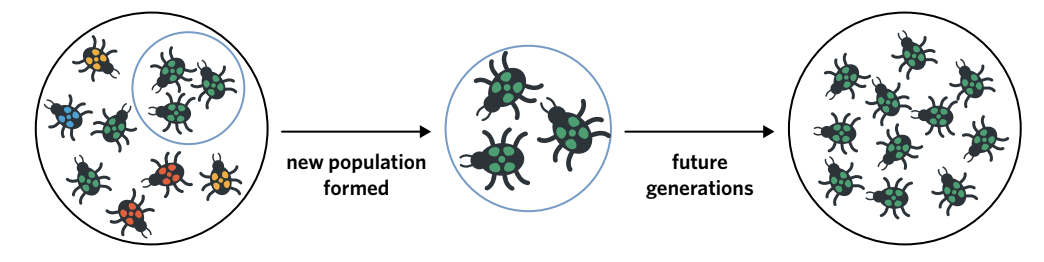
Sometimes a small group breaks away from the main population to establish a new colony elsewhere. The founder effect occurs when this founding group is an unrepresentative sample of the original population.
Founder effect: the reduction in genetic diversity that occurs when a population is derived from a small unrepresentative sample of the original population.
Unrepresentative sample: a small selection of individuals from a larger group that does not reflect the characteristics of the larger group.
Important
Crucial Distinction: Founder Effect vs Normal Colonization
Not all new colonies represent the founder effect:
-
Founder effect: If ten green beetles leave a multicoloured population to form a new colony, this IS the founder effect because the new population doesn't represent the original genetic diversity.
-
NOT founder effect: If the original population consisted entirely of green beetles, then ten green beetles establishing a new colony would NOT be the founder effect, because the founding group accurately represents the original gene pool.
The key is whether the founding group is representative or unrepresentative of the original population's genetic diversity.
The founder effect reduces genetic diversity because:
-
Only a small number of individuals establish the new population
-
These founders carry only a subset of the alleles from the original population
-
Rare alleles from the original population are unlikely to be represented
-
The new population starts with limited genetic variation
-
Future generations inherit only from this limited gene pool
Effects of genetic drift on genetic diversity
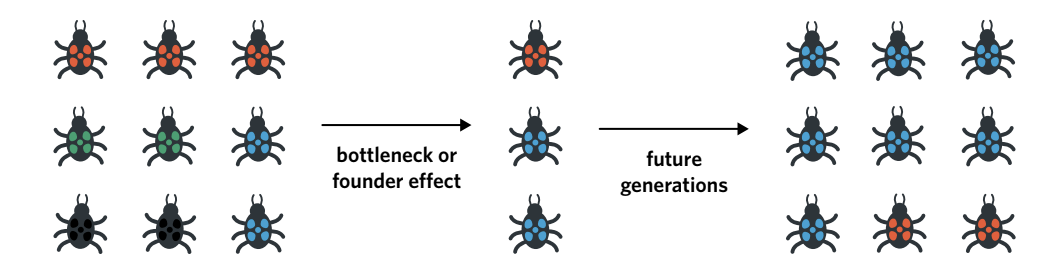
Both the bottleneck effect and founder effect decrease genetic diversity within populations. This happens because alleles are randomly removed from the gene pool.
| Mechanism of genetic drift | How it decreases genetic diversity |
|---|---|
| Bottleneck effect | Removes alleles through random events (e.g. natural disasters) that kill individuals |
| Founder effect | Reduces alleles through establishment of a new population from a small, unrepresentative sample |
Consequences of reduced genetic diversity
When genetic drift reduces diversity, two major risks emerge:
1. Inbreeding
Inbreeding: sexual reproduction between two related individuals.
With fewer unique individuals in the population, organisms are more likely to mate with relatives. This keeps harmful alleles circulating in the gene pool. In healthy, diverse populations, harmful recessive alleles can be masked by dominant alleles. However, inbreeding increases the chance that offspring inherit two copies of harmful recessive alleles, leading to genetic disorders and reduced fitness.
2. Lower adaptive potential
Adaptive potential: the ability for a population to adjust to new environmental selection pressures.
Populations with low genetic diversity become vulnerable to new environmental challenges. When a new disease, predator, or climate change appears, the population may lack advantageous alleles that could help some individuals survive. Without genetic variation, the entire population could be wiped out by a single new threat.
Important
Why Reduced Genetic Diversity is Dangerous
The combination of inbreeding and lower adaptive potential creates a vicious cycle:
- Genetic drift reduces diversity
- Inbreeding keeps harmful alleles in circulation
- Lack of genetic variation means no advantageous alleles for new challenges
- Population becomes extremely vulnerable to extinction
Both consequences work together to make genetically uniform populations highly susceptible to collapse.
Population size matters
The impact of genetic drift depends heavily on population size:
Note
Small populations are more susceptible to genetic drift because:
- They already have lower genetic diversity
- Losing one individual means losing a larger percentage of the gene pool
- Example: In a population of 10 beetles, one death = 10% of genes lost
Large populations are more resistant to genetic drift because:
- They have higher genetic diversity to begin with
- Losing one individual has minimal impact on the overall gene pool
- Example: In a population of 100 beetles, one death = only 1% of genes lost
The combined effects of inbreeding and lower adaptive potential can make genetic drift even more damaging in smaller populations.
Case study: Cheetahs and the bottleneck effect
Example
Case Study: Cheetah Population Bottlenecks
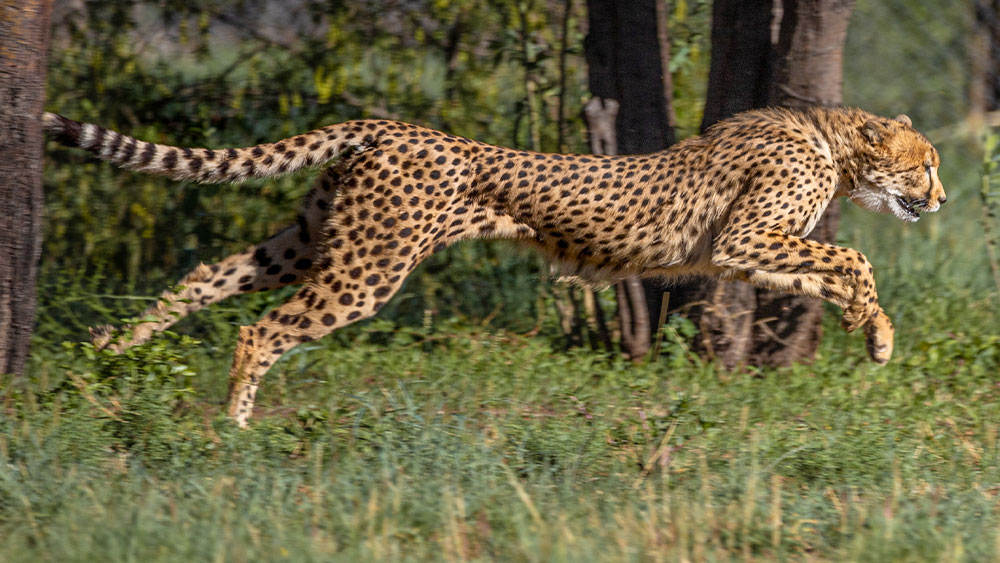
Cheetahs (Acinonyx jubatus) provide a dramatic real-world example of the bottleneck effect.
The bottleneck events:
Scientists believe cheetahs experienced two major population crashes:
- One occurred about 100,000 years ago
- Another happened 10,000-12,000 years ago after the last ice age
These bottleneck events caused cheetah extinctions in North America and Europe, leaving only Asian and African populations. The surviving cheetahs had severely reduced genetic diversity, leading to widespread inbreeding.
The remarkable consequence:
Modern cheetahs are so genetically similar that they are nearly identical. This creates an unusual situation for organ transplants. Normally, individuals receiving an organ transplant must undergo extensive compatibility testing to prevent rejection. However, a cheetah could theoretically receive an organ transplant from any other cheetah, even a complete stranger from the opposite side of Africa, because they're all so genetically alike.
The dangerous vulnerability:
Unfortunately, this lack of genetic diversity makes cheetahs extremely vulnerable. If a new disease, environmental change, or other selection pressure arises, the population is unlikely to contain any individuals with advantageous alleles to survive it. Without genetic variation to draw upon, cheetahs face a high risk of extinction from novel threats.
What is gene flow?
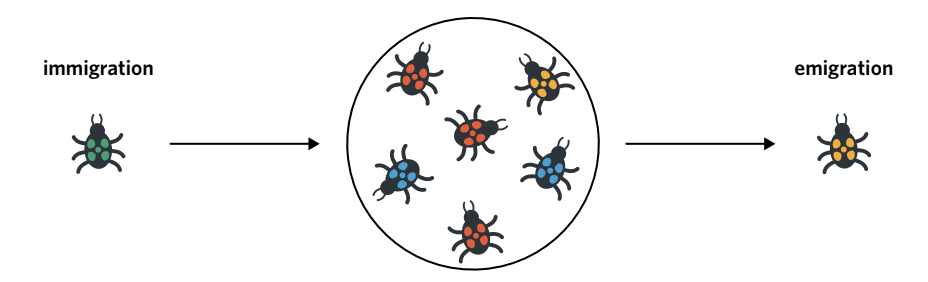
While genetic drift involves random losses of alleles, gene flow involves the movement of alleles between populations. Gene flow is the flow of alleles in and out of a population due to the migration or interbreeding of individuals between two populations.
Gene flow occurs through three mechanisms:
- Immigration
- Emigration
- Interbreeding
Gene flow can happen when populations live close together geographically, or when external forces remove barriers between populations (such as a river drying up or a forest being cleared).
Immigration
Immigration: the movement into a population.
When individuals enter a population through immigration, they bring their alleles with them. These new alleles are added to the receiving population's gene pool, increasing its genetic diversity.
Emigration
Emigration: the movement out of a population.
When individuals leave a population through emigration, they take their alleles with them. These alleles are removed from the original population's gene pool, decreasing its genetic diversity.
Interbreeding
Interbreeding: when two individuals living in different populations mate and have offspring.
Sometimes individuals temporarily enter a population, mate with local individuals, and then leave again. Even though they don't permanently stay, their alleles are passed to offspring and become part of that population's gene pool. This allows populations in different geographic locations to exchange genetic material without permanent migration.
Effects of gene flow on genetic diversity
Unlike genetic drift, which only decreases diversity, gene flow can either increase or decrease genetic diversity depending on the mechanism.
Immigration increases diversity
When new individuals enter a population through immigration, they bring new alleles that weren't present before. This increases the genetic variation within the population.
Note
Impact on Small vs Large Populations
The impact of immigration is more pronounced in smaller populations because:
- They start with a smaller gene pool
- New alleles represent a larger proportional increase
- Each immigrant makes a bigger difference
In large populations, immigration has less impact because:
- The existing gene pool is already large
- New alleles don't significantly change the overall proportions
- Each immigrant represents a smaller percentage of the total
Emigration decreases diversity
When individuals leave a population through emigration, they remove their alleles from the gene pool. This decreases genetic diversity in the population they leave behind.
Like immigration, the effects of emigration are stronger in smaller populations because each individual represents a larger portion of the gene pool.
Interbreeding increases diversity
When individuals from different populations reproduce, their offspring inherit unique allele combinations. These new genetic variants can become permanently established in the population (unless selected against by environmental pressures). This increases the genetic diversity of the population where the offspring are born.
Summary: Comparing genetic drift and gene flow
| Mechanism | Category | Effect on genetic diversity |
|---|---|---|
| Genetic drift | Bottleneck effect | Decrease |
| Founder effect | Decrease | |
| Gene flow | Immigration | Increase |
| Emigration | Decrease | |
| Interbreeding | Increase |
Note
Key distinction: Genetic drift involves random chance events that only decrease diversity. Gene flow involves movement of organisms between populations and can either increase or decrease diversity.
Conclusion: The Irish potato famine explained
Now we can answer the opening question: why were Irish potatoes so vulnerable to Phytophthora infestans?
Important
The Fatal Combination: No Genetic Diversity
Potatoes were grown using a technique called vegetative propagation, which produces genetically identical plants. This completely eliminated genetic diversity within the potato population. When P. infestans arrived, it spread rapidly because no potatoes had advantageous alleles to resist the fungus.
The P. infestans infection acted as a random catastrophic event that drastically reduced the potato population size, representing an example of genetic drift (specifically, a bottleneck effect caused by disease). Because the potatoes already lacked genetic diversity due to vegetative propagation, they had no adaptive potential to survive this new selection pressure. The result was the devastating Great Irish Famine.
This tragic historical example demonstrates the vital importance of maintaining genetic diversity in populations, whether in wild species or agricultural crops.
Summary
Key Points to Remember:
-
Genetic drift refers to random events that dramatically change allele frequencies, always decreasing genetic diversity through the bottleneck effect or founder effect
-
The bottleneck effect occurs when disasters randomly eliminate most of a population, leaving survivors with reduced genetic variation
-
The founder effect happens when a small, unrepresentative group establishes a new population with limited genetic diversity
-
Reduced genetic diversity leads to inbreeding (keeping harmful alleles in the gene pool) and lower adaptive potential (inability to respond to new selection pressures)
-
Gene flow involves movement of alleles between populations through immigration (entering), emigration (leaving), or interbreeding, and can either increase or decrease genetic diversity
-
Population size matters: smaller populations are more affected by both genetic drift and gene flow because each individual represents a larger proportion of the gene pool