The Gene Pool (VCE SSCE Biology): Revision Notes
📚Revision Notes
The Gene Pool
Introduction to genetic variation
When you look around your classroom, you'll notice that everyone appears unique. There's variation in hair colour (blonde, brown, black, red), eye colour (brown, blue, green), and countless other features. Remarkably, despite these visible differences, you share 99.9% of your DNA with every other person in your class. This raises an important question: how can such small genetic differences produce such diverse appearances?
Note
The tiny 0.1% difference in DNA between humans translates to approximately 3 million nucleotide differences, which is enough to create all the variation we observe in physical characteristics, disease susceptibility, and other traits.
The answer lies in understanding gene pools and the mechanisms that create variation within populations. One of the most important mechanisms is mutation, which introduces new alleles into a population.
Gene pools and allele frequencies
What is a gene pool?
A gene pool is the complete set of alleles present within a particular population. To understand this concept, we need to define a few key terms:
- Gene: a section of DNA that carries the code to make a protein
- Allele: an alternate form of a gene
- Population: a group of individuals of the same species living in the same location
Note
Think of a gene pool as a collection of all the genetic information available in a population. The larger and more diverse this pool, the more genetic variation exists within that population.
Understanding allele frequencies
Allele frequency refers to the proportion of certain alleles in a gene pool. We can calculate allele frequencies by counting how many copies of a particular allele exist in a population and dividing this by the total number of alleles for that gene.
Example: calculating allele frequencies in sheep
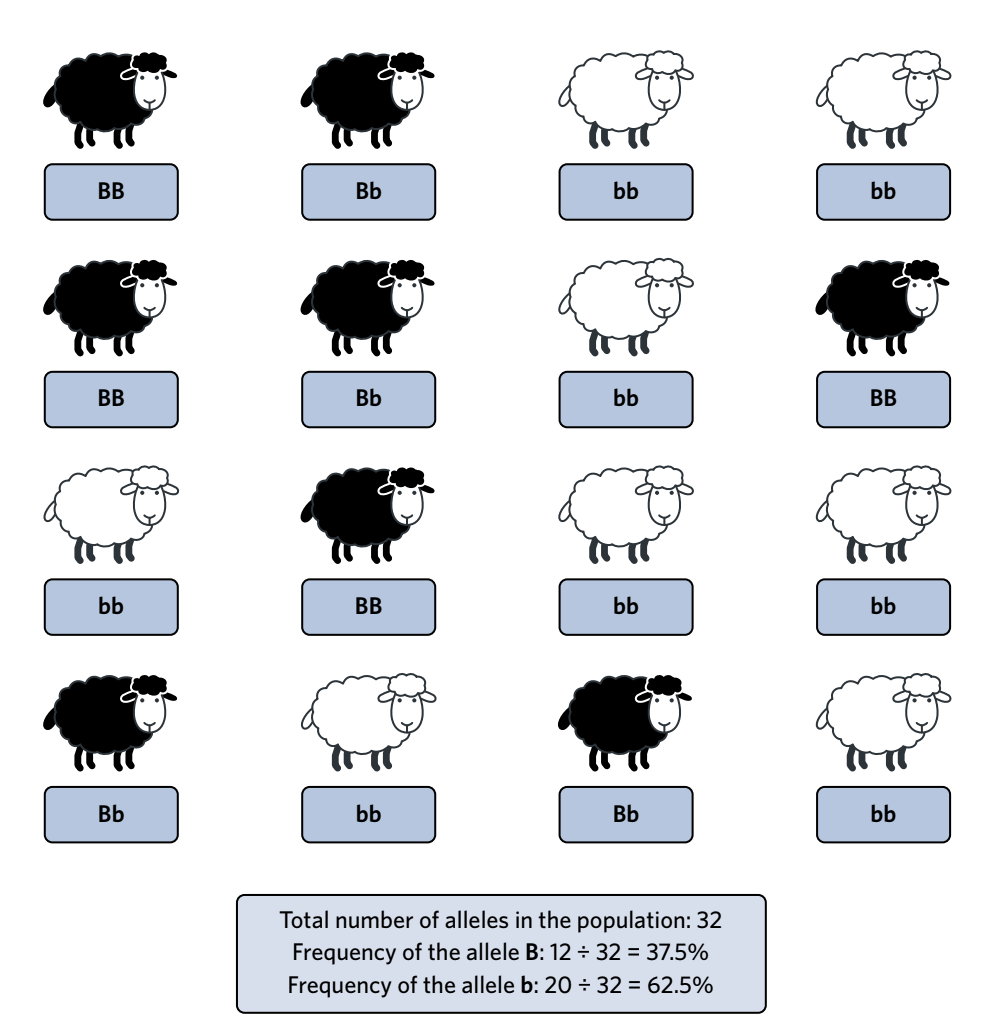
Let's examine a population of sheep with a gene that controls coat colour. This gene has two alleles: B (which produces black wool) and b (which produces white wool). Each sheep has two copies of this gene, so their genotype could be BB, Bb, or bb.
Example
Worked Example: Calculating Allele Frequencies
To calculate the frequency of each allele in the population:
Step 1: Count the total number of each allele across all individuals Step 2: Divide by the total number of alleles in the population
For example, if we have 16 sheep (32 alleles total), and we count:
- 12 copies of allele B
- 20 copies of allele b
Step 3: Calculate the frequencies
Frequency of B =
Frequency of b =
Note: The frequencies always add up to 100%.
Genetic diversity and gene pools
A larger and more diverse gene pool contains a greater variety of genes and alleles. This leads to:
- A greater number of genotypes (the genetic composition of an organism at a particular gene locus)
- A greater number of phenotypes (the physical or biochemical characteristics of an organism that result from gene expression and the environment)
- Increased genetic diversity (the variation in genetic makeup or alleles within a population)
Several factors can influence gene pools and alter allele frequencies, including mutations, environmental selection pressures, genetic drift, gene flow, and artificial selection pressures.
Mutations: the source of new alleles
What are mutations?
A mutation is a permanent change to a DNA sequence. Mutations are critically important in evolution because they introduce new alleles into a population, thereby increasing genetic diversity.
Mutations can occur in two ways:
- Spontaneously: happening naturally during DNA replication
- Induced by mutagens: agents that cause mutations in DNA, such as UV radiation, certain chemicals, or ionising radiation
Note
A mutagen is any agent that can cause mutations in DNA. Common mutagens include UV radiation from the sun, X-rays, certain chemicals in tobacco smoke, and some viruses.
How mutations affect protein function
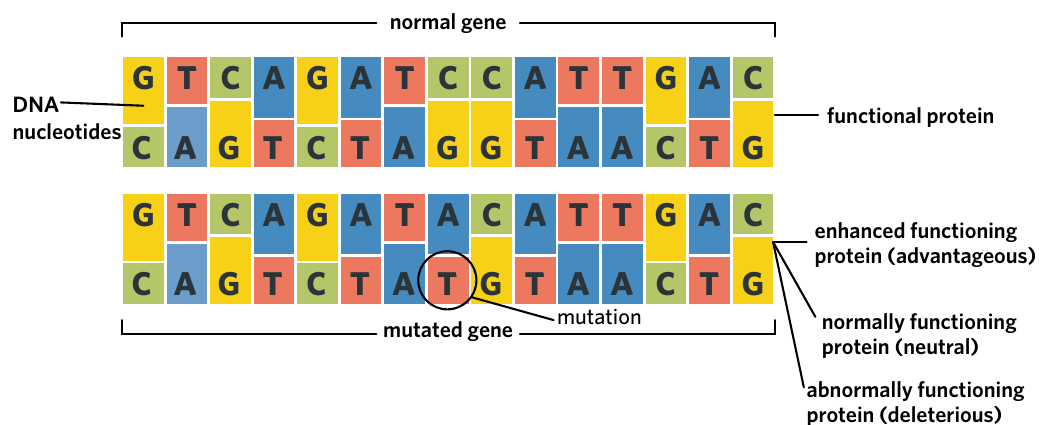
When mutations occur in the DNA sequence of genes, they can significantly affect the expression of that gene. This happens because the mutation may alter the folding and functionality of the resulting protein.
Mutations can be classified into three categories based on their effect on survival:
- Advantageous: The mutation produces a protein that enhances the individual's survival or reproduction
- Neutral: The mutation has no significant effect on the individual's survival
- Deleterious: The mutation produces an abnormally functioning protein that reduces the individual's fitness
Deleterious alleles have an overall negative effect on individual fitness when expressed.
Germline vs somatic mutations
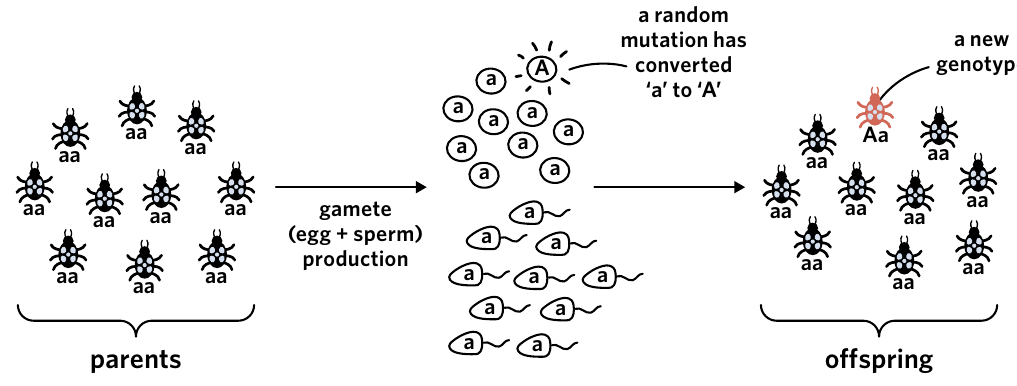
For a mutation to be passed on to offspring, it must occur in specific cells:
Important
Critical Distinction: Germline vs Somatic Mutations
- Germline cells: cells involved in the generation of gametes (sex cells) in eukaryotes. Mutations in these cells are heritable (can be transmitted from parent to offspring)
- Somatic cells: any cell in an organism that is not a germline cell. Mutations in these cells are NOT heritable and cannot be passed to offspring
Heritability refers to the transmission from parent to offspring (i.e. encoded in genes). Only mutations in germline cells contribute to evolutionary change because they can be inherited by future generations.
Point mutations
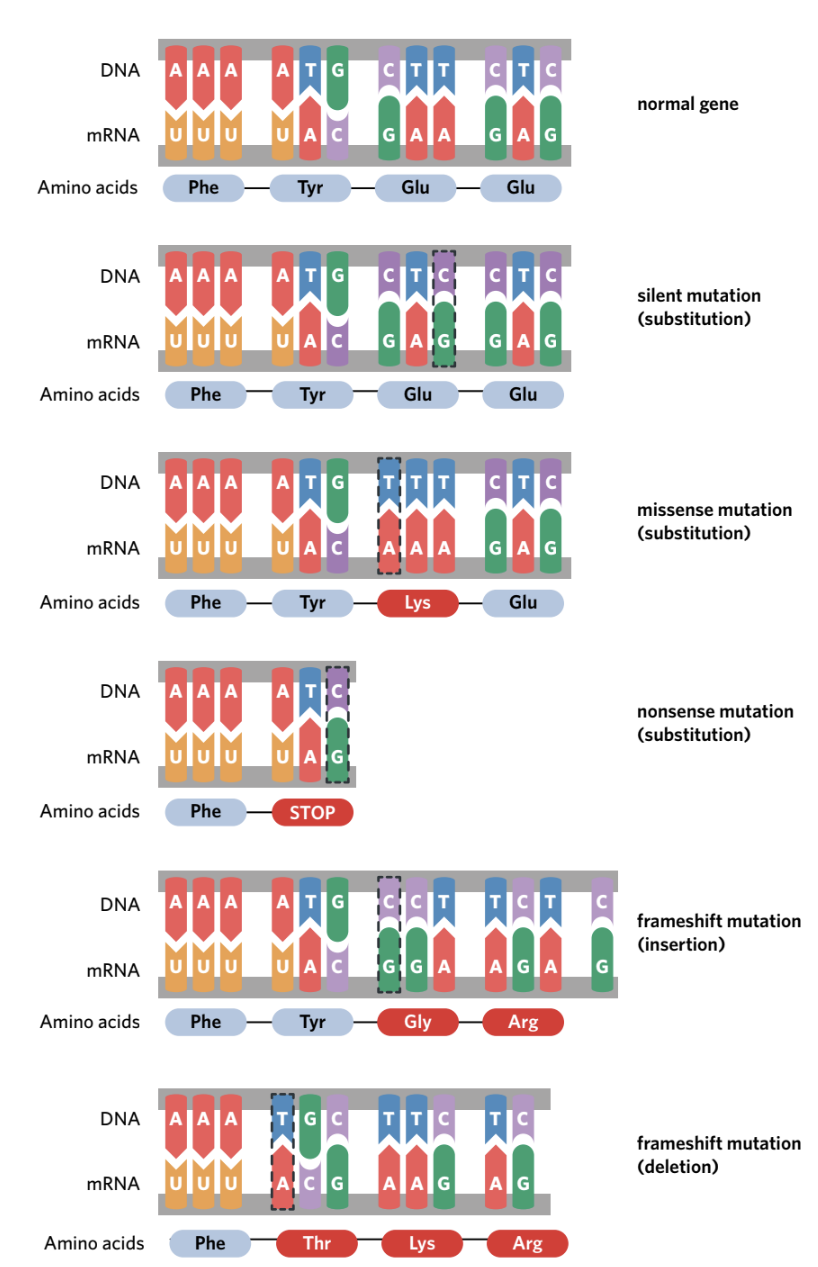
Point mutations are mutations that alter a single nucleotide in a DNA sequence. There are several types of point mutations, each with different effects on the resulting protein.
Types of point mutations
| Mutation type | Description |
|---|---|
| Silent mutation | A nucleotide substitution that changes the codon but still codes for the same amino acid due to the degenerate nature of the genetic code (a property where a single amino acid can be coded for by more than one codon). Therefore, there is no effect on protein structure. |
| Missense mutation | A nucleotide substitution that changes the codon and codes for a different amino acid, altering the primary structure of the polypeptide. This affects the folding of the polypeptide and could alter the protein's function. |
| Nonsense mutation | A nucleotide substitution that changes the codon to a stop codon, prematurely ceasing translation of the gene's mRNA. The resulting polypeptide is too short to function as intended. These are generally considered the most dangerous type of point mutation. |
| Frameshift mutation | The insertion or deletion of one or two nucleotides, which alters the reading frame (the order in which nucleotide triplets or codons are divided into a consecutive, non-overlapping sequence). Since the reading frame shifts, all following codons and their corresponding amino acids are affected, causing major disruptions to protein structure and function. |
Understanding silent mutations
Silent mutations occur when a nucleotide substitution doesn't change the amino acid produced. This is possible because the genetic code is degenerate - most amino acids are coded for by multiple different codons. For example, both UUU and UUC code for the amino acid phenylalanine, so a mutation changing one to the other would be silent.
Note
Silent mutations demonstrate why the genetic code's redundancy is beneficial. This built-in "buffer" means that not every mutation in DNA results in a change to the protein, providing some protection against harmful mutations.
Understanding missense mutations
Missense mutations change one amino acid to another in the protein sequence. Depending on the properties of the new amino acid and where it appears in the protein, this could have minor or major effects on protein function.
Understanding nonsense mutations
Nonsense mutations create a premature stop codon in the mRNA sequence. This means translation stops too early, producing a shortened, non-functional protein. These mutations typically have severe effects on the organism.
Understanding frameshift mutations
Important
Why Frameshift Mutations Are So Dangerous
Frameshift mutations are particularly dangerous because they affect not just one codon, but every codon downstream from the mutation. When one or two nucleotides are inserted or deleted, the entire reading frame shifts. Since DNA is read in triplets (groups of three nucleotides), this changes every subsequent amino acid in the protein.
Think of it like reading a sentence with no spaces: "THECATsat" makes sense, but if you insert one letter and shift the reading frame: "THEXCA TSA T" - nothing makes sense anymore.
Block mutations
In contrast to point mutations (which affect single nucleotides), block mutations involve changes to larger sections of DNA. These mutations can affect multiple genes and potentially cause significant changes to an organism's DNA sequence.
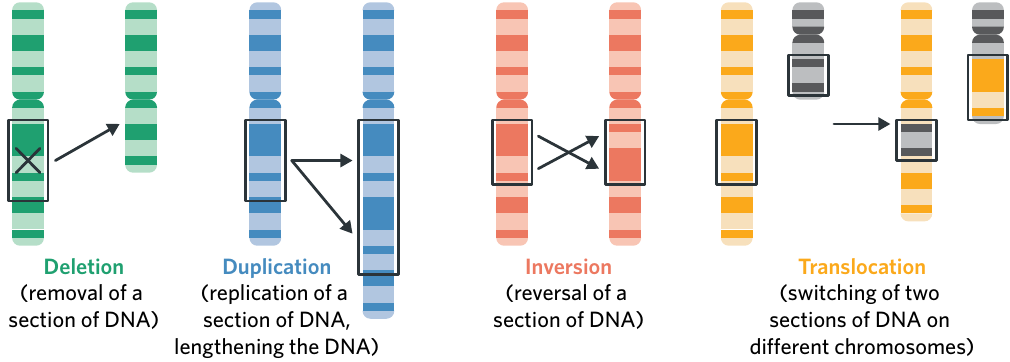
Block mutations involve alterations to chromosome structure and typically occur during meiosis. Understanding these large-scale changes is important because they can have dramatic effects on an organism's phenotype.
Types of block mutations
There are four main types of block mutations:
- Deletion: removal of a section of DNA from a chromosome
- Duplication: replication of a section of DNA, lengthening the chromosome
- Inversion: reversal of a section of DNA within a chromosome
- Translocation: switching of two sections of DNA between different chromosomes
Note
Block mutations can have dramatic effects because they may involve multiple genes or regulatory regions of DNA. Even if genes themselves aren't damaged, moving them to new locations can affect their expression by separating them from their regulatory sequences.
Chromosomal mutations
Mutations can also affect entire chromosomes or sets of chromosomes. These are among the most dramatic types of genetic changes and usually have significant effects on the organism.
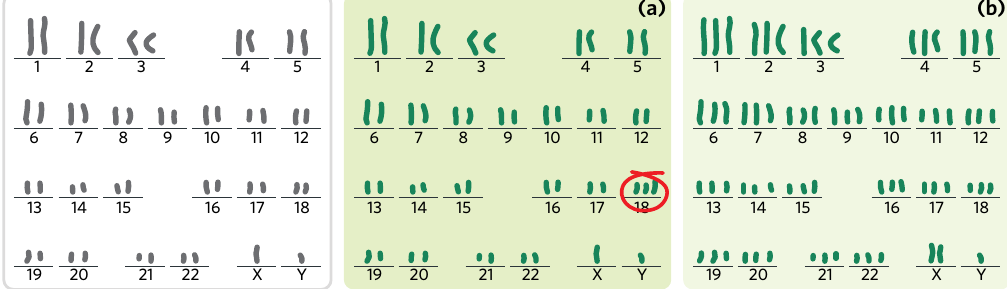
Aneuploidy
Aneuploidy occurs when a cell or organism varies in the usual amount of chromosomes in its genome by the addition or loss of a single chromosome. For example, in humans, Down syndrome is caused by having three copies of chromosome 21 instead of the normal two copies.
Polyploidy
Polyploidy occurs when an organism contains additional sets of chromosomes in its genome. Instead of being diploid (2n), the organism might be triploid (3n) or tetraploid (4n). Polyploidy is relatively common in plants but rare in animals.
Note
While polyploidy is generally lethal in animals, it's surprisingly common and often beneficial in plants. Many important crop species, including wheat, cotton, and strawberries, are polyploid. The additional genetic material can lead to larger cell sizes and increased vigor.
Case study: sickle cell anaemia
Sickle cell anaemia provides an excellent example of how a single missense mutation can have complex effects on an organism and demonstrates the importance of environmental context in determining whether a mutation is beneficial or harmful.
The mutation
Sickle cell anaemia arises from a missense mutation in the gene coding for haemoglobin (the protein in red blood cells that carries oxygen). This mutation changes the structure of red blood cells from their normal flattened disc shape to a crescent or "sickle" shape.
Effects of the mutation
The sickle shape causes several problems:
- Reduced surface area to volume ratio, meaning sickle cells carry oxygen less efficiently than normal red blood cells
- Sickle cells become trapped in capillaries, reducing blood flow
- In individuals with two copies of the sickle cell allele (homozygous recessive), this often leads to premature death from organ damage due to lack of oxygen
Heterozygote advantage
Despite appearing entirely deleterious, the sickle cell allele provides a fascinating example of how an allele can be both harmful and beneficial depending on the environment.
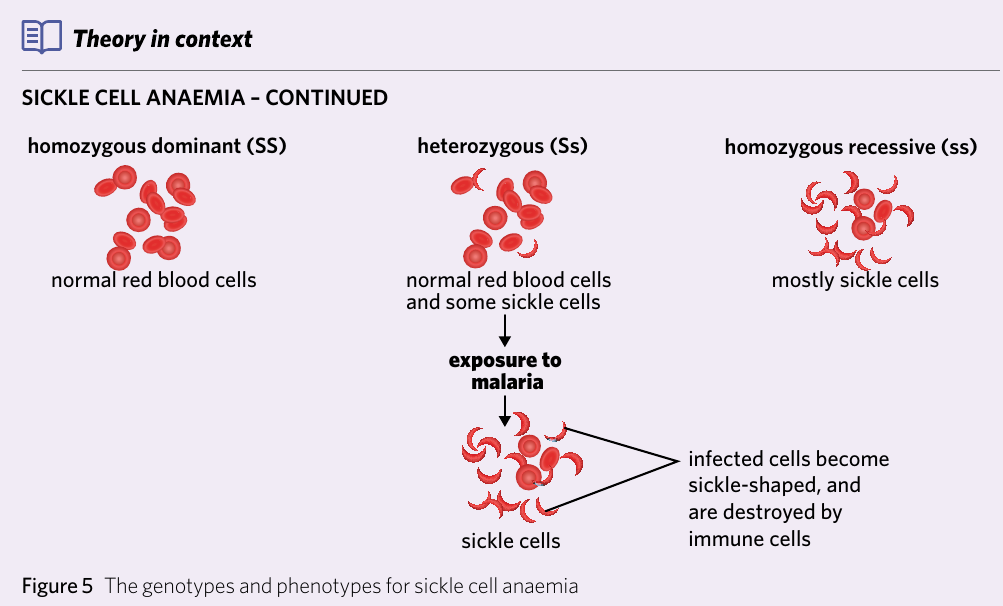
In regions where malaria (a disease caused by a parasite that infects red blood cells) is endemic, having one copy of the normal allele and one copy of the sickle cell allele provides protection against malaria. This is called a heterozygote advantage.
Example
Worked Example: Understanding Heterozygote Advantage in Sickle Cell
Here's how the three genotypes compare in malaria-endemic regions:
1. Homozygous dominant (SS):
- Phenotype: Normal red blood cells
- Advantage: Normal oxygen transport
- Disadvantage: No resistance to malaria
- Overall fitness: Reduced (vulnerable to malaria)
2. Heterozygous (Ss):
- Phenotype: Mostly normal red blood cells with some sickling
- Advantage: Resistance to malaria (red blood cells infected with the malaria parasite become sickled and are destroyed by the immune system)
- Disadvantage: Mild symptoms under certain conditions
- Overall fitness: Highest (protected from malaria without severe anaemia)
3. Homozygous recessive (ss):
- Phenotype: Mostly sickle cells
- Advantage: None
- Disadvantage: Severe sickle cell anaemia
- Overall fitness: Reduced (often premature death)
Key insight: The heterozygous genotype (Ss) has the highest survival rate in malaria-endemic regions, which is why this seemingly harmful allele persists at high frequencies in these populations.
This example demonstrates how a mutation that appears deleterious can actually be advantageous in certain environmental contexts, illustrating the complex relationship between genotype, phenotype, and environment.
Important
The sickle cell example teaches us that we cannot label mutations as simply "good" or "bad" without considering the environmental context. What is harmful in one environment may be beneficial in another.
Remember!
Summary
Key Points to Remember:
- The gene pool is the complete set of alleles in a population, and allele frequencies tell us the proportion of each allele
- Mutations are permanent changes to DNA sequences that introduce new alleles into populations, making them essential for evolution
- For mutations to be inherited, they must occur in germline cells (not somatic cells) - somatic mutations cannot be passed to offspring
- Point mutations affect single nucleotides and include:
- Silent (no effect on amino acid)
- Missense (different amino acid)
- Nonsense (premature stop codon)
- Frameshift (shifts reading frame)
- Block mutations affect larger DNA sections and include deletion, duplication, inversion, and translocation
- Mutations can be advantageous, neutral, or deleterious depending on their effect on the organism's survival and reproduction
- The sickle cell anaemia example shows how the same allele can be beneficial or harmful depending on environmental conditions - demonstrating heterozygote advantage