Introduction to the Plasma Membrane (VCE SSCE Biology): Revision Notes
📚Revision Notes
Introduction to the Plasma Membrane
Introduction
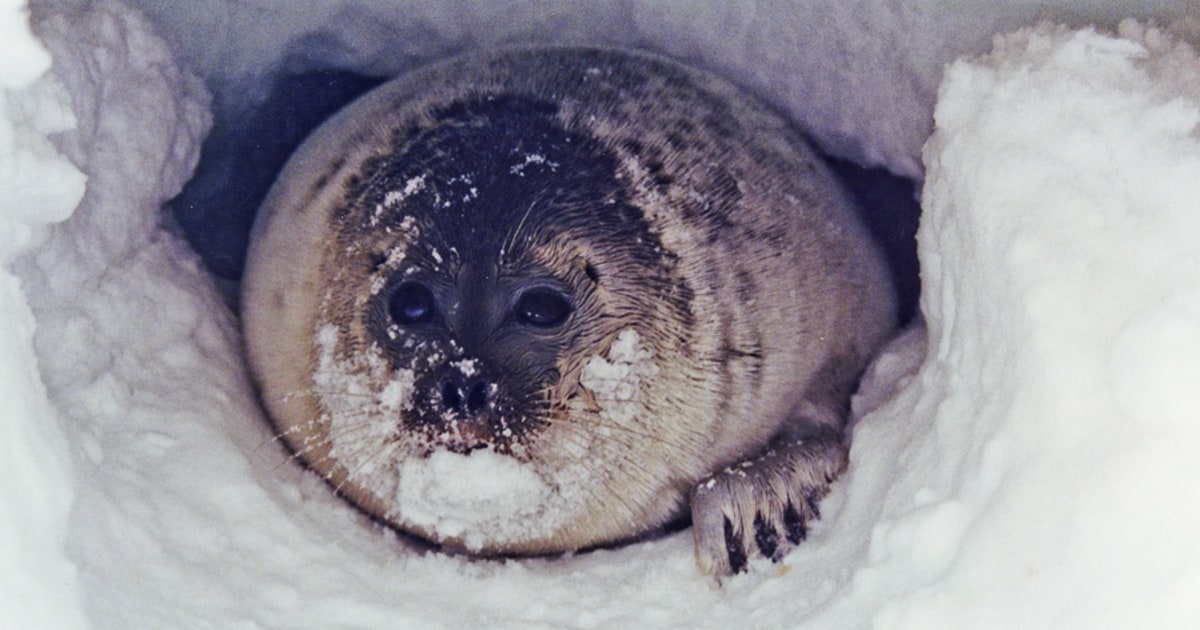
Imagine standing completely naked in Antarctica during summer. You would develop frostbite within an hour and die within 2-3 hours. Yet animals like fish and seals thrive in these freezing temperatures - even the tips of their fins don't freeze! What makes their cells so special? The answer lies in their plasma membranes and how these remarkable structures adapt to extreme conditions.
Note
The plasma membrane is not just a simple wrapper around cells - it's a sophisticated structure that can adapt to environmental conditions. The ability of seals and fish to survive in Antarctic waters demonstrates just how remarkable these adaptations can be!
All living cells are surrounded by a plasma membrane that controls what enters and leaves the cell. Understanding the structure and function of this vital cellular component is essential for understanding how cells survive and function in different environments.
The function of the plasma membrane
The plasma membrane (also called the cell membrane) is the phospholipid bilayer and embedded proteins which separate the intracellular environment from the extracellular environment. Every cell has a plasma membrane that acts as a thin boundary separating the inside of the cell from the outside world.
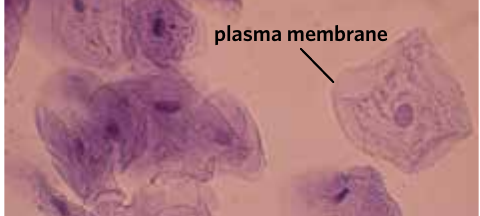
One of the most important properties of the plasma membrane is selective permeability (also known as being semipermeable). This means the membrane acts as a gatekeeper, allowing only specific substances to pass through whilst blocking others.
Note
The Membrane as a Gatekeeper
Think of the plasma membrane as a highly selective security checkpoint. It doesn't just randomly let things through - it carefully controls what enters and exits based on the cell's needs. This selective permeability ensures that:
- Essential nutrients can enter the cell
- Waste products can exit the cell
- Harmful substances are kept out
- The cell maintains a specialised internal environment different from its surroundings
Thanks to this selective barrier, cells can maintain the precise chemical conditions needed for life processes to occur.
The structure of the plasma membrane
The plasma membrane is not a simple boundary - it's a complex structure made up of several different types of molecules. The main components are phospholipids, proteins, carbohydrates, and cholesterol, each serving specific functions.
Phospholipids
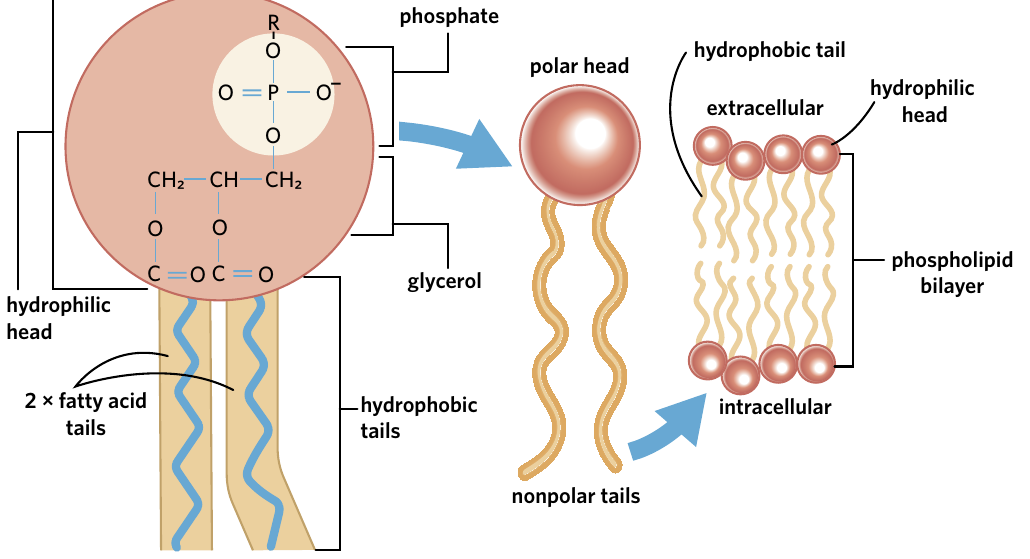
Phospholipids are the main molecule of which membranes are composed. They have a phosphate head and two fatty acid tails. These molecules are arranged in a double layer called a phospholipid bilayer that forms the primary component of cell membranes.
Structure of phospholipids
Each phospholipid molecule has two distinct regions:
The phosphate head:
- Made of glycerol and a phosphate group
- Negatively charged
- Hydrophilic (having a tendency to be attracted to and dissolve in water)
- Polar (has both a positive end and negative end)
The fatty acid tails:
- Made of long chains of carbon and hydrogen atoms
- Uncharged
- Hydrophobic (having a tendency to repel and be insoluble in water)
- Nonpolar (without a clearly positive or negative end)
Note
Understanding Hydrophilic and Hydrophobic
The terms hydrophilic and hydrophobic come from Greek roots:
- Hydrophilic = "water-loving" - these molecules are attracted to water
- Hydrophobic = "water-fearing" - these molecules avoid water
This is directly related to whether molecules are polar or nonpolar. Polar molecules (with positive and negative ends) are hydrophilic, whilst nonpolar molecules (without distinct charges) are hydrophobic.
How phospholipids form bilayers
Because phospholipids have both hydrophilic and hydrophobic parts, they are called amphipathic molecules (also known as amphiphilic). This dual nature is crucial for membrane formation.
When phospholipids are placed in water, they naturally arrange themselves into a bilayer because:
- The hydrophilic phosphate heads are attracted to water (a polar substance) and orient themselves toward the watery environments inside and outside the cell
- The hydrophobic fatty acid tails avoid water and cluster together, forming the interior of the membrane away from the aqueous environments
This arrangement is stable because it satisfies both the water-loving heads and water-avoiding tails.
Important
The "Like Dissolves Like" Principle
A fundamental rule of chemistry explains why phospholipids arrange themselves into bilayers: "like dissolves like"
- Polar molecules are attracted to and dissolve in polar substances
- Nonpolar molecules are attracted to and dissolve in nonpolar substances
- Polar and nonpolar molecules don't interact well with each other
This principle explains why the hydrophilic (polar) heads face the watery environments whilst the hydrophobic (nonpolar) tails cluster together away from water.
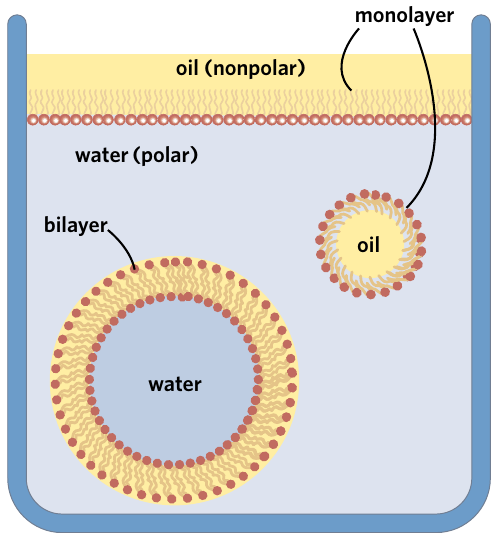
The diagram above shows how phospholipids behave in different environments. Around water (polar), they form a bilayer with heads facing outward. Around oil (nonpolar), they form a monolayer with tails facing the oil.
Proteins, carbohydrates, and cholesterol
Whilst phospholipids form the basic structure of the membrane, other molecules are embedded within or attached to this bilayer, each with important functions.
Membrane proteins
Proteins in the plasma membrane can be classified into three main types:
Integral proteins are permanently secured to the plasma membrane. They are embedded within the phospholipid bilayer and difficult to remove.
Transmembrane proteins are integral proteins that span the entire plasma membrane, extending through both layers from one side to the other.
Peripheral proteins are temporarily attached to the plasma membrane, often binding to integral proteins or the surface of the bilayer.
Note
Why Proteins Matter
Membrane proteins are essential for the plasma membrane to function as more than just a barrier. Without proteins, the membrane would simply be a passive wall. Proteins transform it into an active, responsive structure that can transport materials, receive signals, and interact with the environment.
These proteins serve vital functions:
| Function | Description |
|---|---|
| Transport | Form channels or pumps that control which substances can enter and exit the cell, contributing to selective permeability |
| Catalysis | Act as enzymes to speed up chemical reactions at the membrane surface |
| Communication | Receive signals from other cells or recognise specific molecules, often connecting to the cytoskeleton to transmit signals into the cell |
| Adhesion | Attach to other cells, the extracellular matrix, or the cytoskeleton to hold structures in place |
Carbohydrates
Carbohydrates are usually present as chains extending outside the cell. They attach to either:
- Phospholipids, forming glycolipids (a phospholipid bound to a carbohydrate)
- Proteins, forming glycoproteins (a protein bound to a carbohydrate)
These carbohydrate chains help with:
- Cell-to-cell communication
- Cell signalling
- Recognition of self versus non-self (foreign) molecules
- Cell adhesion
Cholesterol
Cholesterol is a steroid-alcohol that regulates fluidity in plasma membranes. In animal cells, cholesterol molecules embed themselves between the fatty acid tails of the phospholipid bilayer. Other organisms use similar molecules that serve the same function.
Cholesterol has a crucial role in maintaining appropriate membrane fluidity:
- At higher temperatures, cholesterol keeps phospholipids bound together, preventing them from drifting apart
- At lower temperatures, cholesterol disrupts the fatty acid tails, preventing phospholipids from packing too tightly and becoming rigid
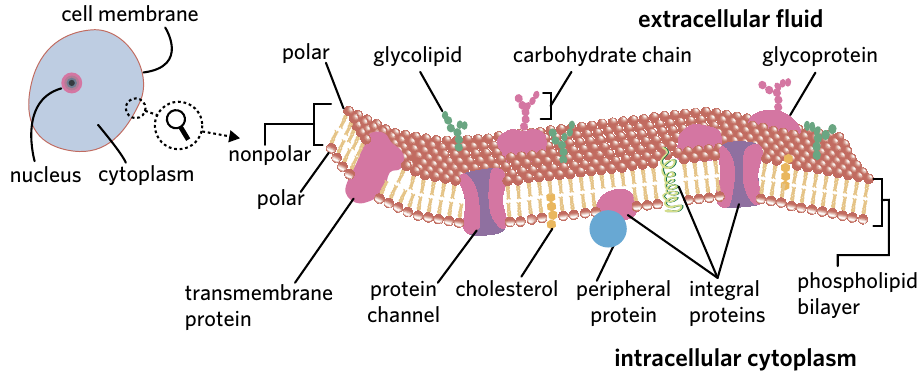
This detailed diagram shows all the components of the plasma membrane working together: the phospholipid bilayer forms the foundation, with various proteins embedded throughout, carbohydrate chains extending outward, and cholesterol molecules wedged between the phospholipids.
The fluid mosaic model
Scientists describe the structure of the plasma membrane using the fluid mosaic model, which explains two key features of membrane organisation.
The "fluid" component
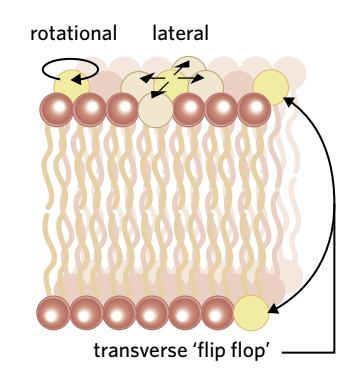
The plasma membrane is described as "fluid" because its components are not fixed in place. Phospholipids continually move within the membrane:
- Lateral movement - phospholipids slide side to side within their layer
- Rotational movement - phospholipids spin in place
- Flip-flop movement - occasionally, phospholipids switch from one layer to the other (though this is rare)
Proteins and carbohydrates also move fluidly through the membrane, drifting laterally like icebergs floating in water.
The "mosaic" component
The membrane is described as a "mosaic" because of the diverse array of proteins and carbohydrates embedded within it. Looking down at a plasma membrane, you would see many different molecules of varying shapes and sizes, creating a pattern similar to mosaic artwork made up of different coloured tiles.
Note
Visualising the Fluid Mosaic Model
Imagine the plasma membrane as a sea of phospholipids where proteins and other molecules float like icebergs. The "fluid" part means these components can move around freely (like ships floating on water), whilst the "mosaic" part refers to the diverse collection of different molecules embedded throughout (like a mosaic made of different coloured tiles).
This fluid mosaic arrangement allows the membrane to be both stable and flexible, adapting to changing cellular needs whilst maintaining its barrier function.
Regulation of membrane fluidity
Temperature changes can significantly affect how well the plasma membrane functions. Cells in extreme environments have evolved mechanisms to maintain optimal membrane fluidity.
Temperature effects on membranes
In hot environments:
- Increased kinetic energy causes molecules to move faster
- Phospholipids risk drifting apart, potentially creating gaps in the membrane
- The membrane becomes too fluid
In cold environments:
- Decreased kinetic energy causes molecules to slow down
- Phospholipids pack tightly together
- The membrane becomes too rigid, impairing transport of substances
Important
Membrane Fluidity is Critical
If a membrane becomes too fluid, it may develop gaps that allow harmful substances to enter or essential materials to leak out. If it becomes too rigid, the cell cannot transport necessary nutrients in or waste products out. Maintaining optimal fluidity is essential for cell survival.
Adapting to temperature extremes
Cells regulate membrane fluidity by adjusting two key factors: cholesterol content and fatty acid composition.
Role of cholesterol
Interestingly, cells maintain high cholesterol levels in both hot and cold environments, though cholesterol serves different purposes at different temperatures:
- In hot environments: Cholesterol's large hydrophobic regions increase nonpolar interactions between fatty acid tails, holding them together and preventing the membrane from becoming too fluid
- In cold environments: Cholesterol takes up space between phospholipids, preventing them from packing too tightly and keeping the membrane flexible
Saturated versus unsaturated fatty acids
The type of fatty acids in membrane phospholipids dramatically affects membrane fluidity.
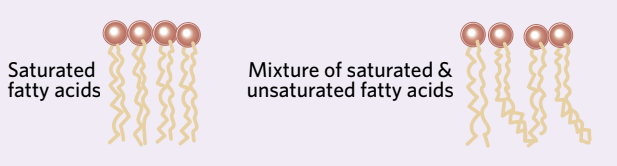
Saturated fatty acids are fatty acid chains with only single bonds between carbon atoms. Without double or triple bonds, these chains are straight and can pack tightly together, like a neat stack of pencils.
Unsaturated fatty acids are fatty acid chains with at least one double or triple bond between carbon atoms. These bonds create "kinks" in the chains, preventing tight packing.
Note
Everyday Examples of Saturated vs Unsaturated Fats
You can observe the difference between saturated and unsaturated fats in your kitchen:
- Saturated fats (like butter) are solid at room temperature because their straight chains pack tightly together
- Unsaturated fats (like olive oil) are liquid at room temperature because their kinked chains cannot pack tightly
Cells use this same principle to regulate membrane fluidity!
Cells adjust their fatty acid composition based on environmental temperature:
| Environment | Cholesterol Level | Fatty Acid Type | Explanation |
|---|---|---|---|
| Hot | High | More saturated | Saturated fatty acids can pack tightly together. Since carbons are only connected by single bonds with no kinks, phospholipids nestle closely, providing more structure when heat increases fluidity |
| Cold | High | More unsaturated | Unsaturated fatty acids have kinks due to double and triple bonds between carbon atoms. These kinks push phospholipids away from each other, maintaining fluidity when cold temperatures would otherwise make the membrane rigid |
Example
Worked Example: Antarctic Seals and Membrane Adaptation
Let's return to our opening question: how do seals survive in Antarctic waters?
The Challenge: Antarctic waters are near freezing (around -2°C). At these temperatures, normal cell membranes would become rigid and non-functional.
The Solution: Seal cells have adapted their membrane composition:
- High proportion of unsaturated fatty acids - the kinks in these fatty acid chains prevent tight packing
- High cholesterol content - prevents phospholipids from packing too closely together
- Result: The membrane remains fluid and functional even at temperatures that would freeze most other cells
Why This Works: The combination of unsaturated fatty acids and cholesterol creates spaces between phospholipids, maintaining membrane flexibility. This allows seals to swim in sub-zero waters without their cell membranes freezing solid - the tips of their fins stay functional because their cells can still transport nutrients and remove waste!
This explains why animals like seals can survive in Antarctic waters - their cell membranes contain high proportions of unsaturated fatty acids, preventing their membranes from freezing solid even in sub-zero temperatures!
Summary
Key Points to Remember:
-
The plasma membrane is a selectively permeable barrier that controls what enters and exits cells, separating the intracellular environment from the extracellular environment.
-
The membrane's foundation is a phospholipid bilayer - phospholipids have hydrophilic (water-loving) phosphate heads and hydrophobic (water-fearing) fatty acid tails that naturally arrange into a stable double layer.
-
The membrane contains proteins for transport, catalysis, communication and adhesion; carbohydrates for cell recognition and signalling; and cholesterol to regulate membrane fluidity.
-
The fluid mosaic model describes how membrane components can move laterally whilst maintaining the membrane's structure, with diverse molecules embedded like tiles in a mosaic.
-
Cells adapt to extreme temperatures by adjusting cholesterol levels and the ratio of saturated to unsaturated fatty acids - more unsaturated fatty acids keep membranes fluid in cold environments, whilst saturated fatty acids provide stability in heat.