Enzymes (VCE SSCE Chemistry): Revision Notes
📚Revision Notes
Enzymes
What are enzymes?
Enzymes are biological catalysts that speed up chemical reactions in living cells. They are a special type of protein that plays a vital role in sustaining life. In your body, enzymes are involved in thousands of reactions, including immune responses, digestion of food, and breakdown of waste products. The unique three-dimensional shape of each enzyme is what allows it to function as a catalyst.
Note
Many medicines work by changing how enzymes function in the body, which shows just how important enzyme activity is for maintaining health.
Comparing inorganic catalysts and enzymes
Like the inorganic catalysts you've studied previously, enzymes lower the activation energy of reactions by providing an alternative reaction pathway. This makes reactions occur faster without the need for extreme temperatures or pressures.
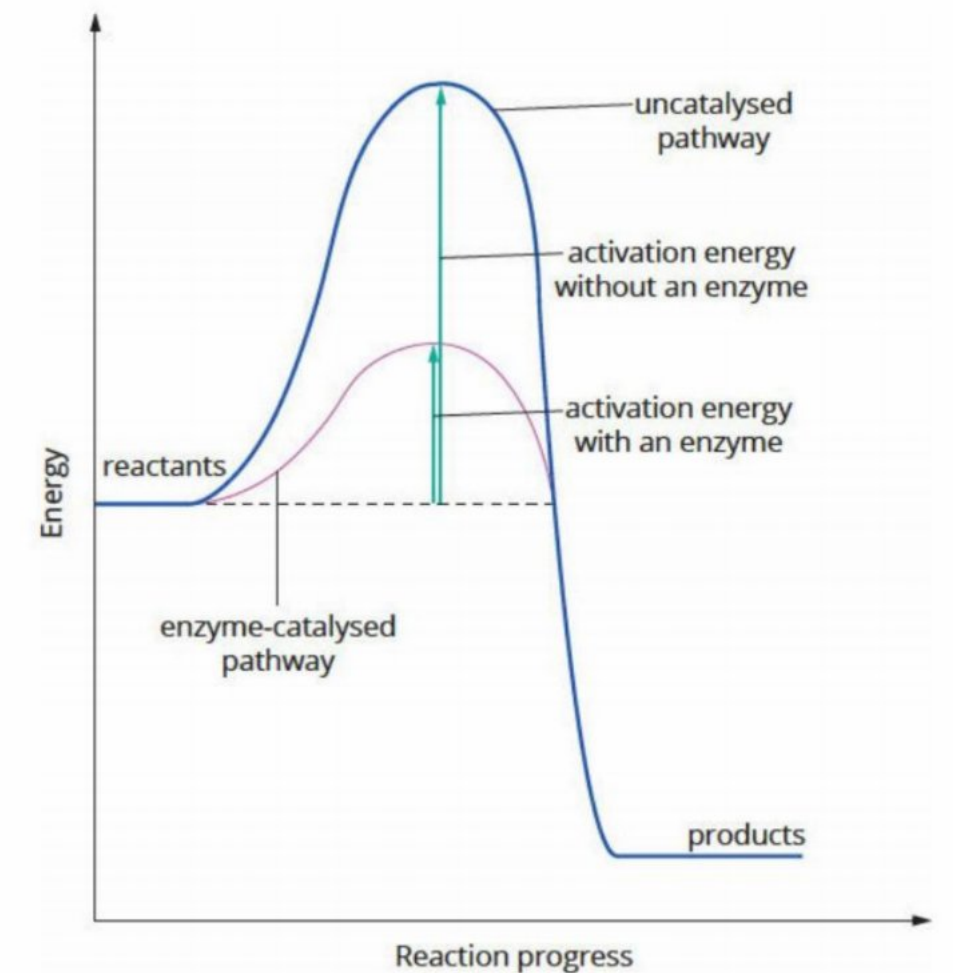
Similarities between enzymes and inorganic catalysts
Enzymes share four key properties with inorganic catalysts:
- They are only needed in relatively small amounts
- They are not used up or changed at the end of the reaction
- They do not alter a reaction's equilibrium position
- They provide an alternative reaction pathway that lowers activation energy
Key differences: specificity and sensitivity
While enzymes share these basic catalytic properties, they differ from inorganic catalysts in two important ways.
Important
Specificity: Enzymes are highly specific, meaning each enzyme catalyses only one particular reaction or type of reaction. This is quite different from inorganic catalysts, which can often catalyse multiple reactions.
Here are some examples of enzyme specificity:
- Amylase: catalyses the hydrolysis of starch into smaller sugar molecules
- Sucrase: catalyses the hydrolysis of sucrose into glucose and fructose
- Lactase: catalyses the hydrolysis of lactose into galactose and glucose
- Catalase: catalyses the decomposition of hydrogen peroxide ()
Sensitivity: Enzymes are much more sensitive than inorganic catalysts to changes in reaction conditions. They operate effectively only within a narrow temperature range and are sensitive to changes in pH. Any factor that changes the unique shape of the enzyme's active site will reduce or eliminate its effectiveness as a catalyst.
How enzymes work
The active site and substrate
The specificity of enzyme action can be explained by the structure of the enzyme molecule. Each enzyme has a particular region called the active site where reactions occur. The active site is usually a uniquely shaped, flexible hollow or cavity within the protein structure.
The reactant molecule that binds to the active site is called the substrate. The shape of the active site is complementary to the shape of the substrate, which explains why each enzyme only works with specific substrates.
The lock-and-key model
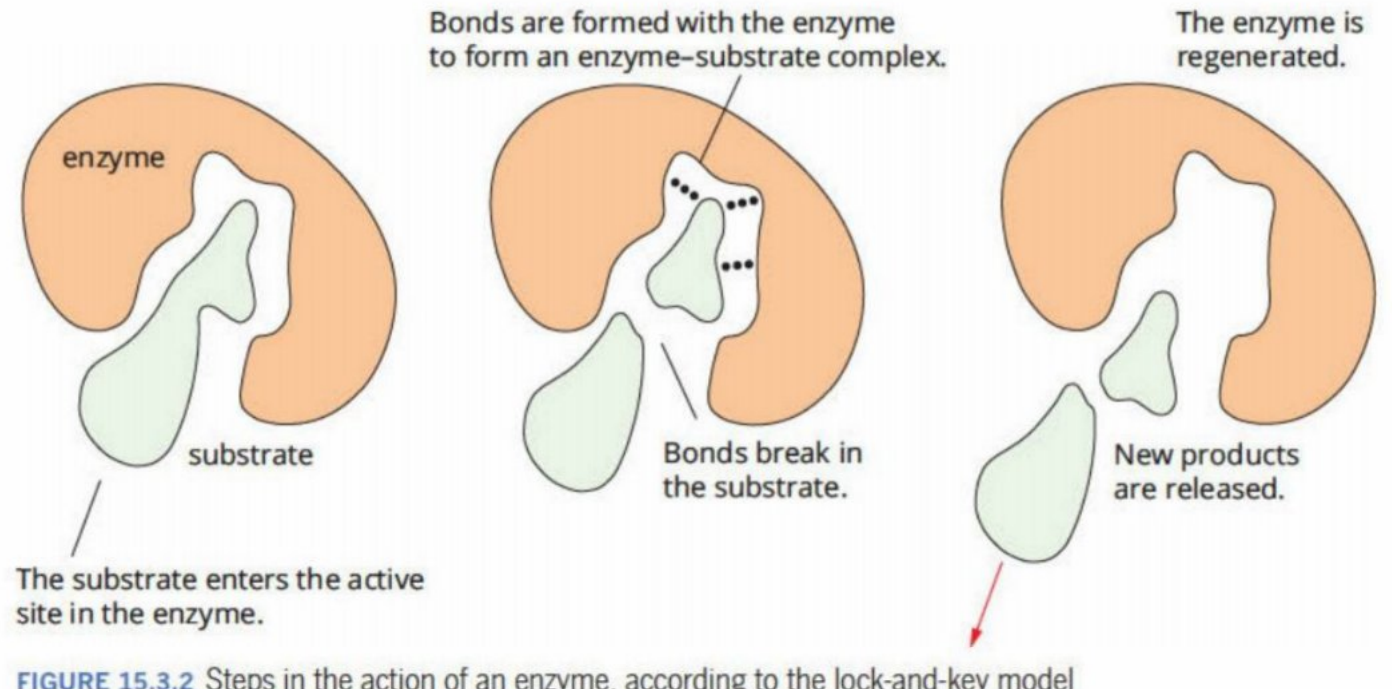
One helpful way to understand how enzymes work is the lock-and-key model. In this model, the substrate molecule fits into the enzyme's active site like a key fitting into a lock. This complementary fit is what makes enzymes so specific.
Note
The enzyme-catalysed reaction occurs in three steps:
- The substrate enters the active site of the enzyme, fitting precisely into the complementary shape
- Bonds form between the enzyme and substrate, creating an enzyme-substrate complex. The enzyme helps break bonds in the substrate
- New product molecules are released, and the enzyme is regenerated unchanged, ready to catalyse another reaction
Because the enzyme is specific for a particular substrate, binding to a different molecule will not result in a reaction. The substrate must have the correct shape to fit the active site.
Temperature dependence of enzymes
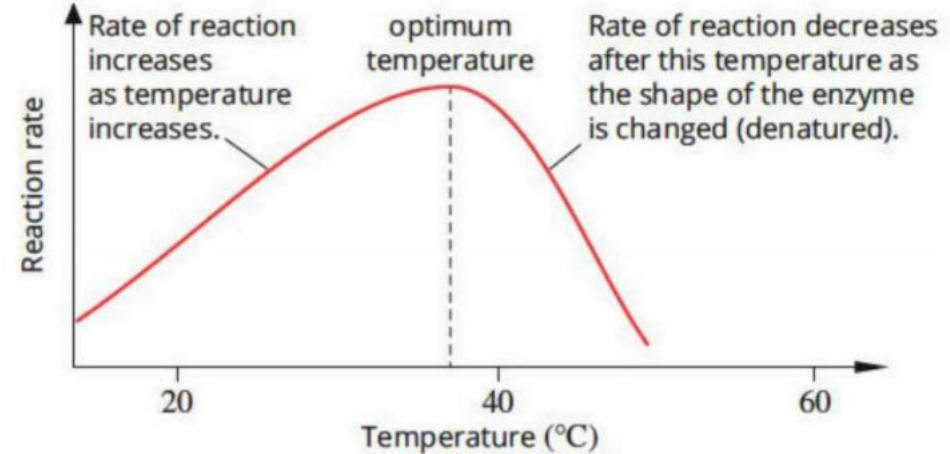
Enzymes are only effective within a relatively narrow range of temperatures. The temperature at which enzyme activity is greatest is called the optimum temperature. For enzymes that operate inside human cells, the optimum temperature is approximately 37°C (normal body temperature).
Important
At temperatures above or below the optimum, enzyme function is impaired. This is why conditions like hypothermia (abnormally low body temperature) and fever (abnormally high body temperature) are dangerous to human health.
Effects above optimum temperature
When temperature increases above the optimum, the reaction rate decreases rapidly. Here's why: the increased kinetic energy of molecules causes increased movement throughout the enzyme structure. This breaks some of the intermolecular forces (such as hydrogen bonds) that are responsible for maintaining the enzyme's three-dimensional shape. When the shape of the active site changes, it can no longer effectively bind to the substrate or catalyse the reaction.
Effects below optimum temperature
When temperature decreases below the optimum, the reaction rate also decreases, but less dramatically. At lower temperatures, both enzyme and substrate molecules have lower kinetic energies. This results in less frequent and less energetic collisions between molecules, reducing the rate of reaction. At these lower temperatures, the enzyme is said to be deactivated.
Important
Key difference: Deactivation at low temperatures is usually reversible, while damage at high temperatures often is not reversible.
Denaturation
When temperatures rise significantly above the optimum temperature, the enzyme becomes denatured. Denaturation occurs when the bonding in an enzyme is disrupted and the shape of the active site changes permanently. The enzyme loses its catalytic activity, and this change to the protein structure is often irreversible.

pH dependence of enzymes
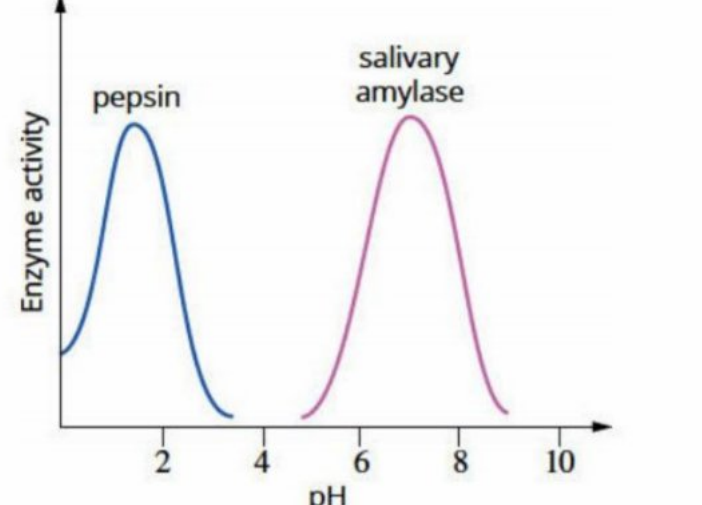
Like temperature, enzymes operate effectively only within a narrow pH range. The pH at which enzyme activity is greatest is known as the optimum pH. Different enzymes have different optimum pH values, depending on their normal environment in the body.
Examples of pH specificity
Example
Enzyme pH Comparison:
Pepsin is an enzyme that catalyses the breakdown of proteins into amino acids in the acidic conditions of the stomach. It has an optimum pH of approximately 1.5 and is only active at pH values below 3.
Salivary amylase catalyses the breakdown of starch to maltose (a disaccharide) in the relatively neutral environment of the mouth. It has an optimum pH of approximately 7.2 and is active between pH 5 and 9.
The activity of these enzymes drops off drastically outside their normal pH conditions. This is why enzymes have reduced activity and are less effective as catalysts at any pH above or below their optimum pH.
How pH affects enzyme structure
Changes in pH can have a large impact on the stability of enzyme structure. The enzyme's active site changes shape and loses the ability to function effectively when pH changes significantly. Extremely high or low pH values generally cause complete loss of activity for most enzymes through denaturation.
Salt bridges in protein structure
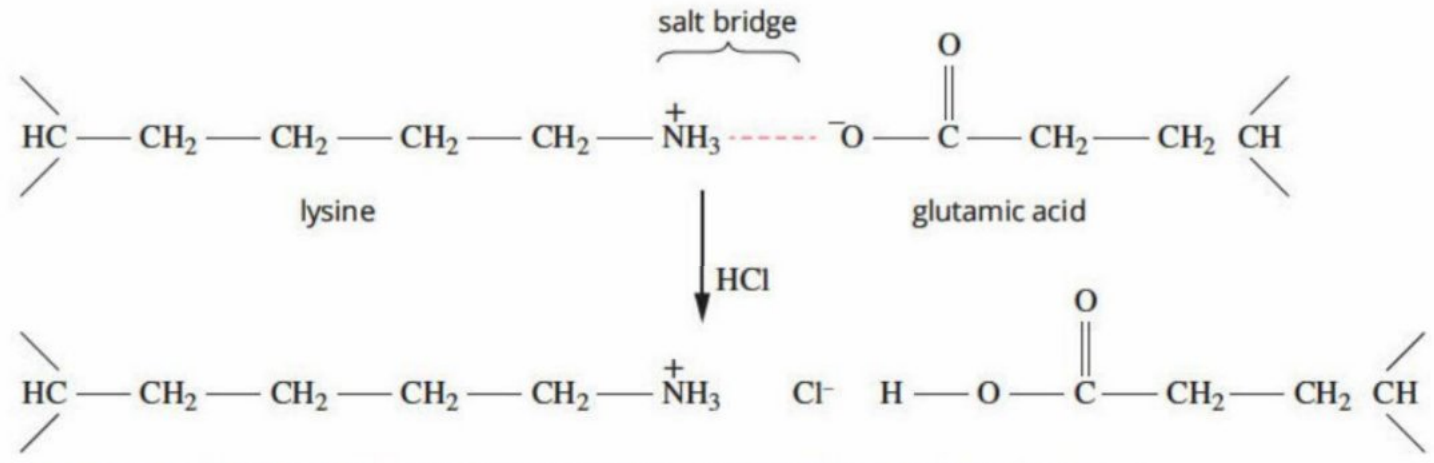
The acidic and basic R groups on amino acids play a significant role in stabilising the tertiary structure of proteins. These groups can form ionic bonds called salt bridges, which help maintain the enzyme's shape.
Note
The addition of either a strong acid or base can disrupt salt bridges. For example, in the diagram above, lysine (with a positively charged group) forms a salt bridge with glutamic acid (with a negatively charged carboxylate group). When acid () is added, the salt bridge is broken, leading to denaturation of the protein.
A real-world example: when milk passes into the acidic environment of the stomach, the acid denatures proteins in the milk and it curdles.
Real-world applications
Bromelain in pineapple
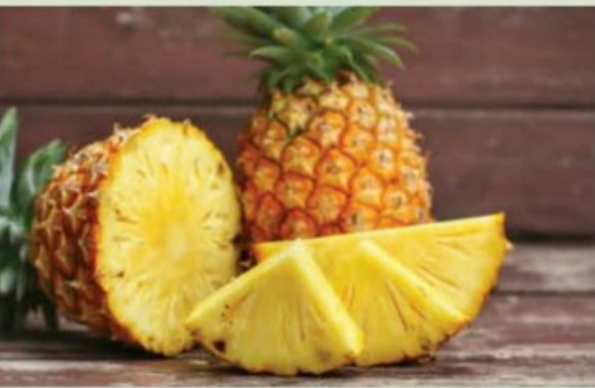
Bromelain is an enzyme found only in pineapple. It catalyses the digestion of proteins and is responsible for the unpleasant soreness or even bleeding that can occur in your mouth when you eat fresh pineapple.
Example
Bromelain and Jelly Setting:
Gelatin (the substance that makes jelly set) is a protein. When you add fresh pineapple to a jelly mixture, the bromelain catalyses the breakdown of the gelatin, preventing the jelly from setting.
However, tinned pineapple can be used in jelly without problems. This is because tinned pineapple has been heated to a temperature that denatures (inactivates) the bromelain enzyme.
The Burke and Wills expedition
In 1861, explorers Robert Burke and William Wills were starving on their return from crossing Australia. The local Yandruwandha people gave them cakes made from nardoo, a clover-like fern, which sustained the Indigenous people.

Example
The Thiaminase Case Study:
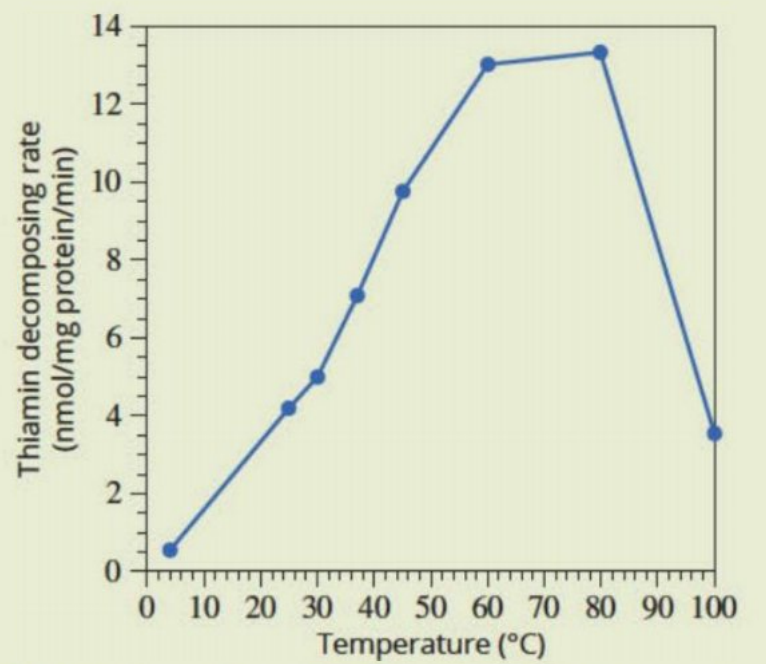
However, when Burke and Wills tried to make the cakes themselves, they became sicker and both eventually died. The reason lies in an enzyme called thiaminase found in nardoo.
The Problem: Thiaminase breaks down vitamin B1 (thiamine), which is essential for the digestion of carbohydrates. This is obviously undesirable in humans.
The Solution: The Indigenous people knew that nardoo cakes needed to be cooked for long periods. The prolonged heat treatment denatured the thiaminase, preserving the thiamine necessary for digestion.
Note
Thiaminase has a particularly high heat resistance for an enzyme. As the graph shows, its optimum temperature is around 60-80°C, significantly higher than most enzymes. This explains why ordinary cooking methods used by Burke and Wills were insufficient to denature it, while the prolonged cooking methods of the Indigenous people were effective.
Remember!
Summary
Key Points to Remember:
- Enzymes are biological catalysts - they are proteins that speed up chemical reactions in living cells by lowering activation energy
- Enzymes are specific - each enzyme catalyses only one particular reaction or type of reaction due to its uniquely shaped active site
- Lock-and-key model - substrates fit precisely into the enzyme's active site, forming an enzyme-substrate complex
- Optimum conditions are critical - enzymes have optimum temperature (37°C for human enzymes) and optimum pH where they work best
- Denaturation vs deactivation - high temperatures and extreme pH cause irreversible denaturation, while low temperatures cause reversible deactivation