Innovations in Polymer Manufacture (VCE SSCE Chemistry): Revision Notes
📚Revision Notes
Innovations in Polymer Manufacture
Introduction to polymer sustainability
The sustainability of polymer use centres on two critical challenges facing modern society. First, we must address the depletion of scarce resources, particularly crude oil, which serves as the primary raw material for most plastic production. Second, we face the growing problem of plastic waste accumulation in landfills and natural environments. Scientists and industry leaders have responded to these challenges by developing innovative solutions that vary in their degree of sustainability.
Note
These innovations can be classified based on two key factors: the source of raw materials used (fossil fuels versus plant-based biomass) and whether the resulting polymer can biodegrade naturally.
Understanding waste terminology
To properly evaluate polymer innovations, we need to understand three important sustainability terms that describe different aspects of environmental impact.
Biobased materials refer to products that are at least partially derived from biomass, which means living plant matter. Common sources include sugarcane, corn, starch, potatoes, and fruit waste. When a polymer is described as biobased, it indicates that renewable plant resources, rather than finite fossil fuels, were used in its manufacture.
Biodegradable materials can be broken down through natural biological processes. Biodegradation occurs when microorganisms present in the environment convert materials into simpler, natural substances like water, carbon dioxide, and compost.
Important
The term "biodegradable" has a significant limitation: it doesn't specify a timeframe. In oxygen-poor environments like landfill sites, many plastics labelled as biodegradable may not actually degrade for decades or even centuries.
Compostable materials represent a more stringent standard than biodegradable. A compostable product can disintegrate completely into natural elements within a compost environment, leaving no toxic residues in the soil. Products that meet compostability standards will naturally break down within approximately 90 days under normal composting conditions. This term provides more certainty about actual environmental breakdown compared to the vaguer "biodegradable" label.
Fossil fuel sourced, compostable polymers
Some innovative polymers address the waste problem while still relying on fossil fuel resources. These materials offer partial sustainability improvements by focusing on end-of-life disposal rather than resource conservation.
Polyvinyl alcohol (PVA)
Polyvinyl alcohol represents an interesting case of a water-soluble plastic. Although both polyvinyl acetate (the starting material) and PVA itself are manufactured from fossil fuels, PVA offers unique disposal advantages. The polymer structure contains hydroxyl groups () along its chain, which can form hydrogen bonds with water molecules. This molecular feature gives PVA its distinctive water solubility.
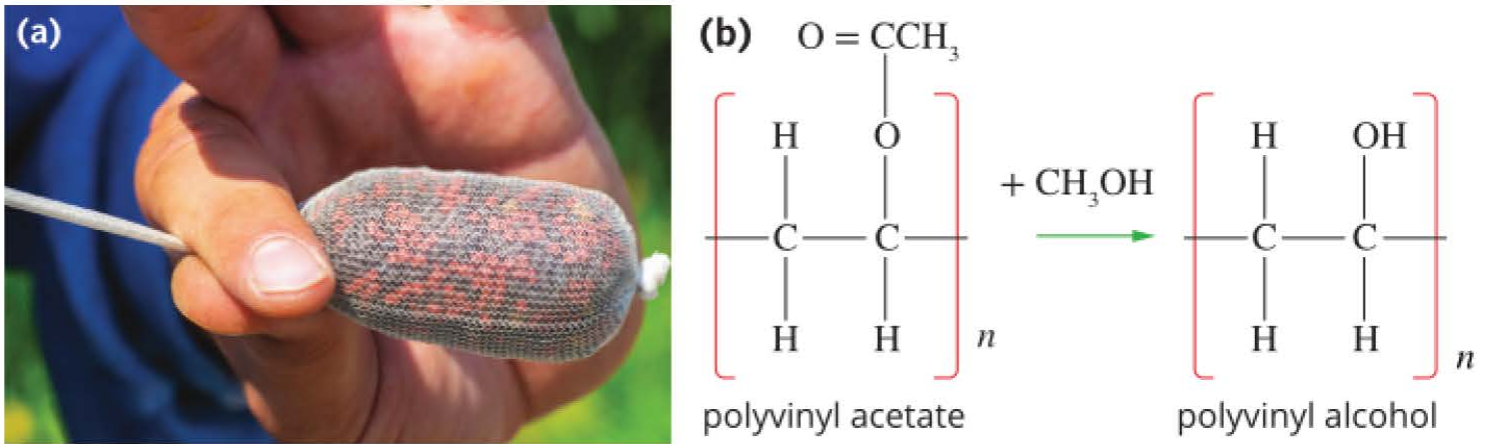
When exposed to water, PVA dissolves rather than persisting as solid waste. This property makes it valuable for medical applications, where it can safely dissolve in body fluids, and for cleaning products, where it disperses in water after use.
Note
While PVA still depletes petroleum resources during manufacture, it avoids contributing to landfill volume and doesn't create toxic breakdown products in the environment.
Enzymatic breakdown using PETase
A groundbreaking discovery in 2016 by Japanese scientists offers hope for addressing the massive accumulation of PET plastic waste. Researchers identified bacteria in a specific landfill site that were breaking down plastic products at six times the normal degradation rate. From these bacteria, they isolated an enzyme called PETase.
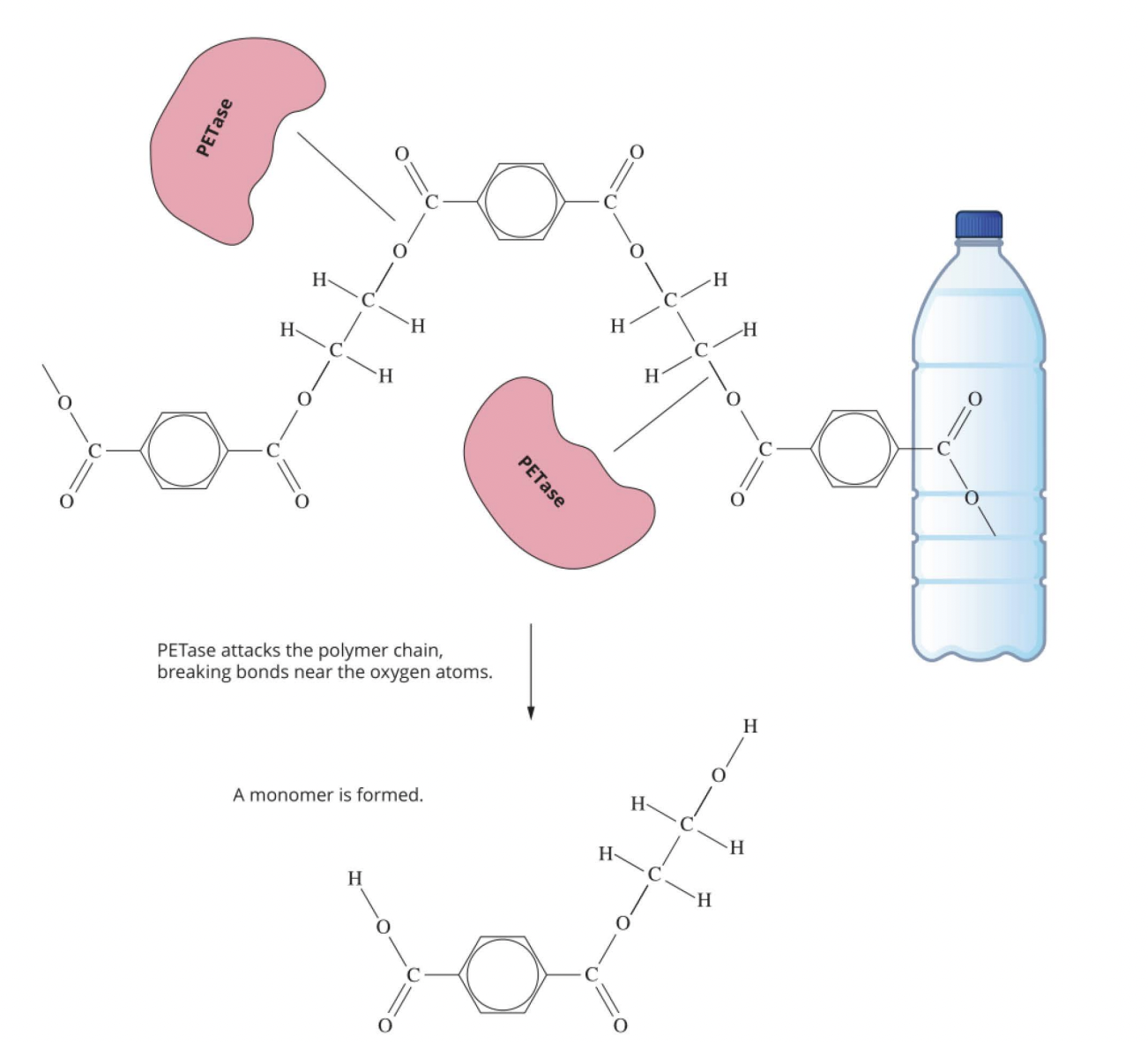
PETase works by attacking the covalent bonds that link monomers together in PET polymer chains, specifically targeting the ester groups. This enzymatic action breaks the polymer back down into its original monomers. The significance of this process lies in its potential for genuine recycling: the recovered monomers can be reused to manufacture new plastic products, creating a closed loop rather than simply disposing of waste.
Note
This represents organic recycling, which uses microorganisms to dramatically reduce the time required for polymers to decompose into useful monomers or harmless smaller molecules.
Microbial breakdown by bacteria
Austrian researchers have expanded this field by discovering that bacteria from a cow's stomach can break the bonds between monomer units in certain polymers. This microbial process (where microorganisms like bacteria break down materials) enables the re-formation of starting monomers, offering another pathway for organic recycling.
Hydrolysis of condensation polymers
Condensation polymers like PET show greater potential for composting compared to addition polymers. This difference arises from the presence of oxygen atoms within the molecular chain. The carbon-oxygen double bond () in these polymers has polar character, making it susceptible to attack from microorganisms.
When condensation polymers break down, the process is called hydrolysis. This term reflects the chemistry involved: water molecules that were released during polymer formation are consumed when the polymer breaks back down. Hydrolysis essentially reverses the condensation polymerisation reaction, converting the polymer back into its constituent monomers.
Biobased, not compostable polymers
Some innovations focus on replacing fossil fuel resources with renewable biomass while producing polymers with similar properties to conventional plastics. These bio-monomers reduce dependence on petroleum but don't necessarily solve the waste accumulation problem.
Bio-monomers from fermentation
Ethane-1,2-diol is one of the two monomers required to manufacture PET. Traditionally, this chemical comes from crude oil processing. However, a newer production method uses fermentation of plant waste as the starting point.
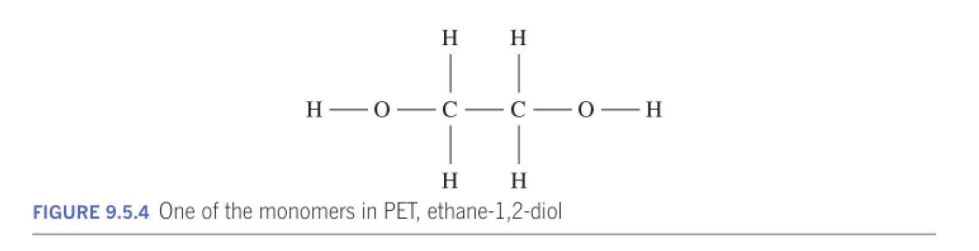
The process begins by adding yeast to a solution containing carbohydrates from plant waste. Through fermentation, these carbohydrates slowly convert to bioethanol. This bioethanol can then be chemically converted to ethane-1,2-diol, creating a bio-monomer (a monomer produced from biomass rather than petroleum). When this bio-monomer is used to manufacture PET, the resulting plastic is called bio-PET.
Note
The bioethanol can also be converted to other useful monomers. Converting bioethanol to ethene produces bio-polyethene (bio-PE), while converting it to propene creates bio-polypropene (bio-PP). Brazil built the world's first commercial bio-polyethene plant in 2010, leveraging the country's position as the leading producer of bioethanol.
These bio-based polymers reduce demand on non-renewable petroleum reserves, which is environmentally beneficial. However, they share a critical limitation with their fossil fuel counterparts.
Important
The polyethene formed from bio-ethene has the same poor compostability as polyethene made from crude oil. The source of the monomer doesn't change the polymer's resistance to natural degradation.
Chemical recycling innovations
Recycled plastic has traditionally been used for applications where high purity isn't essential, such as outdoor furniture and detergent bottles. However, chemical recycling processes are expanding the possibilities for using recycled materials.
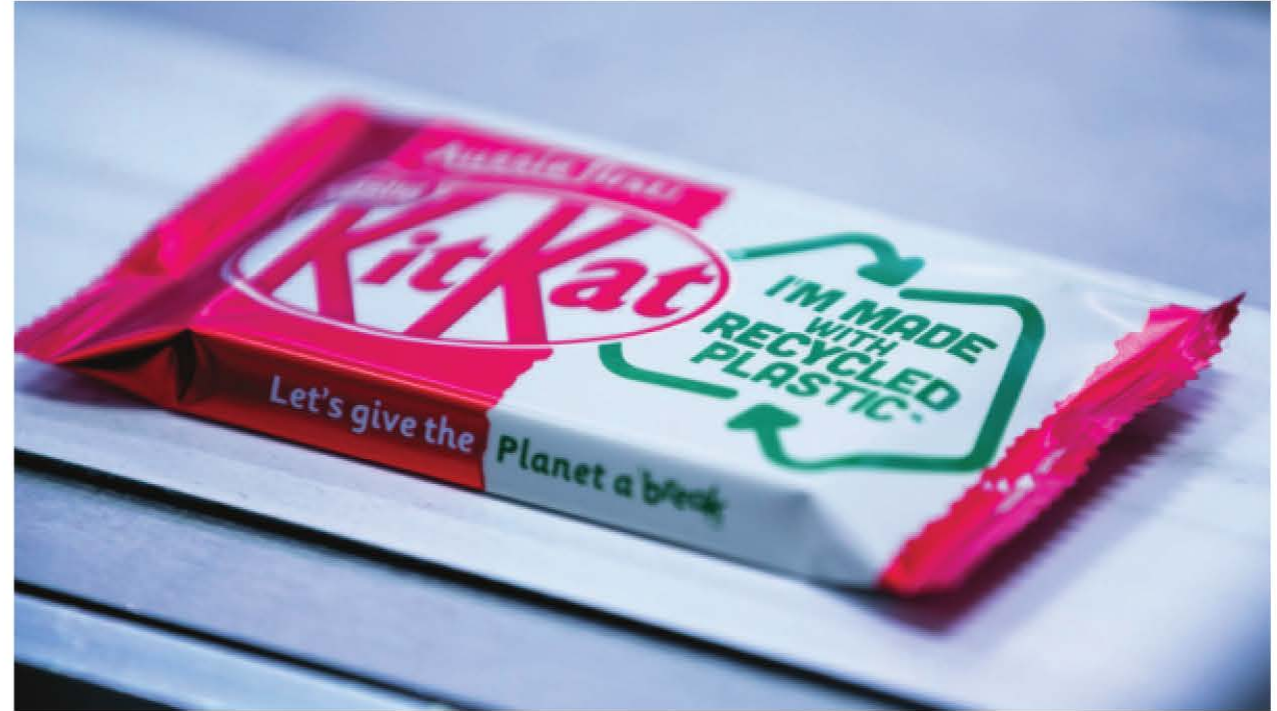
The Licella company operates a trial plant in New South Wales that uses plastic waste as its raw material (feedstock). Through a combination of high-temperature steam and catalysts, the process breaks down plastics to form synthetic renewable oil with properties similar to crude oil. This represents chemical recycling, where the polymer structure is fundamentally changed during the recycling process, also known as chemical cracking.
The synthetic oil can then be processed to create monomers such as propene, which are used to manufacture new plastics. This innovation dramatically accelerates what nature does over millions of years—converting organic materials to oil—completing the process in just 20 to 30 minutes while using waste materials as the starting point.
Biobased and compostable polymers
The most sustainable polymer innovations combine renewable resource use with genuine compostability, creating what approaches a truly circular economy.
Starch-based polymers
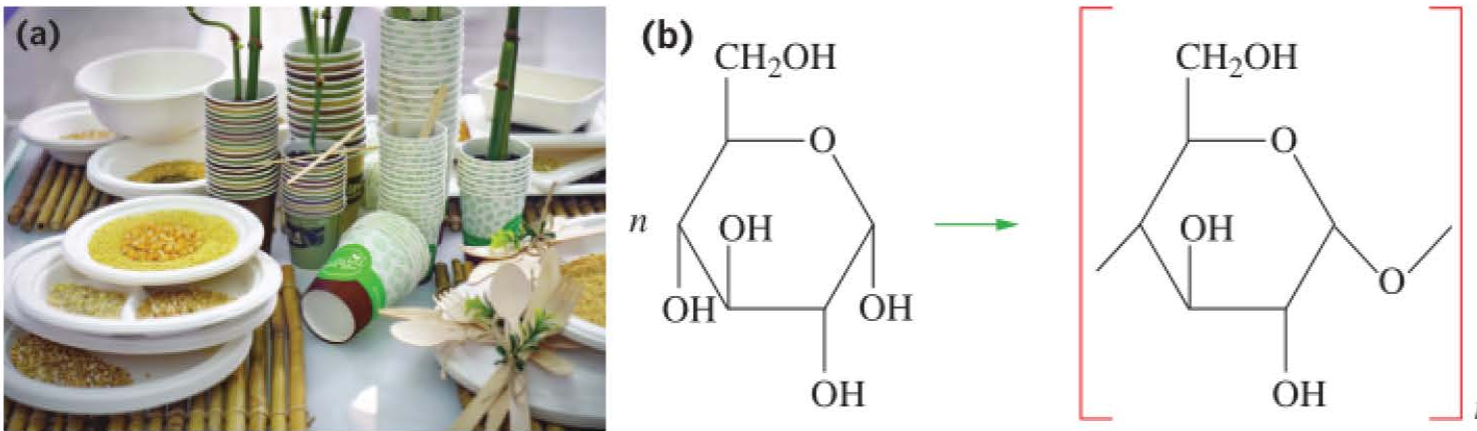
Several companies now manufacture products primarily from starch. This material can be obtained as a by-product from food processing industries, particularly from potato and corn processing facilities. The advantage of starch-based products extends beyond their renewable source: they compost easily, breaking down to either glucose monomers or carbon dioxide.
Note
Starch is a natural polymer formed when many glucose molecules link together through condensation reactions. When starch-based products break down, they return to these natural building blocks without leaving harmful residues.
Polylactic acid (PLA)
Polylactic acid represents one of the most promising biobased polymers currently emerging in the marketplace. The starting material, lactic acid, is produced through bacterial action on biomass. Suitable biomass sources include waste fruit from canning plants and waste materials from dairy processing facilities. Once produced, lactic acid undergoes polymerisation to form PLA.
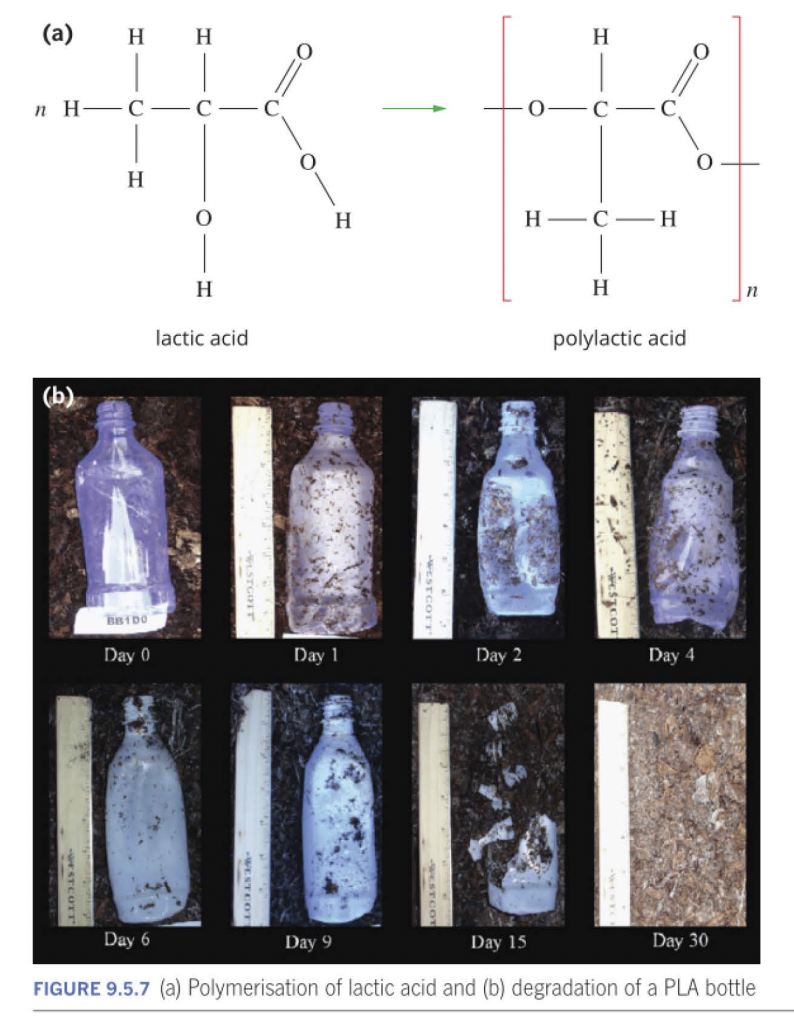
PLA offers exceptional sustainability credentials: it composts easily to form natural products, truly embodying the principles of a circular economy where the monomer comes from waste and the polymer quickly composts into harmless substances. The table below compares PLA's sustainability profile with conventional PET:
| Property | PET | PLA |
|---|---|---|
| Made from | Oil | Plant waste |
| Biodegrade? | No | Yes |
| Recycle? | Yes | Yes |
| Toxins released if incinerated? | Yes | No |
| Concerns of toxins leaching? | Yes | No |
Note
This comparison clearly demonstrates PLA's superior environmental performance across multiple criteria. While both materials can be recycled, PLA biodegrades naturally, releases no toxins when burned, and poses no concerns about toxic chemicals leaching into food or the environment.
Circular versus linear economy
The shift toward sustainable polymers represents a fundamental change in how we think about materials: moving from a linear economy to a circular economy.
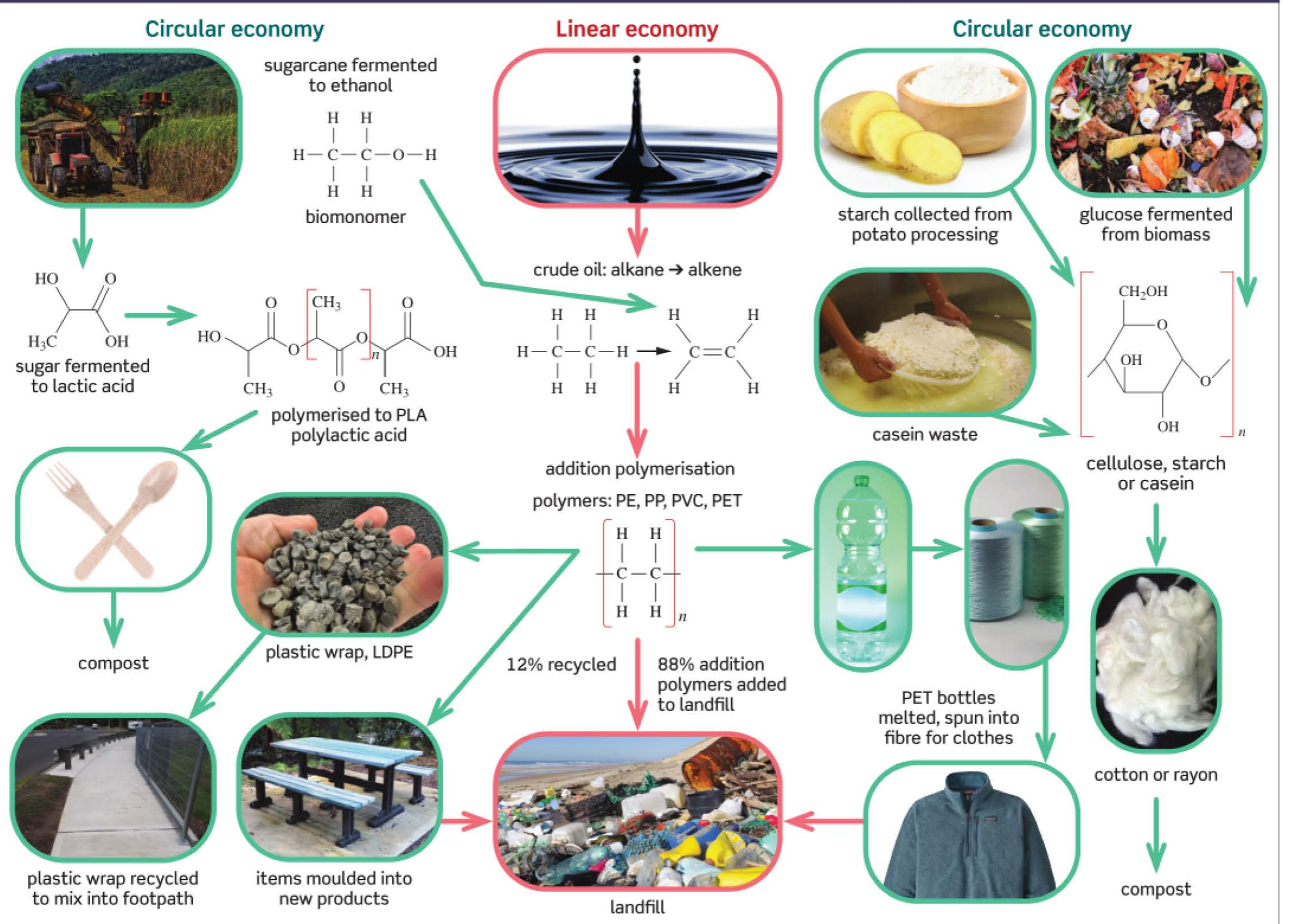
In a linear economy, materials follow a one-way path: crude oil is extracted and processed into alkanes, which are converted to alkenes, then polymerised through addition reactions to form polymers like PE, PP, PVC, and PET. After use, approximately 88% of these addition polymers end up in landfill sites, where they persist for centuries. This model is unsustainable because it depletes finite resources and creates permanent waste.
A circular economy takes a different approach, creating closed loops where materials continuously cycle through use and renewal. Several pathways exemplify this model:
- Sugarcane can be fermented to produce ethanol, which forms bio-monomers that polymerise into PLA. After use, PLA composts back into natural substances.
- Starch collected from potato processing can be converted into products that ultimately compost, returning nutrients to soil.
- PET bottles can be recycled by melting and spinning the material into fibres for clothing, which can later be composted if made from appropriate materials.
- Glucose fermented from biomass can form cellulose, starch, or casein, which become cotton or rayon fabrics that eventually compost.
Note
The emphasis in a circular economy falls on better packaging design (or eliminating packaging entirely), increasing recycling rates, and introducing new polymer types derived from natural, renewable sources.
Classifying polymers by sustainability
We can classify polymers into three broad categories based on their source materials and end-of-life characteristics:
Fossil fuel-based polymers use monomers derived from crude oil. These can be recycled but not composted. Examples include HDPE, PVC, LDPE, PP, PS, and PET. While recycling these materials is better than disposal, they still represent the least sustainable option.
Bio-monomers are monomers produced from biomass. The polymer created from these bio-monomers may or may not be recyclable or compostable, depending on its chemical structure. Examples include bio-ethanol and monomers derived from it, such as ethene (used to make bio-PE), propene (used to make bio-PP), and ethane-1,2-diol (used to make bio-PET). These materials reduce fossil fuel dependence but don't necessarily solve the waste problem.
Bio-plastics use monomers made from biomass and are compostable, representing the most sustainable option. Examples include starch-based polymers, PLA, and nanollose. These materials address both resource depletion and waste accumulation.
Important
Note that some polymers can appear in multiple categories depending on their manufacturing method. For instance, PET can be fossil fuel-based or partially biobased if bio-ethanol is used to make one of its monomers.
Case study: Nanollose
Nanollose provides a compelling example of innovative, sustainable polymer manufacture. Rayon (also called viscose) is a popular fabric traditionally made from cotton or timber. However, both cotton farming and forest plantations require substantial water and land resources.
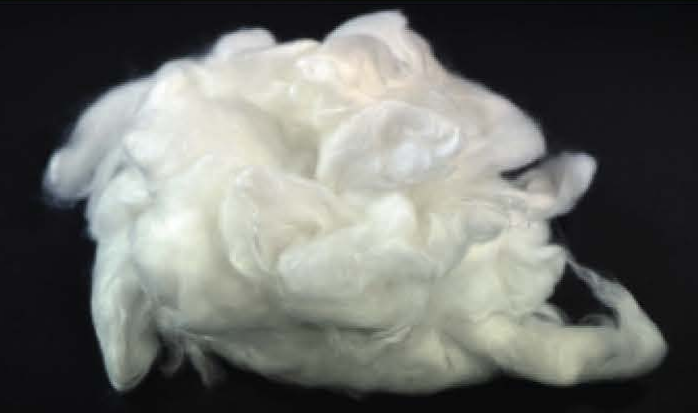
A Perth-based company has patented a process to manufacture rayon from waste biomass, dramatically reducing resource demands. The process harnesses bacterial action at multiple stages:
Example
Worked Example: Nanollose Manufacturing Process
-
Waste breakdown: Bacteria act on waste fruit, vegetables, or timber to break these materials down into glucose.
-
Polymerisation: Different bacteria convert the glucose into cellulose, which is a natural polymer.
-
Fibre spinning: The cellulose is spun into fibres to create viscose.
-
Garment production: The viscose fibres are woven or knitted into clothing.
This process transforms waste materials that would otherwise decompose or require disposal into valuable textile products. The nanollose fibre produced has been successfully manufactured from coconut waste, demonstrating the versatility of the process. This innovation exemplifies a circular economy approach: waste becomes the raw material for new products, eliminating both resource extraction and waste disposal problems.
Remember!
Summary
Key Points to Remember:
-
Sustainability in polymers involves two key aspects: using renewable rather than fossil fuel resources, and ensuring products can break down naturally without toxic residues.
-
The three levels of environmental benefit are biodegradable (breaks down eventually), compostable (breaks down within 90 days with no toxins), and biobased (made from plants). The most sustainable polymers are both biobased and compostable.
-
Organic recycling uses enzymes or microorganisms (like PETase or bacteria) to break polymer bonds, returning polymers to their monomers much faster than natural degradation.
-
Bio-monomers reduce fossil fuel use but don't necessarily create compostable polymers. Bio-PE and bio-PP made from plant ethanol have the same disposal problems as their petroleum-based counterparts.
-
PLA represents the gold standard for sustainable polymers: it's made from waste biomass, composts quickly and completely, releases no toxins, and creates a true circular economy where waste becomes product becomes compost.