Hydrolysis of Biomolecules (VCE SSCE Chemistry): Revision Notes
📚Revision Notes
Hydrolysis of Biomolecules
Introduction to nutrient breakdown
The food we eat provides essential raw materials that our bodies process and transform. These raw materials, known as nutrients, include proteins, carbohydrates, and triglycerides (fats). Each type of nutrient serves different primary functions in maintaining our health and survival.
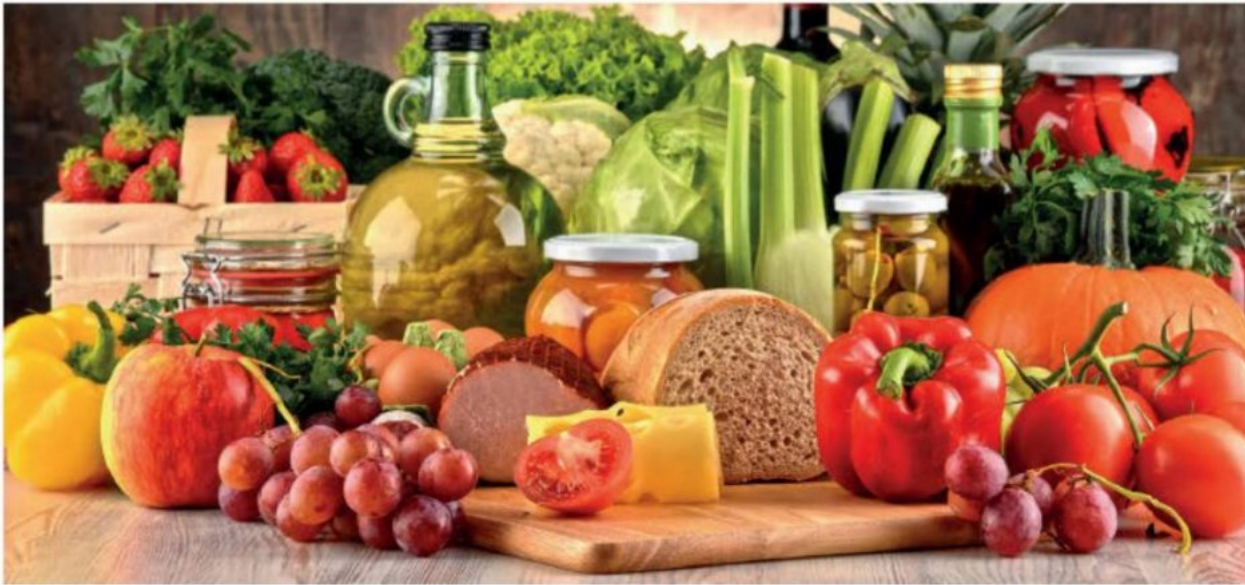
During digestion, chemical bonds in nutrient molecules are broken and new bonds are formed. The body requires substantial quantities of these nutrients, which are broken down into smaller, more manageable molecules by the digestive system. Carbohydrates and triglycerides primarily serve as energy sources, whilst proteins mainly function in growth and tissue repair, although they can also provide energy when needed.
Understanding hydrolytic reactions
The human digestive system does not break molecules down into individual atoms. Instead, it reduces complex compounds into smaller, soluble molecules that can serve as building blocks for constructing new substances. This breakdown process is called hydrolysis.
Note
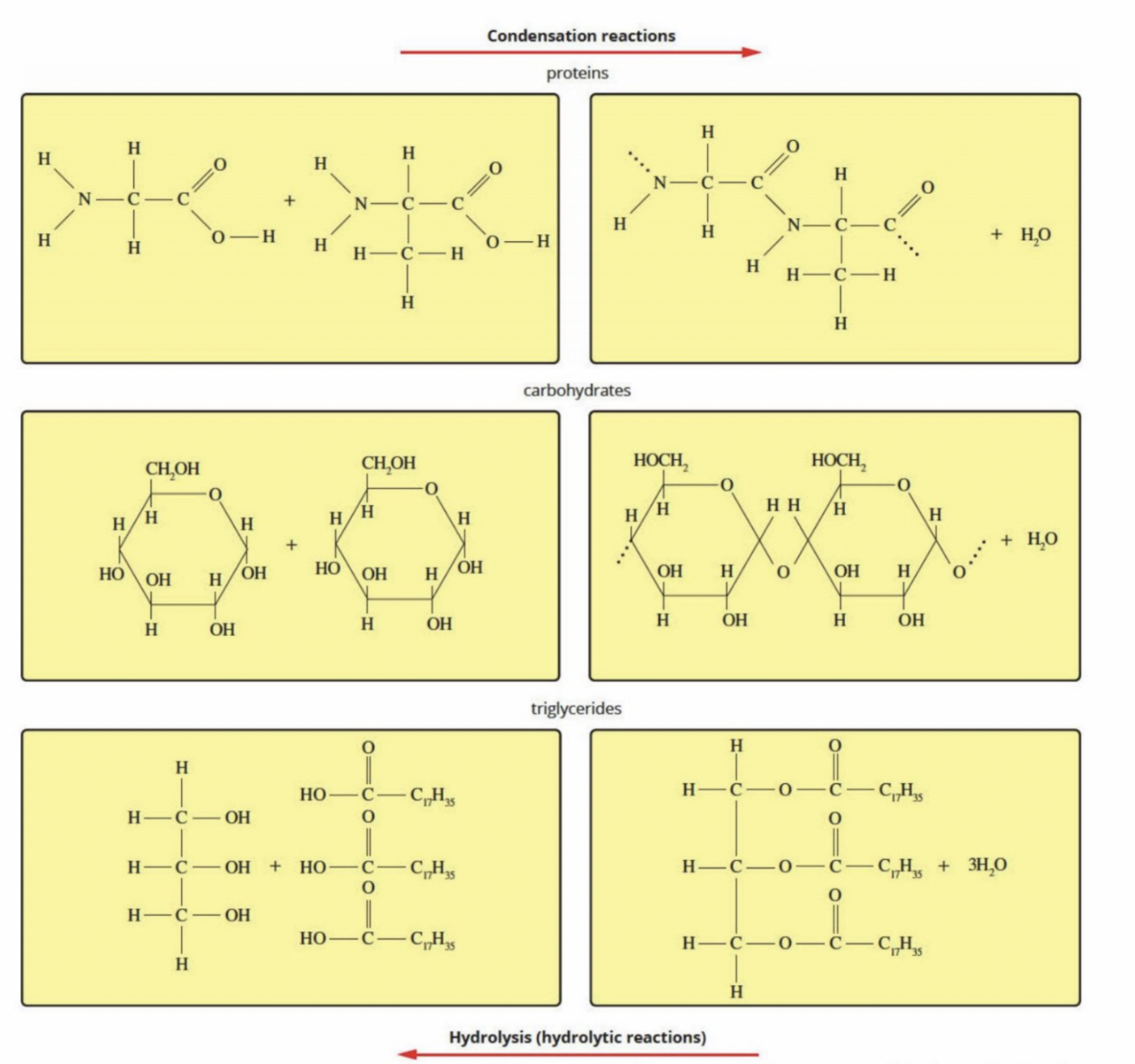
Two main types of chemical reactions are involved in the breakdown and rebuilding of nutrient molecules:
Hydrolysis (hydrolytic reactions):
- These reactions split large molecules by reacting them with water molecules
- They break down proteins, fats, and complex carbohydrates
- In the body, they occur primarily in the digestive system
Condensation reactions:
- These reactions join two smaller molecules together to form a larger molecule
- A small molecule (water) is eliminated during the process
- They occur in other parts of the body, away from the digestive system
- They are used to build new biomolecules from the products of hydrolysis
The role of enzymes
Enzymes are absolutely crucial for both hydrolysis and condensation reactions to occur in biological systems. Each reaction step requires a specific enzyme that dramatically increases the reaction rate. Some enzymes are highly specific, catalysing only one particular reaction, whilst others can catalyse any reaction involving a particular type of chemical bond or functional group.
Reversibility of reactions
Hydrolysis and condensation reactions can be regarded as opposite processes. The forward reaction shown in diagrams typically represents the formation of larger biomolecules, whilst the reverse reaction illustrates their breakdown through hydrolysis.
The cycle of hydrolysis and condensation
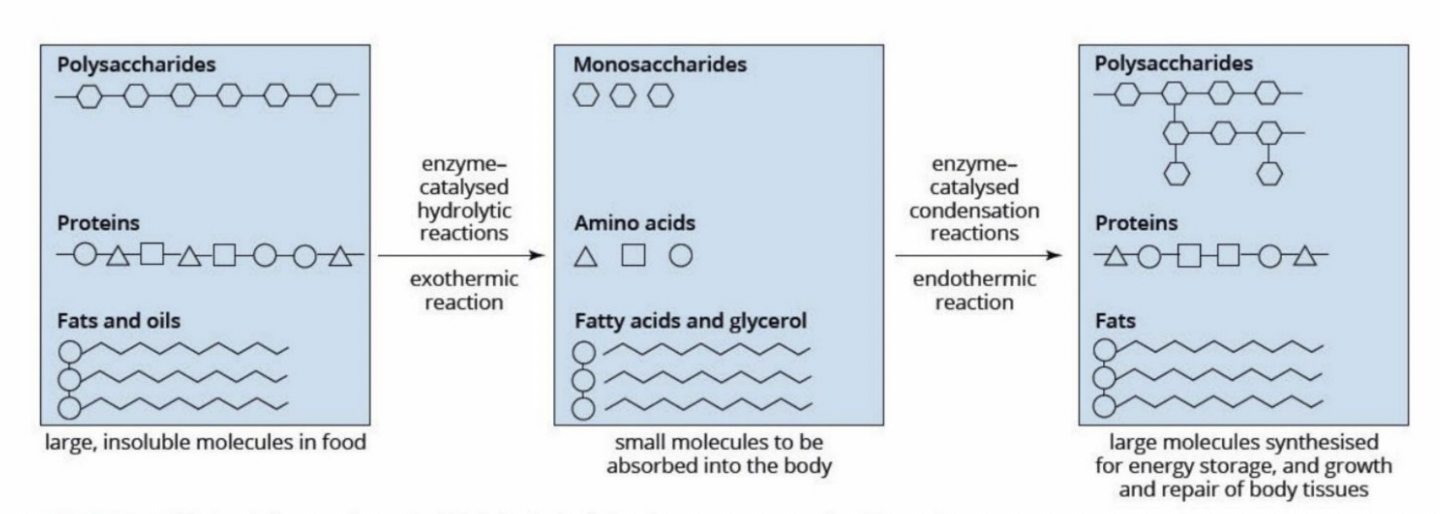
The breakdown and rebuilding of nutrients follows a continuous cycle in the body:
Proteins:
- Proteins are broken down into amino acids by hydrolysis of amide bonds (also called peptide bonds)
- The soluble amino acids are transported through the body to cells
- Inside cells, amino acids are reassembled through condensation reactions to form new proteins needed by the body
Polysaccharides:
- Complex carbohydrates are broken down into monosaccharides and disaccharides by hydrolysis of ether bonds (glycosidic bonds)
- The soluble sugars are transported throughout the body for energy production
- Monosaccharides can also be converted back to polysaccharides such as glycogen for energy storage
Triglycerides:
- Fats and oils form fatty acids and glycerol when ester bonds are hydrolysed
- These products are transported through the body
- Fatty acids and glycerol can be converted back to triglycerides or used to produce energy
Energy considerations in metabolism
Important
In general, for these chemical processes that occur within living cells or organisms (collectively called metabolism):
- Condensation reactions tend to be endothermic, requiring energy input to form larger molecules
- Hydrolytic reactions tend to be exothermic, releasing energy as bonds are broken during the formation of smaller molecules
Overview of digestion
Digestion is one important aspect of metabolism. In animals, food metabolism begins in the digestive system. As soon as food enters the mouth, it starts being broken down into smaller molecules through a complex process involving numerous separate enzymes throughout the digestive tract.
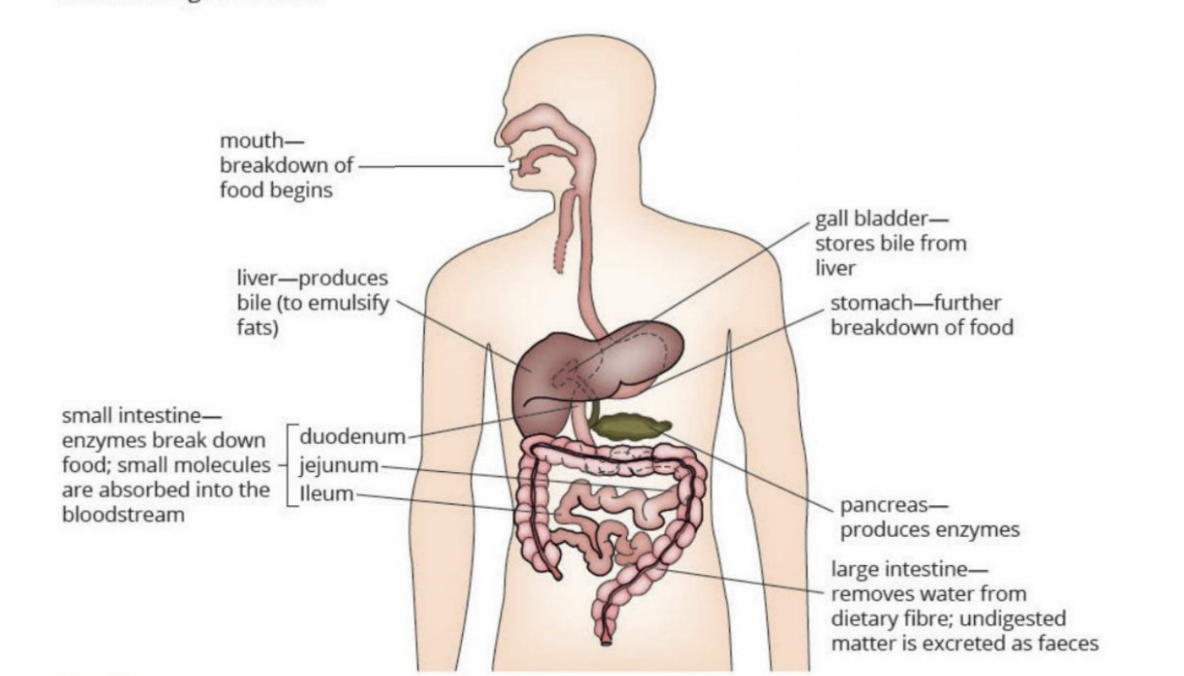
The main stages of digestion include:
| Organ/Location | Function in Digestion |
|---|---|
| Mouth | Initial breakdown of food begins; mechanical chewing and enzymatic action |
| Stomach | Further breakdown of food; acidic environment denatures proteins |
| Liver | Produces bile to emulsify fats |
| Gall bladder | Stores bile from the liver |
| Pancreas | Produces digestive enzymes |
| Small intestine (duodenum, jejunum, ileum) | Enzymes break down food; small molecules are absorbed into the bloodstream |
| Large intestine | Removes water from dietary fibre; undigested matter is excreted as faeces |
Hydrolysis of carbohydrates
The digestion of carbohydrates begins in the mouth. When you chew, you increase the surface area of food and mix it with saliva. Saliva contains the digestive enzyme amylase, which starts breaking down carbohydrates (usually present as starch) into smaller disaccharide molecules. This breakdown continues throughout the digestive system.
Starch and glycogen hydrolysis
The enzyme amylase in saliva hydrolyses starch in food to produce maltose, a disaccharide. You can experience this process yourself: if you chew a piece of bread and hold it in your mouth for a few minutes, you will notice a sweet taste developing. This sweetness results from the hydrolysis of starch to maltose.
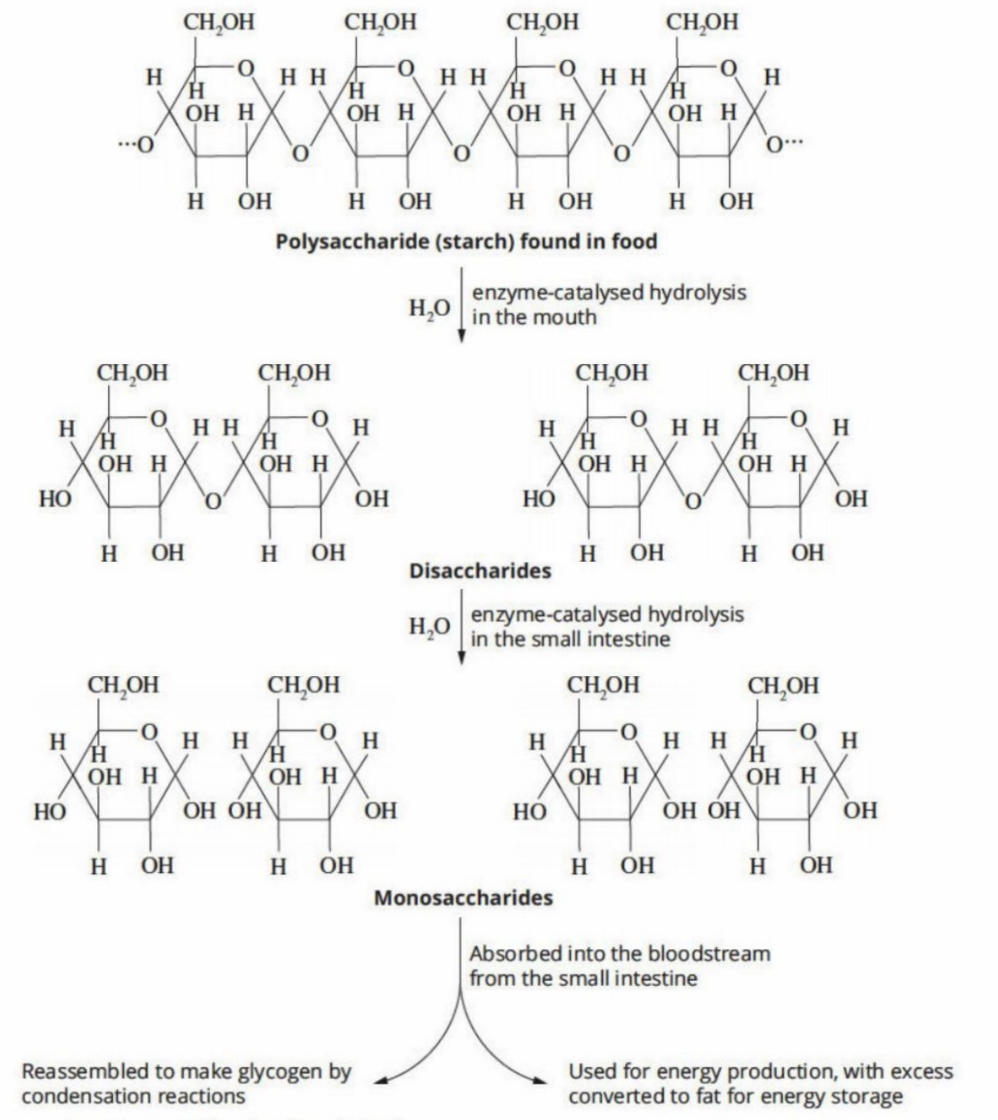
The process for glycogen hydrolysis is broadly similar to starch hydrolysis. During digestion, the glycosidic links (bonds) between each monosaccharide unit are broken by hydrolysis reactions. The hydrolysis continues in the small intestine, where the enzyme maltase is produced. Maltase hydrolyses maltose into glucose molecules.
Note
Glucose molecules are highly soluble because hydrogen bonds can form between the numerous hydroxyl () groups in the molecule and water. Consequently, glucose dissolves readily in blood and is transported to different parts of the body. Some glucose molecules are used to produce energy through respiration, whilst others are used to synthesise energy storage molecules such as glycogen.
Cellulose hydrolysis
The polysaccharide cellulose is present in large amounts in cereals, fruits, and vegetables. It is commonly known as dietary fibre or roughage. Cellulose is rapidly hydrolysed by the enzyme cellulase.
Important
Most animals, including humans, do not produce the enzyme cellulase. Therefore, cellulose passes through our digestive system relatively unchanged, although a small percentage can be hydrolysed by bacteria in the gut. A diet high in cellulose or fibre provides bulk to help food pass through the digestive system, which helps prevent constipation, haemorrhoids, and colon cancer.
Special adaptations for cellulose digestion
Some animals have developed special adaptations to digest cellulose:
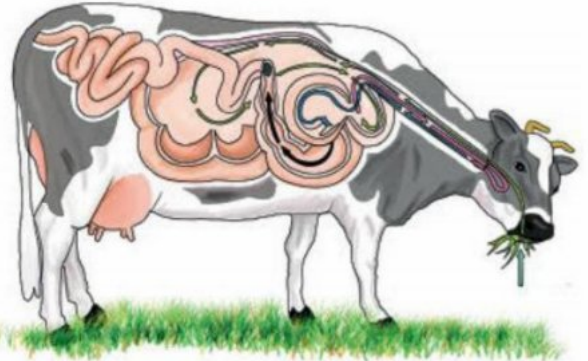
Cows and sheep: These animals can digest large amounts of cellulose because bacteria living in their gut produce the enzyme cellulase. A cow's stomach has four compartments, and grass spends considerable time in the first two compartments being broken down before moving through the rest of the digestive system. When a cow first eats, it chews the food just enough for it to travel to the first compartment. Later, the cow regurgitates the food as 'cud' and chews it thoroughly before the food moves progressively to the other compartments.
Koalas: These animals eat an even higher fibre diet than cows. Koalas have a large caecum (a bag of microorganisms) in their gut at the junction between the small and large intestine. Microbial digestion of cellulose occurs there, as bacteria break down cellulose into smaller molecules that can be absorbed. Baby koalas build up levels of these microbes by eating their mother's faeces.
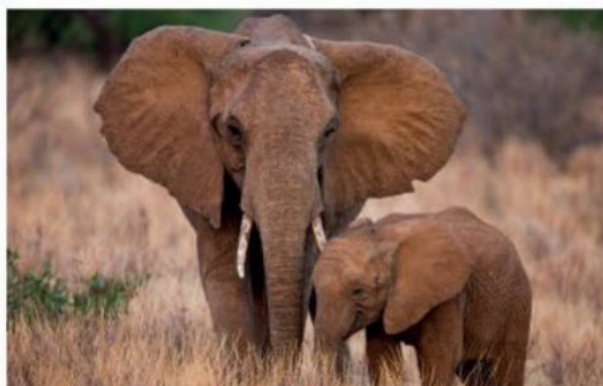
Elephants: Baby elephants also feed on the dung of their mothers to build up the level of microbes in their gut, which are necessary for breaking down cellulose into smaller molecules.
Practical application: chocolate-covered cherries
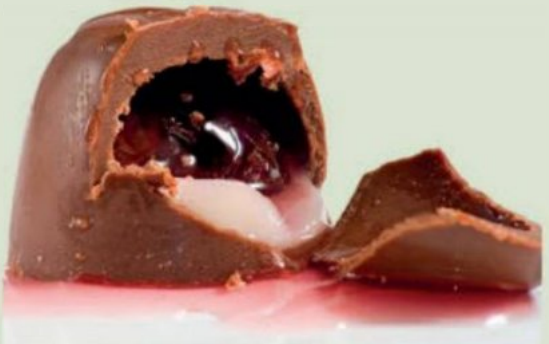
An interesting practical application of enzyme-catalysed hydrolysis is found in the production of liquid-centred chocolates. Chemist H.S. Paine invented these confections by exploiting the differences in solubility between the disaccharide sucrose and the monosaccharides glucose and fructose.
In the presence of very little water, sucrose forms a paste-like solid, whereas glucose and fructose are very soluble. The enzyme invertase hydrolyses sucrose to glucose and fructose according to the reaction:
(sucrose + water → glucose + fructose)
Example
Practical Application: Making Liquid-Centred Chocolates
To make liquid-centred chocolates:
- A small amount of invertase is added to a sucrose paste and moulded around a cherry
- This is then dipped in molten chocolate
- The enzyme remains active inside the chocolate and hydrolyses sucrose into the more soluble sugars
- It takes several weeks for the paste to turn into a sweet liquid because the chocolates are kept at $18°C
- At this temperature, enzyme activity is low, slowing down the reaction rate
Hydrolysis of proteins
In humans, the digestion of proteins produces individual amino acids, which the body uses to synthesise enzymes and other essential proteins. The three-dimensional structure of proteins is first unravelled by a combination of hydrochloric acid and muscular contractions in the stomach.
Proteins begin breaking down in the stomach through the action of the enzyme pepsin. This produces shorter polypeptide chains that move into the duodenum (the first part of the small intestine). In the small intestine, these polypeptides are broken down into smaller dipeptides (two amino acids joined together). Further along the intestine, dipeptides are broken down into individual amino acids.
Note
The digestion of proteins occurs in stages:
Protein → Polypeptides → Dipeptides → Amino acids
Each stage involves specific enzymes:
- Gastric protease enzyme (in the stomach)
- Pancreatic proteases (in the small intestine)
- Intestinal proteases (in the small intestine)
At each stage of digestion, the peptide chains are broken into progressively smaller units until eventually individual amino acids are released and can be absorbed into the bloodstream.
Laboratory hydrolysis of proteins
Hydrolysis of proteins can also be performed in a laboratory, often as an early step in determining their amino acid sequence. However, in contrast to the body temperature process in organisms, quite extreme reaction conditions are needed.
Important
These laboratory reactions require solutions of hydrochloric acid and heating for 24 hours at to hydrolyse the amide bonds (peptide bonds). This contrasts sharply with the mild conditions (body temperature) at which enzymes catalyse the same reactions in living organisms.
Hydrolysis of triglycerides
Like proteins and carbohydrates, triglycerides are hydrolysed by enzymes during digestion. However, unlike proteins and carbohydrates, triglycerides are insoluble in water. Therefore, their molecules remain intact as they pass through the digestive tract until they reach the small intestine.
The role of bile in fat digestion
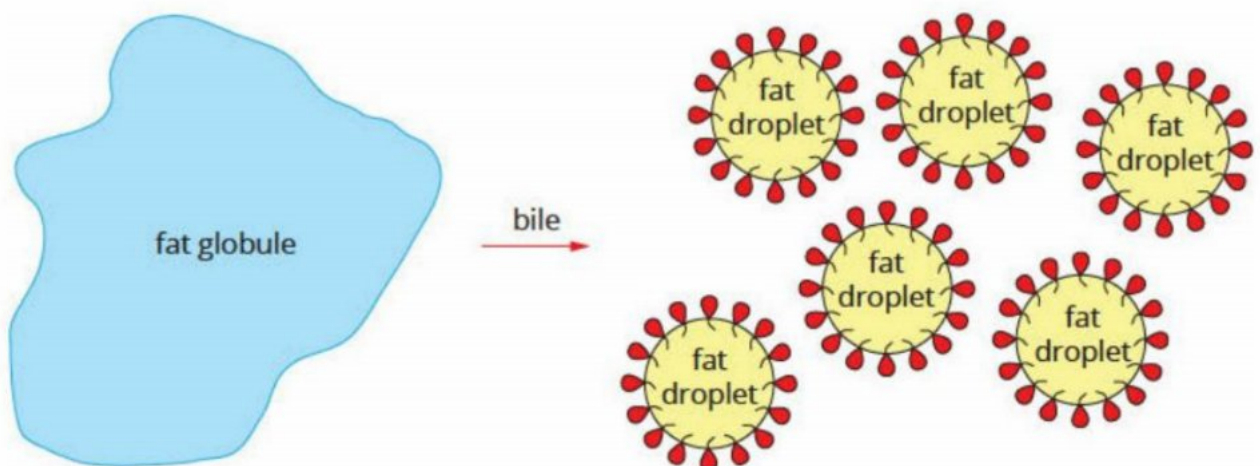
In the small intestine, bile is used to process triglycerides. Bile emulsifies fats, breaking them down into smaller particles and dispersing them as small droplets. This process of creating an emulsion is similar to how detergents work on the fat left in a frying pan after cooking fatty food.
Note
A triglyceride enters the small intestine as a large fat globule or oil globule. Bile turns this globule into an emulsion, consisting of much smaller fat droplets with bile particles embedded in the surface. Emulsification of fats increases their surface area significantly, so that more triglyceride molecules are exposed to the aqueous environment. This allows enzymes to access and break down the fats more effectively.
Lipase enzyme action
In the body, an enzyme called lipase breaks down triglycerides. However, lipase is a water-soluble protein, so it can only interact at the surface of non-polar fat globules. The emulsification of fats by bile increases the surface area of the fats, which means that lipase can access more triglyceride molecules. This significantly increases the rate of hydrolysis.
Lipase enters the intestine from the pancreas. The enzyme catalyses the hydrolysis of the three ester bonds in the triglyceride molecules.
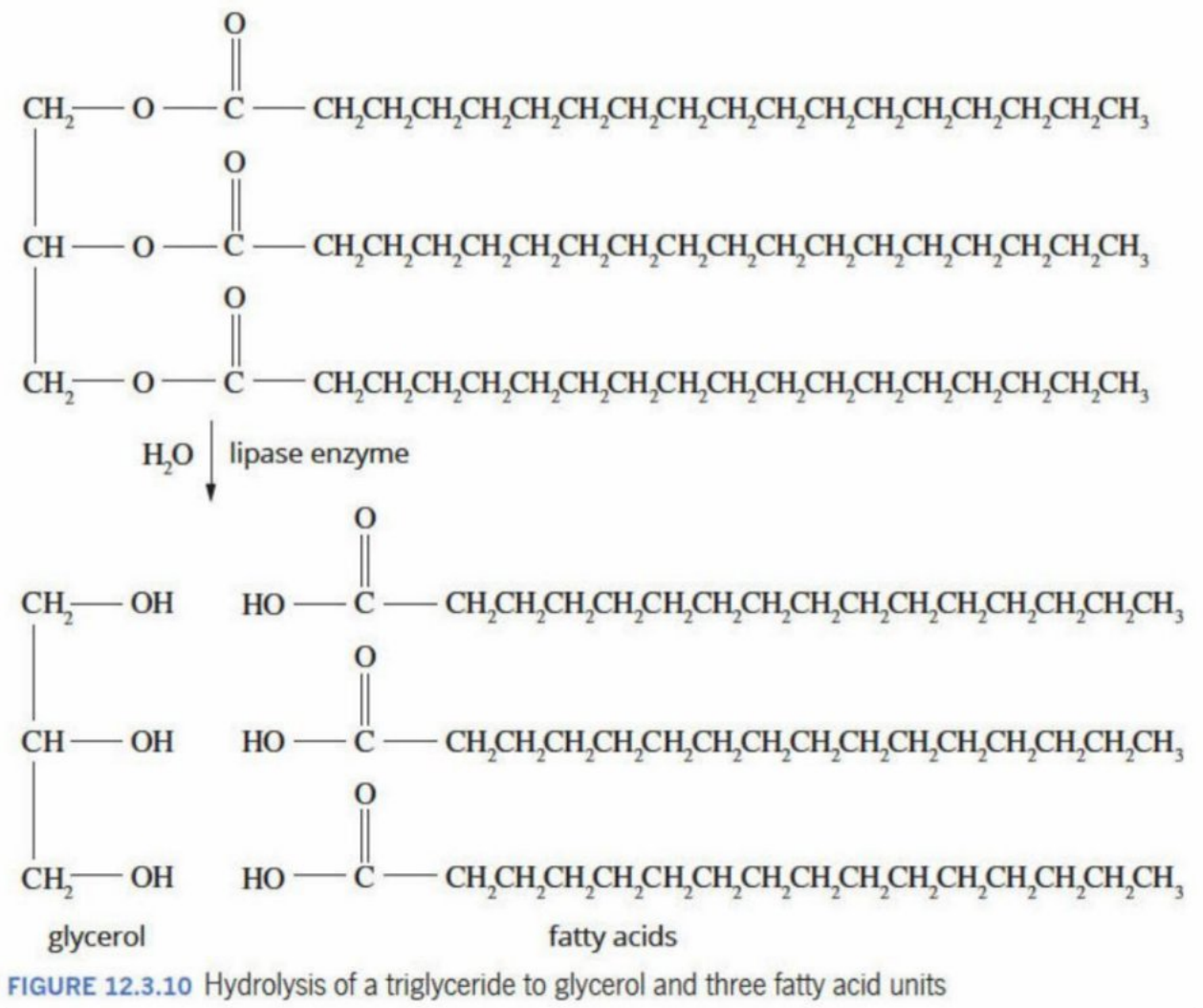
The chemical process can be represented as:
Triglyceride + Water (with lipase enzyme) → Glycerol + Fatty acids
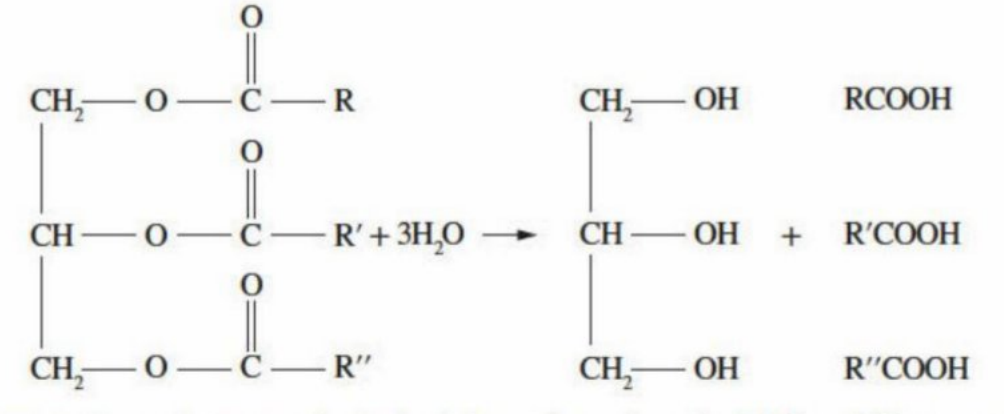
Note
The three fatty acids produced will not necessarily have the same structure. A general equation for the hydrolysis of a triglyceride uses the letter to represent each fatty acid hydrocarbon chain (where , , and can be different):
Triglyceride + → Glycerol + + +
The glycerol and fatty acids that are produced pass into the bloodstream and travel to the liver, where they can be re-formed into triglycerides through condensation reactions for storage or used to produce energy.
Summary
Key Points to Remember:
-
Hydrolysis is the breakdown of large molecules into smaller ones by reaction with water, whilst condensation is the opposite process that joins smaller molecules together with the elimination of water.
-
Enzymes are essential biological catalysts that enable both hydrolysis and condensation reactions to occur at suitable rates in the body. Different enzymes catalyse the breakdown of different types of bonds.
-
The three main nutrients undergo specific types of hydrolysis: carbohydrates break down at glycosidic bonds, proteins break down at peptide bonds (amide bonds), and triglycerides break down at ester bonds.
-
Hydrolysis reactions in metabolism tend to be exothermic (releasing energy), whilst condensation reactions tend to be endothermic (requiring energy input).
-
Bile plays a crucial role in fat digestion by emulsifying large fat globules into smaller droplets, which increases the surface area available for lipase enzymes to act upon and speeds up the hydrolysis of triglycerides.