Reactions of Alkanes and Haloalkanes (VCE SSCE Chemistry): Revision Notes
📚Revision Notes
Reactions of Alkanes and Haloalkanes
Introduction to alkane reactivity
Alkanes are saturated hydrocarbons with strong carbon-carbon single bonds. Unlike many other organic compounds, alkanes lack functional groups or carbon-carbon multiple bonds. This structural simplicity makes them significantly less reactive than compounds containing these features.
Note
The term "saturated" means that alkanes contain only single bonds between carbon atoms, with each carbon bonded to the maximum number of hydrogen atoms possible. This saturated structure contributes to their stability and relatively low reactivity.
However, despite their relative stability, alkanes do undergo two important types of reactions: combustion in air and substitution with halogens.
Combustion of alkanes in air
Although alkanes participate in relatively few chemical reactions, they burn readily in air, releasing energy in an exothermic reaction. This property makes them excellent fuels.
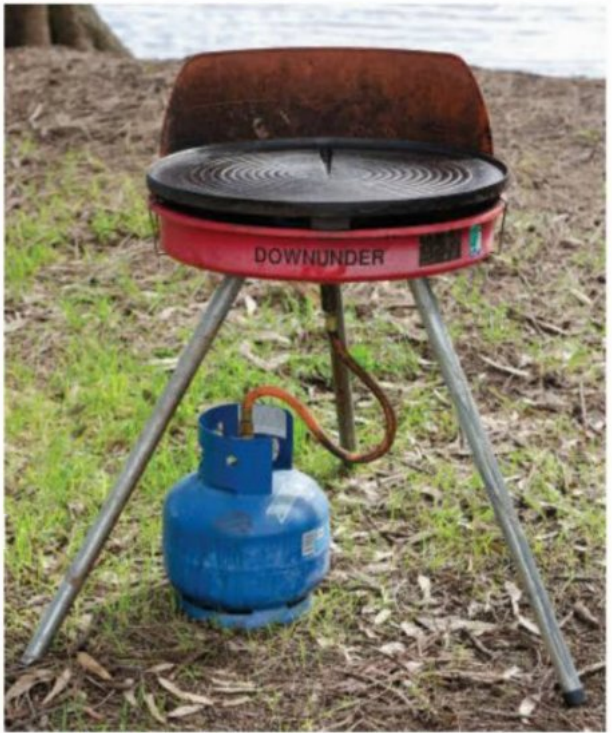
Common fuels like petrol, diesel, kerosene, and barbecue gas cylinders contain mixtures of alkanes along with other hydrocarbons. Natural gas consists primarily of methane (), the simplest alkane.
Complete combustion
When alkanes burn in excess oxygen, complete combustion occurs, producing carbon dioxide and water vapour as the only products.
Combustion of methane:
Combustion of octane:
Octane is a major component of petroleum. Its complete combustion is represented by:
Note
These reactions release substantial amounts of energy, which is why alkanes are such valuable fuels in modern society. The combustion of alkanes is highly exothermic, meaning it releases more energy than is required to initiate the reaction.
Substitution reactions of alkanes
A substitution reaction occurs when an atom or functional group in a molecule is replaced by another atom or group.
Alkanes undergo substitution reactions with halogens such as chlorine and bromine to produce haloalkanes. However, these reactions don't happen spontaneously - they require specific conditions.
Reaction conditions
A mixture of an alkane and chlorine gas will not react at room temperature or in darkness. The substitution reaction must be initiated by ultraviolet (UV) light.
Important
UV light is absolutely essential for alkane halogenation reactions. Without UV light, alkanes and halogens will not react, even if mixed together. This is because UV light provides the energy needed to break the halogen-halogen bond and initiate the free radical mechanism.
Halogenation of methane
When methane reacts with chlorine in the presence of UV light:
For each chlorine molecule that reacts, one hydrogen atom on the alkane is replaced by a chlorine atom. The product, chloromethane, is called the substitution product.
Sequential substitution
The reaction doesn't stop at chloromethane. If excess chlorine is available, further substitution occurs. The chloromethane product can react with another chlorine molecule to form dichloromethane ().
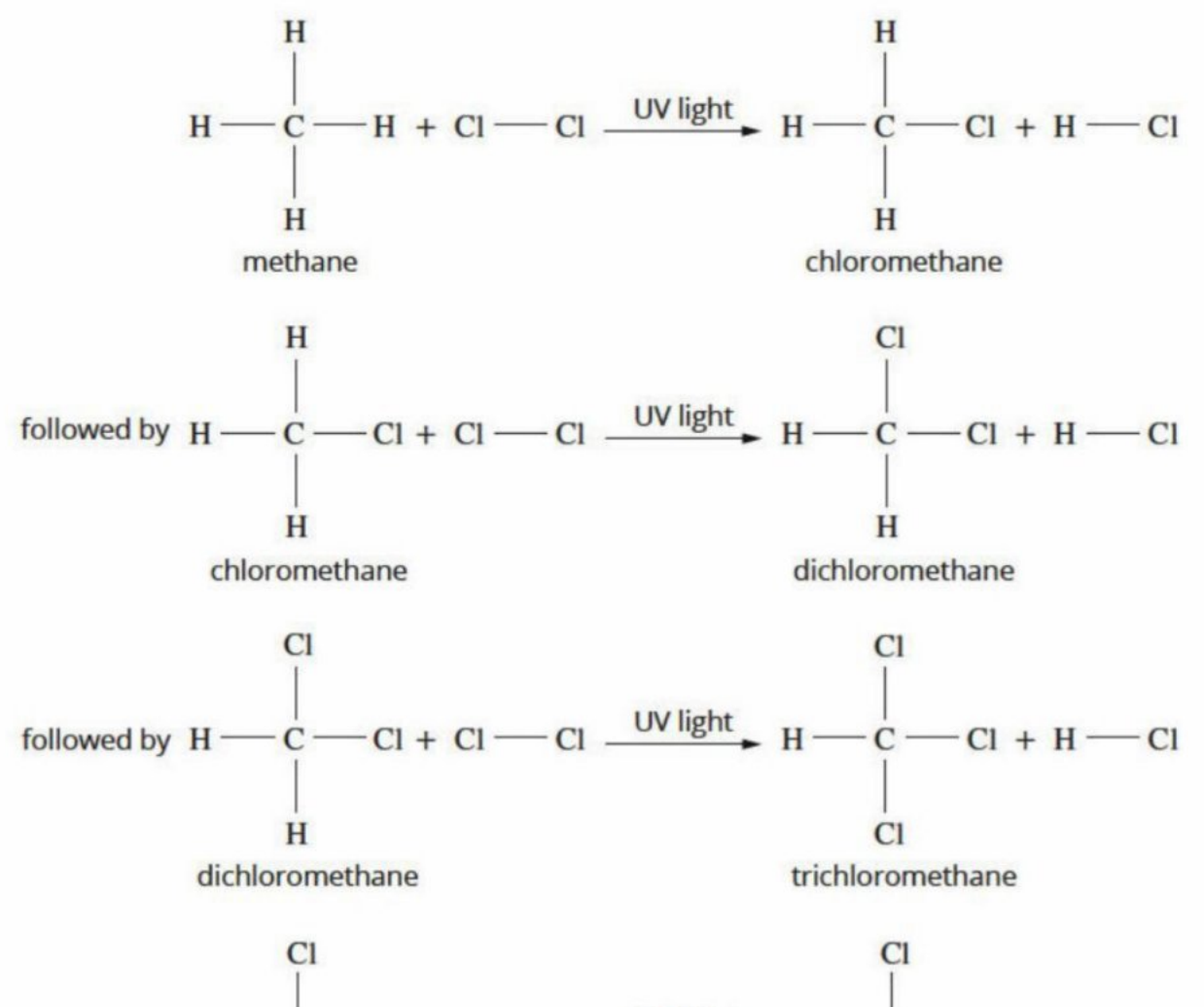

This process can continue until all four hydrogen atoms of the original methane molecule are substituted by chlorine atoms, ultimately forming:
- Chloromethane ()
- Dichloromethane ()
- Trichloromethane (), also known as chloroform
- Tetrachloromethane (), also known as carbon tetrachloride
Because these products have different boiling points, they can be separated from one another using fractional distillation.
Note
Exam tip: When writing equations for alkane halogenation, remember to include "UV light" above the arrow and to show HCl (or HBr) as a product alongside the haloalkane. A common mistake is forgetting to show the hydrogen halide byproduct.
Substitution reactions of haloalkanes
Haloalkanes contain a carbon-halogen bond that has special properties affecting their reactivity.
Polarity of the carbon-halogen bond
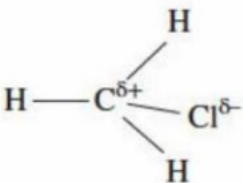
The large difference in electronegativity between carbon and halogen atoms creates a polar covalent bond. The halogen (being more electronegative) pulls electron density towards itself, leaving the carbon partially positive and the halogen partially negative.
Example
Understanding Bond Polarity in Chloromethane
For chloromethane:
- Carbon electronegativity: 2.6
- Chlorine electronegativity: 3.2
This electronegativity difference results in a polar C-Cl bond, with the carbon carrying a partial positive charge () and chlorine carrying a partial negative charge ().
The greater electronegativity of chlorine means it attracts the bonding electrons more strongly, creating an uneven distribution of electron density along the bond.
This polarity makes the bond weaker and more reactive than a non-polar bond.
Reaction with hydroxide ions
The partial positive charge on the carbon atom makes it susceptible to attack by negatively charged species such as hydroxide ions (), found in sodium hydroxide solution.
When chloromethane reacts with hydroxide ions, the chlorine atom is replaced by a hydroxyl group, producing methanol:

This is a substitution reaction because one group (chlorine) has been swapped for another (hydroxyl).
Reaction with ammonia
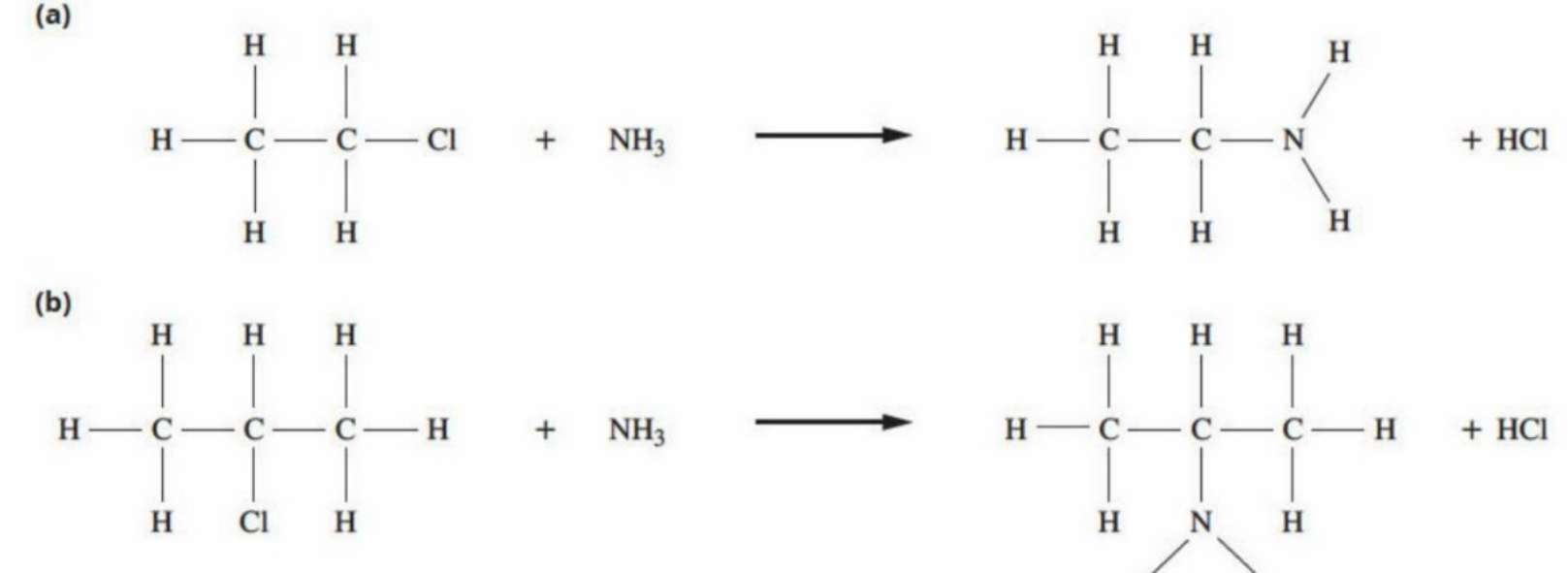
Ammonia also reacts with haloalkanes through substitution, producing amines as products.
Example
Haloalkane Reactions with Ammonia
Example 1: Chloroethane with ammonia
This reaction produces ethanamine.
Example 2: 2-chloropropane with ammonia
This produces propan-2-amine.
These substitution reactions don't require a catalyst and work with other haloalkanes containing fluorine, bromine, or iodine to produce the corresponding alcohols (with hydroxide) and amines (with ammonia).
Important
Key point: The polar nature of the C-halogen bond is crucial for these substitution reactions. The partially positive carbon acts as an electrophilic site that nucleophiles like and can attack. Without this polarity, the substitution reactions would not occur readily.
The role of free radicals in alkane chlorination
Understanding how alkanes react with chlorine requires knowing about free radicals and how they drive the reaction mechanism.
What are free radicals?
A free radical is a species containing an atom with an unpaired electron in its outermost shell. Free radicals are extremely reactive because they readily combine with other species to form covalent bonds by pairing their unpaired electron with an electron from another atom or molecule.
Note
Free radicals are shown with a dot (•) next to the atom with the unpaired electron. The dot represents the single, unpaired electron that makes the radical so reactive. This notation is crucial for understanding reaction mechanisms.
The mechanism of chlorination
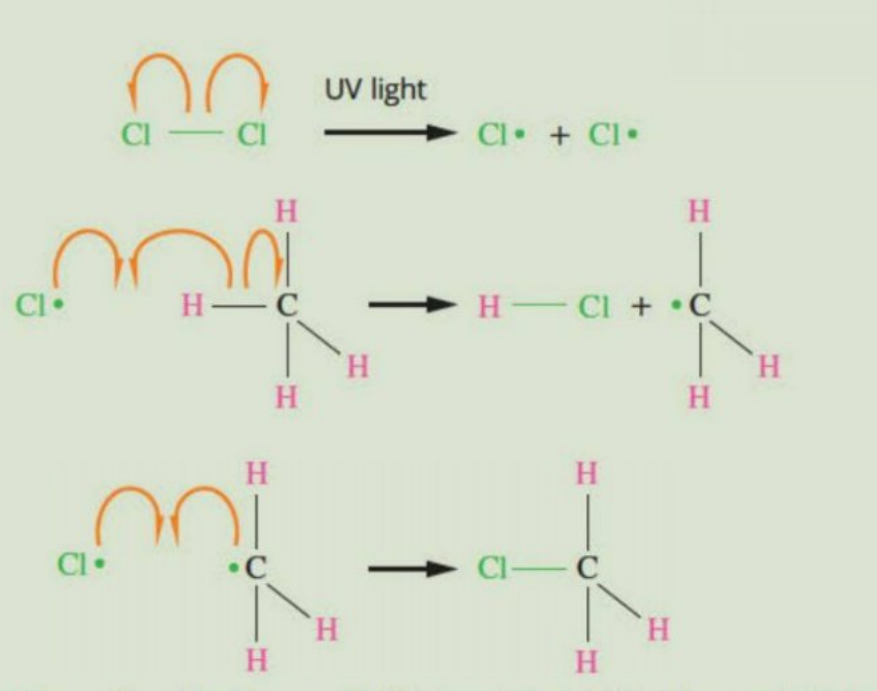
The free radical mechanism consists of distinct stages that work together to convert alkanes into haloalkanes:
Step 1: Initiation
UV light provides the energy needed to break the Cl-Cl bond in a chlorine molecule, forming two chlorine free radicals:
Note
The movement of a single electron is shown by a half-arrow (fish-hook arrow) in mechanism diagrams. This is different from the full arrow used to show the movement of electron pairs in other mechanisms.
Step 2: Propagation (first step)
A chlorine free radical attacks a methane molecule, removing a hydrogen atom and forming hydrogen chloride. This creates a methyl free radical ():
Step 3: Propagation (second step)
The methyl free radical combines with another chlorine free radical to form chloromethane:
Important
These propagation steps can continue, leading to further chlorination if excess chlorine is present, eventually producing dichloromethane, trichloromethane, and tetrachloromethane. This is why halogenation of alkanes produces a mixture of products rather than a single pure product.
Summary
Key Points to Remember:
-
Alkanes are relatively unreactive due to strong C-C bonds and absence of functional groups, but they readily undergo combustion and UV-initiated halogenation.
-
Complete combustion of alkanes in excess oxygen produces only carbon dioxide and water vapour, releasing energy that makes alkanes valuable fuels.
-
Halogenation of alkanes requires UV light to initiate the reaction and proceeds through a free radical mechanism, producing a mixture of products with increasing halogen substitution.
-
Haloalkanes have polar C-halogen bonds due to electronegativity differences, making the carbon atom susceptible to nucleophilic attack.
-
Haloalkanes undergo substitution with hydroxide ions (forming alcohols) and ammonia (forming amines), where the halogen is replaced by the incoming nucleophile.