Key Skills (VCE SSCE Health and Human Development): Revision Notes
📚Revision Notes
Key Skills
Applying the Ottawa Charter action areas to data and case studies
Understanding the foundation
To effectively apply the Ottawa Charter for Health Promotion, you need more than just memorising the names of the five action areas. You must understand what each action area means and how it works in practice. Not every health promotion initiative will address all five action areas, but many programs incorporate multiple areas working together.
Note
The Five Action Areas of the Ottawa Charter:
- Build healthy public policy
- Create supportive environments
- Strengthen community action
- Develop personal skills
- Reorient health services
These action areas can work independently or in combination to address health promotion challenges.
How to apply the action areas
When analysing data or case studies, you may be asked to identify how the Ottawa Charter action areas are evident. The key is making specific, clear connections between the action area and concrete examples from the material provided.
Important
The Power of Specificity: Poor vs Strong Examples
Poor example: "By being more educated, Aboriginal and Torres Strait Islander people will be better equipped to quit smoking and therefore their health and wellbeing will improve."
Strong example: "Telephone counselling could be provided to Aboriginal and Torres Strait Islander people in a culturally appropriate manner that can provide education relating to quitting smoking. This can reduce smoking rates, which can decrease the risk of respiratory conditions among this group."
The difference lies in specificity. Strong responses explain exactly how the action area is being implemented and link it directly to health outcomes.
Applying action areas to explain improvements
You should be able to use the Ottawa Charter action areas to explain how improvements in health and wellbeing can be achieved for major health concerns in Australia. This includes issues such as dietary intake and obesity, as well as health challenges facing specific population groups including Aboriginal and Torres Strait Islander peoples, males, low socioeconomic groups, and those living outside major cities.
Worked example: obesity trends in Australia
Example
Worked Example: Applying the Ottawa Charter to Obesity Data
Let's examine how the Ottawa Charter can be applied to obesity data:
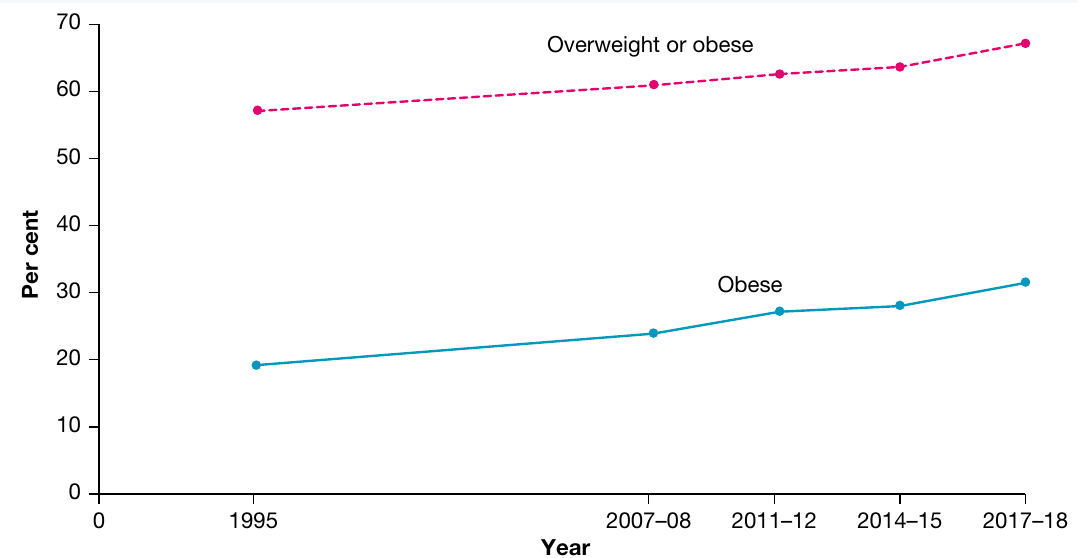
Data Analysis: Rates of obesity have increased substantially in Australia for those aged 18 and over. The proportion of the population classified as obese rose from around 20 per cent in 1995 to approximately 27 per cent in 2011–12, reaching around 30 per cent by 2017–18.
Ottawa Charter Applications:
Build healthy public policy: The federal or state/territory governments could introduce a tax on energy-dense, nutrient-poor foods (often called junk food). This policy would increase the price of these items, potentially reducing their consumption. Lower intake of these foods would decrease overall energy consumption, which could help reduce obesity rates across the population.
Develop personal skills: Traffic light labelling systems could be implemented in food outlets such as school canterias. These systems use colour coding to help consumers identify which foods should be eaten regularly (green), in moderation (amber), or only occasionally (red). This educational approach develops people's understanding of nutrition, enabling them to make healthier choices. Reduced consumption of energy-dense foods through informed decision-making can help reverse the increasing trend in obesity.
Reorient health services: Healthcare professionals, particularly general practitioners, could be encouraged to prescribe exercise programs for patients who are obese or at risk of becoming obese. This shifts the focus of health services from only treating illness to actively preventing it, promoting physical activity as a key component of weight management.
Case study: the Good Sports program
The Good Sports program demonstrates how multiple Ottawa Charter action areas can work together in a real-world initiative. VicHealth provides funding to this program, which is delivered by the Alcohol and Drug Foundation.

The program helps sporting clubs manage alcohol responsibly and reduce alcohol-related issues including binge drinking and drink driving. Clubs that meet Good Sports accreditation criteria receive support services and earn the right to display the Good Sports logo, confirming that they promote responsible attitudes towards alcohol and provide a safe, healthy and family-friendly environment.
Note
The Three-Level Accreditation Process
The accreditation focuses on alcohol management standards:
Level 1: Clubs address liquor licensing laws, bar management, Responsible Service of Alcohol (RSA) training, and creating smoke-free environments.
Level 3: Clubs have developed an alcohol management policy, offer healthy food and drink options (including low and non-alcoholic drinks), implement a safe transport policy, and reduce reliance on alcohol sales and sponsorships for revenue. All bar servers must be RSA-qualified.
The program has been adopted by almost 10,000 clubs across all Australian states and territories, spanning more than 80 codes of sport. Independent research has proven that Good Sports reduces risky drinking in participating clubs.
Ottawa Charter action areas in Good Sports:
Develop personal skills: The program provides RSA training for bar servers, developing their knowledge and skills to serve alcohol responsibly. This education helps staff identify and manage potentially harmful drinking behaviours.
Create supportive environments: By promoting smoke-free areas and implementing safe transport policies, the program creates physical and social environments that support healthier behaviours. The shift away from a "boozy" atmosphere to a family-friendly culture makes it easier for members to make healthy choices.
Build healthy public policy: The requirement for clubs to develop alcohol management policies creates organisational rules that guide behaviour and reduce alcohol-related harm at a club level.
Case study: Tyntynder Football Netball Club

The Tyntynder Football Netball Club exemplifies how Good Sports can transform club culture. Previously relying heavily on alcohol for revenue, the club had developed an atmosphere centred around drinking. The committee chose to join Good Sports to become more family and community-focused, valuing off-field success as highly as on-field performances.
Through the program, the club:
- Trained members in RSA
- Created a healthier canteen
- Implemented the "Tyntynder Taxi" to ensure safe transport home
The club now generates more revenue from memberships and family-friendly social events than from bar sales. The club actively promotes social issues, training and education for members. These efforts earned recognition including the Victorian Good Sports Club of the Year and AFL Victoria Club of Excellence awards.
Evaluating initiatives for Indigenous health and wellbeing
Making informed judgements
When evaluating health promotion initiatives for Aboriginal and Torres Strait Islander peoples, you must make judgements about the program's capacity to improve health and wellbeing. These judgements should be based on evidence and clear reasoning.
Essential foundation knowledge
Before you can effectively evaluate initiatives, you must understand the health issues facing Aboriginal and Torres Strait Islander peoples. This knowledge allows you to assess whether programs address significant health concerns and whether they're likely to be effective.
Evaluation criteria
Strong evaluations consider multiple factors. Using just one consideration rarely provides sufficient depth for a comprehensive judgement. Consider the following criteria:
Note
Key Evaluation Criteria for Indigenous Health Initiatives
Actual improvements in health and wellbeing: Has the initiative produced measurable improvements in health outcomes? Look for evidence of reduced disease rates, improved wellbeing measures, or other positive health changes.
Participation rates: How many people have accessed or been involved in the initiative? Higher participation rates may indicate better program reach and cultural appropriateness.
Participant feedback: What do participants say about the program? Positive feedback can indicate the program meets community needs and is culturally appropriate.
Ottawa Charter action areas: Which action areas are evident in the initiative? Does it provide education (develop personal skills)? Does it involve various stakeholders and community groups in planning and implementation (strengthen community action)?
Cultural appropriateness: Is the program suitable for Aboriginal and Torres Strait Islander peoples? This includes whether Aboriginal and Torres Strait Islander personnel were consulted, used and trained in planning and delivering the program. Cultural appropriateness affects participation rates and program effectiveness.
Specific needs consideration: Has the program taken into account the specific needs of the target group? This includes addressing the particular health and wellbeing needs of Aboriginal and Torres Strait Islander peoples.
Funding: What level of funding has been provided to implement the program? Adequate funding supports program quality, reach and sustainability.
Significance of health issue addressed: Does the program address a significant health concern for Aboriginal and Torres Strait Islander peoples? Understanding why addressing this issue is important strengthens your evaluation.
Worked example: Aboriginal Driving Stories program
Example
Worked Example: Evaluating the Aboriginal Driving Stories Program
Program description: The project involved developing a road safety booklet containing short stories for children up to age 12. The booklet covered important road safety issues including:
- Wearing seatbelts
- Driving without a licence
- Overloading in cars
- Drink-driving and drink-walking
- Safe driving practices
- Speeding dangers
The program aimed to increase awareness and educate young people about road safety. An innovative feature was that children could then pass this information to Elders in the community, attempting to change cultural attitudes towards road safety. The resource was developed in close consultation with the community to enhance credibility and cultural significance.
Evaluation:
Addresses a significant health need: The program targets a major health concern for Aboriginal and Torres Strait Islander peoples, who experience significantly higher rates of road trauma compared to other Australians. This makes the initiative highly relevant and important.
Develops personal skills: The program educates young Aboriginal people about road safety. These skills can be passed between generations, potentially creating lasting change. By reducing risky behaviours, the initiative can decrease injury rates among Indigenous Australians, promoting physical health and wellbeing.
Cultural appropriateness: Aboriginal and Torres Strait Islander people were included in developing the program. This consultation enhances cultural appropriateness, which may increase participation rates among Indigenous Australians and improve the chances of promoting their health and wellbeing. When communities see their input reflected in programs, they're more likely to engage with and benefit from them.
Case study: Specky Dreaming footy frenzy program
The Specky Dreaming program aims to improve fitness, coordination, balance and timing for children of all ages. The program encourages all children, both boys and girls, to develop enthusiasm and skills for an ongoing active and healthy lifestyle. The inclusive approach means all children are encouraged to participate, regardless of initial skill level.
The program operates in Aboriginal communities throughout Australia and can be adapted to reflect specific community needs, demonstrating flexibility and cultural sensitivity.
Note
Learning Outcomes for Participants
Through participation, children learn to:
- Identify and develop their natural talents
- Pursue and achieve personal goals, improving self-esteem
- Make decisions based on personal values and principles reflecting empathy and integrity
- Understand healthy eating and living
- Recognise the importance of attending school
- Use appropriate language that is sensitive to audience and culture
Specky Dreaming delivers the program in a culturally safe manner, showing sensitivity to community needs.
Evaluation considerations: This program could be evaluated based on its incorporation of physical activity education, its culturally appropriate delivery method, its adaptability to different communities, and its broader focus on values and life skills beyond just sport. The program's capacity to improve Indigenous health and wellbeing relates to increased physical activity, improved self-esteem, and the development of healthy lifestyle habits.
Drawing conclusions about dietary improvement challenges
Understanding the complexity
When analysing why dietary improvements are difficult to achieve in Australia, you must recognise that challenges typically arise from multiple factors working together. A single barrier in isolation is less likely to prevent dietary change than several factors combining to create obstacles.
Important
The Interaction of Barriers
For example, someone who lacks cooking skills might still improve their diet if they can afford a healthy meal delivery service. However, if they also have low income, these two factors together significantly reduce their ability to make healthy changes. This interaction between factors is crucial to understand.
Analysing stimulus material
When presented with case studies or data, look carefully for any references to factors that may present challenges to changing dietary behaviour. These should inform the conclusions you draw.
Key factors affecting dietary change
Personal preference: People tend to prefer familiar foods they enjoy. Changing to new, healthier options can be difficult when taste preferences are already established.
Attitudes and beliefs: What people believe about food, health and nutrition influences their choices. Misconceptions about healthy eating or cultural beliefs about certain foods can create barriers.
Willpower: Making dietary changes requires sustained effort and self-control, particularly when facing temptation or stress.
Food security: Having reliable access to sufficient, safe, nutritious food is fundamental. Without food security, making healthy choices becomes extremely difficult.
Time constraints and convenience: Busy lifestyles can make it challenging to prepare healthy meals. Convenience foods, often less nutritious, become attractive options when time is limited.
Education, nutrition knowledge and cooking skills: Understanding nutrition and knowing how to prepare healthy foods are essential for dietary improvement. Without these skills and knowledge, even motivated individuals struggle to change their diet effectively.
Family, culture, society and religion: The people around us and our cultural background strongly influence what and how we eat. Family eating patterns, cultural food traditions, and religious dietary laws all shape food choices.
Food marketing: Advertising and promotion of less healthy foods can influence food preferences and purchasing decisions, particularly affecting children and vulnerable populations.
Health and wellbeing: Existing health conditions or wellbeing status can affect appetite, energy levels for cooking, and ability to shop for and prepare food.
Worked example: Clive's situation
Example
Worked Example: Analysing Barriers to Dietary Improvement
Case Background: Clive is 82 years old and has been married to Margot for over 50 years. Throughout their marriage, Margot handled all the cooking. Recently, Margot suffered a stroke and now lives in long-term residential care. Clive visits her daily and shares lunch with her at the aged-care facility.
For other meals, Clive uses a Meals on Wheels service (a local government initiative delivering meals to those unable to prepare their own food) for several dinners each week. He relies on his limited cooking skills for remaining meals. Clive's diet lacks nutritional quality, and this has started to impact his health and wellbeing.
Challenges to dietary improvement:
Age and established patterns: At 82, Clive has developed eating patterns and food preferences over many decades. These long-established habits can be very difficult to change, even when health concerns arise.
Limited food choices: When eating at the aged-care facility, Clive's food options are determined by what the facility provides. He will likely choose foods he likes and finds familiar from the available options, which may not align with optimal nutrition. Similarly, Meals on Wheels, while providing convenient access to food, offers limited menu choices that may not fully meet his nutritional needs.
Lack of cooking skills: Having never needed to cook during his marriage, Clive has limited skills and knowledge about food preparation. This lack of capability creates a significant barrier to eating healthier foods, as he may not know how to select, prepare or cook nutritious meals. Even if he wants to improve his diet, the practical skills needed are absent.
Multiple factors combining: Clive's situation illustrates how factors interact. His age, limited cooking skills, restricted meal choices, and established preferences work together to create substantial barriers to dietary improvement. Addressing any single factor alone would not solve the challenge.
Case study: Veronica's challenges
Veronica is a 22-year-old student who works part-time at a supermarket three nights weekly. She socialises with friends on weekends, meaning she's not home for several meals each week. Veronica's parents are Argentinian, and her mother does all the cooking at home. Recently, Veronica has gained weight, moving above her healthy weight range. Despite being introduced to the Australian Dietary Guidelines, she struggles to make significant dietary changes.
Note
Factors Reducing Veronica's Ability to Change
Lack of cooking skills and knowledge: Because her mother has always done the cooking, Veronica likely hasn't developed the skills to prepare healthy meals independently. This makes it difficult to follow dietary guidelines when she needs to prepare her own food.
Time constraints: Balancing study and part-time work leaves Veronica with limited time for meal planning and preparation. This may lead to reliance on convenient but less nutritious options.
Social and cultural influences: When socialising with friends on weekends, Veronica may feel pressure to eat what others are eating, making it hard to follow dietary guidelines. Additionally, family food traditions from her Argentinian background may differ from Australian Dietary Guidelines recommendations, creating tension between cultural food practices and guideline suggestions.
Food availability: The meals Veronica's mother prepares may not align with Australian Dietary Guidelines, but as Veronica doesn't control meal planning at home, she has limited ability to change what's available.
Remember!
Summary
Key Points to Remember:
-
The Ottawa Charter has five action areas that can be applied individually or in combination to address health concerns. Always make specific links between action areas and concrete examples when analysing data or case studies.
-
Evaluating Indigenous health initiatives requires considering multiple factors including cultural appropriateness, community involvement, specific health needs addressed, and actual outcomes achieved. Strong evaluations use several criteria, not just one.
-
Dietary improvements are difficult to achieve because multiple factors typically combine to create barriers. Challenges rarely exist in isolation - factors such as skills, knowledge, time, culture, preferences and food access interact to influence dietary behaviour.
-
When applying key skills in exams, be specific and detailed. Vague statements don't demonstrate understanding, but clear explanations showing how and why something works will earn better marks.
-
Understanding the health issues affecting different population groups (including Aboriginal and Torres Strait Islander peoples, males, low socioeconomic groups, and those outside major cities) is essential for applying health promotion concepts effectively.