Skin Cancer and the Role of Health Promotion in Improving Population Health (VCE SSCE Health and Human Development): Revision Notes
📚Revision Notes
Skin Cancer and the Role of Health Promotion in Improving Population Health
Introduction to skin cancer
Skin cancer is one of the most significant public health issues in Australia. There are two main categories of skin cancer: non-melanoma skin cancers and melanoma. While non-melanoma skin cancers are more common and usually treatable, melanoma is far more dangerous and can be fatal if not detected and treated early.
Note
Melanoma is a type of cancer that affects the melanocytes in the skin. Melanocytes are specialised cells responsible for producing melanin, the pigment that gives skin its colour and provides some protection against harmful ultraviolet (UV) radiation. When you spend time in the sun without adequate protection, your body produces more melanin to shield your skin - this is why your skin darkens or 'tans' after sun exposure.
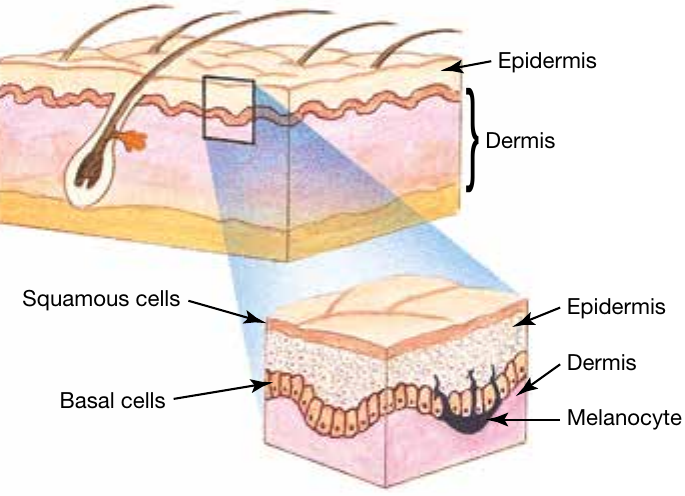
However, excessive UV exposure can cause melanocytes to grow abnormally and become malignant (meaning the cells are cancerous and can invade healthy tissue). If melanoma isn't diagnosed and treated in its early stages, cancerous cells can grow deeper into the skin layers and eventually metastasise (spread to other parts of the body).
Important
When melanoma metastasises and spreads to other parts of the body, the threat to health and wellbeing becomes very serious. Early detection and treatment are critical to preventing this progression.
Risk factors for skin cancer
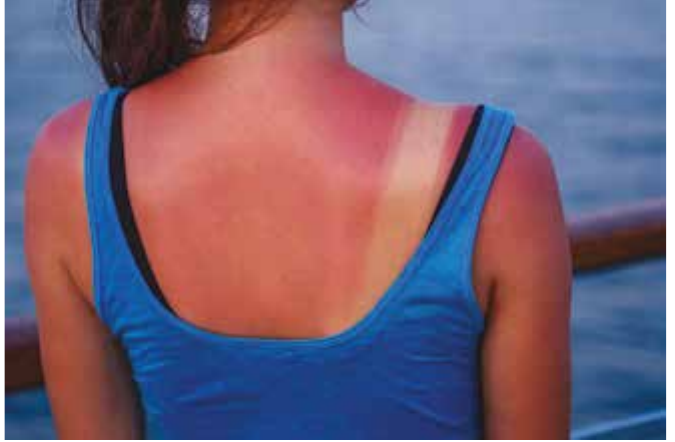
The primary risk factor for skin cancer is exposure to UV radiation. This radiation is present in:
- Natural sunlight
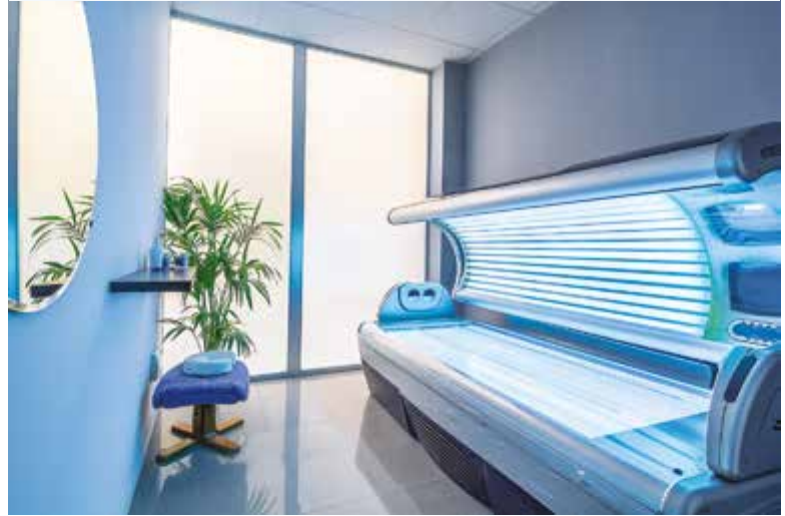
- Artificial sources such as solariums (units that use UV radiation to create a tan)
Fair-skinned and freckly individuals face greater risk of developing skin cancer. The risk also increases with age and cumulative UV exposure over a person's lifetime. Skin cancer typically appears as a spot or mole that changes in appearance over time. Some existing moles can turn cancerous and should be monitored regularly by a doctor.
Note
Exam tip: When discussing population health in your responses, remember to refer to groups of people rather than individuals. For example, discuss "the physical health and wellbeing of youth" or "incidence of skin cancer among males" rather than "an individual's health."
Why is skin cancer targeted for health promotion?
Australia's skin cancer burden
Australia has the unfortunate distinction of having the highest rate of skin cancer in the world. The statistics are sobering:
- More than 2000 Australians die from skin cancer annually
- Approximately two in three Australians will be diagnosed with skin cancer before reaching age 70
- Skin cancers account for around 80% of all newly diagnosed cancers in Australia
- In 2020, an estimated 16,221 Australians were diagnosed with melanoma
Important
When excluding non-melanoma skin cancers (which aren't reported to cancer registries, so exact numbers are unknown), melanoma ranks as the third most common cancer in Australian women and the second most common in men.
According to the Australian Institute of Health and Welfare (AIHW), melanoma skin cancers were responsible for 32,524 years of life lost in 2015, representing 1.4% of the total fatal burden. Sun exposure contributed to 0.8% of Australia's total disease burden.
Population groups most affected
Like many public health issues, skin cancer doesn't affect all population groups equally:
Males: Non-melanoma skin cancer is almost twice as common in males compared to females. Males are also significantly more likely to die from skin cancer. In 2020, an estimated 891 males died from skin cancer compared to 484 females.
Outdoor workers: Approximately 200 melanomas and 34,000 other skin cancer types each year are estimated to result from occupational exposure in Australia. Research has found that outdoor workers exposed to solar UV radiation are more likely to be male and reside in lower socioeconomic and regional areas. The occupations with the highest percentage of outdoor workers include farming, painting, and plumbing.

Economic costs
The economic burden of skin cancer in Australia is substantial:
- Medicare records show over one million treatments for squamous and basal cell carcinoma skin cancers in 2018 - that's more than 100 skin cancer treatments every hour
- Non-melanoma skin cancers accounted for almost one-quarter of all cancer-related hospitalisations in 2016-17
- The cost to the health system in 2015-16 for these skin cancers alone exceeded $1 billion
- Lost productivity and premature mortality contribute additional costs of over $100 million annually
Mental health and wellbeing impacts
Beyond the physical and economic costs, skin cancer has significant emotional and psychological impacts:
- Surgery can alter a person's appearance as large amounts of surrounding tissue are often removed during treatment, which can lead to higher levels of depression and anxiety
- Those diagnosed with melanoma may experience high levels of stress throughout their treatment journey
- Premature death causes immense distress among family and friends, increasing the overall level of grief in the community
Prevention potential
A crucial factor in targeting skin cancer is its preventability. The Cancer Council estimates that between 95% and 99% of skin cancers are caused by exposure to the sun. This means health promotion activities have enormous potential to reduce skin cancer's impact in Australia by implementing strategies that reduce overexposure to UV radiation.
Important
Currently, an estimated 17% of adults, 26% of teenagers, and 8% of children experience sunburn on an average summer weekend. Many people get sunburnt while participating in water sports and beach activities, or during everyday activities like gardening or having a barbecue.
Effectiveness of health promotion in improving population health
Health promotion activities targeting skin cancer have been implemented in Australia since the 1980s and have achieved significant success overall.
While melanoma incidence in Victoria continues to rise among those aged over 45 years, the rate of increase has slowed considerably. More encouragingly, melanoma incidence is actually falling in those under the age of 45. This suggests that health promotion is having a positive effect on generations who have grown up with skin cancer prevention interventions.
The Ottawa Charter framework
The Ottawa Charter for Health Promotion is increasingly used to guide the development of health promotion interventions. The five action areas of the Ottawa Charter provide a comprehensive framework for addressing skin cancer:
- Build healthy public policy
- Create supportive environments
- Strengthen community action
- Develop personal skills
- Reorient health services
Note
Because skin cancer results from a range of influences, there is no single solution to reducing its rates. The greatest improvements are achieved when multiple action areas are addressed simultaneously.
Note
Exam tip: You should know a range of health promotion initiatives so you can discuss examples of interventions relating to each action area of the Ottawa Charter.
Health promotion interventions for skin cancer
Government laws
Research published in 2008 found that 281 melanomas, 43 deaths, and 2,572 non-melanoma skin cancers were attributable to solarium use in Australia each year, costing the health system approximately $3 million.
In response to this evidence, in 2015 the Victorian Government developed a healthy public policy that made it illegal to operate commercial solarium units in Victoria. This ban resulted from ongoing campaigning led by Cancer Councils across Australia and represents a significant example of building healthy public policy. The result is that many Victorians will be saved from the devastating effects of skin cancer.
Note
Commercial solarium operators have since been banned in New South Wales, South Australia, Tasmania, the Australian Capital Territory, Western Australia, and Queensland. There are no commercial solariums operating in the Northern Territory.
Policies
A range of healthy public policies relating to skin cancer and UV protection are implemented across community, education, and employment settings, representing multiple action areas of the Ottawa Charter:
School policies:
- Many schools implement a "no hat, no play" or "no hat, play in the shade" policy to promote wearing hats during break times
- This creates supportive environments and develops personal skills
Local government policies:
- Many local councils have implemented "shade policies" to guide the development of sustainable shade options (both natural and built) in public places such as playgrounds and sports facilities
- This creates supportive environments
Workplace policies:
- As part of occupational health and safety requirements, many workplaces eliminate, reduce, or control overexposure to UV radiation through various interventions:
- Providing free sunscreen to workers
- Supplying long-sleeved uniforms and hats
- Installing shade in areas where employees spend time
- Offering training and education about sun exposure and protection methods
- These policies both create supportive environments and develop personal skills
SunSmart campaign
SunSmart is an initiative of Cancer Council Victoria, launched in 1988 and funded by Cancer Council Victoria and VicHealth (the Victorian Health Promotion Foundation). In 2004, SunSmart was appointed as the World Health Organization's Collaborating Centre for UV Radiation, establishing it as a world leader in skin cancer prevention.
SunSmart has helped prevent more than 103,000 skin cancers and more than 1,000 deaths since 1988. However, there is still room for improvement. Australian youth continue to have the highest incidence of malignant melanoma in the world compared to youth in other countries. Among young people aged 12-24 years in Australia, melanoma is the most common cancer, accounting for more than one-quarter of all cancers in this age group.
Media campaigns
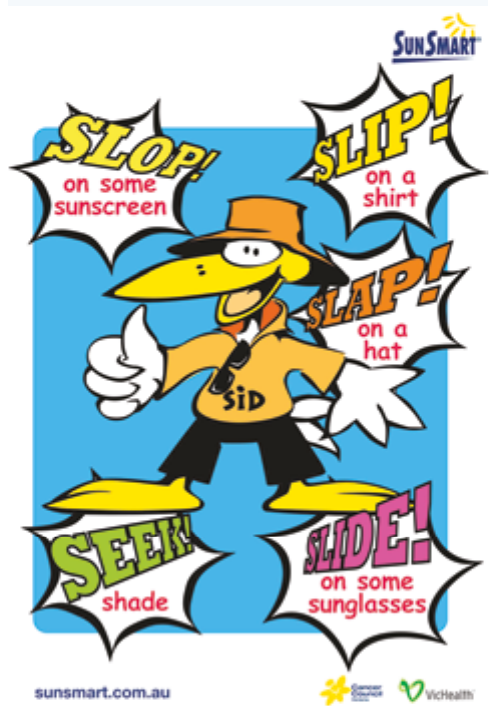
One of the first campaigns developed to promote sun protection was Cancer Council Victoria's 1980 "Slip, Slop, Slap" campaign featuring Sid the Seagull. Today, SunSmart develops personal skills through mass advertising campaigns using paid and unpaid media strategies across television, radio, print, digital platforms, and public relations activities. These campaigns help people understand when they need sun protection.
Examples of SunSmart media campaigns include:
Example
SunSmart Media Campaign: "Slip, Slop, Slap, Seek, Slide"
This updated campaign recommends using a combination of sun protection measures when the UV index reaches 3 or higher:
- Slip on covering clothing
- Slop on SPF30 or higher, broad-spectrum, water-resistant sunscreen
- Slap on a broad-brimmed hat
- Seek shade
- Slide on sunglasses
"UV. It all adds up": This campaign raised awareness about the cumulative effect UV exposure can have over long periods.
"There's nothing healthy about a tan": This campaign highlighted that even one damaged melanocyte can lead to skin cancer, making tanning to any degree dangerous.
"How to remove a skin cancer": Graphic footage showed skin cancer removal procedures to deter people from spending too much time in the sun.
"When you cover things, they last longer. Same goes for you": Targeting males, this campaign drew parallels between protecting possessions (cars, decks, barbecues) from the sun and protecting skin - at any age.
Note
Key term: The UV index is a scale from 0-11+ that indicates how intense UV radiation will be. Sun protection methods are recommended for any UV index score of 3 and above.
Case study: New SunSmart campaign targeting men
In January 2021, SunSmart launched a new campaign specifically targeting men, prompted by research showing that:
- 79% of men surveyed agreed that regular sun protection can prevent skin cancer
- 71% knew that melanoma kills more men than women each year
- Yet less than half (49%) agreed sun protection was part of their daily routine
- Only 29% used sunscreen and 30% stayed in shade on summer weekends
Important
Victorian Cancer Registry data showed that in 2019, 57% of the 2,841 melanomas diagnosed were in men (1,633 cases), and alarmingly, twice as many men died from the disease compared to women.
The "Same goes for you" campaign addressed male complacency by showing a father protecting household items (car, deck, barbecue) from UV damage while forgetting to protect his own skin. His young son pointed out this irony. The key message emphasised that if covering something makes it last longer, the same rule applies to skin - at any age.
This campaign is important because:
- Men typically spend more time outdoors than women, increasing their UV exposure
- 95% of skin cancers are caused by UV exposure, which accumulates over time
- Sun protection is critical at any age, even if damage occurred earlier in life
- The risk of skin cancer can be significantly reduced by protecting skin at any age
SunSmart and the Ottawa Charter action areas
SunSmart addresses multiple action areas:
Creates supportive environments by:
- Improving environmental protection strategies
- Providing information on built and natural shade options
- Promoting the SunSmart UV app, which includes sun protection times based on daily UV levels
Strengthens community action by:
- Running mass-media campaigns that raise awareness about sun protection importance
- Assisting various groups to reduce UV exposure, including early childhood centres, schools, and workplaces
Builds healthy public policy through:
- Developing policies for childcare centres, kindergartens, schools, and workplaces
- The SunSmart Primary School and Secondary School programs that encourage implementation of comprehensive sun protection policies
Develops personal skills by:
- Encouraging SunSmart education within school curricula
- Providing information and resources to help people make informed decisions about sun protection
Reorients health services by:
- Providing support for community health workers, general practitioners, and local governments
- Making research available to health professionals
- Distributing advertising and educational materials for use by health professionals
National Skin Cancer Action Week
Each year, Cancer Council Australia and the Australasian College of Dermatologists collaborate to implement National Skin Cancer Action Week. This intervention primarily represents reorienting health services, as dermatologists (medical doctors with specialist training in skin conditions) work to raise awareness and prevent skin cancer.
During the designated week, the organisations develop personal skills by reminding Australians about the importance of sun protection and early skin cancer detection.
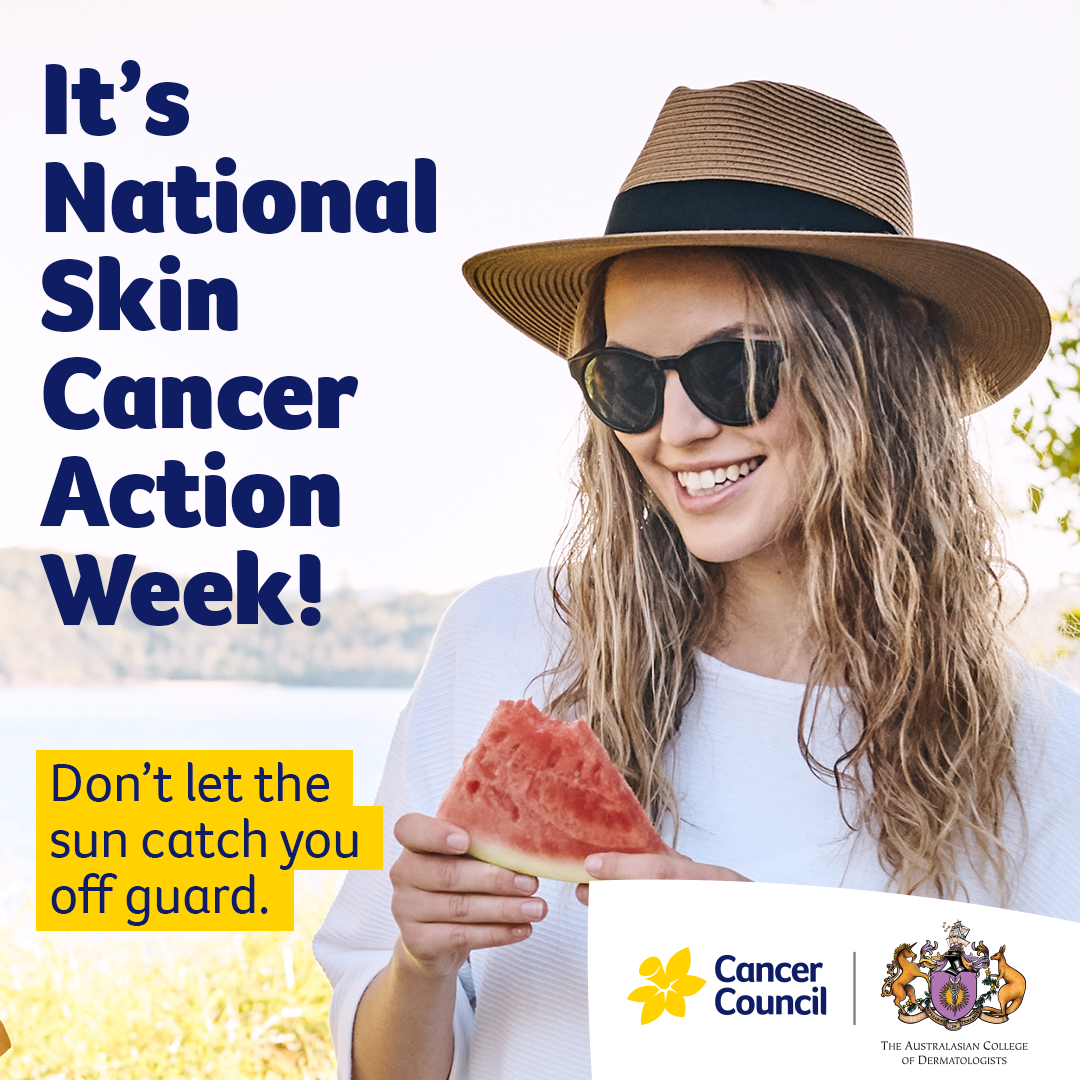
The 2020 theme was "It's still the same sun", reminding people that while many things have changed since Sid the Seagull first appeared in the 1980s, the sun's danger remains constant. Australians still need to use all five forms of sun protection: slip on sun-protective clothing, slop on SPF30+ sunscreen, slap on a broad-brimmed hat, seek shade, and slide on sunglasses.
Note
National Skin Cancer Action Week strengthens community action by encouraging people to get involved through:
- Displaying posters at work, home, or school to remind others about sun protection importance
- Updating social media cover photos using images provided on the Cancer Council website
- Sharing photos showing five forms of sun protection using the #SunSmart5 hashtag
- Spreading awareness by sharing National Skin Cancer Action Week social media posts
UV Daily
UV Daily is an intervention designed by the Cancer Council that aims to develop personal skills relating to sun safety among outdoor trade workers.
The Australian Workplace Exposure Study revealed that workers in construction and agriculture industries had inadequate protection against UV radiation, despite it being the most common cancer risk they faced:
- In construction: 86% of workers were exposed to UV radiation, but only 7% were adequately protected
- In agriculture: 99% of workers were exposed to UV radiation, yet only 10% were adequately protected with shade, clothing, a hat, and sunscreen
UV Daily is a website targeting outdoor workers, specifically those in trades. It addresses multiple action areas:
Creates a supportive environment by:
- Notifying users of the UV index based on their location in Australia
- Providing timely, location-specific information to help workers plan their sun protection
Develops personal skills by:
- Providing fact sheets and videos about skin cancer statistics
- Debunking myths about skin cancer
- Offering case studies and action steps to reduce skin cancer risk
- Including interactive tools to assess skin cancer risk and determine skin type
- Maintaining a social media presence on Twitter and Facebook
Summary of action areas
| Action area | Examples relating to skin cancer |
|---|---|
| Build healthy public policy | Victorian Government's 2015 ban on commercial solarium units; Schools implementing "no hat, no play" policies |
| Create supportive environments | UV Daily providing UV index notifications for tradespeople; SunSmart promoting shade options and UV alerts |
| Strengthen community action | SunSmart assisting early childhood centres, schools, and workplaces to reduce UV exposure; National Skin Cancer Action Week encouraging community involvement |
| Develop personal skills | "When you cover things, they last longer. Same goes for you" campaign; National Skin Cancer Action Week educating about sun protection and early detection |
| Reorient health services | SunSmart supporting community health workers, GPs, and local governments; Dermatologists raising awareness during National Skin Cancer Action Week |
Remember!
Summary
Key Points to Remember:
-
Australia has the world's highest rate of skin cancer, with two in three Australians diagnosed before age 70. This makes skin cancer a critical public health priority.
-
95-99% of skin cancers are caused by sun exposure, making them highly preventable. This is why health promotion activities have such significant potential to reduce the burden of skin cancer.
-
Health promotion has been successful - melanoma incidence is falling in those under 45, showing positive effects on generations who grew up with prevention interventions.
-
The "Slip, Slop, Slap, Seek, Slide" message provides five simple sun protection measures: slip on covering clothing, slop on SPF30+ sunscreen, slap on a broad-brimmed hat, seek shade, and slide on sunglasses. These should be used when the UV index reaches 3 or higher.
-
Multiple strategies across all five Ottawa Charter action areas are needed to effectively reduce skin cancer rates. Key interventions include government laws banning solariums, school and workplace policies, the SunSmart campaign, National Skin Cancer Action Week, and UV Daily for outdoor workers.