The Australian Dietary Guidelines (VCE SSCE Health and Human Development): Revision Notes
📚Revision Notes
The Australian Dietary Guidelines
Introduction
The Australian Dietary Guidelines are a set of evidence-based recommendations developed by the National Health and Medical Research Council (NHMRC), a federal government body. They were last reviewed and updated in 2013.
These guidelines were created in response to increasing rates of diet-related conditions and diseases in Australia. Poor dietary habits, such as eating too many energy-dense processed foods and insufficient fruit and vegetables, have contributed significantly to the burden of disease, particularly obesity, cardiovascular disease and type 2 diabetes.
Note
Who are the guidelines for?
The guidelines are designed to be used by health professionals, educators, industry bodies and anyone interested in promoting healthy eating. They target the general healthy population, including people with common diet-related risk factors such as being overweight.
Important
The guidelines are not designed for people with serious medical conditions like type 2 diabetes, who require specialised dietary advice from qualified health professionals.
Purpose of the guidelines
The Australian Dietary Guidelines aim to help Australians:
- Develop healthy dietary patterns that promote health and wellbeing
- Reduce the risk of diet-related conditions such as hypertension (high blood pressure) and impaired glucose regulation
- Reduce the risk of chronic conditions including type 2 diabetes, cardiovascular disease and some cancers
The guidelines also provide tailored advice for different population groups, including:
- People at different life stages (childhood, late adulthood)
- Pregnant and breastfeeding women
- Vegetarians and vegans
- People from diverse cultural backgrounds
- Aboriginal and Torres Strait Islander peoples
- People living outside major cities
- People experiencing socioeconomic disadvantage
- People aiming to lose or maintain weight
The five guidelines
Guideline 1: Achieve and maintain a healthy weight
Key message: To achieve and maintain a healthy weight, be physically active and choose amounts of nutritious food and drinks to meet your energy needs.
This guideline focuses on energy balance, which occurs when the amount of energy consumed equals the amount of energy required. Energy balance contributes to neither weight gain nor weight loss.
Note
Understanding Energy Balance
When people consume too much energy for their needs (positive energy imbalance), they increase their risk of obesity and associated conditions such as cardiovascular disease, type 2 diabetes and some cancers. Energy comes from foods rich in carbohydrates, fats and protein, and these should be consumed in moderation to ensure energy intake is balanced.
Important
Special considerations:
- Children and adolescents should eat sufficient nutritious foods to grow and develop normally, be physically active every day, and have their growth checked regularly
- Older people should eat nutritious foods and stay physically active to help maintain muscle strength and a healthy weight
Guideline 2: Enjoy a variety of foods from the five food groups
Key message: Enjoy a wide variety of nutritious foods from the following five groups every day and drink plenty of water.
Consuming a range of foods from the five food groups is associated with lower levels of mortality and morbidity compared to diets lacking variety. The five food groups are:
- Vegetables and legumes/beans
- Fruit
- Grain (cereal) foods (mostly wholegrain and/or high cereal fibre varieties)
- Lean meats and poultry, fish, eggs, tofu, nuts and seeds, and legumes/beans
- Milk, yoghurt, cheese and/or their alternatives (mostly reduced fat)
Benefits of each food group
Vegetables and legumes/beans
These foods are low in fat and relatively low in energy (kilojoules) while providing carbohydrates, the body's preferred fuel for energy production. They are also:
- High in fibre, which maintains digestive system health and reduces colorectal cancer risk
- Rich in fibre, which provides feelings of fullness, reducing the risk of overeating and weight gain
- Rich in antioxidants, which reduce the impact of free radicals and thus the risk of cardiovascular disease and cancer
Note
Adequate vegetable consumption is linked to reduced risk of obesity, some cancers, cardiovascular disease and type 2 diabetes.
Fruit
Like vegetables, fruits are low in fat and provide carbohydrates for energy. They are also major sources of fibre and antioxidants. Adequate fruit intake is associated with:
- Lower rates of some cancers
- Reduced obesity risk
- Lower cardiovascular disease risk
- Reduced type 2 diabetes risk
- Improved immune system function
Grain (cereal) foods
Wholegrain and high cereal fibre foods such as breads, cereals, rice, pasta, noodles, polenta, couscous, oats, quinoa and barley are good sources of carbohydrates and fibre while being low in fat. These foods contribute to decreased risk of:
- Obesity
- Colorectal and other cancers
- Cardiovascular disease
- Type 2 diabetes
Lean meats and alternatives
Lean meats and poultry, fish, eggs, tofu, nuts and seeds, and legumes/beans are major sources of:
- Protein (required to maintain healthy cells, tissues and systems)
- Vitamins and minerals
- Essential fatty acids
Note
Protein is necessary for optimal functioning of many body processes, including immune and cardiovascular function. Fish, nuts and seeds contain monounsaturated and polyunsaturated fats, which can decrease cardiovascular disease risk by lowering levels of low-density lipoprotein.
Dairy products and alternatives (reduced fat)
Milk, yoghurt, cheese and/or their alternatives are high in many nutrients, including:
- Protein
- Calcium (supports bone health and reduces osteoporosis risk)
Note
Regular consumption of dairy products has been shown to decrease the risk of cardiovascular disease, some cancers and type 2 diabetes, although the exact mechanism is not fully understood.
Water
Water is required for many bodily processes, including:
- Digestion
- Waste removal
- Chemical reactions
Water does not contribute any energy to the body (unlike most other drinks). Adequate water intake is associated with:
- Well-functioning body systems
- Reduced risk of weight gain and associated conditions (cardiovascular disease, some cancers, type 2 diabetes)
- Decreased risk of dental caries (as it contains no sugar)
Guideline 3: Limit saturated fat, added salt, added sugars and alcohol
This guideline focuses on limiting intake of foods that are energy-dense or increase the risk of conditions such as cardiovascular disease. These are called discretionary foods.
Important
What are discretionary foods?
Discretionary foods are foods and drinks that are not necessary to provide the nutrients the body needs but may add variety. They should be consumed only sometimes and in small amounts.
Examples include:
- Cakes and biscuits
- Confectionery and chocolate
- Pastries and pies
- Ice cream and ice confections
- Butter, cream and spreads containing predominantly saturated fats
- Potato chips, crisps and other fatty or salty snack foods
- Sugar-sweetened soft drinks and cordials
- Sports and energy drinks
- Alcoholic drinks
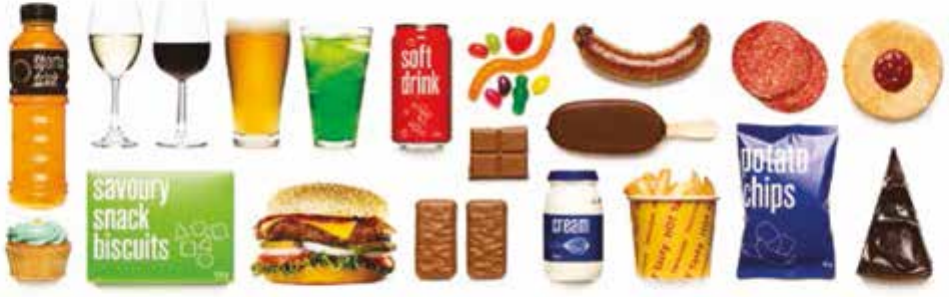
Many discretionary foods are high in saturated fats, sugars and/or alcohol, making them energy-dense. They are also often high in salt, which increases the risk of cardiovascular disease and osteoporosis.
Key recommendations:
Note
a) Limit saturated fat
Replace foods high in saturated fats (like butter, cream, cooking margarine, coconut and palm oil) with foods containing predominantly polyunsaturated and monounsaturated fats (such as oils, spreads, nut butters/pastes and avocado).
Important
Low-fat diets are not suitable for children under two years.
Note
b) Limit added salt
Read labels to choose lower sodium options and do not add salt to foods during cooking or at the table.
Note
c) Limit added sugars
Reduce intake of confectionery, sugar-sweetened soft drinks and cordials, fruit drinks, vitamin waters, energy and sports drinks.
Note
d) Limit alcohol
If you choose to drink alcohol, limit intake. For women who are pregnant, planning a pregnancy or breastfeeding, not drinking alcohol is the safest option.
Guideline 4: Encourage, support and promote breastfeeding
According to the World Health Organization, "breastfeeding is an unequalled way of providing ideal food for the healthy growth and development of infants."
Note
Benefits of Breastfeeding
Breast milk contains all the nutritional requirements to support infant growth and development to around six months of age.
Babies who are breastfed for the first six months have:
- Lower risk of infection
- Lower risk of asthma
- Lower risk of sudden infant death syndrome
- Decreased risk of obesity later in life
- Decreased risk of hypertension later in life
- Decreased risk of some chronic diseases later in life
Guideline 5: Care for your food; prepare and store it safely
This guideline aims to reduce the risk of foodborne diseases in the community. It is estimated that there are over five million cases of food poisoning in Australia every year, which significantly reduces health and wellbeing.
Important
Proper food preparation and storage practices are essential for preventing foodborne illnesses that can seriously impact health and wellbeing.
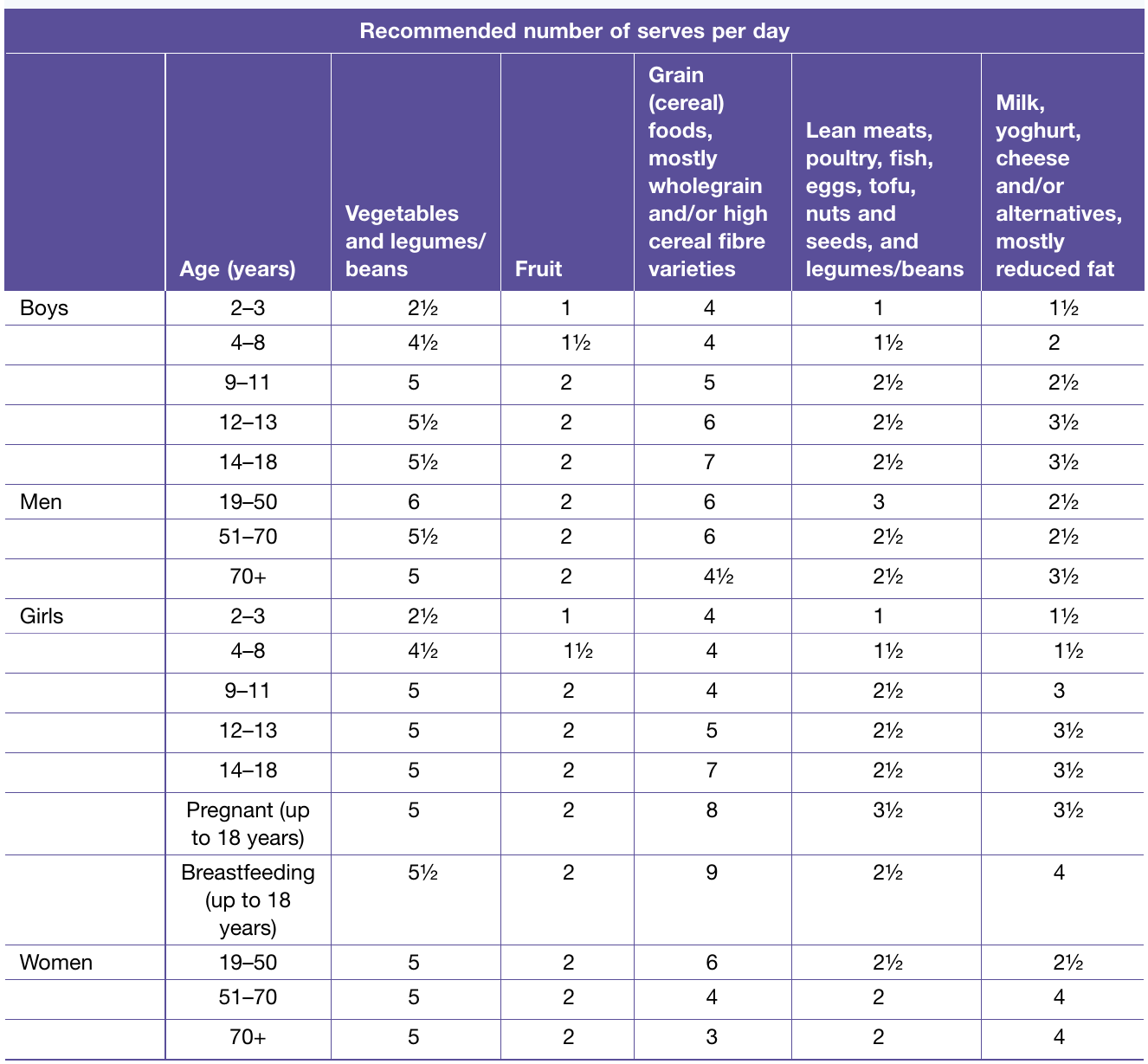
Recommended number of serves
The Australian Dietary Guidelines include specific advice on the recommended number of serves from each food group that should be consumed daily, based on age, sex, and pregnancy and breastfeeding status.
Serves for pregnant and breastfeeding women
Pregnant and breastfeeding women have different nutritional requirements to support the growing baby and milk production.
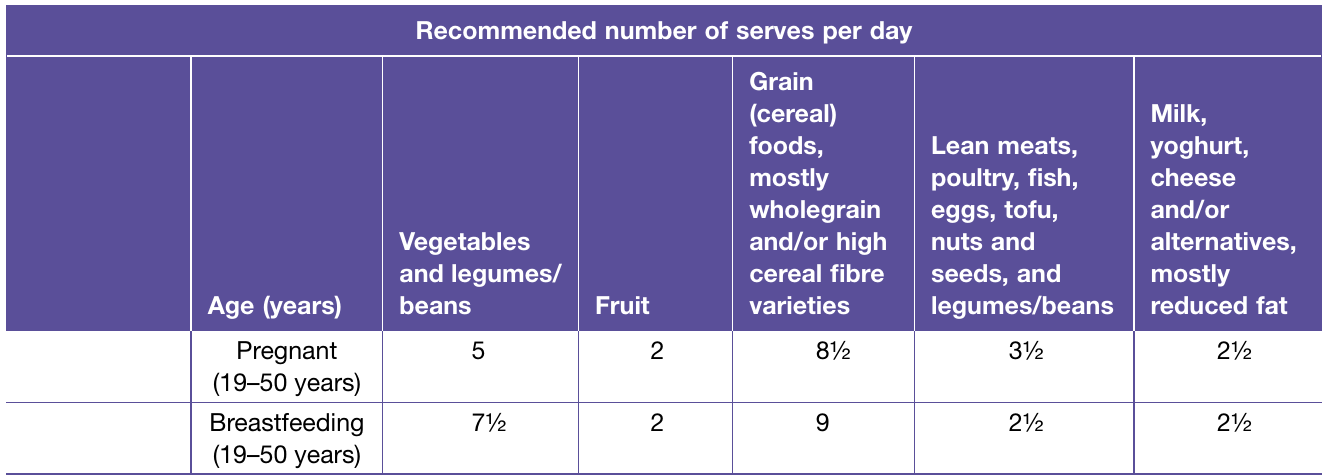
Note
These increased requirements reflect the additional energy and nutrients needed for fetal development during pregnancy and milk production during breastfeeding.
What is a serve? Understanding serving sizes
To help people consume the required number of serves from each food group, the guidelines provide specific examples of foods that make up one "serve."
Vegetables and legumes/beans

Example
Examples of one serve:
- ½ cup (75g) cooked green or Brassica or cruciferous vegetables
- ½ cup (75g) cooked orange vegetables
- ½ cup (75g) cooked dried or canned beans, chickpeas or lentils (no added salt)
- 1 cup (75g) raw green leafy vegetables
- ½ medium potato or equivalent of sweet potato, taro, sweet corn or cassava (75g)
- 1 medium tomato (75g)
Fruit
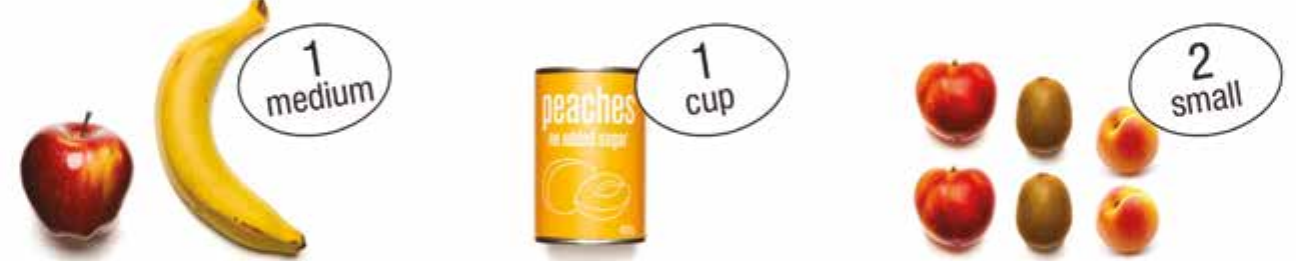
Example
Examples of one serve:
- 1 medium-sized fruit (150g) such as apple, banana, orange or pear
- 2 small fruits (150g) such as apricots, kiwi fruit or plums
- 1 cup (150g) diced, cooked or canned fruit (preferably with no added sugar)
- ½ cup (125mL) 100% fruit juice (only occasionally as a substitute)
- 4 dried apricot halves or 1½ tablespoons of sultanas (30g) (only occasionally as a substitute)
Grain (cereal) foods

Example
Examples of one serve:
- 1 slice of bread or ½ medium roll or flat bread (40g)
- ½ cup cooked rice, pasta, noodles, barley, buckwheat, semolina, polenta, bulgur or quinoa (75-120g)
- ½ cup cooked porridge (120g)
- ⅔ cup wheat cereal flakes (30g)
- ¼ cup muesli (30g)
- 3 crispbreads (35g)
- 1 crumpet (60g) or 1 small English muffin or scone (35g)
Lean meats, poultry, fish, eggs, tofu, nuts and seeds, and legumes/beans

Example
Examples of one serve:
- 65g cooked lean red meats (beef, lamb, pork, venison or kangaroo) or ½ cup lean mince, 2 small chops, 2 slices roast meat (about 90-100g raw)
- 80g cooked poultry (about 100g raw) such as chicken or turkey
- 100g cooked fish fillet (about 115g raw) or 1 small can of fish (no added salt, not in brine)
- 2 large eggs (120g)
- 1 cup (150g) cooked dried beans, lentils, chickpeas, split peas, or canned beans
- 170g tofu
- 30g nuts or seeds or nut/seed paste (no added salt) (only occasionally as a substitute)
Milk, yoghurt, cheese and/or alternatives
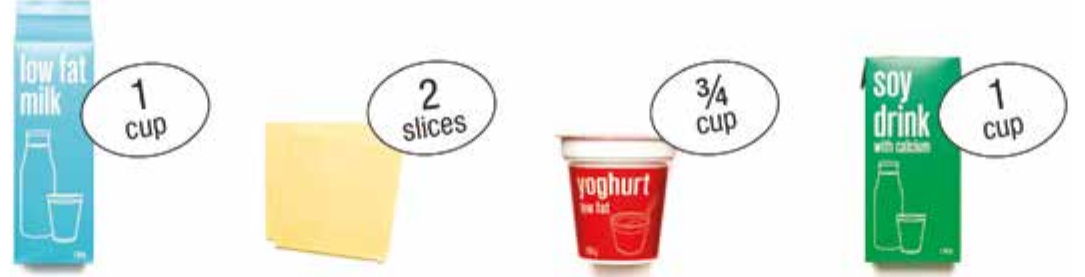
Example
Examples of one serve:
- 1 cup (250mL) milk (fresh, UHT long life or reconstituted powdered)
- ½ cup (120mL) evaporated unsweetened milk
- ¾ cup (200g) yoghurt
- 2 slices or 4 × 3 × 2cm piece (40g) hard cheese such as cheddar
- ½ cup (120g) ricotta cheese
- 1 cup (250mL) soy, rice or other cereal drink with at least 100mg added calcium per 100mL
Unsaturated fats and oils
The guidelines also provide advice on consuming healthy fats that contain monounsaturated and/or polyunsaturated fats. These can help reduce the risk of cardiovascular disease.

Recommended serves of unsaturated spreads and oils
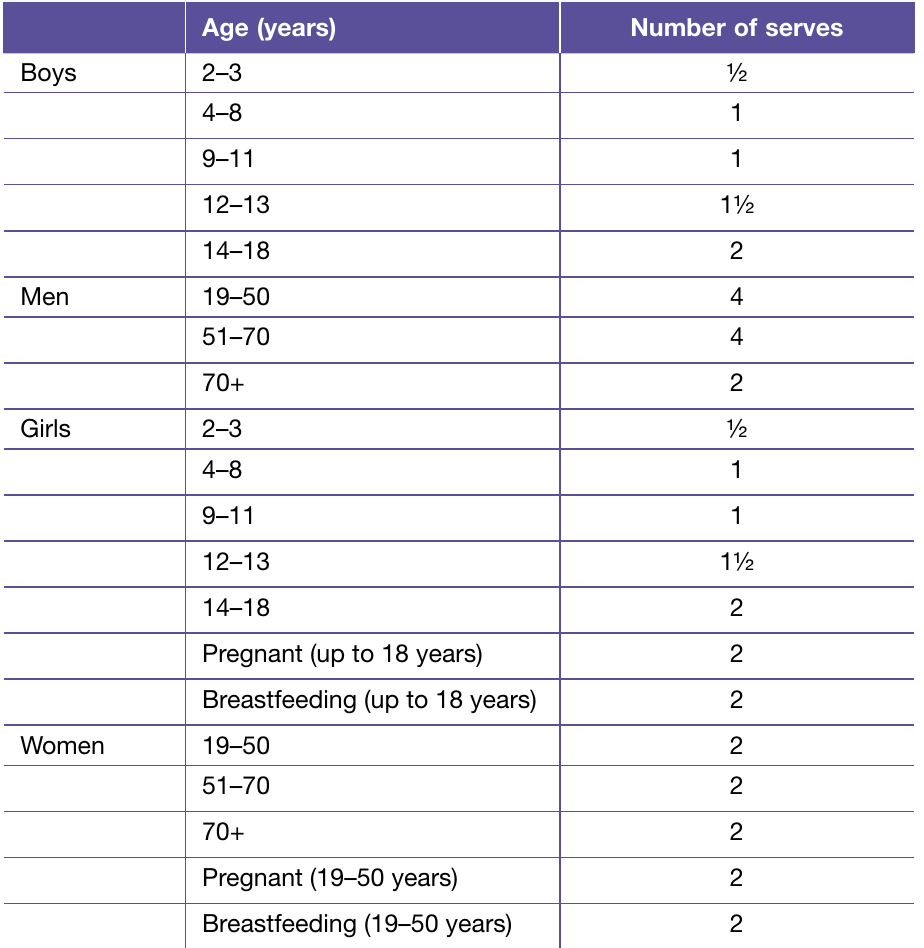
The recommended number of serves varies by age and gender, ranging from ½ serve for young children to 4 serves for adult men aged 19-70 years.
Example
Examples of one serve:
- 10g polyunsaturated spread
- 10g monounsaturated spread
- 7g polyunsaturated oil (such as olive or canola oil)
- 10g tree nuts or peanuts or nut pastes/butters
Discretionary foods serving sizes
While discretionary foods should be limited, the guidelines provide information on what constitutes a serve of these foods for those who choose to consume them occasionally.
Example
Examples of discretionary food serves:
- 2 slices (50-60g) processed meats, salami or Mettwurst
- ½ snack-size packet (30g) salty crackers or crisps
- 1 donut (40g)
- ½ bar (25g) chocolate
- 1 tablespoon (20g) butter
- 1 can (375mL) sugar-sweetened soft drink
- ¼ commercial meat pie or pastie (60g)
- 12 fried hot chips (60g)
The Australian Guide to Healthy Eating
The Australian Guide to Healthy Eating is a visual food selection tool incorporated into the Australian Dietary Guidelines. It helps consumers plan, select and consume adequate proportions of foods from the five food groups.
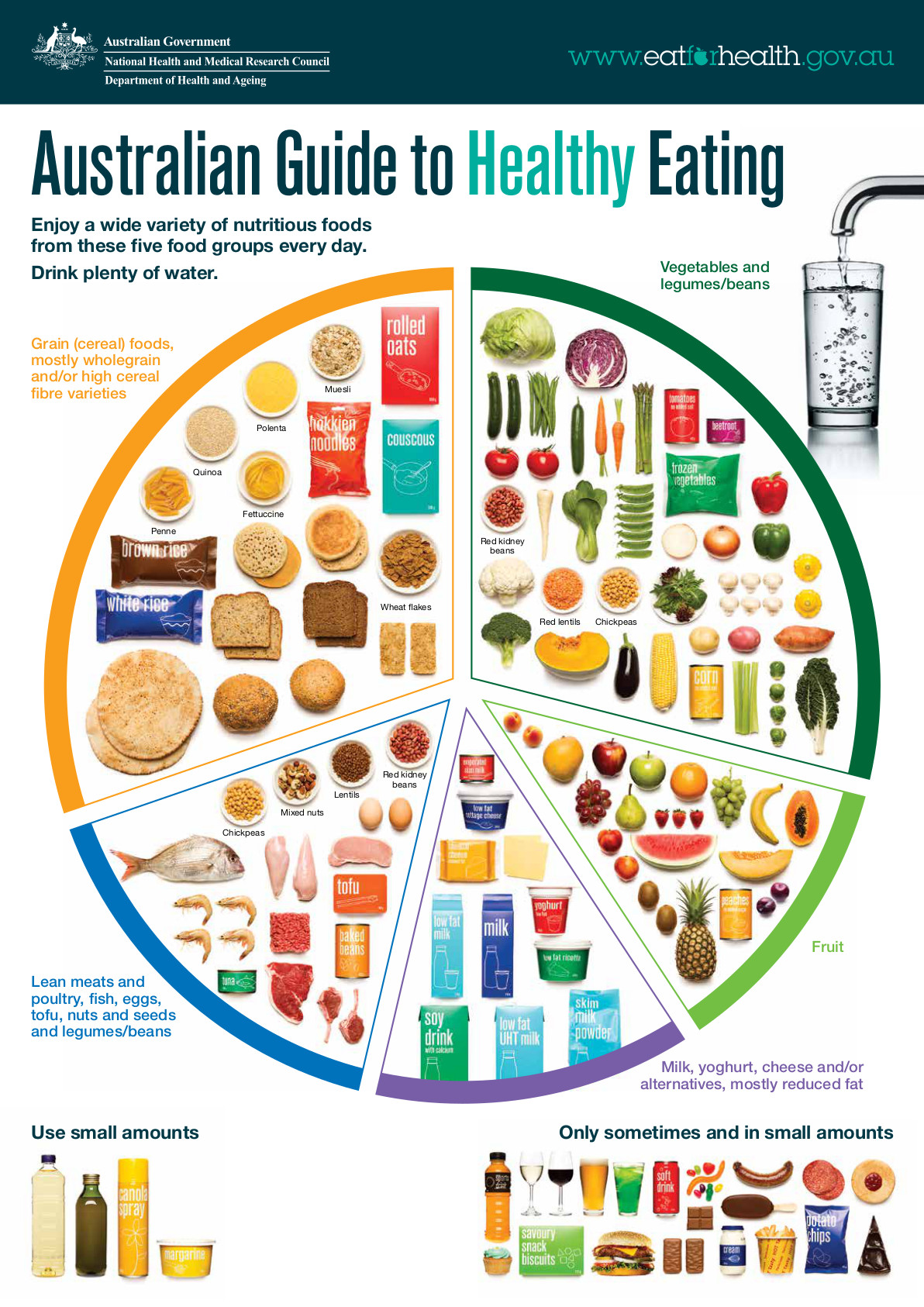
How to read the Australian Guide to Healthy Eating
The guide shows a circle divided into five wedges, each representing one of the five food groups. The size of each wedge reflects the proportion of that food group that should be consumed daily.
Proportions of each food group:
Note
Grain foods (bread, cereal, rice, pasta): 30-35% of total daily food intake
- High in carbohydrates for energy
- High in fibre for weight management and digestive health
Note
Vegetables and legumes/beans: 30% of daily food intake
- Rich in carbohydrates, fibre, protein and antioxidants
- Include fresh, frozen and tinned vegetables, legumes and beans
Note
Lean meats and alternatives: 15% of total food intake
- Provide protein for maintenance of cells and tissues
- Provide energy
Note
Fruit: 10-12% of total food intake
- Contains vitamins and minerals
- Can contain high levels of carbohydrates, so portion control is important
Note
Milk and dairy products or alternatives (mostly reduced-fat): 10-12% of total food intake
- Rich in calcium
- Required for optimal bone health
Additional elements shown:
- Water: Represented by a glass being filled from a tap. Water is required for many body processes but does not contribute energy, helping to maintain a healthy body weight.
- Unsaturated fats (bottom left corner): Foods like margarine and canola spray containing monounsaturated and/or polyunsaturated fats that can reduce cardiovascular disease risk. These should be used in small amounts.
- Discretionary foods (bottom right corner): Foods that should be consumed only sometimes and in small amounts. These include pies, pastries, cakes, processed meats, soft drinks, sports drinks, cordial, alcohol, potato chips, chocolate and biscuits. They are high in saturated fats, sugars and/or alcohol (energy-dense) and often high in salt.
Limitations of the model
While the Australian Guide to Healthy Eating is a useful tool providing basic nutrition advice, it has some limitations:
Important
Key Limitations:
- Does not provide detailed information on serving sizes
- Does not include composite foods (those containing food from multiple groups, such as pizza or casserole)
- These limitations can make the model difficult to follow for some people
Summary
Key Points to Remember:
-
The Australian Dietary Guidelines were developed by the NHMRC to address increasing rates of diet-related diseases in Australia, including obesity, cardiovascular disease and type 2 diabetes.
-
There are five main guidelines covering energy balance, variety from five food groups, limiting discretionary foods, breastfeeding, and food safety.
-
The five food groups are: vegetables and legumes/beans, fruit, grain foods, lean meats and alternatives, and dairy products and alternatives. Each group provides different essential nutrients and health benefits.
-
Discretionary foods (high in saturated fat, added salt, added sugars and/or alcohol) should be limited as they are energy-dense and increase the risk of chronic diseases.
-
The Australian Guide to Healthy Eating is a visual tool that shows the recommended proportions of each food group that should be consumed daily, with grains and vegetables making up the largest portions.
-
Understanding serving sizes is crucial for following the guidelines correctly. The guidelines provide specific examples and measurements for what constitutes one serve of different food types.