The Work of Nutrition Australia (VCE SSCE Health and Human Development): Revision Notes
📚Revision Notes
The Work of Nutrition Australia
Nutrition Australia plays a vital role in promoting healthy eating habits across the country. As Australia's leading community education body for nutrition, this organisation has been working since 1979 to help Australians make better food choices and improve their overall health and wellbeing.

What is Nutrition Australia?
Nutrition Australia is a non-government organisation that brings together a diverse range of community members and serves all Australians. The organisation's central mission focuses on promoting optimal health and wellbeing for all Australians by encouraging both food variety and physical activity.
Note
The organisation works towards several key objectives that guide its activities:
- Serving as a reliable source of scientific information on important nutrition issues
- Creating and distributing nutrition-related materials to policy makers, media outlets, educators, the food industry and consumers
- Providing consultation services to government departments, food industry representatives and consumer groups on food and nutrition matters
- Promoting innovative approaches to sharing nutritional knowledge with the community
Overview of Nutrition Australia's work
Nutrition Australia works to promote healthy eating by sharing the latest information on nutrition research and current food, health and wellbeing trends. This information reaches the public through various channels including media campaigns, the Nutrition Australia website and educational seminars designed for both health professionals and the general public. The organisation also offers a wide range of resources and services to help groups and individuals develop and follow their own healthy eating plans.
The Healthy Eating Advisory Service
The Healthy Eating Advisory Service represents a significant Victorian Government initiative delivered by Nutrition Australia's Victorian Division. This service works to promote the consumption of healthy food and drinks across early childhood services, schools, hospitals and workplaces throughout Victoria.
Note
The service provides comprehensive support including:
Phone advice and support - Staff can receive assistance with providing nutritious, tasty and cost-effective food and drink choices. This includes help with menu planning to ensure meals meet nutritional requirements while remaining appealing and affordable.
Staff training programmes - The service offers training sessions on developing and modifying menus, conducting menu assessments, exploring options for healthy vending machines and creating effective healthy food policies for organisations.
Specialised training for food service staff - Cooks, chefs, food service workers and other key staff receive training on how to produce healthy food options that meet both nutritional standards and taste expectations.
Industry and professional advice - The service provides guidance to the food industry and health professionals to promote healthy eating practices in their respective settings.
Case study: Goulburn Valley Grammar School
Example
Case Study: Gradual Change at Goulburn Valley Grammar School
Goulburn Valley Grammar School in Shepparton demonstrates how small, gradual changes can lead to significant improvements in school nutrition. Marlene Rutherford, the school's Canteen Manager, worked with the Healthy Eating Advisory Service to transform the canteen menu whilst serving over 650 students daily with only five staff and volunteer support.

The Approach: The school began with a free menu assessment from the Healthy Eating Advisory Service. This assessment categorised all available foods and drinks as 'Everyday', 'Select Carefully' or 'Occasionally' items, with the goal of making Everyday foods dominate the menu. The service provided tailored advice for making healthy changes through a step-by-step approach, recommending the gradual removal of Occasionally items whilst increasing the number of Everyday options.
Key Achievements:
- Increasing the number of dishes made on site, giving the canteen full control over ingredients, nutritional value and budget
- Adding more vegetables to students' favourite foods without them noticing the change
- Removing margarine and butter from rolls and sandwiches, which students actually preferred
- Making vegetable-packed dishes like pizza and bolognaise more popular than pre-made versions
- Promoting water consumption by lowering its price to make it the cheapest drink available, resulting in increased water sales
Outcome: The changes received very positive feedback from students, staff and parents, demonstrating that thoughtful implementation of nutritional improvements can be both successful and well-received by the school community.
National Nutrition Week campaign
Nutrition Australia coordinates the annual National Nutrition Week, which takes place during the week of 16 October each year, coinciding with World Food Day. The organisation produces resources and coordinates events to support this important awareness campaign.
During National Nutrition Week, schools, health centres, community fairs and shopping centres can download information, recipes and resources from the Nutrition Australia website to promote healthier eating in line with the annual theme. The 'Try for 5' campaign, which encourages Australians to consume five servings of vegetables daily, has been a key focus of this awareness week.
Educational resources
Nutrition Australia develops an extensive range of publications and resources designed to encourage individuals, families and communities to achieve optimal health and wellbeing through food variety. These resources include nutrition books, portion bowls and plates, booklets, posters, fact sheets, leaflets and webinars.
Note
The organisation recognises that nutritional needs vary across different life stages, so it produces targeted resources for specific groups:
Resources for schools include DVDs, teacher resources and incursions, posters and publications featuring activities and games for students about healthy eating. For example, the 'Packing a School Lunchbox' DVD helps educate parents, students and teachers about healthy eating at school.
Resources for childcare centres focus on meeting accreditation requirements and menu planning, along with stickers and puzzles designed to entertain and educate young children about healthy eating in an age-appropriate way.
Resources for adults provide a range of healthy recipes, resources and fact sheets containing nutrition information specifically relevant for adults and seniors, addressing their unique nutritional requirements.
Case study: Healthy Lunchbox Week
Example
Case Study: Healthy Lunchbox Week Initiative
Healthy Lunchbox Week is a Nutrition Australia initiative designed to inspire parents and carers across Australia to create healthy lunchboxes their children will enjoy. The campaign typically runs in late January as Australian families prepare for the school year ahead.
The Challenge: According to Nutrition Australia Accredited Practising Dietitian Leanne Elliston, busy parents can easily fall into the convenience trap of choosing highly processed, packaged foods that are specifically marketed for children's lunchboxes. Whilst these products offer convenience, they come at a cost financially, to children's health and to the environment.
The Solution: The dedicated Healthy Lunchbox Week website provides extensive lunchbox recipe inspiration, including main meals, snacks and leftover ideas, along with fact sheets, guides and videos to support parents. With some planning and food preparation, parents can save money whilst providing more nutritious options, reducing environmental impact and limiting playground litter problems.
Key Recommendations:
- Parents shouldn't feel pressured to create elaborate lunchbox creations every day
- Simple options like sandwiches made with wholegrain bread, rolls or wraps can provide excellent nutrition
- Fill sandwiches with salad or leftover roast vegetables, lean meat, cheese and dips like hummus
- Choose versatile lunchboxes that can accommodate different sized fruit, sandwich, roll or wrap options
- Include a frozen water bottle to keep food cool and safe, particularly in hot weather
Impact: The campaign emphasises practical, sustainable approaches to healthy lunchbox packing that benefit children's health, family budgets, and the environment.
Nutrition seminars and workshops
Nutrition Australia dietitians and nutritionists conduct various seminars to provide education to workplaces and members of the public who want to improve their diet. These seminars cover diverse topics that address common nutritional concerns and interests.
Note
Seminar Topics Include:
- Nutrition 101, providing foundational knowledge about healthy eating
- Healthy eating for corporate lifestyles, addressing the challenges faced by office workers
- Nutrition for shift workers, who face unique dietary challenges due to irregular schedules
- Understanding food labels, helping consumers make informed choices when shopping
- Healthy habits for a healthy heart, focusing on cardiovascular health through diet
In addition to seminars, Nutrition Australia dietitians and nutritionists provide healthy eating demonstrations in workplaces. These practical sessions include one-hour demonstrations showcasing different seasonal options. Summer workshops might focus on smoothies and salads, whilst winter workshops feature soups and warm salads. The workshops can be tailored to meet the specific needs of individual businesses, ensuring relevance to different workplace environments and employee needs.
Webinars for health professionals
Nutrition Australia develops webinars specifically designed for health professionals to provide training and education that assists them in promoting healthy eating within the community. These professional development opportunities cover a range of current and relevant topics.
Webinar topics include:
- The Modern Mediterranean Diet, exploring this evidence-based eating pattern
- Communicating the Australian Dietary Guidelines, helping professionals effectively share nutritional advice
- Unpacking the Health Star Rating, understanding this front-of-pack labelling system
- Food and fitness — nutrition update for fitness professionals, providing current information for those working in the fitness industry
These webinars ensure health professionals stay current with the latest nutrition research and can effectively communicate evidence-based dietary advice to their clients and patients.
Publication of recipes
Nutrition Australia provides hundreds of healthy recipes free of charge on its website, making nutritious meal ideas accessible to all Australians. The organisation also reviews cookbooks that are available for purchase, helping consumers identify reliable, healthy recipe sources.
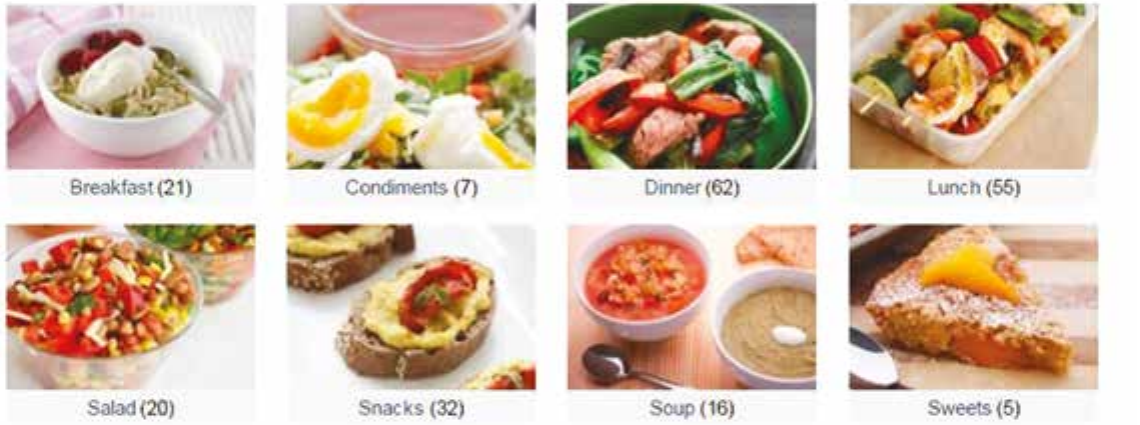
Recipes are organised into convenient categories including breakfast, snacks, lunch, dinner, sweets, salads and condiments. This organisation makes it easy for users to find appropriate recipes for different meals and occasions. The recipes are developed or reviewed by nutrition professionals, ensuring they align with healthy eating principles whilst remaining practical and enjoyable.
The Healthy Eating Pyramid
The Healthy Eating Pyramid serves as a simple visual guide to the types and proportions of foods that individuals should consume every day for good health and wellbeing. Based on the Australian Dietary Guidelines, it displays the five core food groups plus healthy fats, organised according to how much they should contribute to a balanced diet.
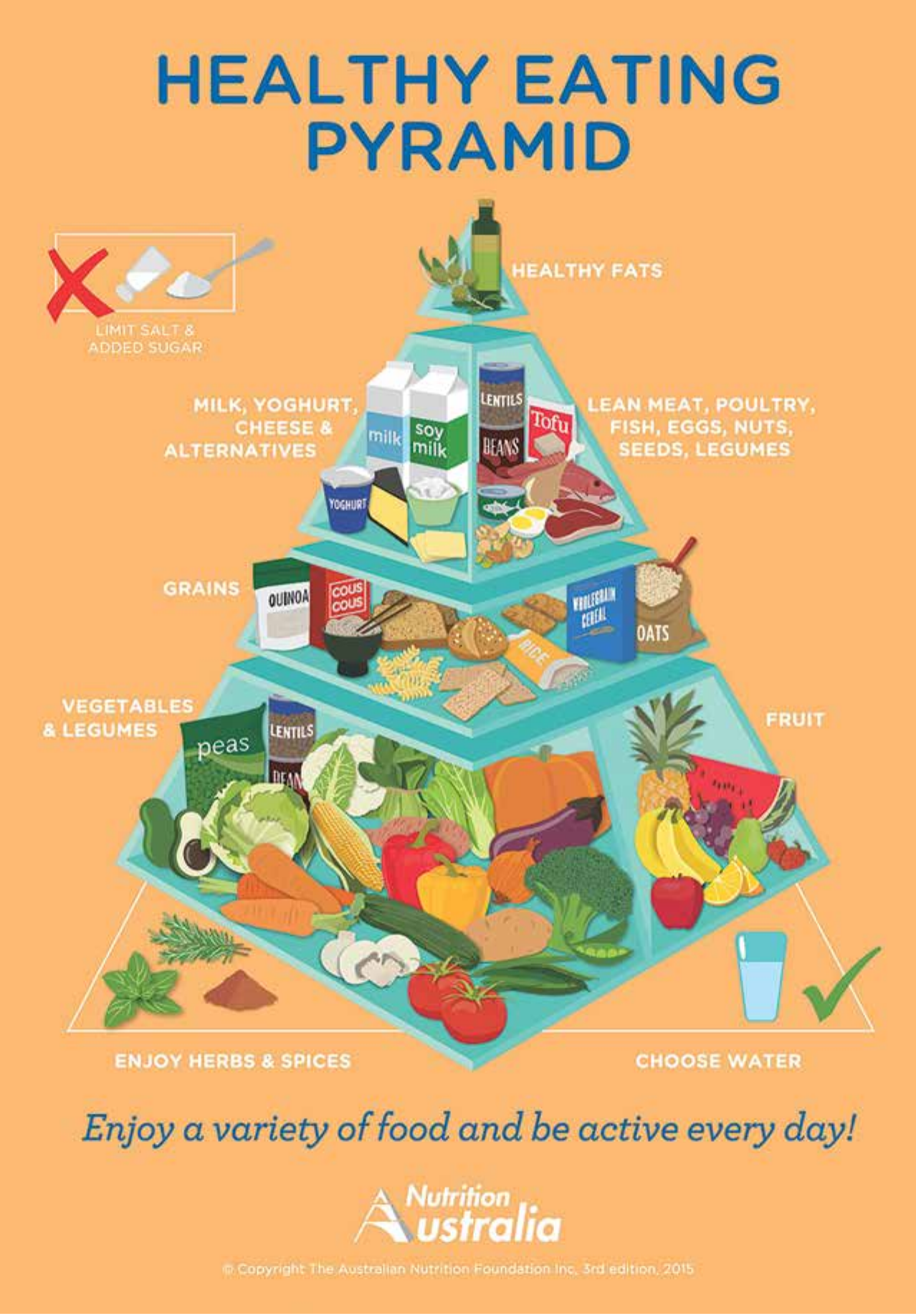
The pyramid encourages Australians to enjoy a variety of foods from every food group daily by showing four distinct layers, each containing different food groups. The size of each layer represents the proportion in which foods from that group should be consumed.
Foundation layers (layers one and two)
The first two layers of the pyramid are known as the 'foundation layers' and feature the three plant-based food groups: vegetables and legumes, fruits, and grains. These layers form the largest portion of the pyramid because plant foods should make up approximately 70 per cent of what a person eats.
Note
The first foundation layer contains vegetables and legumes, and fruits. Vegetables and legumes occupy the majority of this layer, with fruits making up a smaller portion. This reflects the fact that vegetables and legumes should be consumed in greater quantities than fruits.
The second foundation layer features the grains group, represented by whole grains such as brown rice, oats and quinoa, along with wholemeal or wholegrain varieties of bread, pasta, crisp breads and cereal foods. The pyramid specifically emphasises these options rather than highly processed, refined varieties such as white bread and pasta.
Foods in the foundation layers provide a wide variety of essential nutrients including vitamins and minerals. They also serve as the main source of carbohydrates and dietary fibre, which are crucial for digestive health and sustained energy.
Third layer
The third layer includes two important food groups: milk, yoghurt, cheese and alternatives, and lean meat, poultry, fish, eggs, nuts, seeds and legumes.
Foods in the milk, yoghurt, cheese and alternatives group provide major sources of calcium and protein, along with other vitamins and minerals. This food group also encompasses non-dairy options such as soy, rice or cereal milks that have been fortified with calcium, ensuring people with dairy intolerances can still meet their calcium requirements.
Foods in the lean meat, poultry, fish, eggs, nuts, seeds and legumes group serve as major sources of protein and can contain healthy fats. These foods also provide iron, an essential mineral that prevents anaemia and supports oxygen transport throughout the body.
Top layer
The top layer presents foods that contain monounsaturated and polyunsaturated fats, which individuals should consume in small amounts to support heart health and brain function. Choosing foods that contain these healthier fats instead of foods high in saturated fats and trans fats can provide significant health and wellbeing benefits.
Additional recommendations
The pyramid includes several important recommendations beyond the food group layers:
Herbs and spices - The pyramid recommends that consumers enjoy herbs and spices to add flavour to food. This approach is preferable to adding salt, sugar or fat for flavour enhancement.
Water - Water appears at the bottom of the pyramid as it is the best drink for hydration and supports many other essential functions in the body. Choosing water also reduces consumption of sugary options such as soft drinks, sports drinks and energy drinks, which can add excess energy to the diet and contribute to weight gain.
Important
Limiting salt and added sugar - The pyramid recommends limiting the intake of salt (which contains sodium) and added sugar. Although sodium is required for optimal body functioning, excessive consumption can contribute to hypertension and cardiovascular disease.
Consuming large amounts of added sugars, especially from foods such as lollies, chocolate, cakes, biscuits, desserts and soft drinks, can add extra kilojoules to the diet. This can lead to weight gain and increase the risk of developing type 2 diabetes, cardiovascular disease and some cancers.
The average Australian already consumes too much salt and added sugar, which is linked to an increased risk of developing these diseases.
Strengths and limitations
Note
Strengths: The Healthy Eating Pyramid provides consumers with a simple visual tool that promotes healthy food intake in an easy-to-understand format.
Limitations: The model does not include specific serving sizes or provisions for composite foods such as pizzas and casseroles, which may make the model somewhat difficult to follow for some users who need more detailed guidance.
Important
Exam tip
The Healthy Eating Pyramid and Australian Guide to Healthy Eating are both food selection models based on the Australian Dietary Guidelines. Because they share the same foundation, they have several similarities, including representing the five food groups in their correct proportions and encouraging water consumption.
When describing one of these models in an exam, it is important to provide specific details to ensure you are accurately describing the model in question. For example, the pyramid shows the food groups in four layers, whilst the guide shows the food groups in a pie chart format.
Summary
Remember!
Key Points About Nutrition Australia:
-
Nutrition Australia is Australia's major community education body for nutrition, established in 1979 as a non-government organisation with the mission to promote optimal health and wellbeing through food variety and physical activity.
-
The organisation provides numerous services including the Healthy Eating Advisory Service, National Nutrition Week campaigns, educational resources for different life stages, nutrition seminars and workshops, webinars for health professionals, and free recipes on their website.
-
The Healthy Eating Pyramid is a key Nutrition Australia resource based on the Australian Dietary Guidelines, showing the types and proportions of foods to eat daily through four distinct layers.
-
The foundation layers of the pyramid (vegetables and legumes, fruits, and grains) should make up approximately 70 per cent of a person's diet, whilst the top layer containing healthy fats should be consumed in smaller amounts.
-
The pyramid recommends limiting salt and added sugar intake, choosing water for hydration, and using herbs and spices for flavouring rather than salt, sugar or fat to reduce the risk of chronic diseases.