The Process of Psychological Development: Cognitive Development (VCE SSCE Psychology): Revision Notes
📚Revision Notes
The Process of Psychological Development: Cognitive Development
Introduction to cognitive development
Cognitive development refers to changes in an individual's mental abilities. These include thinking, learning, imagination, perception, reasoning, decision-making, memory, problem-solving abilities and language use.
Note
It was previously believed that infants could not think or form complex ideas until they learned language. However, we now understand that babies are highly aware of their surroundings from birth. They actively learn by gathering, sorting and processing sensory information from their environment, supported by developing perceptual and thinking skills.
Cognitive development across the lifespan
Infancy (0-2 years)
Infants explore the world through their senses. By three months, they can recognise faces and respond to familiar sounds. At four to seven months, they recognise their names. By nine months, they can imitate gestures and understand simple words like "no". At 12 months, infants speak multiple words and associate names with objects. By 18 months, they understand 10-50 words, identify body parts and follow two-part directions.
Childhood (2 years - puberty)
By age two, children understand 100-150 words and add approximately 10 new words daily. As they grow, they develop skills in mental imagery, memory and reading. Their attention span increases. Later in childhood, they develop logical thinking and problem-solving abilities, building on past experiences to explain events.
Adolescence (puberty - 18 years)
Adolescents gain increased independence in thinking through problems. They can use abstract thinking, consider possibilities and think hypothetically. They begin metacognition (thinking about thinking itself), and their thinking becomes multidimensional rather than focused on single issues.
Adulthood (18-65 years)
In early adulthood, cognition stabilises and peaks around age 35. Thinking moves beyond black and white concepts to understanding that questions can have multiple right answers. Young adults develop expertise in studies or careers. Older adults experience slower cognitive processing and reduced problem-solving speed, but practical problem-solving skills increase.
Old age (65+ years)
Cognitive processing speed continues to slow, along with problem-solving ability and divided attention. However, practical problem-solving skills that help achieve real-world goals continue to increase.
Gibson and Walk's work on infant perception
Background
Cognitive development in infancy occurs through the senses: hearing, seeing, smelling, touching and tasting. Perception, the process by which incoming sensory information is organised and understood, is integral to cognitive development. Perception involves processing information for the brain to use, and creating links between different perceptions and memories.
In 1960, Eleanor Gibson and Richard Walk conducted a controlled experiment to investigate depth perception in infants. They aimed to determine at what age infants could perceive depth and distance.
The visual cliff apparatus
Gibson and Walk designed an apparatus called the visual cliff to test infants of crawling age for depth perception.
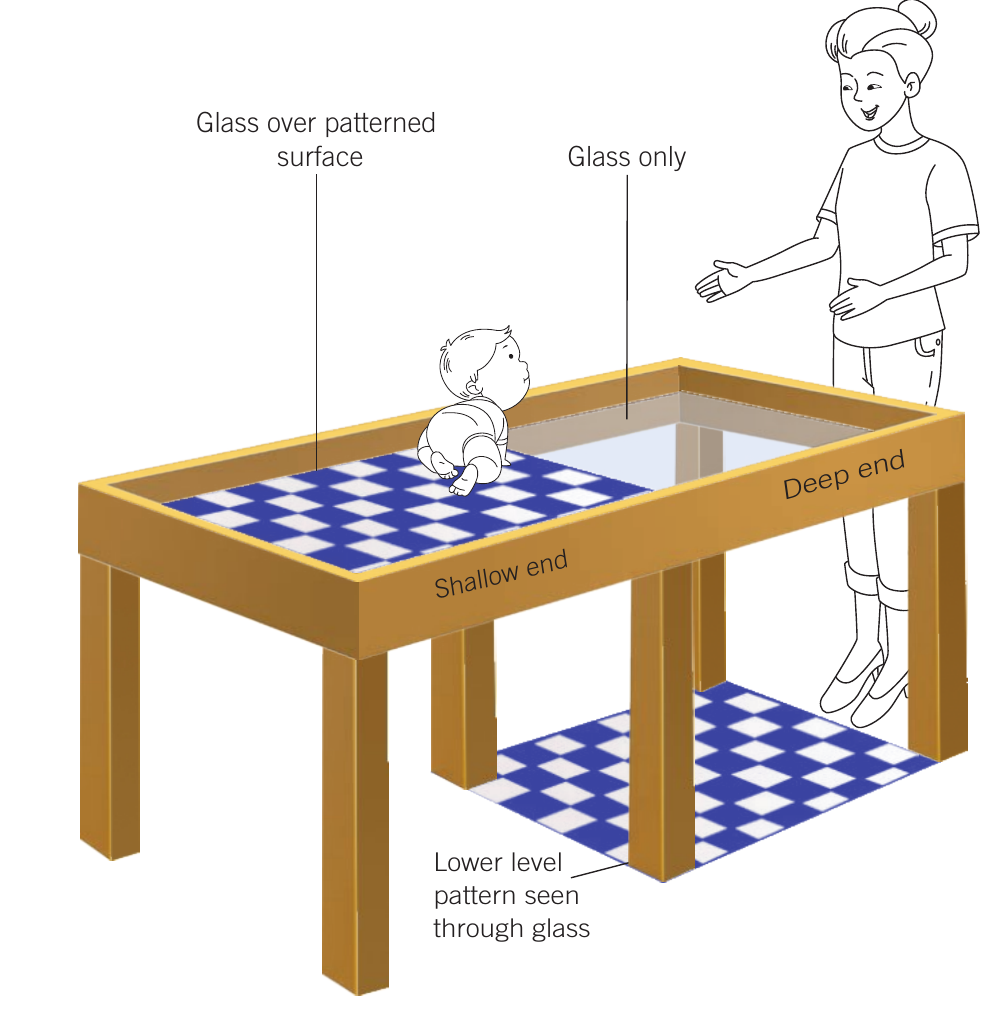
The visual cliff consists of two levels: upper and lower. Thick glass covers the upper level, appearing to span two surface depths. On the 'shallow end', glass covers patterned material on the initial surface. On the 'deep end', the patterned material sits on the lower level, creating the appearance of a drop. Because the experiment required infants to move across the cliff, only mobile (crawling) infants could participate.
Procedure
Note
The Experimental Setup:
A mobile infant was placed in the centre of the upper level (on the cliff edge), with their mother at one end of the apparatus. The mother would call to the child with open arms, waiting for the infant to crawl towards her.
When the mother stood at the shallow end, infants crawled across to her. Gibson and Walk were particularly interested in whether infants would cross the apparent 'drop' when their mother stood at the deep end. They predicted that infants with depth perception would perceive the drop and therefore not cross the cliff. These infants would stay on the centreboard, looking down at the drop or up at their mother. Infants without depth perception would cross the deep end to reach their mother.
Findings
Gibson and Walk tested 36 human infants aged 6-14 months, with 27 infants' results included in the final research. All 36 infants who moved from the centre crawled to the shallow end at least once. Only three crept onto the glass above the deep end.
Some infants peered down through the glass at the deep end then backed away. Others patted the glass, felt the solid surface, but still refused to cross. Many infants crawled away from their mother when called from the deep end, and some cried because they could not reach her without crossing the visual cliff.
Important
Key Conclusion:
Gibson and Walk concluded that most human infants can discriminate depth as soon as they can crawl. Studies on animal infants yielded similar results. They suggested that the infants' reaction relates to vision's role in species survival – infants are reluctant to climb to perceived high places where they might fall and be injured or killed.
Subsequent research by Campos, Bertenthal and Kermoian found that pre-mobile infants still perceive depth, but only develop fear of heights once capable of self-produced motion (either crawling or using a walker).
Evaluation of Gibson and Walk's work
Strengths:
- The visual cliff procedure was conducted in a controlled laboratory setting, providing a reliable and safe way to measure infant depth perception
- The visual cliff was used with various species, including humans and other animals, improving the reliability of findings
- The research helped create a timeline for depth perception development in infants, enabling comparison to 'normal' development and helping identify abnormalities in perception or vision
Weaknesses:
- The sample of human infants was quite small, making findings difficult to generalise to human infants overall
- Ethically, although mothers were present and gave informed consent, the visual cliff may have caused significant distress to infants, particularly those who had developed depth perception
- Researchers had to make assumptions about what infants were thinking and feeling, as verbal communication was not possible
- Although procedures and instructions were highly standardised, mothers' verbal cues (facial expressions) may have changed depending on whether they called from the shallow or deep end, potentially influencing results
Piaget's theory of cognitive development
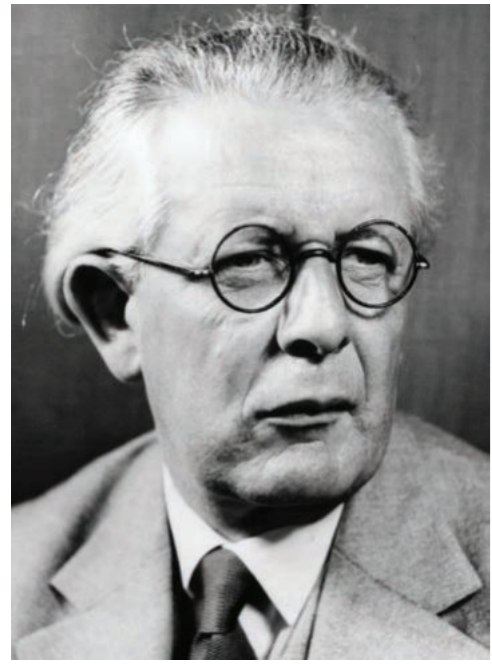
Jean Piaget devoted most of his life to studying cognitive development. He carefully observed his own three children, using them as participants to assess how children use intelligence. He noticed that children actively explored their environment and believed cognitive development depended on children's ability to adapt to their constantly changing world.
According to Piaget, children achieve adaptation through two related cognitive processes: assimilation and accommodation.
Assimilation and accommodation
Assimilation occurs when children acquire new knowledge by taking a new concept and fitting it into pre-existing mental ideas or structures. This mental structure is called a schema. During assimilation, the child's underlying cognitive skills and worldviews remain unchanged – children interpret new information to fit what they already know.
Example
Worked Example: Maya and the Sauce Schema
Three-year-old Maya understands the concept of 'sauce' and loves tomato sauce. In the bathroom with her mother, she points to a bottle of shampoo and calls it 'sauce'.
Why this happens: Since sauce and shampoo share some qualities (both stored in bottles requiring squeezing, similar texture), Maya has incorrectly assimilated shampoo into her pre-existing idea of 'sauce' (her sauce schema).
Accommodation involves changing or adjusting existing ideas to deal with new situations. More advanced thinking would require Maya to use accommodation. Eventually, Maya must adjust her schema about 'sauce' to include distinguishing features: sauces are edible, used only on food, and stored in the kitchen. Otherwise, she will continue incorrectly assimilating shampoo as sauce. Accommodation forces children to see the world differently and indicates a change of stage.
Piaget's four stages of cognitive development
One of Piaget's most important contributions was his description of four cognitive development stages. These occur in a predictable sequence and are characterised by key cognitive accomplishments that individuals must achieve before moving to the next stage.
Sensorimotor stage (0-2 years)
In this first stage, infants develop their ability to coordinate sensory input with motor actions. Their main interactions occur via senses and reflexes, so learning relates sensory and motor information. For example, an infant may knock a rattle, notice a noise, then shake it to make the noise again, encouraging them to shake everything to produce noise.
Important
Object Permanence - A Critical Milestone
Piaget believed a key accomplishment at this stage is that infants learn to use symbols to represent objects, based on understanding that objects continue to exist even when they cannot be touched, seen or heard. He called this object permanence, which usually develops around 5-8 months of age.
Before this point, games like 'peekaboo' are very exciting for infants, as they believe you have disappeared when you cover your face with your hands.

A classic way of testing whether an infant has developed object permanence is to cover a toy with a blanket. If they search for the toy under the blanket, this indicates they understand the toy continues to exist even though they cannot see it.
Note
In the sensorimotor stage, infants also develop goal-directed behaviour, meaning they become capable of having a thought and carrying out a planned series of actions with a purpose. As sensory and motor skills become more sophisticated, they can better coordinate skills and implement action plans. For example, if their toy rolls under the couch, they can crawl towards it and reach to obtain it.
Pre-operational stage (2-7 years)
During this stage, children learn to use symbols more confidently, such as words or images, to solve simple problems and talk about things not physically present. This is called symbolic thinking and is often evident in pretend play, when a pile of sand becomes a turtle, a box becomes a television, and imaginary friends share tea parties or adventures.
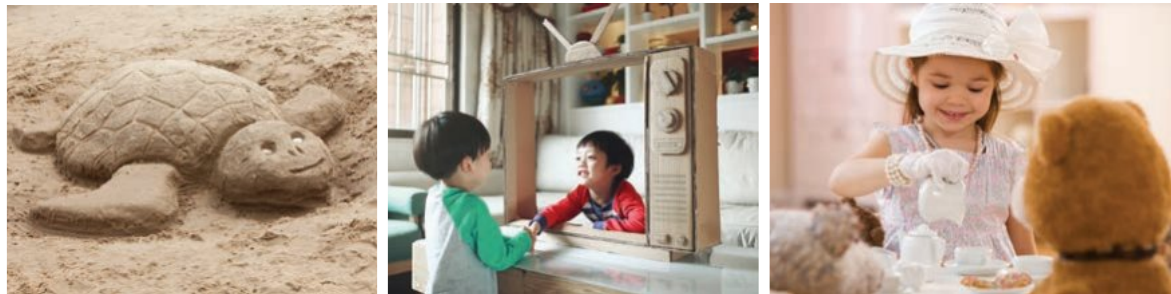
Other examples of symbolic thought include children's use of language and production of drawings.

Animism is another characteristic way of thinking in the pre-operational stage. This is the belief that inanimate objects have feelings and intentions. For example, a child might believe the footpath is angry at them and made them fall over, or that stars twinkle because they are happy.
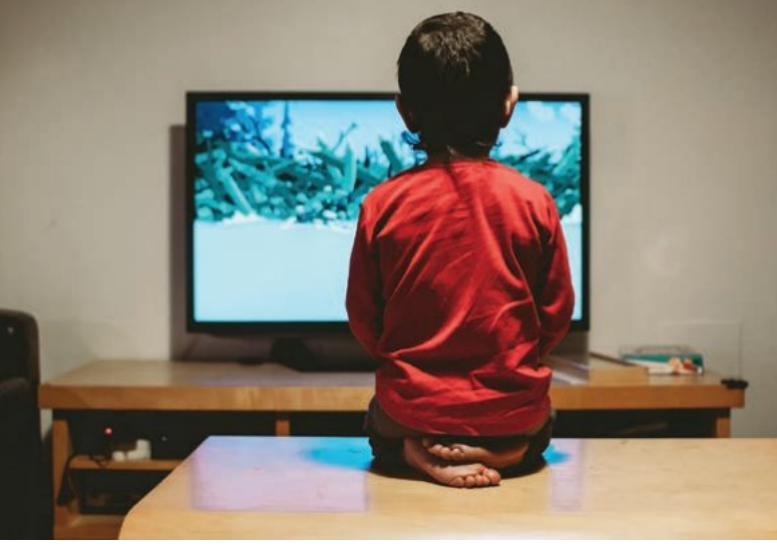
Egocentrism is also characteristic of children in this stage. This is where the child has a limited ability to share or appreciate someone else's point of view. Pre-operational children cannot appreciate that other people have their own viewpoints.
Example
Worked Example: Ella and the Sister Problem
If five-year-old Ella was egocentric in her thinking and you asked if her older sister Zara had a sister, she would probably say 'no'.
Why: This is because she cannot view sisterhood from her sister Zara's point of view – she can only see the relationship from her own perspective.

One more key accomplishment achieved towards the end of the pre-operational stage is transformation. This involves the child understanding that something can change from one state, form or structure to another. For example, if we present a child early in the pre-operational stage with water in various states such as ice and steam (boiling water), the child might identify that ice and steam are water in different states (solid, liquid or gas) but could not explain the process by which these changes occur. By the end of the pre-operational stage, they could propose some explanations.
Concrete operational stage (7-11 years)

Piaget called this the 'concrete' operational stage because children can now perform several mental operations on real, tangible, concrete objects and actual events. One operation is reversibility, which refers to the idea that children understand actions can be undone or reversed. This skill allows children to appreciate there are several ways of looking at things.
Example
Worked Example: Reversibility in Action
Finn can visualise his teddy bear sitting on the window ledge and what might happen if it was pushed. He can also understand that:
- When his favourite ball deflates, it can be filled with air to be played with again
- His stained t-shirt can be washed and look like new
These examples show Finn understands that actions and changes can be reversed.
The ability to understand reversibility leads to a decline in egocentric thinking and gradual proficiency in conservation, another key accomplishment of this stage. This is the understanding that certain qualities of an object remain the same even when its appearance changes. This understanding can be applied to volume, mass, number and length.
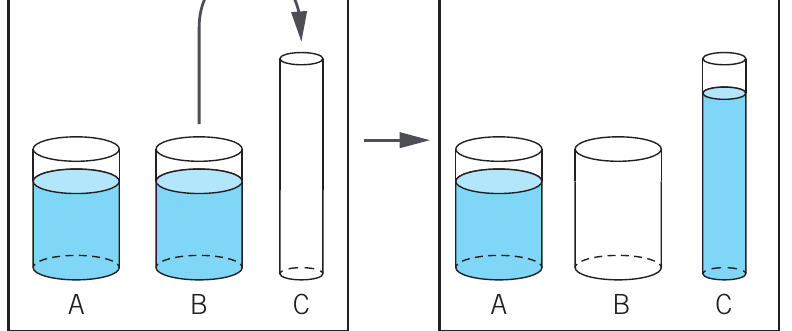
Conservation of volume: This is the understanding that the amount or size (mass) of an object remains the same even when its appearance changes. A common test presents a child with two beakers containing equal amounts of liquid (beaker A and B). The liquid is then poured from one beaker (B) into a different-shaped beaker (C), and the child is asked which beaker contains more. A child who can conserve volume knows that even though the liquid appears higher in beaker C, it still contains the same amount (volume) of liquid as in beaker A or was in beaker B.
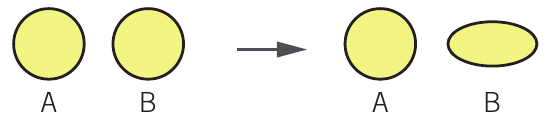
Conservation of mass: This is the understanding that the weight or mass of an object remains the same even when its appearance changes. For example, if you present a child with two identically sized and weighted balls of playdough (A and B) and then change the shape of one (B) by flattening it, the child will understand that both balls (A and B) still have the same amount of playdough.
Conservation of number: This is the understanding that the number of objects remains the same despite a change in their appearance. For example, if you present a child with five coins in two equally spaced rows (row A and B), then change row A so it is more spaced out and longer than row B, a child who can conserve numbers will recognise there is still the same number of coins in both rows A and B.

Conservation of length: This is the understanding that the length of objects remains the same despite a change in their appearance. For example, if you present a child with two matchsticks that are equal in length (A and B) and then change the positioning of matchstick A, a child who can conserve length will recognise that the matchsticks are still the same length.

Note
Another key accomplishment in the concrete operational stage is the ability to use classification. This involves the capacity to sort objects into groups based on features that are similar or different. For example, if a child who can classify is presented with various shapes, they will be able to group them based on whether they are triangles, squares or circles, as well as based on size (large, medium or small) and colour.
Formal operational stage (11+ years)

During the formal operational stage, adolescents become more systematic in their problem-solving attempts. In earlier stages, children tackle problems in a haphazard trial-and-error fashion, but during the formal operational stage, they start to think things through more completely using hypothetical-deductive reasoning. This usually involves developing a hypothesis based on what might logically occur. They can think about all possibilities in a situation beforehand and then test them systematically. This means they will consider possible courses of action and use logic to determine the likely consequences before taking action.
Example
Worked Example: Hypothetical-Deductive Reasoning
Before conducting a chemistry experiment, a formal operational student could hypothesise the expected outcome of mixing chemicals based on understanding their properties.
The Process:
- Consider what might happen (hypothesis)
- Think through all possibilities systematically
- Use logic to predict consequences
- Test the prediction

Thought processes in this stage are increasingly abstract, systematic, logical and reflective. A key accomplishment is the ability to use abstract thinking, which is a way of thinking not reliant on directly observing, visualising, experiencing or manipulating something to understand it. This is particularly important for concepts with no physical reference, such as beauty, love, freedom and morality. The adolescent is no longer limited by what can be directly seen or heard. They can also complete algebraic equations that require using symbols and abstract rules to manipulate them.
Important
Many people (even adults) do not reach this level of cognitive development. Many struggle with abstract concepts and often resort to concrete thinking when things become too abstract.
Evaluation of Piaget's theory
Strengths:
- His theory has inspired countless studies, which have further improved our understanding of children's cognitive development and inspired other theories (including Kohlberg's theory of moral development)
- He anticipated issues that others could fault him on, and hoped future researchers might provide modifications and improvements
- His theory has had an enormous impact on educational practice, changing how children are taught, shaping the modern educational system and improving educational outcomes
Weaknesses:
- Piaget underestimated children's cognitive development generally. Research has found that children understand object permanence much earlier than first thought (at 3-4 months); pre-operational children have less egocentrism and animism than Piaget believed; and only 33% of the population reaches the formal operational stage
- While the sequencing of stages is set, timing for each stage varies considerably, particularly between cultures. Piaget may have seriously underestimated the powerful influence of cultural factors on cognitive development. His tests may have been culturally biased, leading to non-Western cultures being misrepresented
- Piaget's tasks relied on children being able to reflect and report on their own reasoning. Some experiments were also overcomplicated. Where tasks have been simplified, children have been found to have cognitive abilities beyond what Piaget expected, suggesting an underestimation of children's competence
- Piaget's observations were biased as they were of his own children, which is also a very small sample size. He had no controls for comparisons and did not use statistical analysis
- Piaget may have underestimated the role of relationships and social influences in providing improved understanding of concepts throughout development
Vygotsky's sociocultural theory of cognitive development
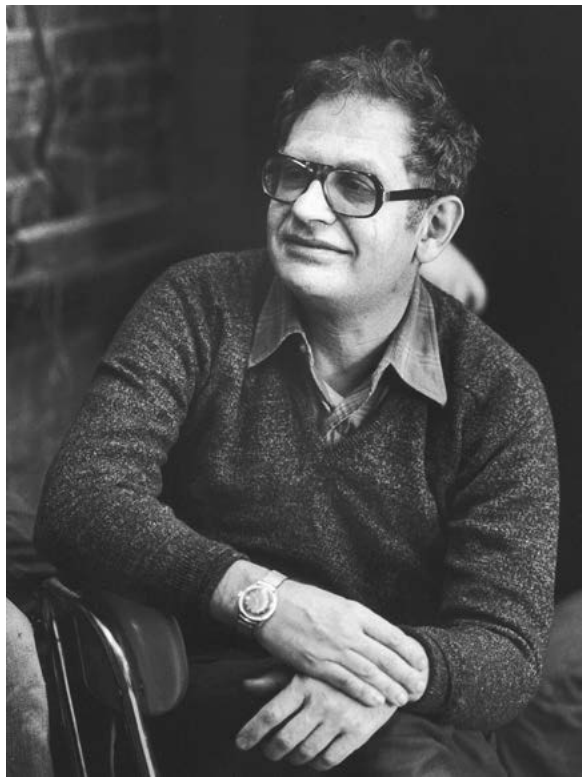
Lev Vygotsky presented his own theory of cognitive development at about the same time Jean Piaget was formulating his. Both men presented independent theories with much in common, though there are important differences between them.
Vygotsky's sociocultural theory proposes that cognitive development in early childhood is advanced through social interaction with other people, such as parents, caregivers and peers, particularly those who are more skilled than the child.
Important
Key Difference from Piaget:
Unlike Piaget's notion that a child's development must occur first for learning to take place, Vygotsky argued that learning is an essential part of the developing process and that cognitive development is social in nature.
He proposed that initially, a child responds to the world only via actions, and then later, society provides meaning for those actions through social interaction. For example, a child may reach for an object and fail to grasp it. His parents may interpret this as a pointing gesture. Their interpretation provides the meaning of the movement to the child (even if this was not the reason he initially made the gesture). According to Vygotsky, learning has its basis in interacting with other people. Once this has occurred, the information is then integrated at the individual level.
Zone of proximal development (ZPD)
One of the most recognised aspects of Vygotsky's sociocultural theory is his concept of the zone of proximal development (ZPD). This is the distance between the child's actual developmental level as determined by independent problem-solving and their level of potential development as determined by problem-solving under adult guidance or in collaboration with more capable peers.
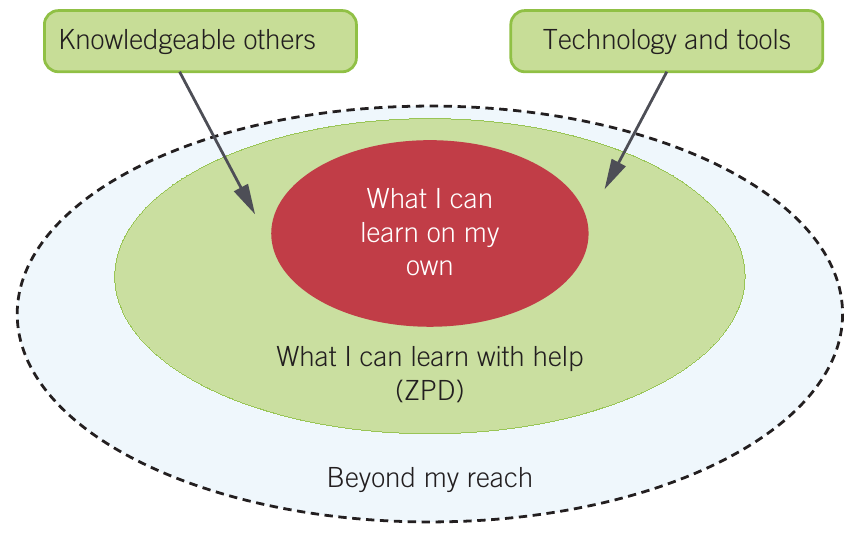
The ZPD therefore includes all the knowledge and skills that a child cannot yet understand or perform on their own but is capable of learning with guidance. Often, children can stretch their skills and knowledge simply by observing someone slightly more advanced than they are. As they master new skills, children progressively extend their ZPD.
Note
The concept of the ZPD means that a caregiver, teacher or more experienced peer, referred to by Vygotsky as a more knowledgeable other, can explore with the child areas for which the child is cognitively prepared but requires support and social interaction to fully develop. This is done by providing the learner with scaffolding, or supports of various kinds, to assist in developing their understanding or skills by allowing the child to participate in more complex and competent ways.
When social interaction is targeted towards the child's ZPD, the child can engage in more advanced cognitive activities than would otherwise be the case. A child's ZPD is constantly changing with the child's increasing level of competence.
Example
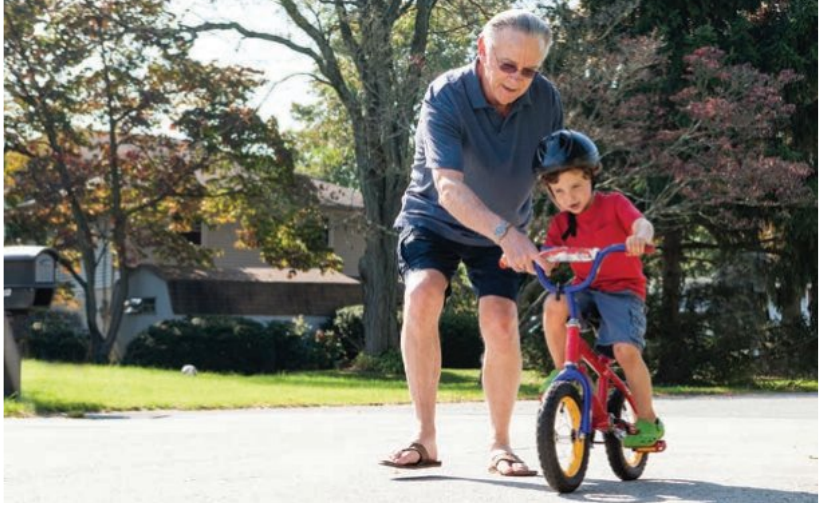
Worked Example: Roman Learning to Ride a Bike
Five-year-old Roman is learning to ride a bike. His current bike has training wheels, and he cannot ride without them unless his grandfather holds onto the back of his bike.
Roman's ZPD: Riding the bike without training wheels with his grandfather helping him stabilise the bike.
The Process:
- Current ability: Can ride with training wheels
- ZPD: Can ride without training wheels with support
- Future ability: After some practice, he can ride the bike on his own
This example highlights the power of social influence in cognitive development, particularly in early childhood.
Role of language

Vygotsky also emphasised that language is integral to cognitive development as children start to understand meanings associated with social interactions. Initially, preschool children use speech as communication to produce change in others. Later, we see the beginnings of 'private speech', where children talk aloud to themselves to plan and regulate their actions and achieve personal goals. This private speech then becomes more 'internalised' within our own minds rather than aloud, converging with our thoughts and allowing us to direct, control and reflect on our thinking. Eventually, language itself splits into an inner voice for thinking and problem-solving and an outer voice for communicating with others. From this, it is easy to see how language and social interaction play such a prominent role in cognitive development.
Evaluation of Vygotsky's theory
Strengths:
- It acknowledges that humans are social beings and that society and social interactions have an enormous impact on a child's cognitive development. It therefore also acknowledges that cultural differences exist in cognitive development
- It allows for the personalisation of instruction and activities at school so that students' learning needs are addressed in terms of what and how they learn. This has promoted greater flexibility in educational methods
- It allows learners to monitor and manage their own progress and encourages them to keep striving to do better and improve their learning outcomes
Weaknesses:
- It focuses more on the processes through which children develop rather than the characteristics that children of certain ages are likely to demonstrate
- It does not give a precise picture of a child's learning needs, present capability level or motivational influences. This is because the role of the individual is given less importance than the role of community and social learning
- It does not recognise that some individuals (such as gifted students or child prodigies) can develop their own personal understandings that allow them to progress beyond what they might learn through social interaction
Comparison of Piaget and Vygotsky
| Element | Piaget | Vygotsky |
|---|---|---|
| Acknowledgement of social and cultural factors | No, states that cognitive development is mostly universal across cultures. Maintains that cognitive development stems largely from independent explorations in which children construct knowledge on their own | Yes, assumes cognitive development varies across cultures. Proposes that cognitive development stems from social interactions as children and others co-construct knowledge |
| Emphasis on 'stages' of development | States that there are four age-related stages of cognitive development | Does not state any general stages of cognitive development |
| Role of language | The role of language is not emphasised, but it is suggested that it allows children to label things | Suggests that language plays a powerful role in shaping children's thoughts |
| Key processes | Accommodation and assimilation | Zone of proximal development (ZPD) and scaffolding |
Kohlberg's stages of moral development
Moral development is thought to involve changes in moral behaviour over time, including the values, attitudes and behaviours we adopt towards people in society, based on social and cultural norms, rules and laws. A key component of moral development is the growth of one's sense of morality, which is the ability to distinguish right from wrong and behave accordingly.
Kohlberg developed a model of moral development to explain how people acquire this sense of right and wrong. He proposed that moral development is directly affected by cognitive development. This is because how we deal with moral issues relies on our ability to think and process information.
Note
Much of Kohlberg's research involved presenting people with short stories or scenarios (such as the Heinz dilemma) and recording what they thought should be done and why. This allowed Kohlberg to investigate changes in moral development and reasoning over the lifespan and led to the creation of his stage theory of moral reasoning.
Three levels and six stages
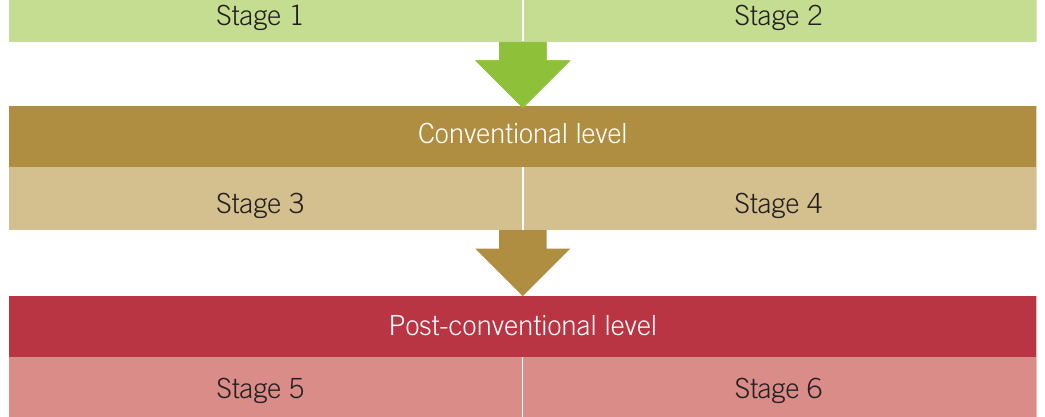
This theory is based on the idea that people progress through three levels of moral development, each divided into two stages (or sub-levels). Each of the six stages represents a different approach to moral thinking, where the individual determines what is 'right' and 'wrong'. Kohlberg believed that everybody went through each of the six stages in order and that no stage could be skipped.
Pre-conventional level (childhood)
At this level, children think in terms of external authority, where behaviours are described as wrong if they are punished and right if they lead to some positive consequence.
- Stage 1: Moral decisions are based primarily on fear of punishment or the need to be obedient
- Stage 2: Moral reasoning is guided by satisfying one's own self-interest, which could involve making some sort of bargain
This is demonstrated by younger children, who tend to think in terms of the power exerted by external authorities. There is a clear focus on punishment as an overriding factor influencing behaviour.
Conventional level (many adolescents and adults)
Older children view rules as necessary for maintaining social order. Rules are followed not to avoid punishment but to show how virtuous they are and to win approval from others. At this level, moral thinking is somewhat inflexible, as rules are seen as absolute guides that should be enforced rigidly.
- Stage 3: Reasoning is guided by conforming to what other important people believe is of value
- Stage 4: Moral reasoning is determined by conforming to society's rules and laws
Post-conventional level (some or few adults)
At this level, adolescents and adults decide on a personal set of ethics. Acceptance of rules is less rigid and moral thinking tends to be more flexible. At this level, it is accepted that if personal ethics and society's rules conflict, one may choose personal beliefs or ethics to guide behaviour.
Example
Worked Example: Post-Conventional Moral Reasoning
At the post-conventional level, one might support a news reporter who chooses to go to jail rather than reveal an information source who was promised confidentiality.
Why: This demonstrates choosing personal ethics (keeping a promise of confidentiality) over society's rules (obeying a court order), which is characteristic of post-conventional moral reasoning.
- Stage 5: Reasoning is determined by careful consideration of all alternatives and then trying to balance human rights with the laws of society
- Stage 6: Reasoning is determined by abstract principles while simultaneously emphasising equity and justice
Evaluation of Kohlberg's theory
Strengths:
- A review of over 45 studies demonstrated that people do progress through the stages of moral development in the proposed order. As children get older, moral reasoning does change in the predicted directions
- Cross-cultural studies have found evidence of Kohlberg's first four stages in many cultures
- It has been found that delinquents operate at lower levels of moral development than non-delinquents, supporting Kohlberg's theory
Weaknesses:
- It has been suggested that most people never reach stage 6, and that some people may actually skip stages or move in reverse order, which contradicts Kohlberg's proposals
- There has been criticism of the dilemmas used by Kohlberg. Specifically, they are difficult for children to relate to, too hypothetical, too culturally biased and too biased towards 'male' ideas of morality. Regarding this last concern, Kohlberg's dilemmas focus on a 'justice orientation' (based on law, equality and individual rights) at the expense of a 'care orientation' (based on caring, concern for others and avoiding pain). Although people exhibit a mixture of justice and care orientations regardless of gender, Kohlberg's focus on justice in his original stages is biased towards traditionally considered 'male' ideas of morality. This can be explained by the fact that Kohlberg's theory was based on interviews with men only
- Kohlberg's dilemmas may not be valid predictors of moral reasoning in certain cultures. The dilemmas have inbuilt values characteristic of Western society to a deeper level than Kohlberg appreciated
- The dilemmas focused on moral thinking as distinct from actual moral behaviour in real-life situations. Some evidence suggests that moral reasoning is somewhat predictive of moral behaviour
- It is possible for people to show signs of several adjacent levels of moral reasoning at the same time
Remember!
Summary
Key Points to Remember:
-
Cognitive development involves changes in mental abilities including thinking, learning, memory, reasoning and problem-solving throughout life
-
Gibson and Walk's visual cliff experiment demonstrated that most infants can discriminate depth as soon as they can crawl, suggesting depth perception is important for survival
-
Piaget's theory proposed four stages of cognitive development: sensorimotor (0-2 years), pre-operational (2-7 years), concrete operational (7-11 years) and formal operational (11+ years), with key accomplishments at each stage
-
Assimilation and accommodation are the two cognitive processes by which children adapt to their changing world according to Piaget
-
Vygotsky's sociocultural theory emphasised that cognitive development is advanced through social interaction, with the zone of proximal development (ZPD) highlighting the importance of learning with guidance from more knowledgeable others
-
Kohlberg's theory of moral development proposed three levels (pre-conventional, conventional and post-conventional) with six stages, showing how moral reasoning develops from childhood through adulthood