DNA, Genes & Chromosomes (AQA A-Level Biology): Revision Notes
📚Revision Notes
Structures of Ribonucleic Acid
Introduction to RNA
Ribonucleic acid (RNA) plays a vital role in transferring genetic information from DNA to create proteins. While DNA stores the genetic code in the nucleus of eukaryotic cells, protein synthesis occurs in the cytoplasm. RNA serves as the molecular messenger that carries this coded information from the nucleus to where proteins are assembled.
Note
RNA acts as the crucial link between genetic information storage (DNA) and protein production, making it essential for all cellular functions that depend on proteins.
Basic structure of RNA
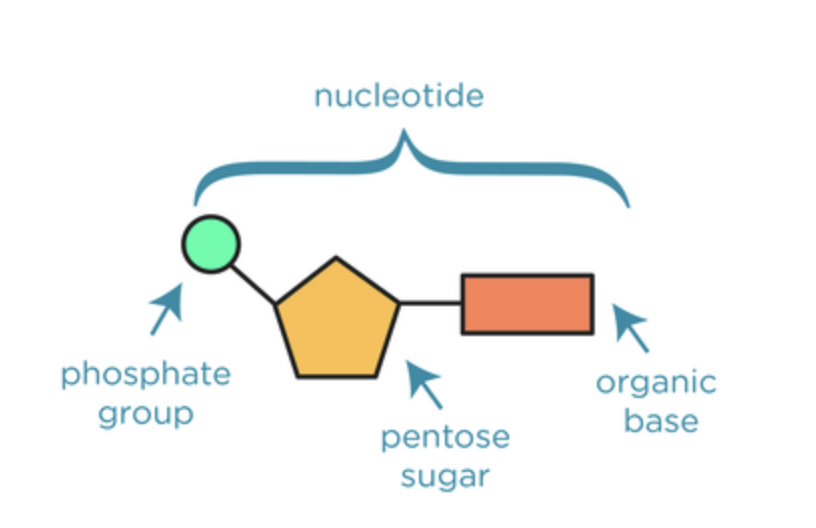
RNA is a polymer composed of repeating mononucleotide subunits linked together to form a single strand. Each nucleotide contains three components:
- Pentose sugar: ribose (compared to deoxyribose in DNA)
- Organic bases: adenine (A), guanine (G), cytosine (C), and uracil (U)
- Phosphate group: links the nucleotides together
Unlike DNA's double helix structure, RNA typically exists as a single polynucleotide chain, though it can fold and form complex three-dimensional shapes.
Types of RNA in protein synthesis
Two main types of RNA are essential for protein synthesis:
Messenger RNA (mRNA)
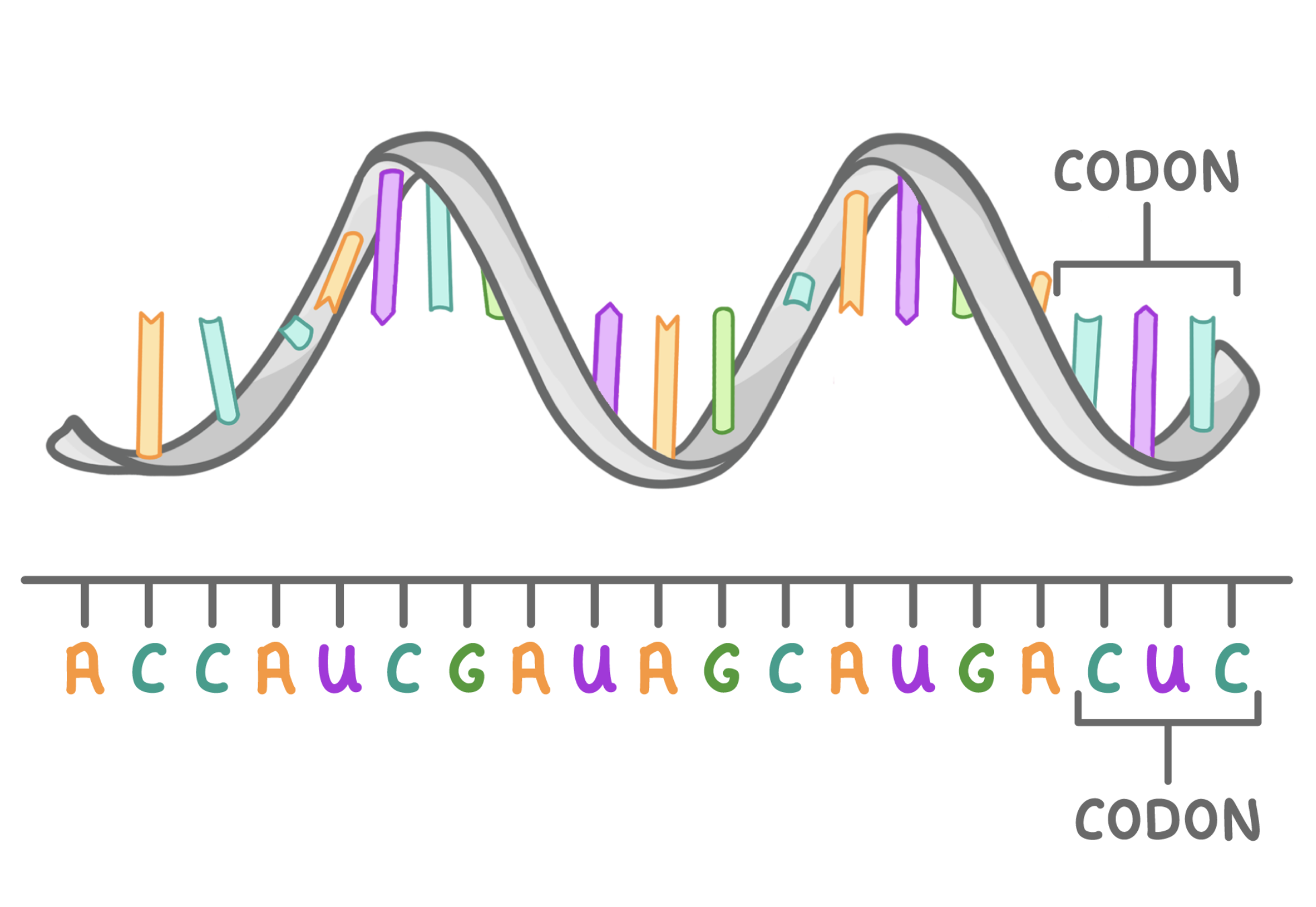
Messenger RNA (mRNA) is a lengthy single-stranded molecule containing thousands of nucleotides arranged in a linear sequence. Its key features include:
- Function: Carries genetic information from DNA in the nucleus to ribosomes in the cytoplasm
- Structure: Single helix formation that can pass through nuclear pores
- Information content: Contains codons - sequences of three bases that specify individual amino acids
- Variability: Different mRNA molecules exist for different proteins, with varying lengths depending on the protein they encode
The base sequence of mRNA directly corresponds to a section of DNA through a process called transcription. Once in the cytoplasm, mRNA associates with ribosomes where it serves as a template for protein assembly.
Transfer RNA (tRNA)
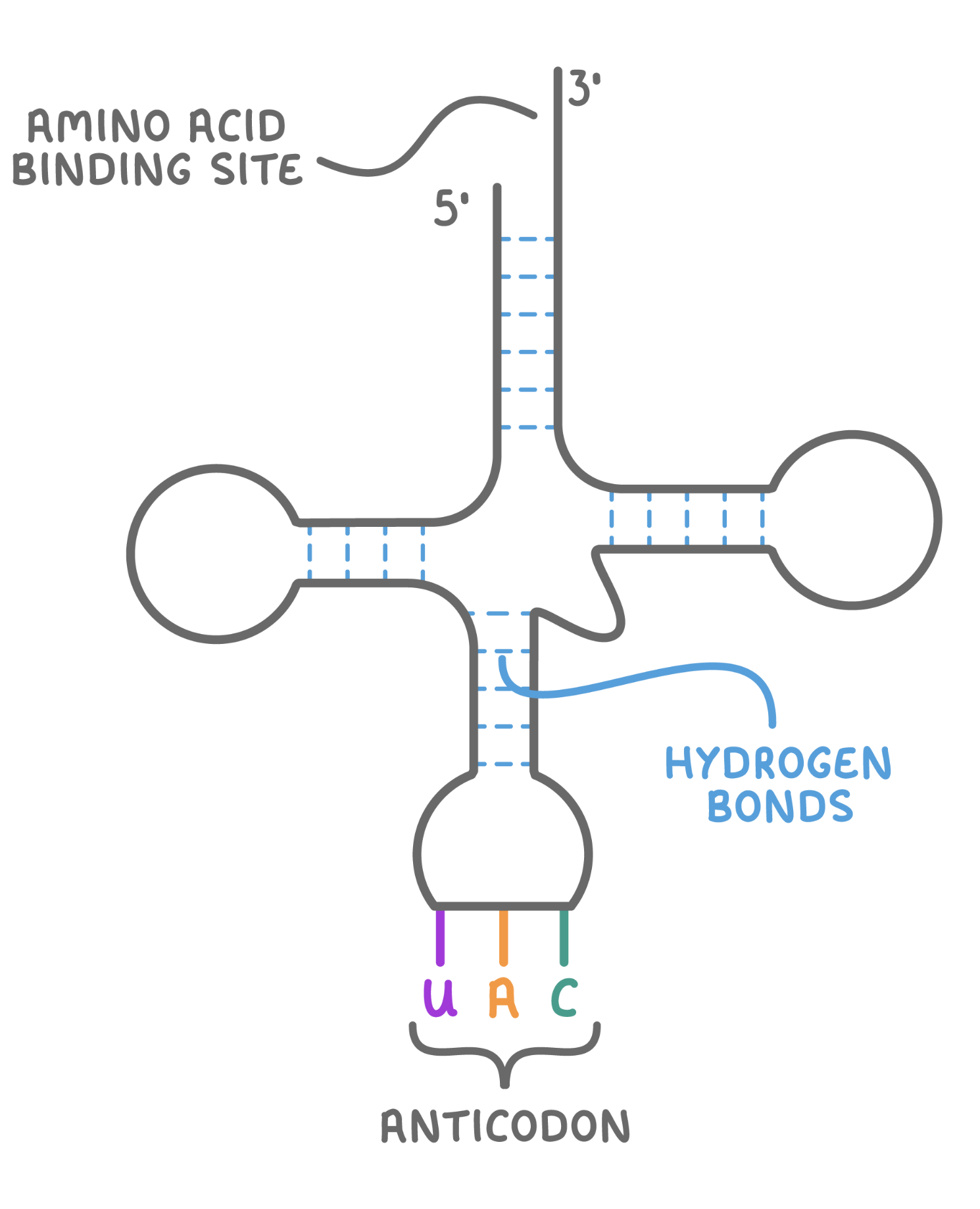
Transfer RNA (tRNA) is a relatively small molecule consisting of approximately 80 nucleotides. Its distinctive features include:
- Shape: Folded into a characteristic clover-leaf structure with one end extending beyond the others
- Function: Transports specific amino acids to the ribosome during protein synthesis
- Anticodon: Contains a three-base sequence called an anticodon that pairs with complementary codons on mRNA
- Specificity: Each tRNA molecule is specific to one particular amino acid
- Diversity: Multiple types exist, with each binding to a different amino acid
The anticodon region allows tRNA to recognise and bind to the correct position on mRNA during protein synthesis, ensuring amino acids are assembled in the proper sequence.
Example
Example: tRNA-mRNA Pairing
If an mRNA codon reads AUG (which codes for methionine), the corresponding tRNA must have the anticodon UAC to pair correctly:
- mRNA codon: 5'-AUG-3'
- tRNA anticodon: 3'-UAC-5'
This ensures the correct amino acid (methionine) is added to the growing protein chain.
Base pairing in RNA
RNA can form complementary base pairs with both DNA and other RNA molecules.
Important
Base Pairing Rules for RNA:
- Guanine pairs with cytosine (G-C)
- Adenine pairs with uracil in RNA (A-U) or with thymine in DNA (A-T)
Remember: RNA uses uracil (U) instead of thymine (T), which is a key difference from DNA!
This base pairing is essential for:
- mRNA formation during transcription (RNA pairing with DNA)
- tRNA anticodon binding to mRNA codons during protein synthesis
- RNA folding into complex three-dimensional structures
Key terminology
Note
Important Terms to Remember:
- Codon: A sequence of three bases on mRNA that codes for a single amino acid
- Anticodon: The complementary three-base sequence on tRNA that pairs with a specific codon
- Genome: The complete set of genes in a cell, including those in mitochondria and chloroplasts
- Proteome: The full range of proteins produced by the genome under specific conditions
Comparison of nucleic acids
| Feature | DNA | Messenger RNA | Transfer RNA |
|---|---|---|---|
| Chain structure | Double polynucleotide chain | Single polynucleotide chain | Single polynucleotide chain |
| Size | Largest molecule | Intermediate size | Smallest molecule |
| Shape | Double-helix | Single-helix (except in a few viruses) | Clover-leaf structure |
| Pentose sugar | Deoxyribose | Ribose | Ribose |
| Organic bases | A, G, C, T | A, G, C, U | A, G, C, U |
| Location | Mainly nucleus | Manufactured in the nucleus, found throughout the cell | Manufactured in the nucleus, found throughout the cell |
| Stability | Very stable chemically | Less stable, individual molecules broken down within days | More stable than mRNA but less stable than DNA |
| Quantity | Constant for all cells of a species (except gametes) | Varies from cell to cell and with level of metabolic activity | Varies from cell to cell and with level of metabolic activity |
Summary
Key Points to Remember:
- RNA is a single-stranded polymer made of nucleotides containing ribose sugar, phosphate groups, and four bases (A, G, C, U)
- mRNA carries genetic information from nucleus to cytoplasm as codons (triplets of bases coding for amino acids)
- tRNA has a clover-leaf structure with anticodons that pair with mRNA codons during protein synthesis
- RNA uses uracil instead of thymine, allowing A-U base pairing during transcription and translation
- Both mRNA and tRNA are less stable than DNA, allowing for rapid cellular responses to changing protein demands