Movement in the Phloem (AQA A-Level Biology): Revision Notes
📚Revision Notes
Movement in the Phloem
What is translocation?
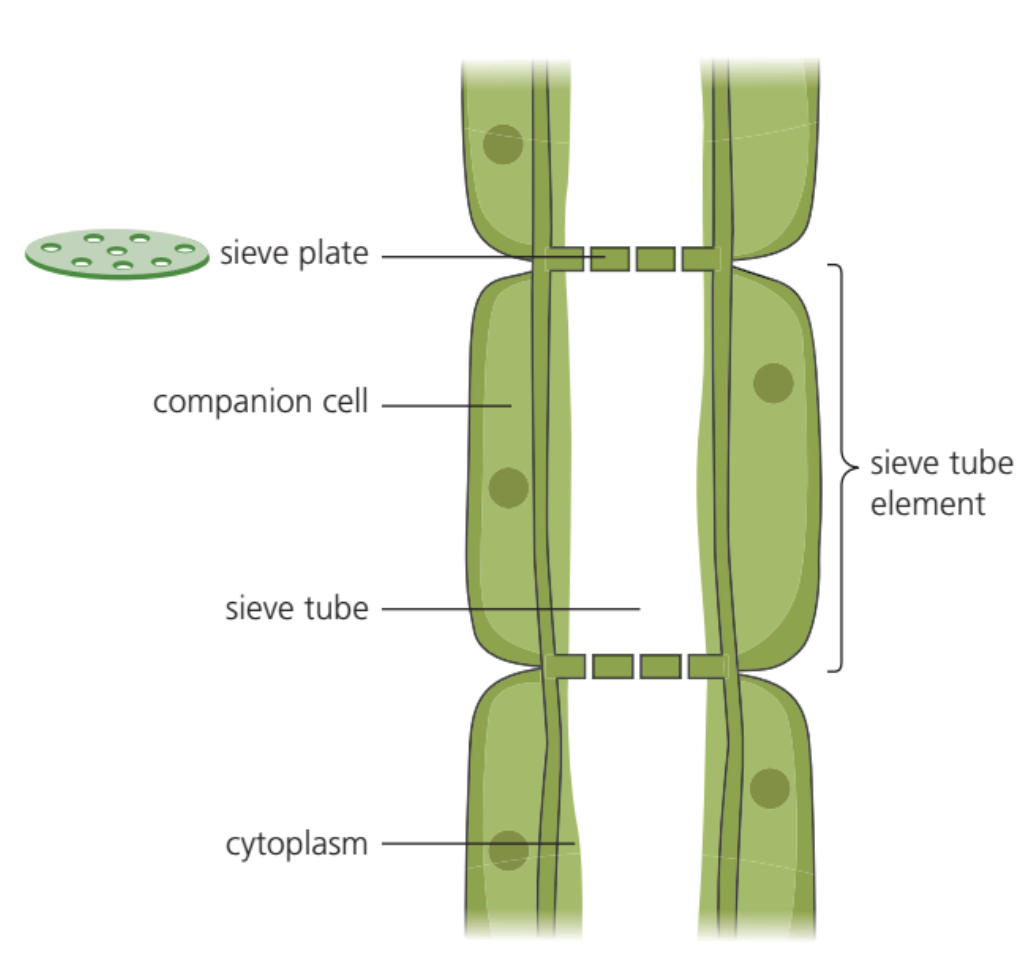
Translocation is the transport process that moves organic molecules and mineral ions from one part of a plant to another. In flowering plants, this occurs through specialised tissue called phloem. The phloem consists of sieve tube elements - elongated structures arranged end-to-end with perforated walls called sieve plates that allow substances to flow between cells.
Note
Each sieve tube element works alongside a companion cell that contains a nucleus and many mitochondria. These companion cells provide metabolic support and control the loading and unloading of substances.
Sources and sinks
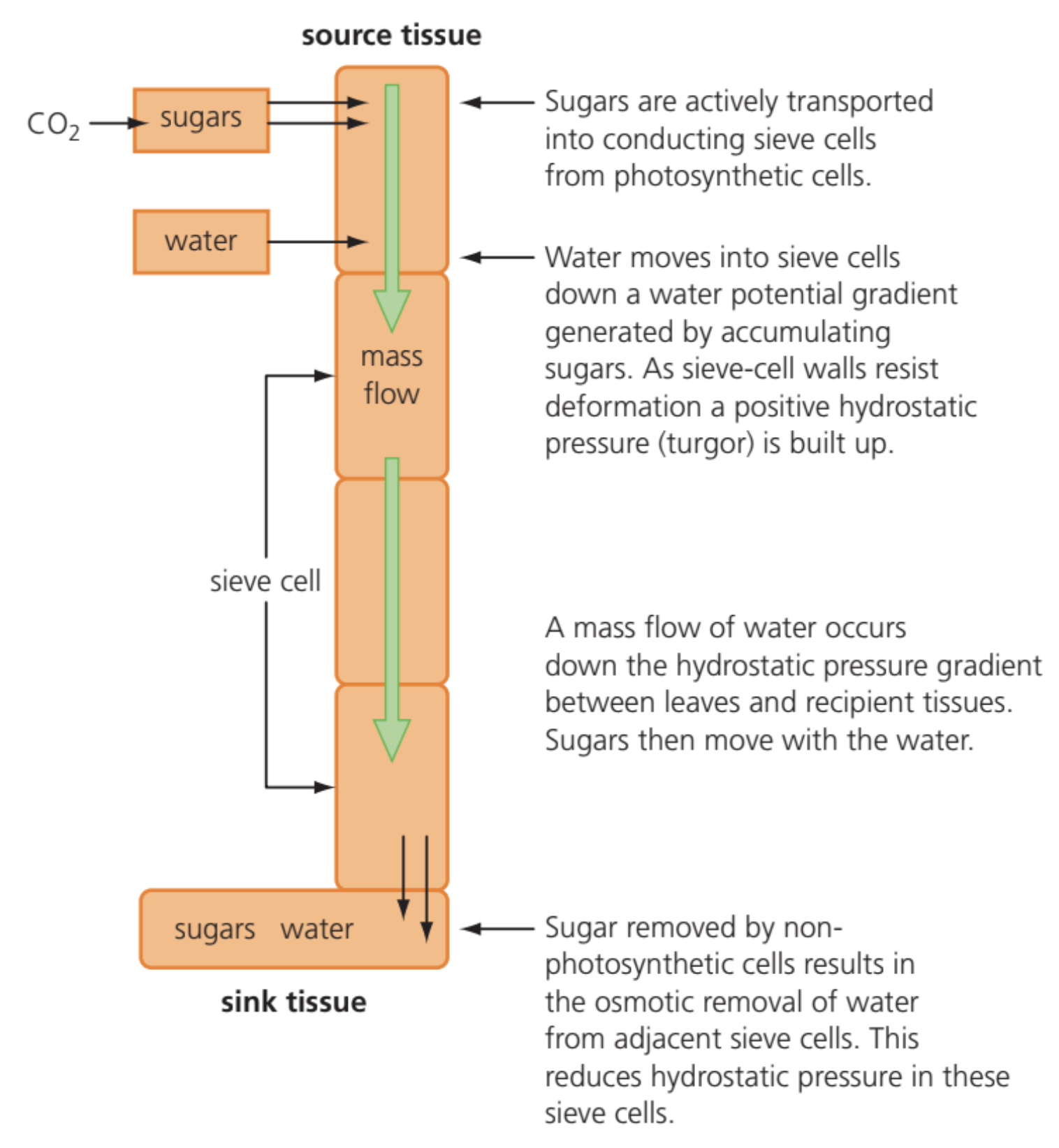
Plants transport sugars from sources to sinks through the phloem. Sources are locations where sugars are produced during photosynthesis (typically leaves), while sinks are areas where sugars are either used immediately or stored (such as roots, fruits, or growing tissues).
Important
The substances transported include sucrose, amino acids, and inorganic ions like potassium, chloride, phosphate and magnesium.
The mass flow theory
Since transport in phloem occurs too rapidly for simple diffusion, scientists have developed the mass flow theory to explain translocation.
Important
This theory describes how bulk movement of solutions occurs through pressure differences and involves three distinct phases.
Phase 1: Loading sucrose into sieve elements
The first stage involves moving sucrose from photosynthesising cells into the phloem transport system:
- Sucrose produced during photosynthesis diffuses from chloroplast-containing cells into adjacent companion cells
- Companion cells actively pump hydrogen ions out of their cytoplasm into surrounding cell walls using ATP
- These hydrogen ions create a concentration gradient and diffuse back through co-transport proteins in the companion cell membrane
- Sucrose molecules are transported alongside the hydrogen ions through this co-transport mechanism
- The sucrose then moves from companion cells into the connected sieve tube elements
Phase 2: Mass flow through sieve tubes
Once sucrose enters the phloem system, mass flow creates bulk movement of the solution:
- Active loading of sucrose into sieve tubes at the source creates a high solute concentration
- This lowers the water potential inside the sieve tubes compared to surrounding xylem tissue
- Water moves by osmosis from xylem into sieve tubes, generating high hydrostatic pressure at the source
- At sink regions, sucrose is actively removed from sieve tubes, creating lower solute concentrations
- This results in higher water potential in sieve tubes at the sink, causing water to leave by osmosis
- The pressure difference between source (high pressure) and sink (low pressure) drives mass flow of the sucrose solution down the pressure gradient
Note
The pressure gradient is the driving force behind mass flow - high pressure at the source pushes the solution towards low pressure at the sink.
Phase 3: Unloading at sink tissues
The final phase involves removing sucrose from the transport system:
- Companion cells actively transport sucrose out of sieve tube elements at sink locations
- Sink cells then use the sucrose for respiration or convert it to starch for storage
- This removal maintains the low sucrose concentration needed to sustain the pressure gradient
Evidence for and against mass flow theory
| Evidence supporting mass flow | Evidence questioning mass flow |
|---|---|
| Pressure exists within sieve tubes (sap released when cut) | Function of sieve plates unclear - may hinder rather than help flow |
| Higher sucrose concentration in leaves than roots | Not all solutes move at the same speed as expected |
| Flow occurs during daylight but stops when leaves shaded | Sucrose moves at different rates to different regions |
| Sucrose increases in leaves followed by increases in phloem | |
| Metabolic poisons inhibit translocation | |
| Companion cells contain many mitochondria for ATP production |
Note
Links to other topics
The mass flow mechanism connects to several other biological processes:
- ATP synthesis during respiration (provides energy for active transport)
- Water potential and osmosis (drives water movement)
- Photosynthesis (produces the sucrose being transported)
Summary
Key Points to Remember:
- Translocation moves organic substances from sources to sinks via phloem tissue
- Mass flow theory explains transport through three phases: loading, bulk flow, and unloading
- Active transport using ATP is essential for both loading and unloading sucrose
- Pressure gradients created by osmotic water movement drive the bulk flow of solutions
- Evidence exists both supporting and questioning aspects of the mass flow mechanism