Specialised Plant Cells (AQA A-Level Biology): Revision Notes
📚Revision Notes
Specialised Plant Cells
Plants have evolved specialised cells that are perfectly adapted to their specific functions. Two crucial cell types involved in mass transport are root hair cells and xylem vessels, each with unique structural features that enable efficient substance exchange and transport.
Note
These specialised cells represent perfect examples of how structure directly relates to function in plant biology - every structural feature has evolved to maximise efficiency in their specific roles.
Root hair cells
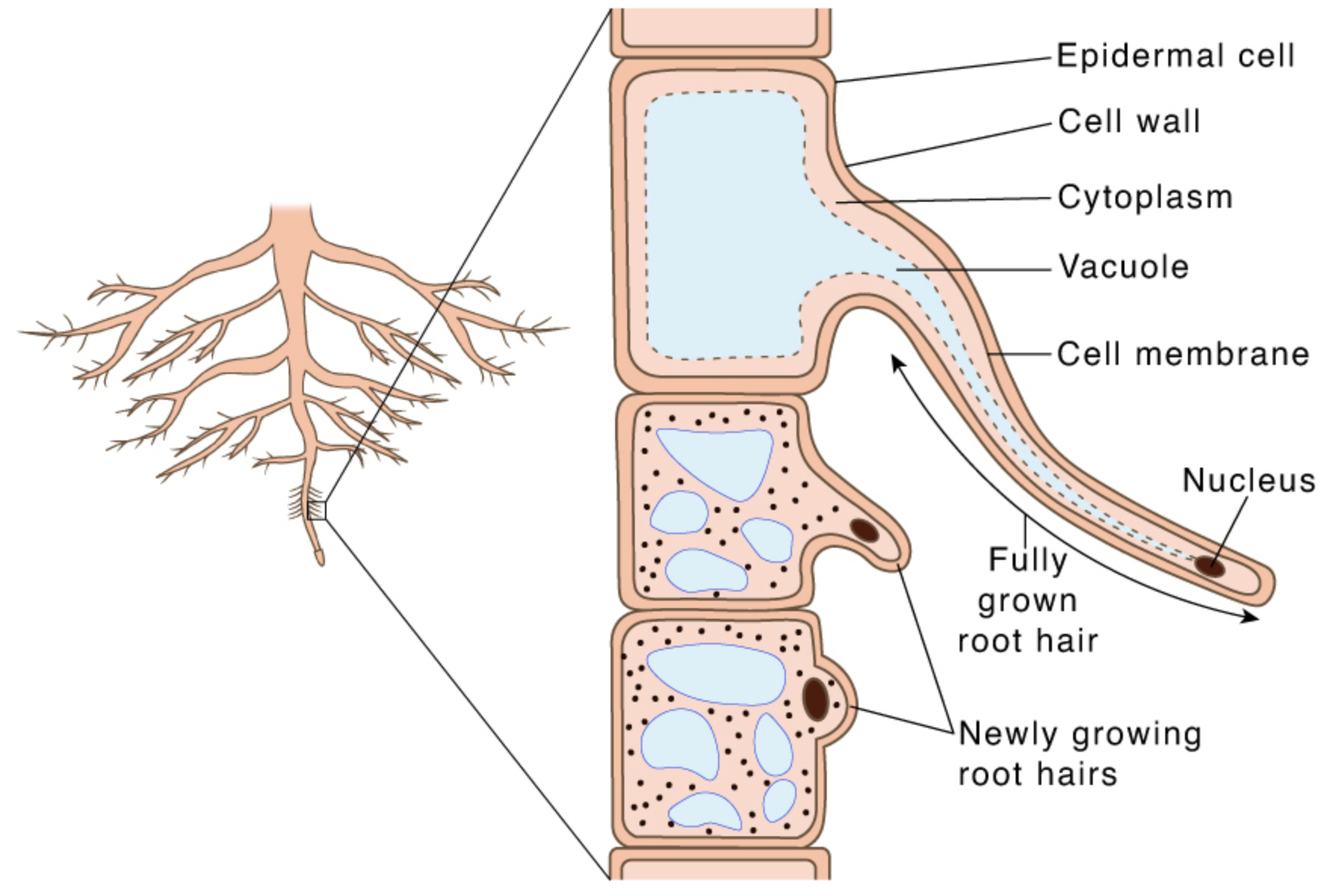
Root hair cells are microscopic extensions that project from the epidermis of plant roots. These cells represent one of the most elegant examples of how structure relates directly to function in plant biology.
Structure and adaptations
Each root hair cell consists of a long, thin projection that dramatically increases the surface area available for absorption. The basic structure includes a cellulose cell wall that provides shape and protection, while the cytoplasm contains the cellular machinery necessary for active processes. A large central vacuole occupies much of the cell volume, and the nucleus controls cellular activities.
The root hair itself is simply an extension of the main cell, creating a finger-like projection that can penetrate between soil particles. This design maximises contact with the soil solution where water and dissolved minerals are located.
Important
The root hair is not a separate cell - it's simply an elongated extension of the epidermal cell. This means the surface area can increase dramatically without requiring additional cellular machinery or energy investment.
Function in absorption
Root hair cells serve as the primary exchange surfaces in plants, responsible for absorbing both water and mineral ions from the soil. Water uptake occurs through osmosis - the movement of water molecules from an area of higher water potential to lower water potential through a partially permeable membrane.
The absorption process involves both passive and active mechanisms. While water moves by osmosis down its potential gradient, essential mineral ions are often absorbed by active transport, allowing plants to take up nutrients even when their concentration in soil is lower than inside the root.
Note
The extensive surface area created by thousands of root hairs per square millimetre of root surface ensures maximum efficiency in this vital absorption process. Without this specialisation, plants would struggle to obtain sufficient resources for growth and metabolism.
Xylem vessels
Xylem vessels represent a remarkable example of cellular sacrifice for the greater good of the plant. These specialised cells undergo a complete transformation during development, ultimately dying to create the most efficient water transport system possible.
Development and structure
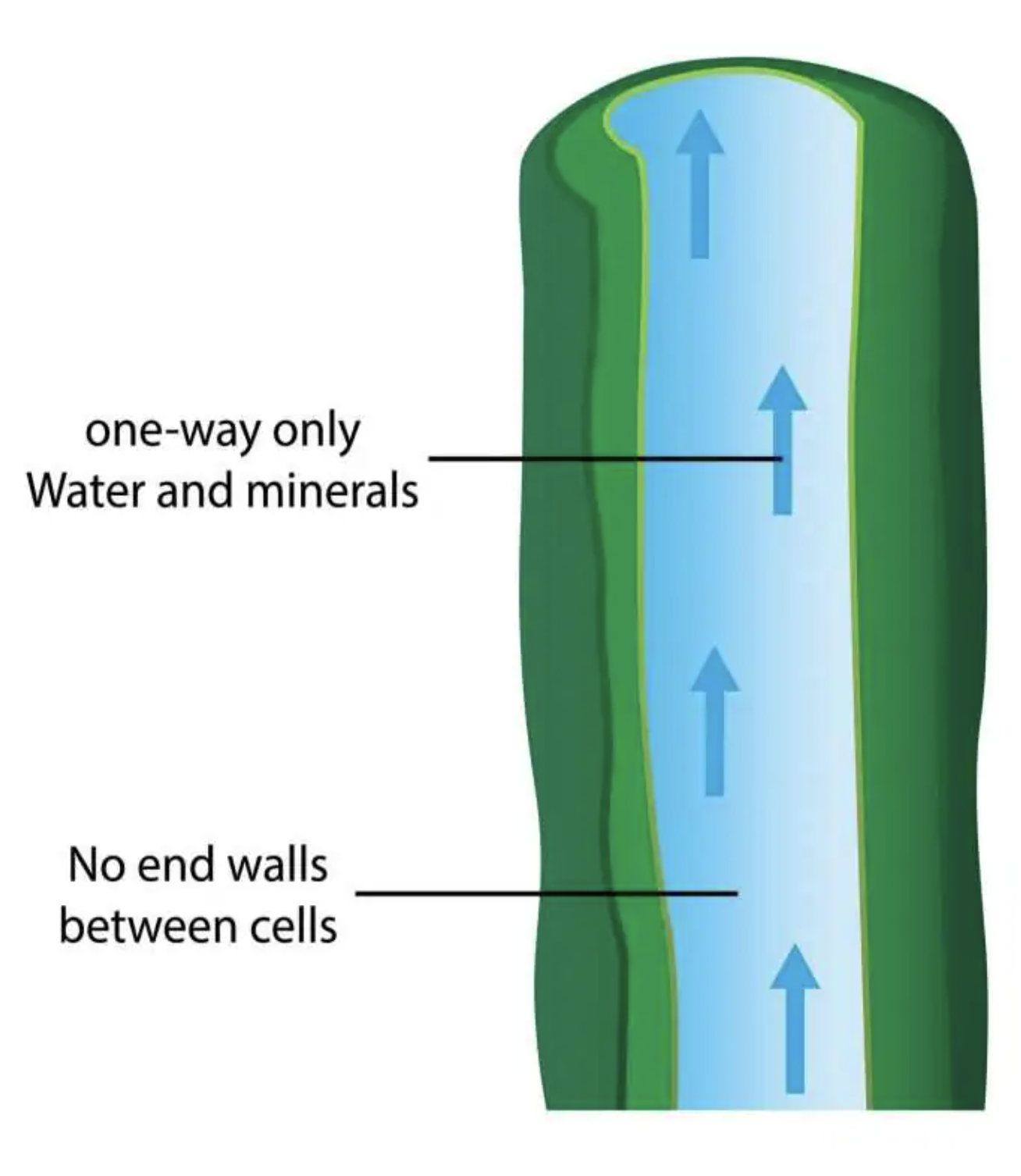
Xylem vessels begin life as normal living cells, but as they mature, they undergo significant changes. The cell walls become thickened and impregnated with lignin, a complex polymer that provides exceptional strength and waterproofing. This lignification process creates reinforced walls that can withstand the negative pressures generated during water transport.
As development continues, the living contents of the cell - including the cytoplasm and nucleus - break down and disappear completely. What remains is essentially a hollow tube with reinforced walls, creating a hollow centre that allows unimpeded water flow.
Structural adaptations for transport
The mature xylem vessel displays several key features that optimise water transport. The lignified walls provide mechanical strength to prevent collapse under the negative pressure created by transpiration. This pressure can be substantial, equivalent to several atmospheres of suction.
Important
The negative pressure in xylem vessels can reach several atmospheres - equivalent to the suction created by a powerful vacuum pump. Without lignin reinforcement, these vessels would collapse instantly under such extreme conditions.
Many xylem vessels show spiral thickening of lignin rather than continuous thickening around the entire circumference. This spiral pattern offers several advantages: it maintains structural strength while allowing some flexibility as the plant grows, prevents excessive use of resources that would be required for complete lignification, and still provides adequate support for water transport.
Advantages of dead cells
The fact that xylem vessels are composed of dead cells provides significant functional advantages. Dead cells cannot actively interfere with water movement, creating an unobstructed pathway from roots to leaves. There is no cytoplasm to impede flow, no metabolic processes consuming energy or resources, and no risk of cellular damage from the high-pressure differentials involved in transpiration.
This cellular sacrifice enables the transpiration stream - the continuous flow of water from soil, through the plant, to the atmosphere - to operate with maximum efficiency. The hollow vessels act like biological plumbing, creating a direct route for mass flow of water containing dissolved minerals.
Note
This concept of "cellular sacrifice" is unique in biology - the xylem vessels literally die to serve their function more effectively. It's the ultimate example of the needs of the organism taking priority over individual cell survival.
Links to mass transport
Both cell types work together in the plant's transport system. Root hair cells create the entry point for water and minerals into the plant, while xylem vessels provide the superhighway for moving these substances to where they're needed. This coordinated system links to broader concepts in plant physiology, including transpiration, photosynthesis requirements, and structural support.
Summary
Key Points to Remember:
- Root hair cells are extensions of epidermal cells that maximise surface area for absorption of water and mineral ions
- Xylem vessels are dead, hollow tubes with lignified walls that transport water under negative pressure
- Both cell types show perfect structure-function relationships - their anatomy directly supports their specific roles
- The sacrifice of xylem vessel contents creates the most efficient transport system possible
- These specialisations work together to maintain the transpiration stream essential for plant survival