The Problem of Poverty (AQA A-Level Economics): Revision Notes
📚Revision Notes
The Problem of Poverty
What is poverty?
Poverty refers to the condition of being extremely poor, lacking sufficient money or income to cover basic necessities such as food, clothing and shelter. The World Bank provides a comprehensive description of poverty, highlighting that it encompasses multiple dimensions:
- Experiencing hunger and lacking adequate shelter
- Being ill without access to medical care
- Not having access to education or being unable to read
- Being unemployed with fear about the future
- Living day-to-day with uncertainty
Poverty stems from two main sources: low real national income compared to a country's population size, and inequalities in how income and wealth are distributed. The first source results in absolute poverty affecting many or most inhabitants, whilst the second creates relative poverty within a society.
Note
Understanding the distinction between absolute and relative poverty is crucial for analyzing poverty in different contexts. Absolute poverty relates to the inability to meet basic survival needs, while relative poverty concerns how individuals compare to others in their society.
Understanding absolute and relative poverty
Absolute poverty
Absolute poverty represents a severe condition characterised by the deprivation of fundamental human needs. The Joseph Rowntree Foundation defines it as a poverty threshold that remains constant over time, measured against a fixed living standard. This standard does not change even as society becomes more prosperous.
Key characteristics of absolute poverty include lack of:
- Food and safe drinking water
- Adequate sanitation facilities
- Healthcare and shelter
- Education and access to information
Important
Absolute poverty depends not only on income levels but also on access to essential services. A person may have some income but still experience absolute poverty if they cannot access healthcare, clean water, or adequate shelter.
A poverty line measured in absolute terms represents a basic level of goods and services, adjusting only with inflation to reflect the cost of purchasing these necessities.
Relative poverty
Relative poverty occurs when a household's income falls below a specified proportion of the average income for all households in that society. In the UK, the 'poverty line' has typically been set at 60% of median income.
The charity Barnardo's explains that relative poverty defines individuals or families as 'poor' not by comparing them to a fixed benchmark, but by comparing them to others within the population being studied. This means that relative poverty thresholds can change as average living standards in a society rise or fall.
Note
For most people living in poverty in the UK, relative poverty is more significant than absolute poverty, though some homeless individuals living in very poor conditions may experience both forms of poverty simultaneously. This highlights how poverty can manifest differently depending on the economic development and social safety nets present in a society.
Causes of poverty in the UK
Old age and poverty
Old age represents a significant cause of relative poverty in the UK. Many elderly people rely solely on the state pension without having accumulated private pension savings. Before the early 1980s, the state pension increased annually in line with rising national prosperity driven by economic growth and higher real earnings.
Important
The shift in pension policy during the early 1980s had profound consequences. The move to 'index-linking' meant that pensions rose at the rate of inflation as measured by the Retail Prices Index (RPI). This meant pensions rose at the same rate as the average price level in the economy, but no longer increased in line with the general rise in living standards. Consequently, pensions stagnated in real terms, and older people relying solely on the state pension found their living standards increasingly fell behind those of working people.
In 2011, the Coalition government introduced the 'triple lock' system. Under this policy, the state pension rises in line with whichever is greatest from three measures:
- Average earnings growth
- Consumer Prices Index (CPI) inflation
- A 2.5% increase
Shortly after implementation, the government briefly considered returning to linking pension increases solely to average earnings, thus ending the annual inflation-linked rise in benefits. This was because by 2013, earnings were rising by approximately 1% annually whilst inflation approached 2%. By 2015, average earnings were rising slightly faster than the low rate of inflation at that time.
Following a dip around the Brexit vote in 2016, average earnings resumed a modest increase by 2018. However, regardless of future policy changes, unless supplemented by other income sources, the state pension will continue to be a poverty-level income.
Unemployment and poverty
Unemployment benefits typically provide lower income than the wages workers previously received whilst employed. Therefore, rising unemployment directly increases poverty levels.
In 2013, as part of public spending cuts, the Coalition government introduced a limit on the total benefit amount most people aged up to 64 could claim. This limit may have further increased poverty levels, though any such effect could be offset by a sustained rapid fall in unemployment.
Note
Absolute poverty can be reduced through fast and sustained economic growth combined with job creation. Economic growth can also help reduce relative poverty. Additionally, economic growth provides governments with extra financial resources to increase the real value of both the state pension and unemployment benefits.
The political influence of different voter groups can affect government priorities. Due to the political power of the 'grey vote', governments may be more inclined to increase the real value of state pensions rather than unemployment benefits.
Low wages and poverty
When examining both absolute and relative poverty in the UK, it is essential to distinguish between the low-waged and the unwaged (unemployed). The low-waged are workers in employment, albeit in jobs where their hourly and weekly earnings remain low.
The low-waged category includes:
- Many unskilled workers
- Skilled workers who have lost their jobs in industrial sectors such as manufacturing and coal mining
- Those who have accepted low-waged, unskilled employment after losing their previous jobs
Note
Understanding the distinction between low-waged and unwaged poverty:
The low-waged poor are almost always relatively poor rather than absolutely poor. In contrast, some unwaged individuals, including homeless people living on the streets, fall into the category of absolute poverty. This distinction is important because different policy interventions are needed to address each form of poverty.
The national minimum wage, which was explained in earlier chapters, represents an attempt to reduce poverty among the low-waged. The national living wage has now assumed this role in addressing low-wage poverty.
The effects of poverty in the UK
According to the Child Poverty Action Group (CPAG), poverty inflicts serious damage on childhoods, life opportunities and ultimately on society as a whole. It represents a direct cost to government through additional demands placed on public services and benefits for the poor, as well as reduced tax revenues.
Educational deprivation
In terms of educational outcomes, the CPAG argues that children from poorer backgrounds lag behind at all stages of education. The evidence includes:
Important
The Educational Gap Created by Poverty:
- By age 3, poorer children are estimated to be nine months behind children from wealthier backgrounds
- By the end of primary school, pupils receiving free school meals (an indicator of poverty) are estimated to be almost three terms behind their more affluent peers
- This gap expands to over five terms by age 14
- By age 16, children receiving free school meals achieve 1.7 grades lower at GCSE compared to their peers
This educational deprivation creates a cycle where poverty limits educational achievement, which in turn restricts future employment opportunities and earning potential.
Example
Worked Example: The Cumulative Effect of Educational Disadvantage
Consider two children starting education:
Child A (from wealthy background):
- Age 3: Developmentally on target
- End of primary school: Performing at expected level
- Age 14: Performing at expected level
- Age 16: Achieves grade 6 average at GCSE
Child B (from poor background):
- Age 3: Nine months behind Child A
- End of primary school: Three terms (9 months) behind Child A
- Age 14: Five terms (15 months) behind Child A
- Age 16: Achieves grade 4.3 average at GCSE (1.7 grades lower)
This demonstrates how the poverty gap widens over time, making it increasingly difficult for disadvantaged children to catch up with their peers.
Health deprivation
The CPAG states that poverty is strongly associated with higher risks of illness and premature death. Key health inequalities include:
Important
Health Inequalities Linked to Poverty:
- Children born in the poorest areas of the UK weigh, on average, 200 grams less at birth compared to those born in the richest areas
- Children from low-income families face higher risks of death at birth or during infancy compared to children born into wealthier families
- Poorer children are more likely to suffer from chronic illness during childhood or develop a disability
- Poorer health over a lifetime impacts life expectancy: professional workers live, on average, eight years longer than unskilled workers
These health disparities reflect unequal access to healthcare, nutritious food, safe housing and other factors that influence wellbeing throughout life.
The effect of poverty on communities
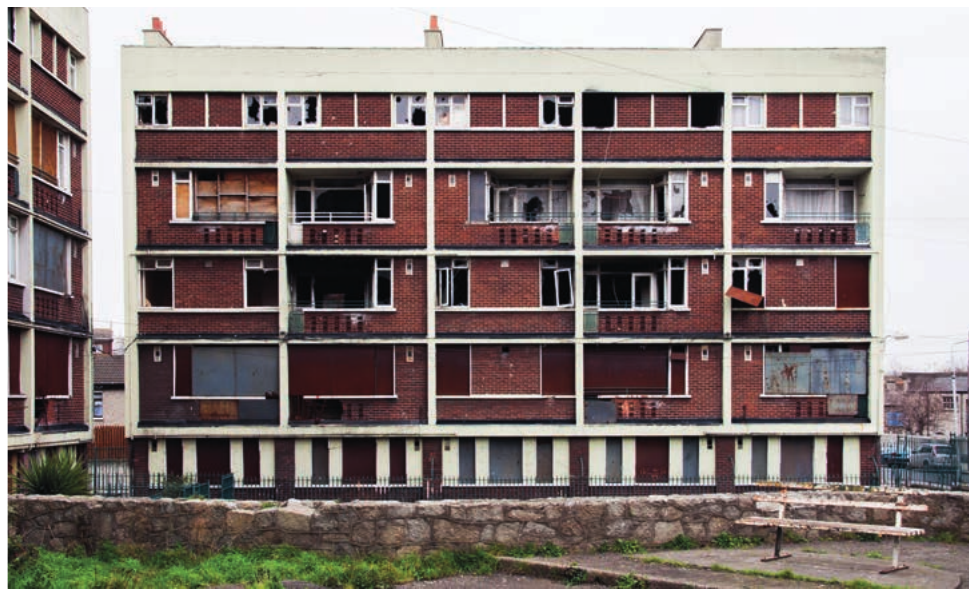
Children living in poverty face almost twice the likelihood of living in substandard housing. Poor housing conditions significantly affect both physical and mental health, as well as educational achievement.
Fuel poverty also affects children detrimentally as they grow up. Low-income families sometimes must choose between purchasing food or heating their homes. Children from low-income families often miss out on activities that most children take for granted, including:
- School trips and educational visits
- Inviting friends to their homes for social activities
- Affording a one-week holiday away from home
Note
The Reality of Fuel Poverty:
Low-income families sometimes face an impossible choice: purchase food or heat their homes. This represents a form of absolute poverty even in a developed country like the UK, where basic needs cannot all be met simultaneously.
Beyond its impact on children, poverty adversely affects other groups in society. Pensioners whose sole income source is the state pension represent the main group in society suffering from fuel poverty. Although energy prices fell briefly in 2016, falling prices generally proved to be a short-term situation, soon replaced by rising prices responding to global resource depletion.
During 2022, energy companies announced substantial price increases that raised costs across the board. Old-age poverty and the reality that people now live longer lead to additional adverse effects on society. For example, elderly people acting as 'bed-blockers' continue to occupy hospital beds after successful treatment simply because they have nowhere else to go.
Summary
Key Points to Remember:
-
Poverty has two forms: Absolute poverty involves severe deprivation of basic needs (food, water, shelter, healthcare), whilst relative poverty means earning below a specified proportion of median income (typically 60% in the UK).
-
Multiple causes create poverty: In the UK, the main causes include old age (especially reliance on state pension alone), unemployment (with benefits lower than working wages), and low wages (particularly affecting unskilled workers).
-
Poverty damages educational opportunities: Children from poorer backgrounds lag behind at every educational stage, from being nine months behind at age 3 to achieving 1.7 grades lower at GCSE by age 16.
-
Health inequalities reflect poverty: Poorer children face higher risks from birth, including lower birth weights, higher infant mortality, greater likelihood of chronic illness, and reduced life expectancy in adulthood.
-
Poverty affects entire communities: Beyond individual impacts, poverty leads to poor housing conditions, fuel poverty forcing choices between heating and eating, and children missing basic activities like school trips and holidays that others take for granted.