Case Study: Soft Engineering (AQA A-Level Geography): Revision Notes
📚Revision Notes
Case Study: Soft Engineering
Location and context
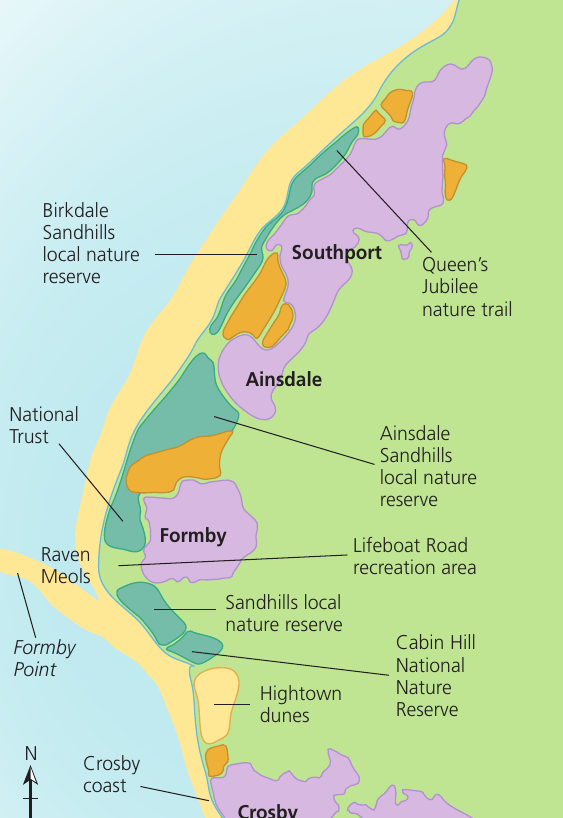
The Sefton Coast is located north of Liverpool in Northwest England and contains England's largest sand dune system. This extensive coastal area stretches over 17 km along the Irish Sea coastline, with the dune system varying in width from 200 m to 4 km. The area encompasses several key locations including Southport, Ainsdale, Formby Point, and extends south to Crosby.
Note
The Sefton Coast is designated as a protected area, containing multiple local nature reserves, National Trust land, and the Cabin Hill National Nature Reserve. This recognition highlights the environmental significance of the dune system and its unique habitats.
The erosion problem at Formby Point
The sand dune system around Formby Point experienced severe and continuous erosion throughout the twentieth century. Between 1920 and 1970, the coastline retreated by approximately 700 m. This represents an average erosion rate of around 4 m per year, which is considered substantial for a coastal dune system.
Important
This significant loss of coastal land threatened not only the natural dune habitats but also the recreational areas and local infrastructure that depended on the coastal zone. The rate of erosion was unsustainable and required urgent management intervention.
Causes of coastal erosion
The erosion at Formby Point resulted from a combination of both natural processes and extensive human interference. Understanding both types of factors is essential for developing effective management strategies.
Physical (natural) factors
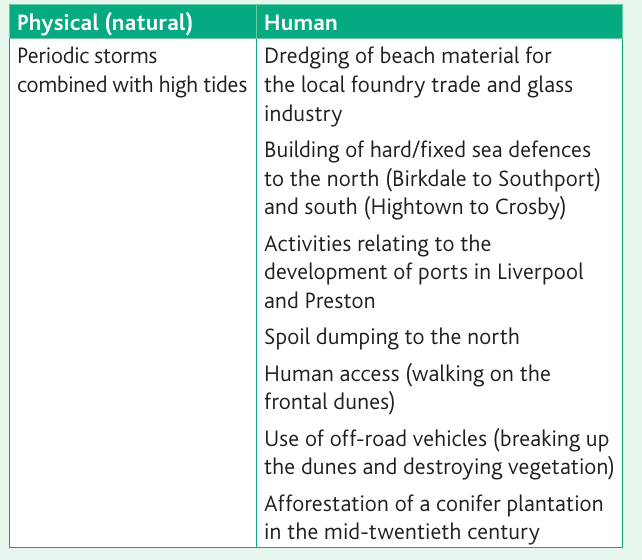
The primary natural cause of erosion was the occurrence of periodic storms combined with high tides. These storm events created powerful wave action that removed large quantities of sand from the dunes and beach system. When storms coincided with high tides, the waves could reach further up the beach and attack the frontal dunes directly, accelerating erosion rates.
Human factors
Human activities had a particularly significant impact on the coastal system at Sefton. The scale and variety of human interference made this a major contributor to the erosion problem.
Important
Human Impact on Coastal Erosion
The human factors at Sefton Coast demonstrate how multiple human activities can combine to accelerate natural erosion processes. Each activity individually disrupts the coastal system, but their combined effect was particularly severe.
Key human activities affecting the coast included:
-
Dredging operations: Beach material was extracted for use in local industries, particularly the foundry and glass manufacturing sectors. This removal of sediment disrupted the natural supply of sand to the dune system.
-
Construction of sea defences: Hard engineering structures were built along the coast between Birkdale-Southport in the north and Hightown-Crosby in the south. These fixed defences altered natural sediment transport patterns along the coastline.
-
Port development: Activities related to the development and operation of ports in Liverpool and Preston affected coastal processes and sediment movement in the wider area.
-
Spoil dumping: Waste material was deposited along sections of the coast to the north, which interfered with natural coastal dynamics.
-
Pedestrian access: Walking on the frontal dunes caused damage to vegetation and destabilised the dune structure. Without vegetation cover, dunes become much more vulnerable to wind and wave erosion.
-
Off-road vehicles: The use of motorcycles and other vehicles broke up the dune structure and destroyed protective vegetation cover, creating areas of exposed sand that eroded rapidly.
-
Afforestation: A conifer plantation was established in the mid-twentieth century. Whilst this might seem beneficial, the plantation altered the natural dune landscape and ecosystem.
Future threats
Climate change presents additional challenges for the Sefton Coast's future management. Recent climate models predict an average sea level rise of 0.3 m over the next 60 years for this region. Additionally, maximum wave heights are expected to increase, which would significantly raise the risk of coastal erosion.
Important
Climate Change and Coastal Protection
These future changes mean that the dune system will play an increasingly vital role in mitigating flood risk for local communities. However, if erosion at Formby Point continues unchecked, the protective function of the dunes would be lost.
The immediate impacts would not be confined to Formby Point itself. As the coastline becomes straighter, beach material is transported both north and south where it is deposited. In locations like Crosby, this has occasionally resulted in coastal footpaths and access roads being buried under considerable accumulations of sand.
The Sefton Coast Management Scheme
In the late 1980s, a comprehensive management scheme was developed for the Formby and Ainsdale areas. This scheme prioritised soft engineering approaches that work with natural processes rather than against them.
Note
What is Soft Engineering?
Soft engineering refers to coastal management techniques that use natural systems and processes to protect the coast. These methods are typically more sustainable and environmentally friendly than hard engineering structures like sea walls and groynes.
Soft engineering measures implemented
The management scheme included several key interventions designed to encourage natural dune regeneration and reduce human pressure on the system.
Example
How Christmas Trees Trap Sand
Used Christmas trees are 'planted' on the seaward edge of the dunes. These trees act as barriers that trap wind-blown sand, encouraging natural dune regeneration and growth.
The Process:
- Trees create shelter and reduce wind speed
- Wind-blown sand particles settle around the branches
- Sand gradually accumulates to form new dune features
- Vegetation colonises the trapped sand
- New stable dunes develop naturally
Key soft engineering measures included:
-
Planting Christmas trees: Used Christmas trees were 'planted' on the seaward edge of the dunes to trap wind-blown sand and encourage dune regeneration.
-
Fencing: Areas of sand dunes were fenced off to restrict pedestrian access. This allows vegetation to re-establish without being trampled, which stabilises the dune structure naturally.
-
Wooden posts: Posts were placed in front of the dunes to further encourage dune regeneration by creating sheltered areas where sand accumulates and vegetation can establish.
Additional management strategies
Beyond the physical soft engineering works, the scheme incorporated several management and education measures to address the human causes of erosion.
-
Boardwalks: Wooden boardwalks were constructed to prevent people from trampling across the dunes. By providing a clear pathway, visitors can access the beach whilst avoiding sensitive dune areas.
-
Signage: Signs were installed to direct people to the beach via designated routes that avoid the dunes, reducing pressure on vulnerable areas.
-
Ranger services: A ranger programme was established to educate local children and visitors about the importance of protecting and conserving the dune ecosystem.
-
Vehicle restrictions: Off-road vehicles were banned from the dune system to prevent damage to both dune structure and vegetation.
-
Sand extraction controls: The commercial extraction of sand was controlled to prevent further depletion of the beach and dune sediment supply.
-
Pine plantation debate: Ongoing discussions consider whether removing the conifer plantation and allowing scrub vegetation to re-establish would help restore a more natural dune landscape and maintain a broader range of habitats.
Management objectives
All of these measures work together with a common goal: to protect the Sefton Coast dune system for future use in a sustainable manner. The scheme recognises that the area must balance conservation needs with its role as a recreational resource that attracts large numbers of visitors to beaches, sand dunes, and pine forests.
Note
Balancing Conservation and Recreation
By implementing soft engineering techniques that work with natural processes, the management scheme aims to achieve long-term coastal protection whilst maintaining the ecological and recreational value of this important coastal environment. This approach demonstrates how sustainable management can protect both the environment and human interests.
Remember!
Summary
Key Points to Remember:
-
The Sefton Coast contains England's largest dune area (17 km long) and experienced severe erosion of 700 m between 1920-1970, averaging 4 m per year.
-
Erosion was caused by both natural factors (storms and high tides) and extensive human interference (dredging, sea defences, port development, recreational access, vehicles, and afforestation).
-
The Sefton Coast Management Scheme (late 1980s) uses soft engineering approaches including planting Christmas trees, fencing dunes, installing wooden posts, and building boardwalks to encourage natural dune regeneration.
-
Additional management measures include signage, ranger education programmes, vehicle bans, and controls on sand extraction to protect the area sustainably.
-
Future challenges include predicted sea level rise of 0.3 m over 60 years and increased wave heights, making the dune system's protective role increasingly important for flood risk management.