Case Studies: Tropical Coral Reefs (Belize, Jamaica and Australia) (AQA A-Level Geography): Revision Notes
📚Revision Notes
Case Studies: Tropical Coral Reefs (Belize, Jamaica and Australia)
Introduction to tropical coral reefs
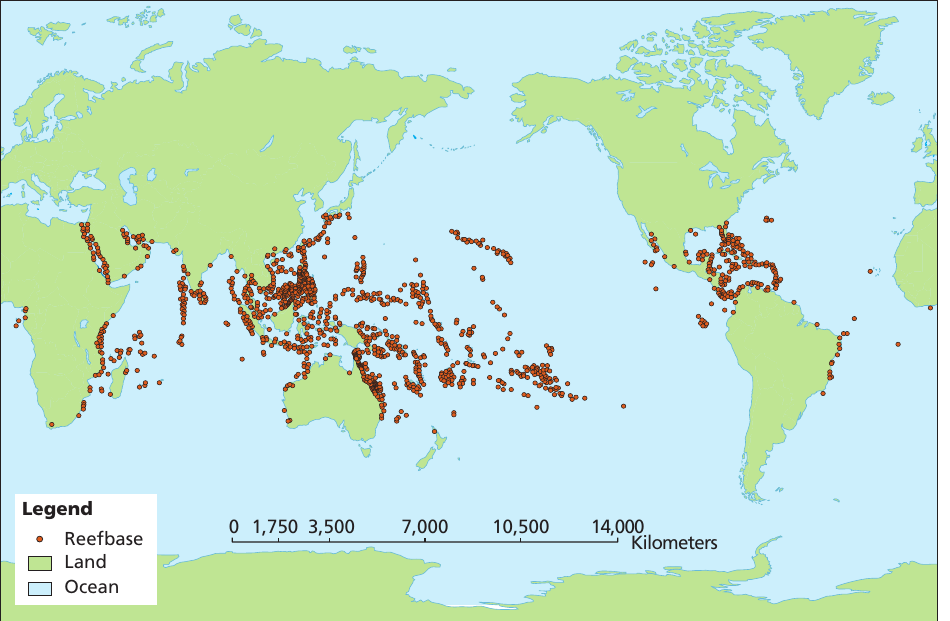
Coral reefs are among the largest and oldest living systems on Earth. Australia's Great Barrier Reef, for example, stretches 2,000 km and formed over five million years.
What are coral reefs made of?
Coral reefs are built from calcium carbonate (limestone). This substance is absorbed from seawater by colonies of coral polyps and coralline algae. The reef structure develops through a remarkable process:
- Most of the underlying foundation consists of dead coral, made up of layer upon layer of coral skeletons
- Living reef grows on top of this foundation
- Tiny coral polyps add new limestone to the massive structure
- Each polyp contains small symbiotic algae called zooxanthellae growing inside them
The symbiotic relationship
The relationship between coral polyps and zooxanthellae is mutually beneficial:
- The algae receive shelter and food (nutrients from captured plankton) from the polyp
- The polyp receives food from the algae through photosynthesis
- This photosynthesis requirement explains why tropical corals grow in shallow, clear water with plenty of sunlight
- Corals need to stay away from sediment and river mouths where water clarity is reduced
Note
The symbiotic relationship between polyps and algae is crucial for reef survival. The algae provide up to 90% of the coral's energy needs through photosynthesis, while the polyps provide the algae with a protected environment and access to nutrients. This partnership is why coral reefs can only thrive in clear, sunlit waters.
Coral bleaching
Important
Coral bleaching is the process where coral loses its zooxanthellae algae. If the algae are not replaced within weeks, the coral can die.
When corals become stressed, particularly from high water temperatures, the algae leave the polyp. This exposes the white calcium carbonate skeleton underneath, giving the reef a bleached appearance.
Coral bleaching events worldwide have been linked to sea surface temperatures (SST) rising and staying as little as 1°C higher than the usual average monthly maximum during the hottest months of the year.
Types of coral reefs
Coral reefs are categorised into three main types:
Note
Fringing reefs:
- Grow directly from a shore
- No area of open water exists between the beach and the inshore edge of the reef
- Most common type of reef
- Because there is no intervening lagoon to act as a buffer between the land and the reef, they are particularly sensitive to pollution and sedimentation from rivers
Note
Barrier reefs:
- Extensive linear reef complexes
- Develop parallel to the shore
- Separated from the shore by a lagoon (a wide band of seawater of varying depth)
- The lagoon provides some protection from land-based pollution
Note
Atolls:
- Roughly circular reef systems
- Surround a central lagoon
- Often form on submerged volcanic islands
Case Study 1: Belize Barrier Reef Reserve System
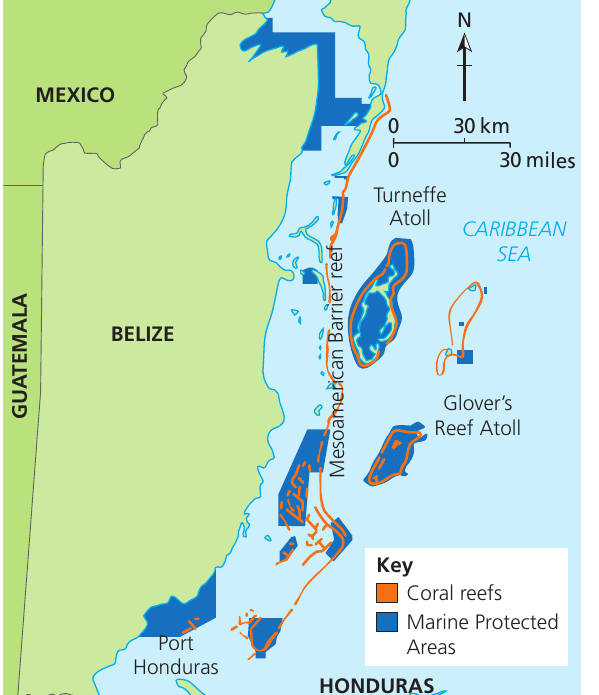
The Belize Barrier Reef Reserve System is 300 kilometres long, making it the second largest reef system in the world. Within its seven protected areas lies an outstanding example of reef diversity.
Location and characteristics
The reef complex covers 960 km² and contains approximately 450 sand and mangrove cayes (small sandy islands). The unique array of reef types within one self-contained area distinguishes it from other reef systems:
- The barrier reef complex runs parallel to the Belize coastline
- Three atolls are present: Turneffe Atoll and Glover's Reef Atoll
- Approximately 70 hard and 36 soft coral species have been identified on the barrier reef
- Over 500 species of fish and invertebrates live in the area
- However, only about 10 per cent of all the species on the reef have been discovered so far
Physical influences on the Belize reef
Coral bleaching:
In Belize, bleaching along the reef has become more common as the oceans become warmer. In 2015 and 2016, almost a quarter of the corals off the Belizean coast were affected by bleaching. Worldwide, coral bleaching events have been attributed to sea surface temperatures rising and staying elevated.
Salinity levels:
Coral reefs develop best where the salinity of seawater is between 34 and 37 parts per 1,000. Where rivers flow into the sea, there are gaps in the reef because the lowering of salinity locally affects coral growth. This can be seen where the Belize River flows into the lagoon between the mainland and the barrier reef.
Ocean acidification:
Studies examining links between ocean acidification and coral development have been inconclusive. Although scientists think that coral's ability to form a calcium carbonate exoskeleton would be reduced in more acidic water, this has not always been found to be the case. During the summers of 2010 and 2011, scientists in the Caribbean observed rapid acidification events driven by enhanced coral growth and calcification, which were likely caused by an increase in food supply thanks to phytoplankton blooms.
Note
The formation of calcium carbonate produces carbon dioxide. Well-fed corals respire more carbon dioxide than their symbiotic algae can take up through photosynthesis, making the water around them more acidic. This creates a complex relationship between coral health and local water chemistry.
Disease and natural events:
A disease epidemic swept through populations of an important reef grazer, the sea urchin (Diadema antillarum), virtually killing it off across the Caribbean. Over-fishing and the loss of these urchins meant that there was rapid algal growth (an algal bloom). These blooms limit the sunlight available and cause lack of oxygen in water. When oxygen levels decline, marine animals, coral reefs, seagrass beds and other vital habitats suffer and may die.
Important
Major hurricanes such as Hurricane Earl (2017) have damaged the Belizean reefs. The violence of the waves fragment and kill branching coral in shallow water. Even the soft corals are damaged by objects being tossed around in the waves. Sometimes the scars that result are rapidly overgrown by fast growing opportunistic algae. The heavy rainfall on land and the increased river run-off increases cloudiness and reduces water salinity.
Fortunately for Belize, it is rarely affected by hurricanes, with just eight major hurricanes in the last 100 years.
Human influences on the Belize reef
UNESCO designation and conservation challenges:
In 1996, UNESCO designated the Belize Barrier Reef Reserve System as a World Heritage Site, with Belize responsible for its protection. By 2009, the site was on UNESCO's 'danger' list, with the organisation saying that the country needed to enact better management and safeguards.
The main concerns cited included:
- Mangrove cutting and excessive development
- Coastal development issues
Development impacts:
Development of the tourist industry has meant land clearance, resulting in increased amounts of sediment being washed into the sea. Mangroves act as nurseries for many fish and shellfish and filter much of the sediment being washed off the land.
Coastal developments, such as tourist hotels, are creating problems for the satisfactory treatment of sewage. Each hotel has its own disposal system, but a lot of waste is discharged into the sea after little treatment.
Oil exploration:
UNESCO also expressed concern about oil exploration. In 2017, the Belize government was the first in the world to impose a moratorium (temporary halt) on oil exploration and exploitation in the maritime zone of Belize.
Conservation measures:
The government has introduced several positive measures:
- Special environmental taxes that go directly to conservation
- A booming eco-tourism market has developed
- Attempts to reduce overfishing
Fishing concerns:
The fish population on Belize's reefs has been steadily declining as a result of over-fishing. One study indicated that fish biomass had already been reduced by up to 80 per cent by the late 1970s. The government has tried to stop trap fishing as well as visits from foreign commercial trawlers, although this can be difficult to manage.
Note
In 2008, when the International Society for Reef Studies recommended that countries along the reef must protect parrot fish, Belize was the first to respond with a law restricting their catch. Parrot fish play a crucial role in reef health by grazing on algae that might otherwise smother the coral.
In 2018, Belize announced plans to more than triple the size of its 'no-take' fishing zones, from 3 to 10 per cent, to help ocean wildlife recover.
Plastic ban:
They also announced plans to ban single-use plastic and Styrofoam products (bags, utensils and so on) by Earth day, 2019.
Case Study 2: The Jamaican coral reef
Jamaica is the third largest Caribbean island, measuring 230 km long by 80 km wide with 891 km of coastline and a coral reef area of 1,240 km².
Reef characteristics
Well-developed fringing reefs occur along most of the north and east coasts, while patchy fringing reefs occur on the broader shelf of the south coast. In addition to the reefs surrounding mainland Jamaica, there are reefs and corals on the neighbouring banks and shoals within Jamaica's Exclusive Economic Zone.
Historical decline
Important
After a series of natural and manmade disasters in the 1980s and 1990s, Jamaica has lost 85 per cent of its coral reefs. The physical influences are very similar to those experienced by Belize, but the human influences differ.
Human influences on the Jamaican reef
Mining and industrial pollution:
Pollution comes in many forms. Onshore development such as bauxite mining in Cockpit Country is particularly important for the economy of Jamaica. This activity also releases large quantities of particulate matter into local rivers. This sediment load is carried to the sea, creating clouds of silt and reducing the necessary sunlight penetration coral needs in order to grow. The corals within Montego Bay Marine Park are under threat from this pollution.
Coastal development:
Coastal developments such as tourist hotels in Jamaica are creating problems for the satisfactory treatment of sewage. Coastal hotels each have their own disposal systems, but much waste is discharged to sea after little treatment. Although they are now beginning to install treatment plants, many are not used efficiently.
Agricultural impacts:
Excess nutrients are discharged to the marine environment through fertilisers from agriculture. These nutrients may lead to eutrophication (an excessive growth of marine plant life and decay). This leads to algal blooms.
Note
Eutrophication creates a cascade of problems for coral reefs. The excessive nutrients from agricultural runoff cause rapid algae growth, which blocks sunlight from reaching the coral. When the algae die and decompose, they consume oxygen in the water, creating "dead zones" where marine life cannot survive.
Water shortage and desalination:
In recent years there has been a water shortage in Jamaica; in 2012 water was rationed. There have been calls for the building of desalination plants on the island. These plants remove all the unwanted chemicals from sea water and produce a fresh water supply. The unwanted chemicals are then flushed back out to sea causing localised increases in salinity and temperature.
Studies have found effects ranging from no significant impacts through to widespread alterations to community structure in seagrass, coral reef, and soft-sediment ecosystems when discharges are released in areas where there is little mixing of sea water.
Overfishing:
The fish population on Jamaican reefs has been steadily declining as a result of over-fishing. One study indicated that fish biomass had already been reduced up to 80 per cent by the late 1970s.
Case Study 3: The Great Barrier Reef of Australia and the Fitzroy drainage basin scheme
The Fitzroy River basin in Central Queensland is the second biggest river basin in Australia and the largest on the eastern seaboard. The catchment area is approximately 145,000 km² in area (almost the size of England).
Basin characteristics
The basin contains:
- Important freshwater and estuarine wetlands
- Six major rivers which produce a total annual discharge of 5,900 gigalitres
The 2010-2011 flooding event
Important
In 2010-2011, there were extensive floods in the drainage basin resulting in large amounts of sediment being carried downstream, emerging from the river mouth. The Fitzroy River flows into the lagoon separating the southern part of the Great Barrier Reef from the Australian mainland. This part of the reef is a tourist hotspot as well as a centre of the fishing industry. The increase in sediment had the potential to cause the coral lasting damage.
Drainage basin management scheme
The drainage basin management scheme includes:
Water infrastructure:
A series of weirs, dams and barrages along the Fitzroy and its tributaries designed to store water for use in agriculture (cotton, peanuts, corn, melons etc.), industry, power generation and domestic use (for example in the city of Rockhampton). These dams and weirs slow down the river flow and reduce its ability to carry sediment.
Water quality programme:
The Fitzroy water quality programme aims to reduce the amount of sediment carried by the Fitzroy River by 50,000 tonnes per year by repairing damaged agricultural land and producing more environmentally friendly management land use practices.
Future prospects for coral reefs
Caribbean decline
In the Caribbean as a whole, many coral reefs have collapsed and been replaced by beds of algae. The proportion of the reef covered by live coral has fallen from 50 per cent in the 1970s to just 8 per cent in 2013, changing the fish communities dramatically. In fact a third of reef-building corals are in danger of extinction and reefs the world over are in serious decline.
Ecological and human impacts
To lose the reefs would be to lose the planet's most diverse ecosystems. People would also suffer:
- More than 450 million people live close to coral reefs
- They rely on them as sources of tourism revenue and protein
- Reefs act as buffers that dampen the energy of incoming storms
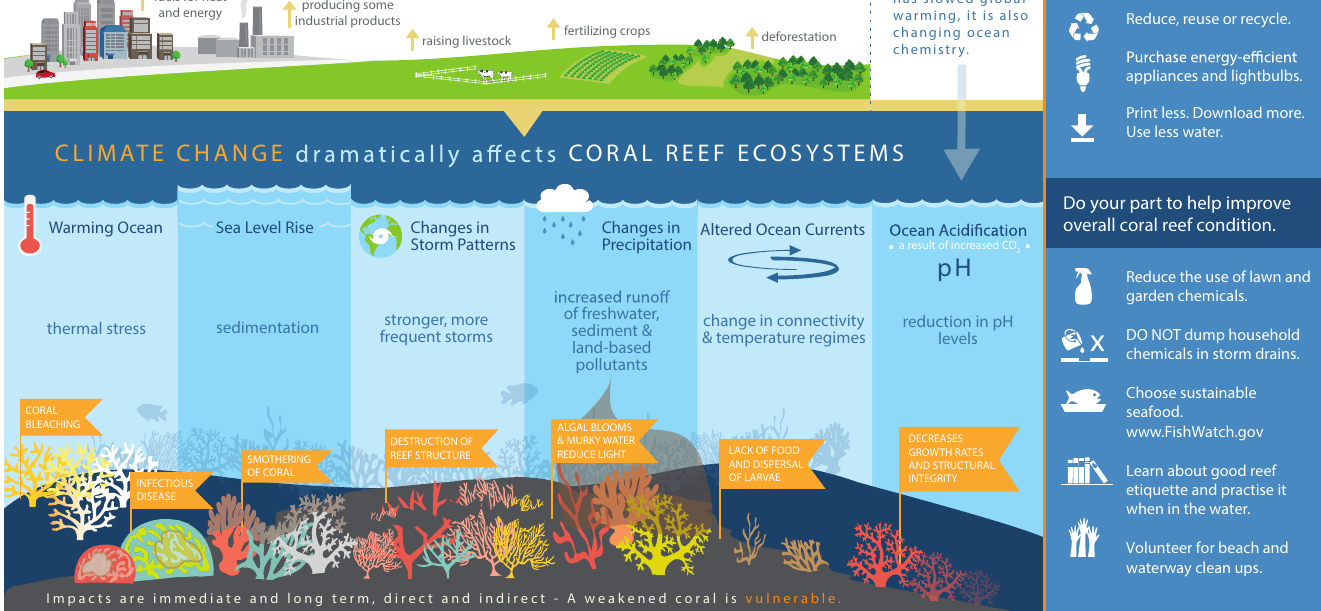
Climate change: the biggest threat
Important
Climate change is the biggest threat. It leads to warmer and increasingly acidified oceans. Some scientists fear that the reefs are doomed to extinction.
Reasons for hope
Opponents of this viewpoint state that not all corals, or all reefs, are the same:
- Some, like those in American Samoa, have genetic advantages that allow them to thrive in shallower warmer waters
- Some can recruit strains of algae that tolerate higher temperatures
- Others grow in waters that are naturally acidic, where carbon dioxide seeps from the ocean floor
- Corals can acclimatise to changing conditions
Note
There is some evidence that reefs which bleach extensively for one year are better able to handle warmer waters a decade later. This suggests coral reefs may have some capacity to adapt to gradually changing conditions. Reefs can also change at the community level, shifting from sensitive species like the elkhorns to sturdy, robust ones like big boulder corals.
Conservation strategies
Marine protected areas:
Humans can help by setting up marine protected areas—underwater national parks where fishing is forbidden. Not only do they allow local reefs a chance to recover, but they can seed nearby areas with coral larvae. This will slow down the decline but if predictions of ocean warming in the next 100 years are correct then coral reefs will die.
Community action:
Individual actions can help protect coral reefs:
- Reducing carbon footprint to limit greenhouse gases
- Using sustainable seafood choices
- Proper waste disposal
- Limiting chemical use
- Volunteering for beach and waterway clean ups
- Learning about reef etiquette when in the water
Remember!
Summary
Key Points to Remember:
-
Coral reefs are built through symbiosis between coral polyps and zooxanthellae algae, forming calcium carbonate structures over millions of years. The three main types are fringing reefs, barrier reefs, and atolls.
-
All three case studies face serious decline: Belize has seen a quarter of corals bleached (2015-2016), Jamaica has lost 85% of its coral reefs since the 1980s, and the Great Barrier Reef faces sediment threats from the Fitzroy River basin. Caribbean-wide, live coral coverage has plummeted from 50% (1970s) to just 8% (2013).
-
Human activities cause multiple threats including coastal development and sewage discharge, overfishing (reducing fish biomass by up to 80%), sedimentation from land clearance and agriculture, and pollution from industries like bauxite mining in Jamaica. These local pressures compound global climate change impacts.
-
Climate change is the greatest threat through warming oceans causing coral bleaching, ocean acidification reducing corals' ability to build skeletons, and stronger storms physically damaging reef structures. Some scientists believe reefs are doomed to extinction under these pressures.
-
Conservation efforts show promise: Belize has implemented an oil exploration moratorium, tripled no-take fishing zones, and banned single-use plastics. Marine protected areas allow reefs to recover and seed nearby areas. Some coral species show genetic advantages for adapting to warmer, more acidic waters, offering hope that not all reefs will disappear.