Case Study: Biodiversity Change at Kinder Scout (AQA A-Level Geography): Revision Notes
📚Revision Notes
Case Study: Biodiversity Change at Kinder Scout
Introduction to blanket bogs and carbon storage
Blanket bogs are vital ecosystems that play a crucial role in combating climate change. Peat, which forms these bogs, consists of semi-decomposed plant material. This makes peat an enormous carbon store - remarkably, more carbon is stored in UK peat than in all the forests of Britain and France combined.
Note
The carbon storage capacity of UK peatlands is extraordinary. These ecosystems contain more carbon than all the forests of Britain and France combined, making them one of the most important natural carbon stores in the region. This highlights why their conservation is critical for climate change mitigation.
When blanket bogs are healthy and peat is actively forming, carbon is being locked away. This process helps reduce atmospheric carbon dioxide and combat global warming. However, when these habitats become degraded, they can no longer perform this important function effectively.
Location and characteristics of Kinder Scout
Kinder Scout is an area of blanket bog located in Derbyshire, within the Dark Peak of the Derbyshire Peak District in England.
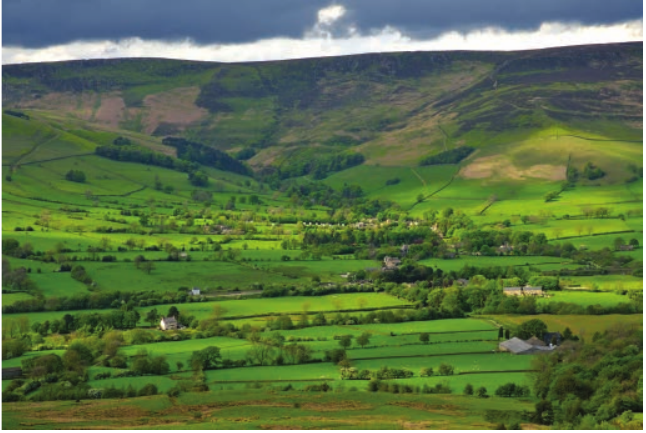
Key characteristics include:
- Located at an elevation of 636 metres above sea level, making it the highest point in the Peak District
- Contains a 7,000-year-old blanket peat bog
- The bog sits on top of a plateau formed from horizontal layers of impermeable sandstone called Millstone Grit
- The land is owned and managed by the National Trust
- It is designated as both moorland and a National Nature Reserve
[IMAGE
]Important
Critical Status of Kinder Scout
Kinder Scout is one of the most damaged areas of moorland in the UK. Its future has been placed in jeopardy through catastrophic wildfires, a long history of overgrazing by sheep, air pollution, and damage from the routes taken by thousands of visitors.
Human contributions to biodiversity change
Understanding the broader context of how humans affect biodiversity helps explain the changes at Kinder Scout. Human activities operate at multiple scales, from local impacts to global environmental changes that affect ecosystems worldwide.
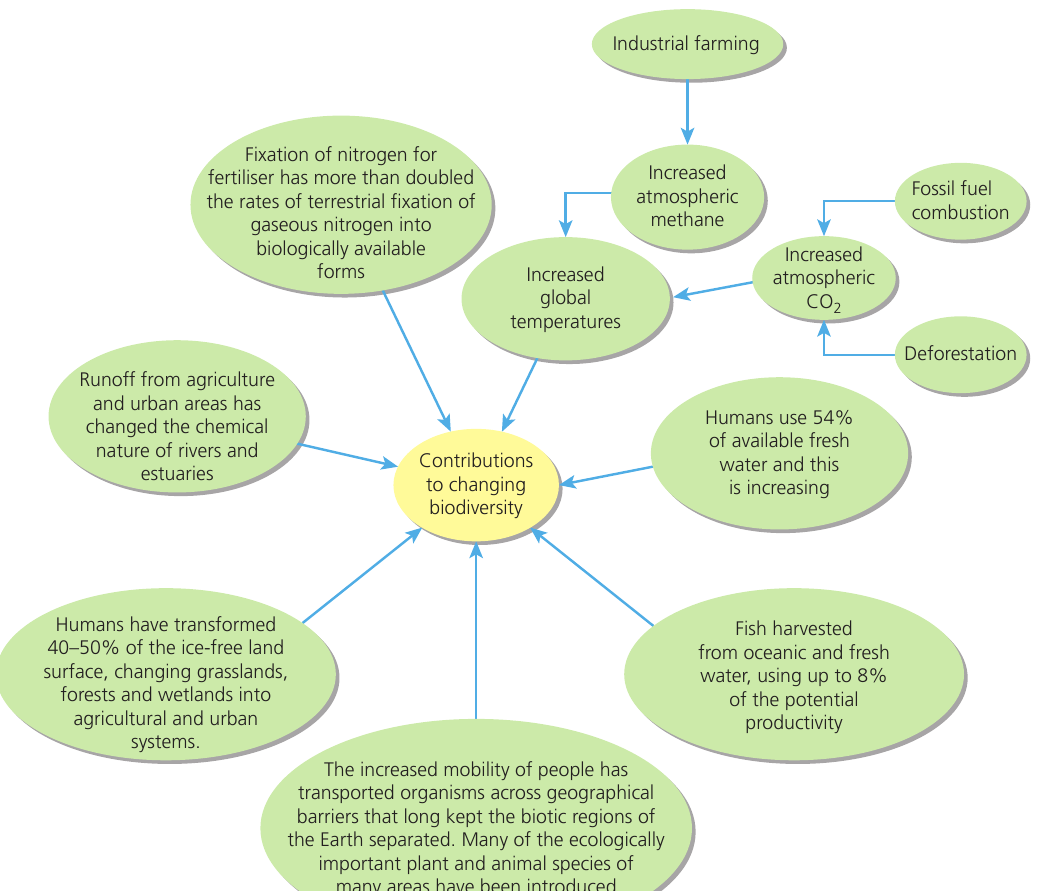
Human activities contribute to biodiversity change in multiple ways:
- Land transformation: Humans have converted 40-50% of ice-free land from grasslands, forests and wetlands into agricultural and urban systems
- Water use: Humans use 54% of available freshwater, which is increasing
- Atmospheric changes: Industrial farming, fossil fuel combustion and deforestation have increased atmospheric methane and CO₂, leading to rising global temperatures
- Chemical changes: Agricultural and urban runoff has changed the chemistry of rivers and estuaries
- Nitrogen fixation: Fertiliser use has more than doubled the rates of terrestrial nitrogen fixation
- Species introduction: Human mobility has transported organisms across geographical barriers that previously kept Earth's biotic regions separated
Causes and impacts of biodiversity change at Kinder Scout
The biodiversity changes at Kinder Scout result from a complex interaction between climate change and direct human impacts. Understanding these interconnected factors is essential for developing effective conservation strategies.
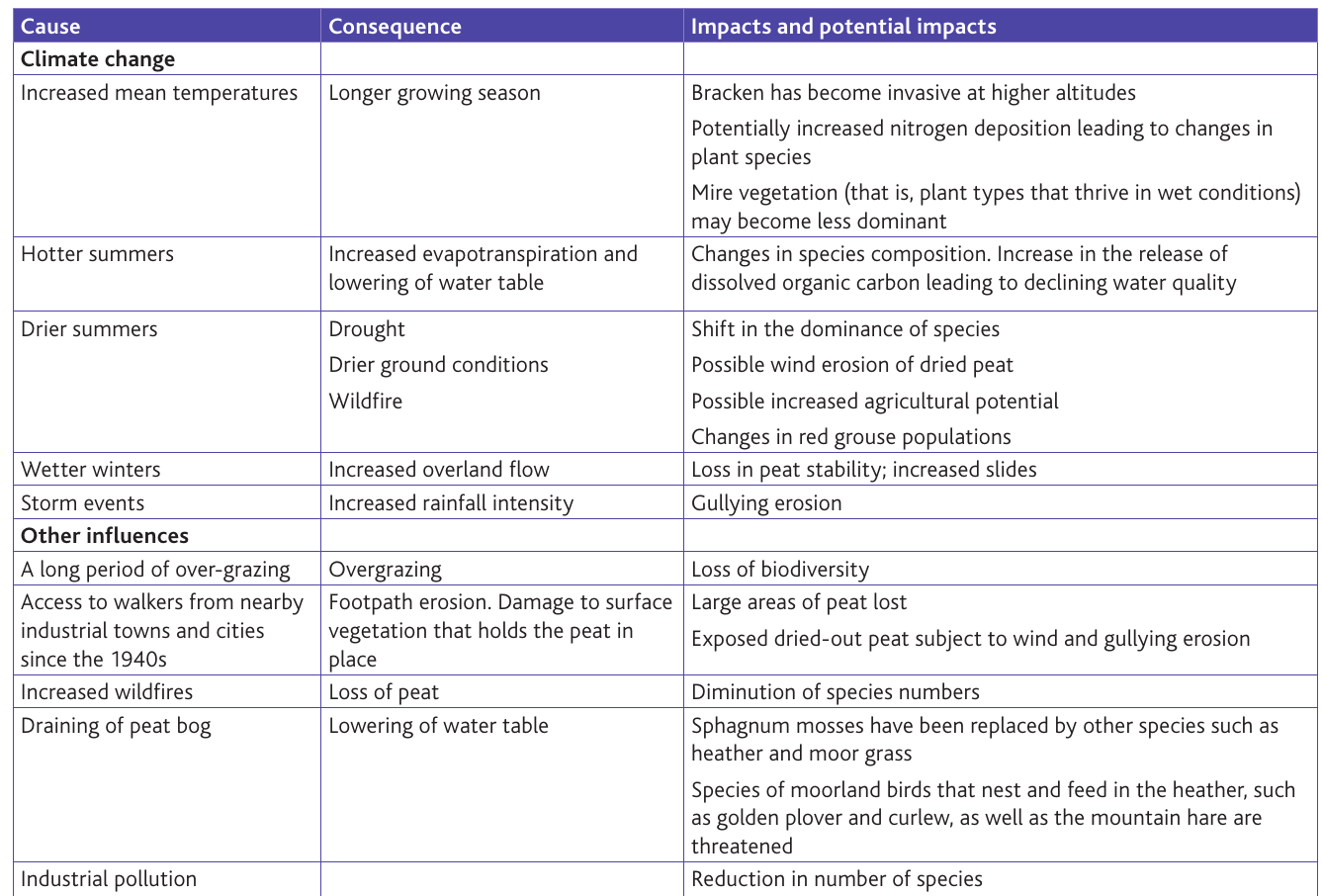
Climate change impacts
Increased mean temperatures have resulted in:
- Longer growing seasons, allowing bracken to become invasive at higher altitudes
- Potentially increased nitrogen deposition, leading to changes in plant species
- Mire vegetation (plants that thrive in wet conditions) becoming less dominant
Hotter summers lead to:
- Increased evapotranspiration and lowering of the water table
- Changes in species composition
- Increased release of dissolved organic carbon, causing declining water quality
Note
Understanding Evapotranspiration
Evapotranspiration is the combined process of water evaporation from the soil surface and transpiration from plants. In hotter summers, this process intensifies, drawing down the water table and fundamentally changing the bog's hydrology.
Drier summers cause:
- Drought conditions, shifting the dominance of species
- Drier ground conditions, making peat vulnerable to wind erosion
- Increased wildfire risk, with possible agricultural potential increases
- Changes in red grouse populations
Wetter winters result in:
- Increased overland flow
- Loss of peat stability and increased slides
Storm events cause:
- Increased rainfall intensity
- Gullying erosion
Human influences
Overgrazing (over a long period):
- Has caused significant loss of biodiversity
- Sheep grazing has damaged vegetation cover
Access from walkers (from nearby industrial towns and cities since the 1940s):
- Footpath erosion has damaged the surface vegetation that holds the peat in place
- Large areas of peat have been lost
- Exposed dried-out peat becomes subject to wind and gullying erosion
Wildfires (increased frequency):
- Loss of peat
- Diminution of species numbers
Important
The Drainage Crisis
Draining of peat bogs has devastating consequences:
- Lowering of water table
- Sphagnum mosses have been replaced by other species such as heather and moor grass
- Species of moorland birds that nest and feed in heather, such as golden plover and curlew, as well as the mountain hare, are threatened
This represents a fundamental shift in the ecosystem's character and biodiversity.
Industrial pollution:
- Has caused a reduction in the number of species
Management and restoration at Kinder Scout
National Trust restoration project (2011)
In spring 2011, the National Trust initiated a five-year project to restore the peat bogs of Kinder Scout. The project employed several integrated management strategies designed to address the multiple causes of degradation.
Fencing to control grazing
- Much of the moorland was fenced off to exclude sheep
- The fencing is planned to remain in place for 15 years
- After this period, the Trust and other bodies will assess the impact before deciding whether to continue
Note
Why Long-Term Fencing?
The 15-year fencing period allows sufficient time for vegetation to recover and establish. This extended timeframe is necessary because peat bog ecosystems recover slowly, and premature reintroduction of grazing could reverse restoration progress.
Cotton grass planting
- Rangers planted nearly half a million pods of cotton grass in 2011
- The grass is dropped by helicopter but then planted by hand
- Cotton grass serves multiple purposes:
- Acts as a skin, reducing erosion effects
- Provides a microclimate for seeds to grow in, offering protection from harsh weather
- Provides seeds that are transported onto the moor
Heather management programme
This forms part of a longer-term reseeding programme:
- Heather brash is cut from nearby local moors in winter when seeds are ripe
- The brash is spread over the worst eroding areas of blanket bog
- This provides:
- Seeds for heather to re-establish
- A fungi-rich environment that helps moorland plants to thrive
Note
The Role of Heather Brash
Using heather brash from local moors ensures the seeds and fungi are adapted to local conditions. The fungi are particularly important as many moorland plants form mycorrhizal relationships that help them access nutrients in the nutrient-poor peat environment.
Dam construction
- Rangers have built over 6,000 small dams in erosion gullies
- The dams rewater the moor, reducing peat erosion
- They help heather to flourish
- These dams act as a flood prevention measure for settlements in the valley by slowing the rate of water release
Tree planting
- 10,000 trees have been planted in the surrounding cloughs (valleys)
Evaluation of the restoration scheme
The restoration project has shown measurable success within a relatively short timeframe, demonstrating that targeted intervention can reverse decades of degradation.
Example
Restoration Timeline: Measuring Success
After two years: The percentage vegetation cover, runoff and sediment yield all showed large changes on bare peat sites.
After six years: Near complete vegetation cover was achieved. However, changes in species richness can take up to 12 years.
Water table recovery: The water table has risen and continues to rise.
Wildlife return: Wildlife such as the Bilberry Bumblebee has started to return to the area.
Ecosystem services and human well-being
Understanding the connection between ecosystems and human populations helps explain why biodiversity conservation matters. The health of ecosystems directly affects human welfare through the services they provide.
Important
What is an Ecosystem?
An ecosystem is a dynamic complex of plant, animal and micro-organism communities and their non-living environment interacting as a functional unit. Humans are an integral part of ecosystems - we are not separate observers but active participants in these systems.
What are ecosystem services?
Important
Defining Ecosystem Services
Ecosystem services are the benefits that people obtain from ecosystems. These services range from tangible products like food and water to intangible benefits like spiritual enrichment and climate regulation.
The Millennium Ecosystem Assessment (MEA) analysed 24 ecosystem services and made concerning findings. It discovered that 15 were being degraded or used unsustainably. This decline in services most strongly affects the world's disadvantaged people and, in developing countries, represents a considerable barrier to achieving the UN's Millennium Development Goals of reducing poverty and hunger.
Four categories of ecosystem services
1. Provisioning services
- Supply of food and water
2. Regulating services
- Help to stabilise ecosystem processes such as climate and water storage
- Assist with purification
3. Supporting services
- Include soil formation
- Nutrient cycling
4. Cultural services
- Recreational benefits
- Spiritual benefits
- Religious benefits
- Other non-material benefits
Note
The Interconnected Nature of Services
These four categories are interconnected. For example, supporting services like soil formation and nutrient cycling underpin all other services. Without healthy soil and nutrient cycles, provisioning services like food production become impossible.
Human well-being components
The MEA considers human well-being to consist of five main components:
- The basic material needs for a good life
- Health
- Good social relations
- Security
- Freedom of choice and action
Human well-being results from many factors. Many are directly or indirectly linked to biodiversity and ecosystem services, whilst others are independent of these.
Anthropogenic factors driving change
Current change is driven by anthropogenic factors (human-caused factors), particularly growing consumption and use of ecosystem services (as well as the growing use of fossil fuels). This results from:
- Growing populations
- Growing per capita consumption
Many people have benefited over the last century from the conversion of natural ecosystems to human-dominated ecosystems and the exploitation of biodiversity. At the same time, however, these losses in biodiversity and changes in ecosystem services have caused some people to experience declining well-being, with poverty in some social groups being made worse.
Note
The Complexity of Change Drivers
Biodiversity and ecosystem services experience change due to both natural and human causes. There are also five indirect drivers of change that shape how ecosystems are affected:
- Demographic factors
- Economic factors
- Sociopolitical factors
- Cultural and religious factors
- Scientific and technological factors
These indirect drivers often interact with direct human impacts to create complex patterns of environmental change.
Remember!
Summary
Key Points to Remember:
-
Kinder Scout is a 7,000-year-old blanket bog at 636m elevation in Derbyshire that has been severely damaged by overgrazing, visitor erosion, pollution and climate change.
-
Peat bogs are vital carbon stores - more carbon is stored in UK peat than in all British and French forests combined, making their conservation essential for climate change mitigation.
-
Multiple factors threaten biodiversity at Kinder Scout: climate change effects (increased temperatures, altered precipitation), human impacts (sheep overgrazing since the 1940s, footpath erosion, drainage, wildfires) and pollution have caused species loss and peat degradation.
-
The National Trust's 2011 restoration project uses targeted management strategies: fencing to exclude sheep, planting 500,000 cotton grass pods, spreading heather brash, constructing 6,000 small dams, and planting 10,000 trees have shown success within 2-6 years.
-
Ecosystem services link biodiversity to human well-being: the Millennium Ecosystem Assessment found 15 of 24 ecosystem services are degraded, directly affecting human well-being through provisioning, regulating, supporting and cultural services.