Case Study: The Sápmi Region of Tundra, Northern Europe (AQA A-Level Geography): Revision Notes
📚Revision Notes
Case Study: The Sápmi Region of Tundra, Northern Europe
Geographical context
The Sápmi region represents a vast area of tundra stretching across the far northern territories of Norway, Sweden, Finland, and the Kola Peninsula in Russia. This region serves as the cultural homeland of the indigenous Sami people who have inhabited these harsh Arctic environments for centuries.
[IMAGE
]Around 2 million people currently live in the Sápmi region. The population includes a diverse mix of ethnic groups, comprising Sami, Russians, Norwegians, Swedes and Finns. While individuals from these various national groups may also identify as ethnically Sami, the region represents a unique cultural landscape where indigenous traditions intersect with modern national boundaries.
Note
The Sápmi region demonstrates a unique example of how indigenous cultural boundaries and modern nation-state borders overlap, creating complex questions of identity, sovereignty, and land rights that persist today.
The Sami people and traditional adaptations
Traditional reindeer herding
The Sami people have developed remarkable adaptations to survive and thrive in this challenging environment. Central to their traditional way of life is reindeer herding, a practice that has continued for more than 1,000 years. The diversity of environments across different parts of Sápmi has led to the development of varied forms of reindeer breeding suited to local conditions.
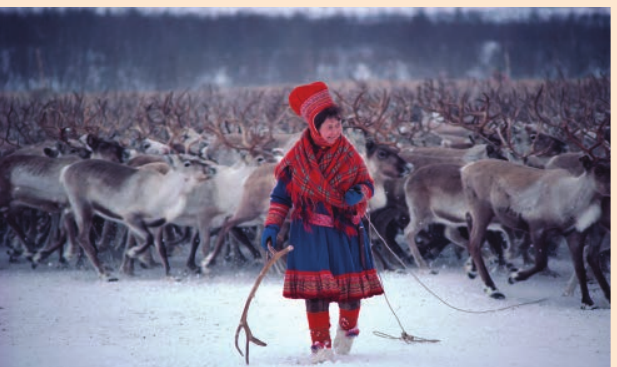
Until the middle of the twentieth century, many Sami family groups maintained a fully nomadic lifestyle. This involved moving their herds seasonally between the sheltered coniferous forests during winter months and the rich mountain pastures in summer. This continual movement served several important purposes:
- It minimised environmental impact on any single location
- Tame reindeer were used for transporting possessions and leading the herd
- It allowed the herd access to fresh grazing areas daily
- The Sami could utilise their reindeer for meat and milk throughout the year
Note
The reindeer provided for virtually all aspects of traditional Sami life. Every part of the animal was processed and used, including skin for clothing, fur for warmth, sinews for sewing, and bones and antlers for tools and utensils. This complete utilization of resources exemplifies the sustainable approach of traditional Sami culture.
Sustainable traditional practices
The traditional Sami lifestyle demonstrated sophisticated environmental management. Strong cultural links between family groups meant that knowledge about interacting with nature was passed down through generations. This included understanding when to move grazing areas in response to changing climatic conditions.
Sami communities also practised population management through careful family planning. By understanding the importance of limiting their impact and protecting natural resources, they maintained low fertility levels. Spacing births several years apart ensured that the number of young children who could not walk with the animals remained low, and most children could move independently with the herd before more were born. This natural population control limited the impact on the environment and available resources.
Important
The traditional Sami lifestyle can be considered sustainable because it provided for basic needs without negatively affecting the environment. This represents a model of human adaptation that maintained ecological balance for over a millennium.
Challenges facing the Sápmi region
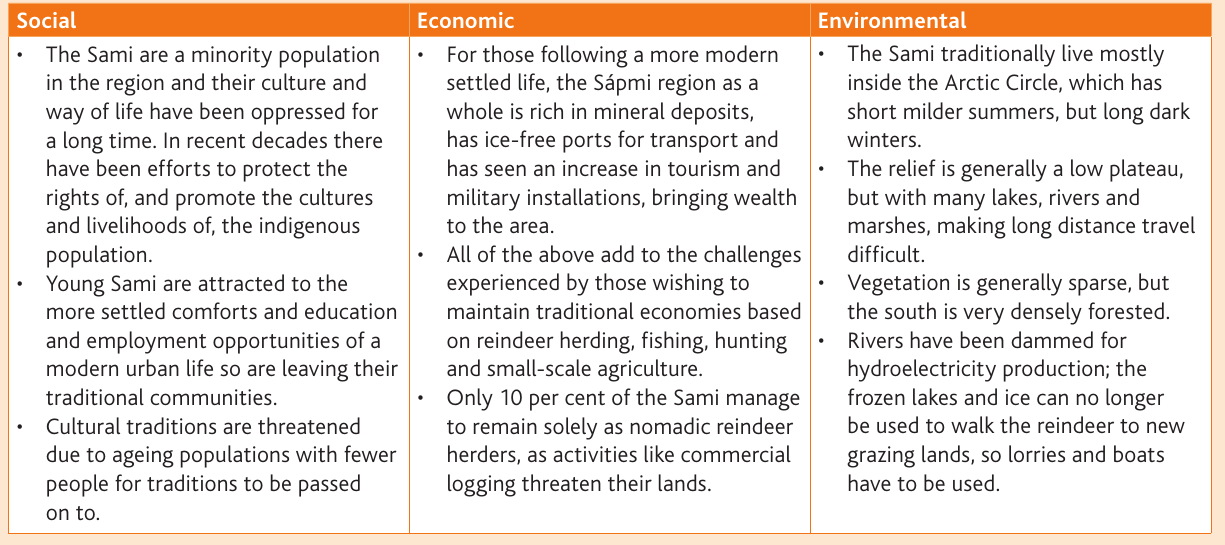
The Sami people face numerous challenges in maintaining their traditional way of life whilst living in the modern world. These challenges can be categorised into social, economic and environmental factors.
Social challenges
The Sami face significant social pressures that threaten the continuity of their culture:
- The Sami represent a minority population in the region, and their culture and traditional way of life have faced oppression for an extended period
- Recent decades have seen efforts to protect indigenous rights and promote the livelihoods of Sami populations
- Younger Sami people are increasingly attracted to the comforts and education opportunities available in more settled urban areas, leading them to abandon their traditional communities
- Cultural traditions face threats as ageing populations mean fewer people remain to pass on traditional knowledge
Important
The loss of younger generations to urban migration creates a critical threat to cultural survival. When traditional knowledge holders age without successors to pass their expertise to, centuries of accumulated environmental wisdom can be lost within a single generation.
Economic challenges
For those following modern settled lifestyles, the Sápmi region is rich in mineral deposits and has ice-free ports for trade. The area has experienced growth in tourism and military installations, bringing economic change. These developments add to the challenges for those wishing to maintain traditional economies based on reindeer herding, hunting and small-scale agriculture.
Note
Economic Pressure on Traditional Herding:
Only 10 per cent of Sami manage to remain solely as nomadic reindeer herders, as commercial activities like logging threaten their lands. A family requires over 500 reindeer to sustain themselves without additional income. Other land uses restrict the amount of available grazing land, putting pressure on herd sizes.
Environmental challenges
The physical environment of the Sápmi region presents both natural challenges and modern complications:
- The Sami traditionally live mostly within the Arctic Circle, which experiences short mild summers but long dark winters
- The landscape is generally a low plateau with many lakes and marshes, making long-distance travel difficult
- Vegetation is generally sparse, though southern areas have denser forests
- Rivers have been dammed for hydroelectricity production, and frozen lakes and rivers can no longer be used to transport reindeer to new grazing lands via lorries and boats
- Modern infrastructure such as roads, railways and hydroelectric power (HEP) reservoirs blocks traditional migratory routes
- Reindeer need to move freely to find fresh food sources
Important
Modern infrastructure development has fundamentally altered the landscape that the Sami have navigated for centuries. The construction of roads, railways, and hydroelectric dams fragments traditional territories, making it increasingly difficult to maintain the seasonal movement patterns that are essential to sustainable reindeer herding.
Case study: The Tässåsen Sámi community
Location and background
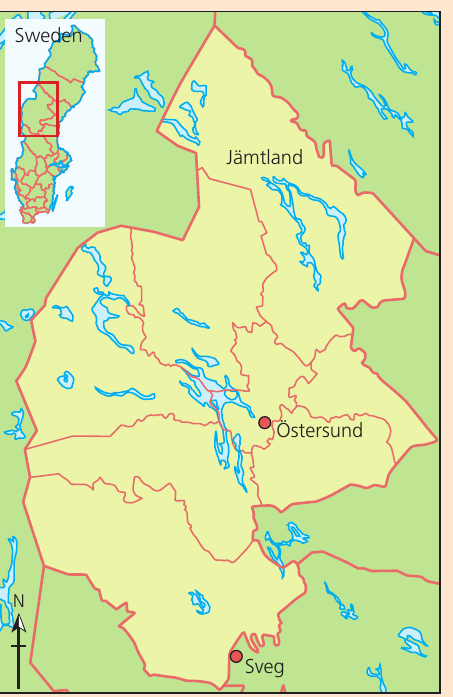
An example of a Sami community is the Tässåsen Sámi group in Östersund, Jämtland County, Sweden. The Tässåsen Sámi community has lived in central parts of the Swedish mountain range west of Östersund in Jämtland County for generations. Southern Sami groups, like those near Sveg to the south, have called this part of northern Europe home since prehistoric times.
Example
Case Study: Tässåsen Sámi Community Characteristics
By the early 2000s, this was one of the few remaining communities of Southern Sami living a traditional way of life. Key characteristics included:
- Grazing grounds covering 111,000 hectares, with winter grazing including an area 100 km by 30 km of old forest
- A reindeer herd numbering 5,500 animals
- A community of 50 individuals organised into 13 grazing groups
- The community lived quite far south, so they occupied mainly mountain grazing areas
- Narrow valleys were used to direct the herd and bring animals together for counting and inspection
- Their culture and traditions remained very strong, and unlike other communities, young people had stayed, keeping the population young and viable
Seasonal grazing patterns
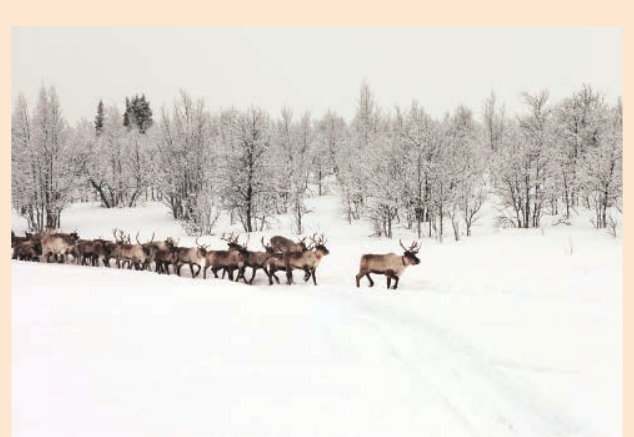
During summer months, the Tässåsen guide their reindeer up onto higher mountain slopes. Here, the animals graze on fresh ground-growing lichens that supplement the tree-dwelling lichens. As winter approaches, the herds are guided back down to lower forested slopes. The snow cover on the forest floor is much lighter and easier to dig through compared to exposed areas outside the forest, allowing the reindeer to reach the lichens beneath.
Note
The most valuable lichen for reindeer are tree pendent lichens that grow hanging from trees. These lichens only grow in old, undisturbed spruce, pine and birch groves that have taken 100-200 years to mature. A small area of this old-growth forest remains in Jämtland, used by the Tässåsen Sámi, especially in winter. If the forest area is large and fertile enough, some small herds could remain in the forest throughout the year.
Environmental impact of traditional herding
In their traditional territories, when reindeer could be freely guided between different grazing areas before overgrazing the lichens, the Sami had minimal impact on the physical environment of Jämtland.
However, recent decades have seen debate about whether Sami reindeer are damaging forest ecosystems. This debate is complicated, and some argue that any degradation results from modern forestry practices rather than traditional reindeer herding.
Conditions for sustainable development
Many people view the growth of settlements and modern industry in Sápmi as unsustainable if the traditional Sami way of life is to continue. For the traditional lifestyle to be maintained, several issues must be overcome.
Important
Three Key Conditions for Sami and Reindeer to Thrive:
1. Access to old forests: Good supplies of ground-dwelling and tree-dwelling lichens are essential. Most Sami do not own their land, and many grazing rights are informal, based on historical customs. Commercial forestry is clearing large areas. The right of the Sami to freely graze their reindeer in many areas of Sápmi is protected, but increasing numbers of landowners are mounting legal challenges.
2. Freedom of movement: Reindeer must be able to move freely to find fresh sources of food. Modern infrastructure like roads and railways, along with HEP reservoirs and settlement growth, blocks traditional migratory routes.
3. Adequate herd sizes: Other land uses limit the amount of grazing land available, which can put pressure on herd sizes. As other land uses restrict available grazing land, this puts pressure on the size of the herd. Reindeer need to be able to move freely to find fresh sources of food.
Future challenges and climate change
Climate change impacts
Like all indigenous peoples living in cold northern environments, climate change poses a potential threat to the Tässåsen Sami. The Arctic and sub-Arctic regions of the northern hemisphere are projected to experience the highest rates of warming. Possible impacts include:
Important
Climate Change Threats to Traditional Sami Life:
-
Reduced lichen availability: Lichen growth depends on winter snow and ice conditions. Warmer winters with less snow would reduce the amount of lichen available for grazing
-
Increased competition: Lichens occupy a very specific ecological niche. Even slight warming will increase competition from other plant species, again reducing available food for reindeer
-
Reduced mobility: Later onset of freezing, and warmer winters overall, will mean fewer rivers and lakes freeze solid. This limits the movement of herds between grazing grounds, and some areas could become overgrazed
-
Seasonal disruption: Reindeer and the Sami are closely attuned to changing seasons. Some groups may be slow to adapt to rapid changes in seasonal patterns
-
Insect harassment: Summer warming may increase insect populations. The reindeer could lose energy and time dealing with insect harassment rather than foraging effectively
Modern economic pressures
Many Sami have already made the decision to end their nomadic way of life and farm reindeer in a more settled commercial way. However, this approach requires the input of more capital for fencing, buildings and feed, making it more expensive and requiring fewer people to manage. Those adopting these new approaches must quickly diversify into other modern commercial activities to make reindeer farming profitable and support all community members.
Land rights and commercial forestry
A more immediate and tangible threat to the traditional way of life comes from commercial logging. Much of the forest area that the Sami have used traditionally is now privately owned, largely by commercial logging businesses. Since the 1990s, there have been well-publicised court cases brought by the commercial forestry industry attempting to ban reindeer herders from their lands.
Important
Community leaders warn that this could mark the end of a culture dating back over 1,000 years. The predicted effects of climate change may mean that traditional grazing lands cannot support the reindeer herds in the future anyway. However, the more immediate threat comes from land ownership disputes and resource extraction activities that restrict access to traditional grazing areas.
Summary
Key Points to Remember:
-
The Sápmi region spans Norway, Sweden, Finland and Russia, home to the indigenous Sami people and approximately 2 million total inhabitants
-
Traditional Sami reindeer herding has been practised for over 1,000 years, with seasonal migration between winter forests and summer mountain pastures demonstrating sustainable resource management
-
The Sami face interconnected social, economic and environmental challenges, including cultural oppression, youth migration to urban areas, and competition from modern industries for land use
-
The Tässåsen Sámi of Jämtland County represent one of the few remaining communities practising traditional lifestyles, relying on old-growth forests with tree pendent lichens that take 100-200 years to mature
-
Climate change and commercial forestry pose serious threats to traditional Sami life, with warming temperatures affecting lichen growth and logging companies challenging traditional grazing rights through legal action