Responses to Seismic Hazards (AQA A-Level Geography): Revision Notes
📚Revision Notes
Responses to Seismic Hazards
Seismic hazards, including earthquakes and the tsunamis they can trigger, pose significant threats to human life and infrastructure. Managing these hazards requires a comprehensive approach involving preparedness, mitigation, prevention and adaptation strategies. Whilst earthquakes cannot be prevented, understanding how to respond effectively can significantly reduce their devastating impacts on communities.
Understanding the scale of seismic disasters
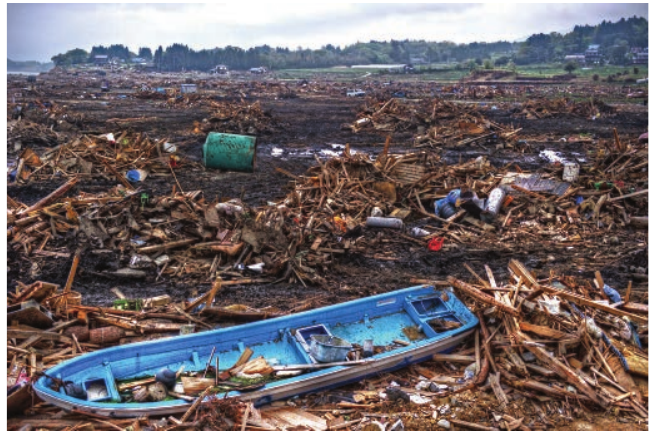
The 2011 Tohoku earthquake and tsunami in Japan demonstrates the catastrophic potential of seismic hazards. This magnitude 9.0 event generated tsunami waves exceeding 40 metres in height that travelled over 10 kilometres inland along Japan's Pacific coast. The disaster resulted in nearly 16,000 deaths, over 6,000 injuries, and 2,500 people missing. Approximately 300,000 individuals were displaced from their homes. The built environment suffered severely, with 127,000 buildings destroyed, 277,000 half-collapsed, and 750,000 partially damaged. The economic cost to insurers exceeded $30 billion, whilst Japan's total economic loss reached $235 billion. The Fukushima nuclear power plant was seriously affected, requiring evacuation of people within a 20-kilometre radius.
Note
In September 2018, a magnitude 7.5 earthquake struck Sulawesi in Indonesia, with its epicentre located 77 kilometres from the city of Palu. This event triggered a localised tsunami with an estimated height of 4-7 metres that struck Palu shortly afterwards. The earthquake occurred due to mostly horizontal crustal movement, which triggered underwater rockslides that caused the tsunami. Because Palu sits at the end of a narrow bay, the tsunami force became more concentrated as it approached. The waves reached nearly six metres in height and devastated a festival taking place on Palu's main beach, killing or injuring many participants.
Preparedness
Being prepared for earthquakes is essential because these events can occur with virtually no warning. Communities and individuals who adopt preparedness measures are significantly better positioned to survive and recover from seismic events.
Individual and household preparedness
The simple safety mantra "Drop, cover, and hold on" should be taught to children from a young age and practised regularly. This procedure helps individuals protect themselves during the shaking. Several practical steps can be taken within homes to reduce injury risk:
- Heavy items such as televisions, refrigerators and bookcases should be properly secured to walls
- Breakable items should be stored at low levels to prevent them falling and causing injuries
- Families should establish a communication plan, such as a WhatsApp group, and designate an emergency meeting location
- If financially feasible, households should maintain an emergency supply kit lasting a few days, containing tinned food, water, clothing, bedding, a first-aid kit, toilet paper, a torch, a fire extinguisher, a whistle and a radio
Structural preparedness
Homes should be made structurally sound, particularly in countries where building codes are lax or non-existent. In earthquake-prone regions, proper construction standards can mean the difference between survival and tragedy. Where financially possible, individuals should consider taking out specialised earthquake insurance policies to help with recovery costs.
The challenge of earthquake prediction
Important
Predicting earthquakes remains extremely difficult. Whilst regions at risk can be identified through plate tectonic analysis, determining exactly when and where an earthquake will strike is unrealistic for the foreseeable future.
Various attempts have been made to identify precursor signs, including:
- Monitoring groundwater levels
- Detecting release of radon gas
- Observing unusual animal behaviour
- Monitoring fault lines for signs of movement
Example
Monitoring Seismic Gaps: The San Andreas Fault
The San Andreas fault serves as an example of earthquake monitoring. Close studies of fault lines can sometimes indicate potential earthquake locations along the fault. Analysis of events between 1969 and 1988 revealed the existence of a seismic gap - an area that had experienced no significant seismic activity for the past twenty years - in the Loma Prieta region.
This area suffered an earthquake in October 1989 measuring 6.9 Mw, the worst to hit the San Francisco Bay region since 1906. Despite this successful identification through survey work, the event remained entirely unexpected and unpredictable, like all earthquakes. This system proved limited when the 1994 Northridge earthquake occurred on a previously unknown fault line.
Important
Key Definition: Seismic Gap
A seismic gap is an area along a fault line that has not experienced any significant seismic activity for approximately twenty years or more, making it a potential location for future earthquakes.
Mitigation
Mitigation strategies aim to reduce the damage and casualties caused by earthquakes when they do occur. These measures acknowledge that earthquakes cannot be prevented but can be managed more effectively.
Early warning systems
The damaging surface waves generated by earthquakes take time to travel from the epicentre to populated areas. Early warning systems exploit this time lag to give people crucial seconds to protect themselves. In Japan, the Earthquake Early Warning system aims to reduce earthquake-related damage by immediately slowing down trains, controlling lifts, and enabling people to take protective action quickly. These systems provide only a short warning time but can save many lives.
Hazard-resistant structures
Buildings can be designed and constructed to be earthquake resistant. Three main engineering approaches exist:
Base isolation and counterweights: Large concrete weights are placed on top of buildings that can move in the opposite direction to earthquake forces, aided by computer programmes. This counteracts the stress imposed by seismic shaking.
Shock absorbers: Large rubber shock absorbers are installed in building foundations, allowing some structural movement without causing failure. This flexibility helps buildings withstand shaking rather than resisting it rigidly.
Cross-bracing: Buildings are reinforced with cross-bracing to hold them together more effectively during shaking. Older buildings and structures, such as elevated motorways, can be retrofitted with such devices to improve their earthquake resistance.
Example
Comparing Construction Standards: Loma Prieta vs Armenia
The effectiveness of different construction types becomes evident when comparing earthquake impacts. The 1989 Loma Prieta earthquake (6.9 Mw) in California and the 1988 Armenia earthquake (6.8 Mw) showed dramatically different death tolls:
- California: 65 deaths with more earthquake-proof buildings
- Armenia: Over 25,000 deaths due to weak foundations and lack of earthquake-proofing
Many Armenian victims died inside buildings that collapsed due to weak foundations and lack of earthquake-proofing features. In Leninakan, for example, over 90% of more modern 9-12 storey precast concrete frame buildings were destroyed.
Key lesson: Proper earthquake-resistant construction can reduce casualties by a factor of hundreds, even when earthquake magnitudes are similar.
Tsunami protection
Tsunamis cannot be predicted entirely, even when the magnitude and location of an earthquake are known. However, certain automated systems can provide warnings. The most effective tsunami warning systems use sea-bed pressure sensors attached to buoys, which constantly measure the pressure of the overlying water column. Regions experiencing high tsunami risk can deploy warning systems, such as klaxons, to alert populations before waves reach land.
Note
The Pacific Tsunami Warning and Mitigation System (ICG/PTWS), co-ordinated by UNESCO and based in Hawaii, monitors earthquake activity and issues warnings to countries around the Pacific Edge when tsunamis are likely. Some countries have constructed prevention walls reaching up to 12 metres in height, though these have not proved very effective as large tsunamis can overwhelm them.
Prevention
Note
Attempting to prevent earthquakes is generally thought to be almost impossible. This reality, however, has not stopped investigation into feasibility schemes. Some researchers have explored whether lubricating active faults with water or oil might stop them becoming stuck. A few individuals have even suggested using nuclear explosions at depth to release built-up tectonic stress. None of these approaches have proven practical or safe, and earthquake prevention remains beyond current technological capabilities.
Adaptation
Long-term adaptation depends on changing people's behaviour based on economic development levels, education, and national and regional priorities. People in more economically developed countries, such as the USA and Japan, are generally better able to adapt their environment than those in lower-income countries.
Land-use planning measures
Effective land-use planning can significantly reduce earthquake vulnerability:
- Identifying areas most at risk from seismic events and regulating land-use planning for those areas, or limiting the type of development that can be constructed
- Locating key buildings, such as schools and hospitals, in low-risk areas and positioning open spaces, such as parks, in higher-risk zones
- Including open spaces in urban plans to provide safe areas away from fires and aftershock damage to buildings
Emergency service adaptation
Important
Emergency services must adapt their organisation and planning to handle seismic events effectively. Heavy lifting equipment should be available, and emergency service personnel should receive first-aid training to deal with casualties immediately following a seismic event. Training should occur well in advance, as there could be considerable time before trained medical personnel arrive at affected areas.
Remember!
Summary
Key Points to Remember:
-
Preparedness is crucial because earthquakes occur without warning - the "Drop, cover, and hold on" mantra and emergency supplies can save lives
-
Early warning systems in countries like Japan provide vital seconds for people to protect themselves by detecting earthquake waves before they reach populated areas
-
Earthquake-resistant building design dramatically reduces casualties - the contrast between California and Armenia earthquake deaths demonstrates this clearly
-
Land-use planning that places critical facilities in low-risk areas and includes open spaces significantly reduces earthquake vulnerability
-
Whilst earthquake prediction remains impossible, monitoring seismic gaps and fault lines can identify high-risk areas, though not when events will occur