Distinctively Arid Geomorphological Processes (AQA A-Level Geography): Revision Notes
📚Revision Notes
Distinctively arid geomorphological processes
Weathering in hot deserts
Desert landscapes are shaped by weathering processes that may seem quite different from those in wetter climates. Most weathering in hot deserts is mechanical or physical in nature. However, it's important to understand that weathering doesn't happen due to just one factor - it's a combination of several elements working together. The main factors that control weathering in arid environments include:
- Regular heating and cooling cycles of rocks
- Presence of moisture, even in very small quantities
- Activity of living organisms
Note
Different weathering processes play varying roles in desert environments. What's clear is that changes in energy input and water availability are crucial factors that determine which processes dominate and how quickly weathering occurs.
Thermal fracture
Thermal fracture is a type of mechanical weathering that happens because of the rapid heating and cooling of rocks in desert environments. The extreme temperature changes that rocks experience cause this process to occur.
During the day, air temperatures can rise rapidly to over 40°C. The surface layers of exposed rocks can become much hotter - reaching up to 80°C in particularly exposed locations. At night, temperatures fall very rapidly, typically dropping below 10°C. In some places, temperatures can even reach 0°C. This creates a huge diurnal range (the difference between daytime high and nighttime low temperatures) and establishes a regular pattern of heating and cooling. The exposed rock also regularly expands during the day as it heats up and contracts at night as it cools down.
Important
This is quite a simplistic way of understanding how thermal weathering works on desert rocks. Scientists now believe that rock disintegration (or breakdown) happens through a combination of several weathering processes working together in different ways, not from temperature changes alone.
Exfoliation
The mechanical weathering process called exfoliation causes the outer layers of rock to peel off (Figure 2.18 below). This 'onion-skin weathering' was once thought to result simply from pressure changes in the rock as the outer layers were exposed to cycles of heating and cooling.
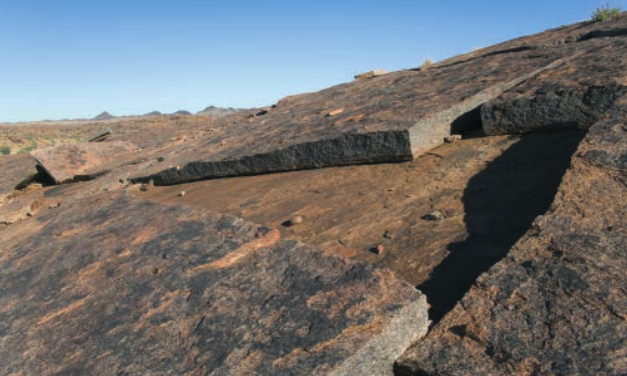
However, the reality is more complex than this simple explanation. Exfoliation typically affects reasonably uniform, coarse-grained crystalline igneous rocks. When rock at depth is under considerable pressure and erosion removes surface material through weathering, the pressure on the rocks lower down decreases. This creates tension within the rock, and cracks form that run parallel to the surface.
As the rock becomes exposed to the heating and cooling cycles described earlier, salt-rich water is drawn to the surface through capillary action. The dissolved salts become deposited in these cracks. When combined with chemical weathering processes, the cracks become larger and slabs of rock detach from the surface.
Chemical weathering
The rate of chemical weathering is generally slow in hot deserts. This is because desert environments have very little soil and moisture levels are extremely low. In more temperate and humid climates, chemical weathering helps develop soils. However, where bedrock is present at the surface in arid environments, different features form.
Because there's a lack of organic material, any soil that exists in a desert tends to be a similar colour to the parent rock from which it formed. Most chemical weathering that occurs in hot deserts results from the deposition of salts. These salts are precipitated from rain water or brought to the surface through capillary action.
Note
Several chemical weathering processes occur in deserts that contribute to the mechanical breakdown of rocks. While these processes are slower due to limited moisture, they play a significant role in rock weathering over time.
Crystal growth
Crystal growth is now recognised as one of the main agents contributing to the mechanical processes described above. When water present in spaces (like pores or bedding planes) evaporates, salts that were dissolved in the water get deposited. Over time, larger and larger crystals develop.
These salts have different thermal capacities compared to the surrounding rock. This means they're often believed to heat and cool at different rates. As they expand and contract, these changes can assist in the mechanical breaking down of the rock. The expanding and contracting salts help break the rock apart.
Hydration
Hydration is another chemical process linked to the mechanical breakdown of rocks in hot deserts. Some rocks can absorb any water that's available, even in tiny amounts like morning dew. As rocks absorb this water, they may physically swell, causing stress to develop in the rock. This makes the rock vulnerable to other types of mechanical breakdown.
Where hydration causes salt minerals in certain rocks to alter chemically, they can become weaker and more vulnerable to other kinds of chemical weathering. For example, when water is added to the mineral anhydrite, gypsum forms.
Hydrolysis
Hydrolysis occurs where mildly acidic water reacts or combines with minerals in the rock. This creates clays and dissolvable salts, which themselves degrade the rock. Both products are likely to be weaker than the parent rock, making it more susceptible to further degradation.
Oxidation
Oxidation is the breakdown of rocks by oxygen and water. This process leads to a common feature of many hot deserts - the red-brown colour of many surface rocks. Materials rich in iron have been oxidised (rust).
As any available moisture continually gets drawn to the surface and evaporates, many of these chemical weathering processes lead to accumulations of salts on or near the surface. Over time, these can become cemented and create layers called duricrust or hardpans.
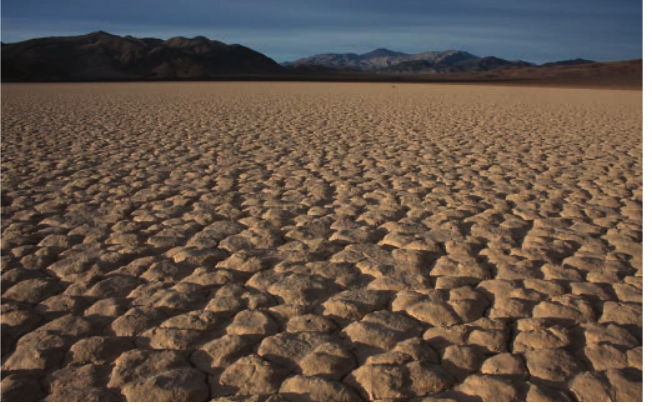
The chemical nature of the underlying rock determines what kind of crusts form. In areas with calcium-rich limestone, crusts form. Where lime is present, gypcrete is created, whilst calcrete gets deposited in other lime-bearing areas.
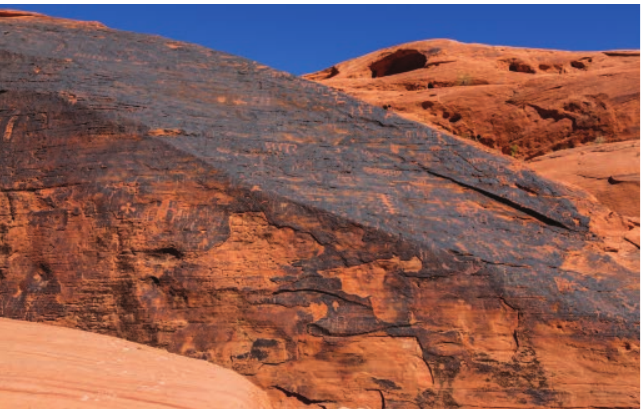
Where iron and manganese oxides have been weathered from rocks at depth and drawn to the surface in solution, the desert heat evaporates the water. This leaves behind a deep red stain, glaze, or desert varnish on all exposed surfaces.
Block and granular disintegration
In rocks that are either heavily jointed (like granites) or have prominent bedding planes (like limestone), the various mechanical processes described above can cause masses of rock to break down into large blocks. This is called block disintegration.
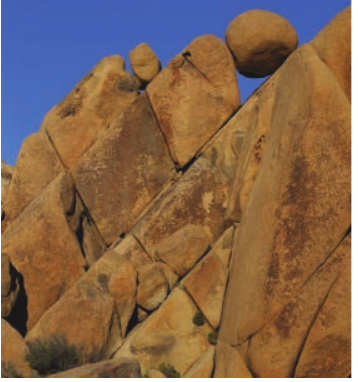
Many igneous rocks like granite have a uniform structure and form in large masses deep below the Earth's surface. When they form, regularly spaced fractures develop. The weight of the rock above is reduced by erosion of the overlying rock, and the rock slowly rises to the surface through uplift. These fractures open slightly, becoming joints.
Even the smallest amounts of available water in the deserts can enter these cracks. Combined with the constant heating and cooling, the water can now chemically weather the rock along these faults. This leads to blocks of rock literally breaking off (block disintegration).
Note
If temperatures do drop below freezing, there's also the possibility that freeze-thaw weathering can occur. During the day, liquid water enters the joints, then freezes at night when temperatures drop below 0°C. As water freezes, it expands by about 9%, exerting pressure on the surrounding rock. Repeated cycles of freezing and thawing can lead to blocks of rock being dislodged. (This process was traditionally known as congelifraction.)
Where rocks have a more granular structure, they can be broken down into separate grains. This happens through both freeze-thaw processes and differential thermal expansion and contraction caused by the huge temperature ranges in hot deserts.
Example
How Granular Disintegration Works:
Step 1: Even small amounts of moisture (such as morning dew) find their way into pore spaces within the granular rock.
Step 2: If the temperature drops below freezing, the water expands, putting pressure on the surrounding grains of rock.
Step 3: With repeated freezing and thawing, individual rock particles get dislodged.
Additionally, where rocks have a granular structure, different minerals heat up and cool down at different rates during the diurnal heating and cooling cycle. This leads to individual particles of rock expanding and contracting at different rates, which causes individual grains to break off through granular disintegration.
The role of wind in hot deserts
Wind is one of the main inputs in hot desert systems. As a driver of change, it contributes to a range of geomorphological processes occurring in these environments.
Wind and aeolian processes (wind-related processes) are very common features of hot desert environments and their margins. This is because:
- The cloudless skies and high angle of incidence means air at the surface gets heated and rises. Cooler air moves in to replace it. This movement of air creates winds.
- Many desert regions are relatively barren with few surface features to create friction that would reduce wind speed or provide shelter. Therefore, winds can blow unimpeded for considerable distances.
Because wind has energy and is moving, it can erode, transport and deposit sediment. This has a significant impact on the landscape of hot desert regions.
Erosion by wind
There are two main processes of wind erosion:
Abrasion
Abrasion is often referred to as a sandblasting or sandpapering effect. Material carried by the wind hits exposed rock surfaces and creates a range of erosional features.
Several factors affect the rate of abrasion:
- The direction, frequency and velocity of the wind
- The lithology (nature) of the rocks
- The size and nature of the particles carried by the wind
Deflation
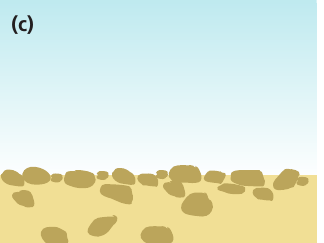
Deflation is the process where wind removes dry, unconsolidated sand, silt and clay particles from the surface and transports them away. Wind only removes the finer material, creating a surface covered in a concentration of coarse and fine pebbles. This surface is known as reg or desert pavement.
Note
Wind can remove very significant amounts of material from the surface, creating deflation hollows. Some of the largest deflation hollows are found in North Africa, where they can extend over hundreds of square kilometres.
Example
The Qattara Depression:
The Qattara Depression in Egypt is the deepest deflation hollow, reaching 134 metres below sea level at its deepest point.
There's some debate about the exact combination of processes that creates these huge desert depressions. However, wind has undoubtedly contributed to removing the millions of tonnes of sand and other material that was once present there. The depth of deflation hollows is controlled by the level of underlying groundwater.
Transportation by wind
Wind is an almost ever-present feature of many hot desert environments. With large amounts of loose surface material available, wind transport is extremely important in shaping the landscape. The transportation of sediment by wind isn't only an important agent of change in terms of erosion processes. It's also crucial for creating depositional landforms through transporting and then depositing material in new locations.
Summary
Key Points to Remember:
- Desert weathering involves both mechanical and chemical processes working together, not just temperature changes alone.
- Thermal fracture, exfoliation and crystal growth are key mechanical weathering processes enhanced by extreme diurnal temperature ranges in hot deserts.
- Chemical weathering is slower in deserts due to limited moisture, but processes like hydration, oxidation and crystal growth still significantly break down rocks.
- Wind is a dominant force in hot deserts, causing erosion through abrasion (sandblasting effect) and deflation (removing fine particles to create desert pavement).
- Distinctive arid features include desert varnish, hardpans, block and granular disintegration, and deflation hollows that can extend hundreds of square kilometres.