Methods, Influence, and Effectiveness of Civil Rights Campaigns (AQA A-Level Politics): Revision Notes
📚Revision Notes
Methods, Influence, and Effectiveness of Civil Rights Campaigns
Methods used by civil rights campaigns
Civil rights organizations in both the UK and USA employ many comparable campaigning tactics. These include organizing marches and rallies, lobbying politicians, engaging in direct action, and practicing civil disobedience (deliberately breaking laws as a form of protest).
However, there are significant differences in how campaigns operate across the two nations:
Use of the courts
American pressure groups (organized groups seeking to influence government policy) make far more frequent use of the judicial system than their British counterparts. This is because the US Supreme Court possesses the power to strike down legislation as unconstitutional or make interpretative amendments to the Constitution. This gives civil rights campaigners a powerful tool for achieving their objectives through legal challenges.
Note
Key Difference in Legal Systems
The US Supreme Court's unique power to strike down legislation provides American civil rights groups with a powerful avenue for change that British groups historically lacked. This explains why legal challenges are a central strategy for US campaigns.
In the UK, pressure groups have traditionally had less scope for judicial action. However, since the introduction of the Human Rights Act (HRA) in 1998, British campaigners have increasingly used judicial review (the process by which courts examine whether government decisions are lawful) to challenge government actions and policies.
Campaign spending
Financial resources play a dramatically different role in the two countries. US pressure groups spend vastly more money than British organizations on supporting or opposing political candidates during elections. This disparity exists because the UK imposes strict limits on election spending, whilst the USA allows far greater financial contributions to political campaigns.
Important
Financial Influence and Political Power
The difference in campaign spending regulations has created fundamentally different environments for civil rights advocacy. US groups can wield enormous financial influence through election spending, whilst UK groups must rely more heavily on other campaigning methods due to strict spending limits.
Influence and effectiveness of civil rights campaigns
Impact on public attitudes
Civil rights campaigns have successfully transformed public opinion across both nations. Today, open displays of racism, homophobia, and misogyny are generally considered unacceptable in most of modern society. Significant legal reforms have been achieved benefiting people of colour, women, and the LGBTQ+ community.
Religious campaigns and abortion rights
Religious campaigns have exercised considerably more influence in the USA than in the UK. This difference is particularly evident in debates over abortion rights:
Note
Abortion Rights: A Transatlantic Comparison
- United Kingdom: Pro-choice abortion campaigners have successfully extended abortion rights to Northern Ireland
- United States: Abortion rights face ongoing threats from state-led restrictions and the possibility that the Supreme Court might reverse the landmark Roe v Wade decision (which established constitutional protection for abortion rights)
This stark contrast illustrates how religious influence shapes policy outcomes differently across the two nations.
Women's rights campaigns
Campaigners for women's rights have achieved greater success in the UK compared to the USA:
- Many US conservatives, including conservative women, have actively opposed reforms such as the Equal Rights Amendment (a proposed constitutional amendment guaranteeing equal rights regardless of sex)
- The USA remains the only developed country that does not grant women any right to paid maternity leave
- By contrast, UK women are entitled to receive some pay for 39 weeks of maternity leave
Important
A Striking International Anomaly
The USA stands alone as the only developed country without paid maternity leave, whilst the UK provides 39 weeks of paid maternity leave. This demonstrates how cultural and political factors can lead to vastly different outcomes for similar campaigns in the two countries.
The National Rifle Association's unique influence
The National Rifle Association (NRA), a gun rights lobbying organization, possesses a degree of influence over US politicians that is unparalleled by any civil rights group in the UK. The NRA's ability to deploy significant financial resources for electioneering gives it extraordinary power. For example, the NRA spent $52.5 million during the 2016 election. The UK has no equivalent civil rights organization with comparable financial clout or political influence.
Important
Unparalleled Financial Power
The NRA's $52.5 million spending in the 2016 election alone exceeds the entire budgets of most UK civil rights organizations over multiple election cycles. This extraordinary financial capacity allows the NRA to exert influence on a scale that has no British equivalent.
Civil liberty campaigns
Civil liberty campaigns have successfully highlighted illiberal measures taken by governments in both countries. These include controversial methods used to deal with terrorist suspects and immigrants. However, neither US nor UK campaigners have managed to prevent their governments from implementing such measures, though they have likely helped to limit their scope and application.
Note
Limited but Important Impact
Whilst civil liberty campaigns have not prevented controversial government measures, their work in exposing and challenging these policies has been valuable. They have likely constrained the extent of illiberal measures and kept civil liberties in the public consciousness.
Government attitudes and civil rights
The attitude of the government undoubtedly influences how successful civil rights campaigns can be. President Trump's approach toward illegal immigrants, transgender people, and the Alt-Right (a far-right political movement) demonstrates how hostile government policies can undermine civil rights progress.
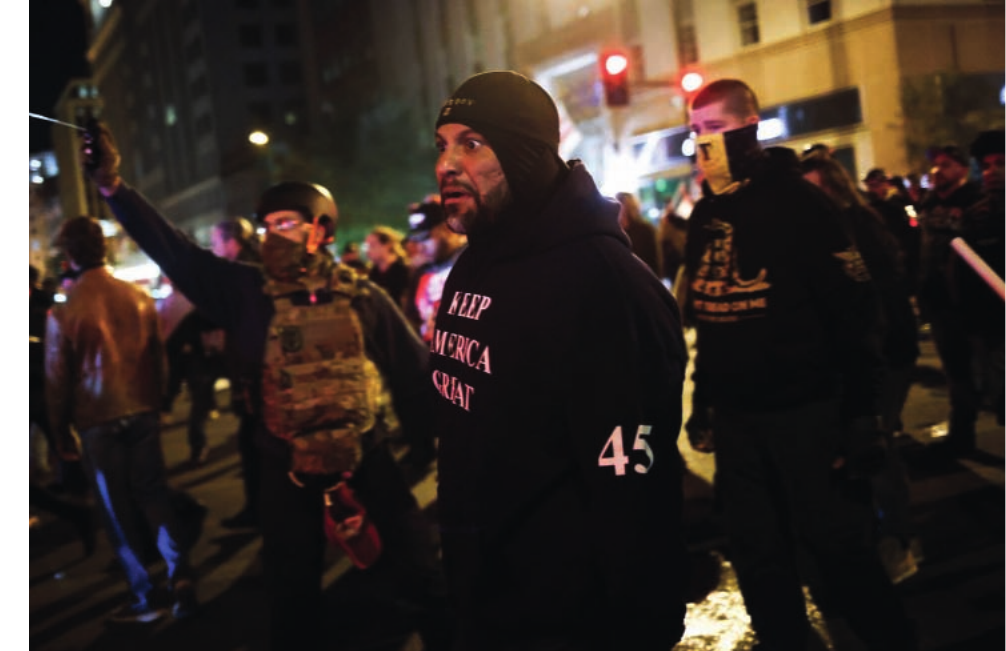
The photograph above shows members of the Alt-Right group Proud Boys clashing with counter-protesters, illustrating the tensions that can arise when government attitudes embolden extremist groups.
Societal attitudes matter equally
Whilst government policy is important, the attitude of wider society is just as crucial for achieving lasting change. Two major social movements have exposed deep-rooted problems in both countries:
Black Lives Matter
The Black Lives Matter campaign has revealed the underlying racism that persists in US society and, to a certain degree, in the UK. Despite decades of civil rights activism, systemic racial inequality remains a serious problem.
Example
Example: The Stephen Lawrence Case
In the UK, the story of Stephen Lawrence and his family's fight for justice after his racist murder highlighted institutional racism within the police force. This case became a watershed moment in British race relations, leading to the Macpherson Report which identified institutional racism in the Metropolitan Police and prompted significant reforms in how police forces handle racist crimes and interact with minority communities.
#MeToo movement
The #MeToo movement exposed the widespread experience of sexual harassment and assault faced by women on both sides of the Atlantic. This campaign revealed that misogynistic attitudes run deep in both societies, with women continuing to face a greater risk of domestic abuse and murder, as well as a persistent gender pay gap.
Ongoing challenges
Despite progress, multiple forms of discrimination persist in both the USA and UK:
- Homophobia (prejudice against LGBTQ+ people)
- Transphobia (prejudice against transgender people)
- Islamophobia (prejudice against Muslims)
- Anti-Semitism (prejudice against Jewish people)
Important
The Continuing Struggle
Legal reforms alone are insufficient if discriminatory attitudes and practices continue in everyday life. To be truly effective, civil rights campaigns need to challenge these underlying attitudes and ensure that the rule of law is applied fairly at all levels of the justice system.
Summary
Key Points to Remember:
-
Common methods: Civil rights campaigns in both countries use marches, rallies, lobbying, direct action, and civil disobedience
-
Key differences: US groups use courts more extensively due to Supreme Court powers and spend far more on elections than UK groups (which face spending limits)
-
Variable success: Religious campaigns have greater influence in the USA, whilst women's rights campaigns have been more successful in the UK
-
Unique US influence: The NRA's financial resources ($52.5 million spent in 2016) give it unparalleled influence over politicians compared to any UK civil rights group
-
Deep-rooted attitudes: Despite legal progress, underlying discrimination persists in both societies, as demonstrated by the Black Lives Matter and #MeToo movements, requiring campaigns to continue challenging societal attitudes alongside pursuing legal reforms