Party Policies (AQA A-Level Politics): Revision Notes
📚Revision Notes
Party Policies
Comparing party policies between the UK and USA reveals both striking similarities and important differences. While it might seem straightforward to pair Conservatives with Republicans and Labour with Democrats, the reality is more nuanced. Understanding these policy positions helps explain how political parties in each country approach governance and represent their voters' interests.
Areas of similarity
Conservatives and Republicans
Both the Conservative Party in the UK and the Republican Party in the USA share core policy positions that reflect their centre-right ideology:
Lower taxes for business and individuals
Both parties believe that reducing taxation stimulates economic growth and innovation. They argue that wealth will 'trickle down' to benefit all sectors of society. In 2018, President Trump cut income tax and slashed the corporate tax rate from 35% to 21%. This commitment to low taxes is so fundamental to Republicans that when President George H. W. Bush broke his famous promise 'Watch my lips, no new taxes', it contributed significantly to his 1992 election defeat.
Note
Margaret Thatcher's tax reforms represent one of the most dramatic shifts in UK fiscal policy. The reduction from 83% to 60% in 1980, then to 40% in 1989, fundamentally changed Britain's approach to taxation of high earners and became a defining feature of Conservative economic policy.
In the UK, Conservative governments have pursued similar policies. Margaret Thatcher dramatically reduced the top rate of income tax from 83% to 60% in 1980, then to 40% in 1989. More recently, Chancellor George Osborne abolished the 50p tax rate on earnings over £150,000 in 2012, and the Conservatives cut corporation tax from 28% to just 19% between 2010 and the present day.
Strong armed forces
Both parties prioritise military strength and defence spending. During Trump's first term, the military budget increased from just over $600 billion to around $700 billion, as part of his pledge to 'rebuild' America's military strength. While the UK budget increases have been more modest, the Conservatives demonstrated their commitment through strong support for the renewal of the Trident nuclear submarine programme and retention of Britain's nuclear deterrent.
Strong nation state
Trump's 'America First' platform emphasised national sovereignty and seeking better trade deals, particularly with China. This mirrors the Eurosceptic wing of the Conservative Party, which campaigned to 'bring back control' from the EU in areas such as immigration and fishing policy. Both parties also share wariness of international bodies: Conservatives with the EU, and Republicans with the UN and the World Health Organization (WHO), both of which had their funding cut under Trump.
The importance of individual freedom
Both parties emphasise limiting government interference in people's lives. Reagan famously quipped, 'The nine most terrifying words in the English language are: I'm from the government, and I'm here to help.' Thatcher similarly promised to 'roll back the frontiers of the state', with both parties decrying what they portray as the 'nanny state'.
Important
Despite their rhetoric about individual freedom, both parties have significantly expanded the surveillance state following terror attacks. This reveals a key tension in conservative ideology: the balance between individual liberty and national security concerns. The Patriot Act 2001 (USA) and Counter-Terrorism and Border Security Act 2019 (UK) demonstrate that ideology can be flexible when security is perceived to be at stake.
However, both parties have expanded the surveillance state following terror attacks. In the USA, this included the Patriot Act 2001 passed after 9/11, while the UK introduced the Counter-Terrorism and Border Security Act 2019. These measures reveal that conservatives sometimes balance individual liberty against national security concerns.
Abandoning fiscal prudence in times of crisis
Both parties demonstrate pragmatism by abandoning their commitment to limited government spending when facing crises. The COVID-19 pandemic saw both Trump and Johnson implement massive emergency support measures to keep businesses afloat and workers receiving income. This shows that ideology and fixed political principles can be jettisoned when circumstances demand pragmatism and protection of the national interest.
Labour and Democrats
The centre-left parties in both countries share several key policy positions:
Reducing the economic gap
Both parties aim to reduce inequality between the richest and poorest in society, making the wealthy and large corporations pay their 'fair share' in taxes. Labour's 2019 manifesto pledged to introduce a new 45% income tax rate starting at £80,000 annually, and a 50% rate starting at £125,000. The Democrat platform in 2020 stated: 'We will make sure the wealthy pay their fair share in taxes. We will make sure investors pay the same tax rates as workers and bring an end to expensive and unproductive tax loopholes.'
Better public services for all
Both parties strongly commit to improving public services, especially for the poorest in society, through increased public spending. Blair's administration famously prioritised 'Education, education, education' while greatly increasing NHS spending. Under Obama, there was a concerted effort to extend healthcare to nearly all uninsured Americans, resulting in the Affordable Care Act (Obamacare) being passed in 2010.
International cooperation
Democrats and Labour both embrace internationalism and enthusiasm for global bodies. The bulk of the Labour Party supported remaining in the EU during the referendum, though leader Jeremy Corbyn was notably less enthusiastic. Obama's administration followed a more multilateral approach to foreign policy, rejecting Bush's 'axis of evil' terminology and working for better relations with countries traditionally less well disposed towards the USA. He also focused on reducing US military presence in Iraq and Afghanistan.
Multiculturalism
Both parties celebrate the benefits of a multicultural and diverse society, and are less focused on cutting immigration numbers. They pride themselves on being inclusive and tolerant, and both draw substantial electoral support from ethnic minorities. In 2019, when Labour performed poorly overall, it still led among voters from minority ethnic groups by 64% to 20%.
Note
The Democrats' support for civil rights represents a major party realignment. While Democrats opposed civil rights in the early 20th century, the civil rights movement since the 1960s has been strongly associated with Democratic leadership, with prominent activists including Jesse Jackson and John Lewis among their ranks. Labour has similarly promoted racial equality, passing the original Race Relations Act in 1965.
The Democrats have been strong supporters of the civil rights movement since the 1960s, with prominent activists including Jesse Jackson and John Lewis among their ranks. Labour has long promoted racial equality, passing the original Race Relations Act in 1965. However, it should be noted that more illegal immigrants were actually deported under Obama than under Bush.
Areas of difference
Despite these similarities, significant differences exist between the party pairings that reflect distinct political cultures and priorities.
Policy differences
Social conservatism
Important
The Republican Party is considerably more conservative on social issues than UK Conservatives. This represents one of the most significant differences between the party pairings and reflects deeper cultural differences between the two nations.
The Republican Party is considerably more conservative on social issues than UK Conservatives. While Conservative Prime Minister David Cameron introduced same-sex marriage (despite most of his party's MPs voting against it), many Republicans, especially those from the South and Midwest, remain more wedded to traditional values. The evangelical 'religious right' holds considerable sway among Republicans, a powerful voting bloc largely absent from UK politics.
Republicans are also much more uniformly pro-life and anti-abortion than British Conservatives. Gun rights and defence of the Second Amendment are virtually an article of faith for most Republicans, in stark contrast to their UK counterparts, where the issue is rarely prominent and never partisan.
Militant libertarianism
There is a militant libertarian and anti-government streak among many Republicans that is largely absent from most Conservatives. This manifests in various ways beyond Second Amendment defence. A fair number of Republican-inclined Americans have adopted anti-vaccination stances, and during the COVID-19 pandemic, many protested vehemently against imposed lockdowns and compulsory mask-wearing. A poll in May 2020 found that 23% of Americans would not be willing to get vaccinated against COVID-19, with fears ranging from mistaken beliefs about childhood illnesses to outlandish claims about microchipping. Many simply do not like being told what to do by their own government.
By contrast, such militant libertarianism is largely absent from the UK, and Conservatives focus much more on challenging international (primarily EU) interference rather than their own government's authority.
Healthcare debates
Important
The debate over healthcare represents the clearest policy difference between the countries. The NHS enjoys cross-party support in the UK, while healthcare remains deeply partisan in the USA.
The debate over healthcare represents a clear difference between the countries. Even within the Democrats, many oppose the 'socialist' healthcare plans advocated by the party's most progressive wing, including Bernie Sanders and Elizabeth Warren, who promoted a 'Medicare for All' option in the 2019 primaries. Many Democrats remain suspicious of a single dominant state-provided healthcare system.
In stark contrast, devotion to and protection of the NHS is a prerequisite for both Labour and Conservative parties in the UK. The political battleground is fought instead over funding levels and the role of private providers in delivering NHS services. Even during Brexit, the Leave campaign gained support through its notorious 'Battle Bus promise' to spend an additional £350 million a week on the NHS, the amount it claimed the UK would save by leaving the EU.
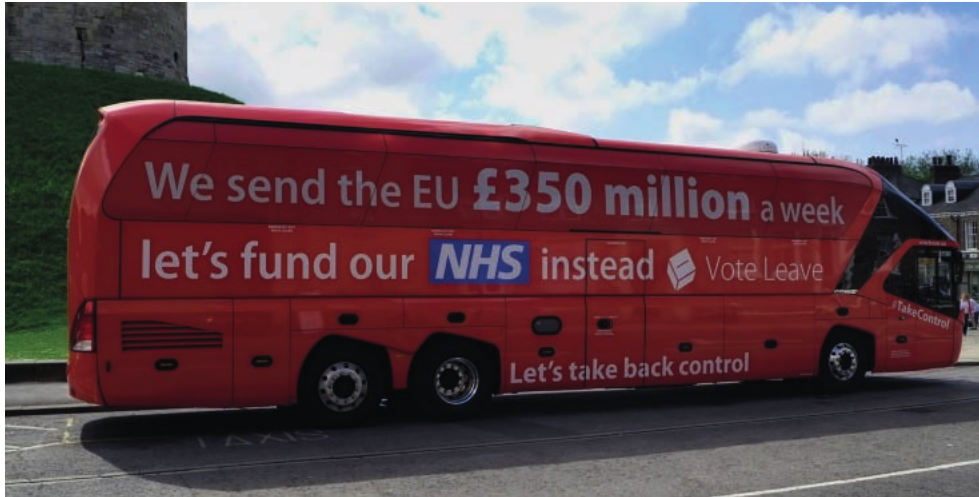
The cross-party support during the COVID-19 crisis, including the public clapping for NHS staff, has no direct parallel in the USA, demonstrating the unique status the NHS holds in British political culture.
Ideology
Note
UK parties have traditionally been more explicitly ideological and influenced by key political thinkers than their US counterparts. This reflects a fundamental difference in political culture: British parties often trace their philosophical lineage to specific thinkers and traditions, while American parties are more pragmatic and coalition-based.
UK parties have traditionally been more explicitly ideological and influenced by key political thinkers. The Labour Party owes a considerable ideological debt to socialist thinkers such as the Webbs, while its famous Clause IV (adopted in 1918 but modified in 1995) was essentially Marxist in origin, with its commitment to wholesale nationalisation. Similarly, the Conservative Party, although historically less wedded to formal ideology, has often embraced the ideas of Burke and the notion of Disraelian 'one-nation Toryism'.
Even the more strident conviction brand of conservatism seen in the 1980s owed a debt to classical liberalism and laissez-faire economics. The Conservative name assumes an affinity with the past and suspicion of abstract radical ideas, while Labour harks back to its 1900 origins as the party of and for the working class.
In the USA, party labels are essentially meaningless – both support the notion of a republic and democracy. Their names give no real clue to their origins or policy positions.
Relationships between party leaders
Examining relationships between leaders provides insight into party alignments. Conservative Prime Minister Margaret Thatcher and Republican President Ronald Reagan developed a famous friendship in the 1980s, which makes sense given their shared commitment to free markets and opposition to Soviet totalitarianism. Less obvious was the close relationship between conservative Republican George W. Bush and Labour's Tony Blair, especially over foreign policy in the Middle East and the wars in Iraq and Afghanistan.
Note
Personal chemistry and circumstances often matter as much as shared ideology in determining leader relationships. Obama's apparent reluctance to meet with Labour's Gordon Brown, and Trump's lack of chemistry with Conservative Theresa May, show that 'equivalent' party leaders don't automatically form strong working relationships.
However, there was reportedly a lack of personal chemistry between Republican Donald Trump and Conservative Theresa May. Meanwhile, Democrat Barack Obama apparently turned down no fewer than five requests from Downing Street to hold a bilateral meeting with Labour Prime Minister Gordon Brown. This demonstrates that leaders from supposedly 'equivalent' parties do not always get on well with each other, and vice versa.
Overall comparison
On most policy positions, it might be argued that the Republicans remain to the right of the Conservatives, while the Democrats are to the right of Labour. There is clear policy crossover but also important differences. In the main, these reflect differences in the political culture and priorities of the two countries. The USA's more individualistic culture, stronger religious influences, and different constitutional framework shape party positions in ways that distinguish them from their British counterparts.
Remember!
Summary
Key Points to Remember:
- Conservatives and Republicans share commitments to lower taxes, strong armed forces, national sovereignty, individual freedom, and pragmatic crisis response
- Labour and Democrats both support reducing economic inequality, better public services, international cooperation, and multiculturalism
- Republicans are more socially conservative than UK Conservatives, particularly on abortion, gun rights, and religious issues
- Healthcare debates differ fundamentally: the NHS has cross-party support in the UK, while healthcare remains deeply partisan in the USA
- UK parties are more explicitly ideological, influenced by formal political theories, while US party names reveal little about their positions
- Leader relationships don't always follow party lines: personal chemistry and circumstances matter as much as shared ideology