Comparing Pressure Groups (AQA A-Level Politics): Revision Notes
📚Revision Notes
Influence and Methods of Pressure Groups
Pressure groups operate very differently in the UK and USA, despite both countries having hundreds of thousands of active groups. The structural differences between the two political systems - particularly around electoral finance, separation of powers, and constitutional arrangements - create distinct opportunities and constraints for pressure group activity. Understanding these differences is essential for comparing how democratic participation works across both countries.
Background: pressure groups in the UK and USA
Both countries have diverse pressure group landscapes, ranging from small local organisations protesting hospital closures to well-funded national institutions with powerful government connections. However, the rules governing their activities differ significantly.
In the USA, pressure groups can spend unlimited amounts on electoral campaigning, whereas UK groups face tight restrictions. The power of the US Supreme Court means American groups use legal action more frequently, hoping to secure landmark constitutional rulings that can fundamentally change the law.
Note
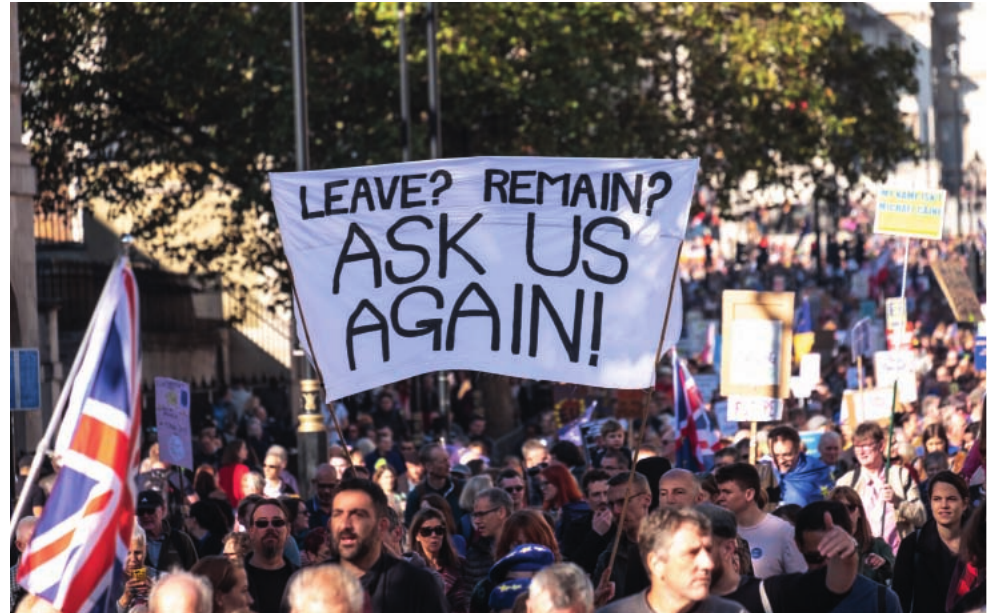
The history and culture of each country has shaped which types of groups are prominent. In the USA, 'culture wars' over issues like race, guns and abortion have made groups such as the National Association for the Advancement of Colored People (NAACP) and the National Rifle Association (NRA) central to politics. The UK's closest equivalent was perhaps the Brexit debate, which generated powerful pressure groups on both the Leave and Remain sides.
Similar features across both countries
Types of groups
Both countries have similar categories of pressure groups:
Interest groups representing specific sectors exist in both systems. The US Chamber of Commerce and the Confederation of British Industry (CBI) both represent business interests. Trade unions represent workers through the AFL-CIO (a federation of US labour unions) and the Trades Union Congress (TUC) in the UK. Professional organisations also operate in both countries - the British Medical Association (BMA) and American Medical Association (AMA) both represent doctors.
Promotional groups defend similar causes across both nations. The American Civil Liberties Union (ACLU) supports civil liberties, while Liberty pursues similar aims in the UK. Environmental groups like Greenpeace operate in both countries as multinational organisations. The UK's Extinction Rebellion, founded in 2018, quickly spread to the USA.
Organisational structures
Pressure groups have similar organisational structures in both countries, though US groups often maintain both federal and state-based offices. The insider/outsider and promotional/interest typologies can be applied to groups in both systems.
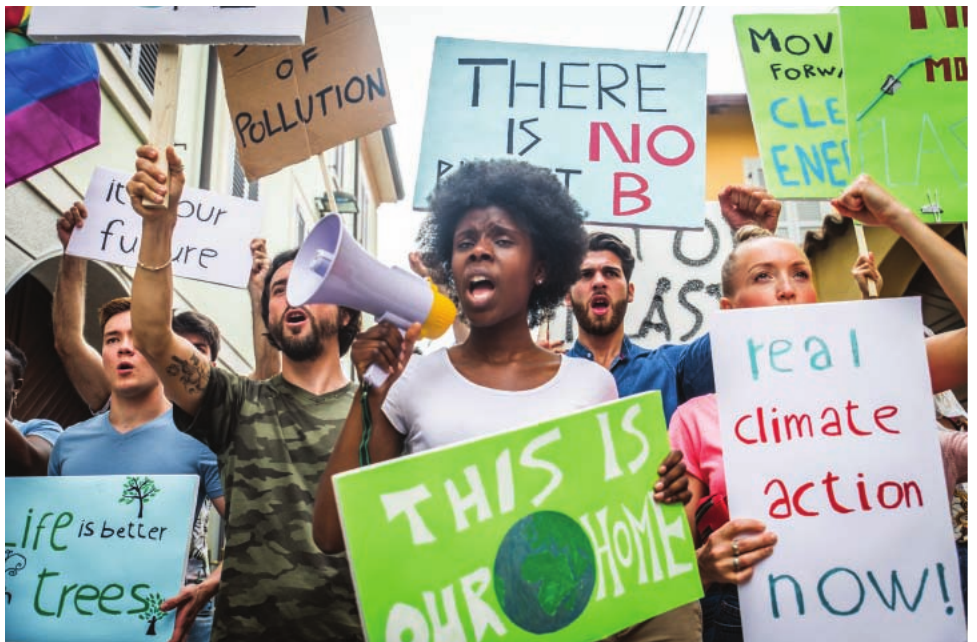
Both countries have experienced a rise in social movements in recent years, many with international reach such as Black Lives Matter and the youth climate movement.
Key structural differences in influence
Access points
Important
The access points available to pressure groups differ dramatically between the two systems, creating fundamentally different opportunities for influence.
In the USA, the federal system and separation of powers create numerous opportunities for pressure group activity:
- A directly elected president and two elected chambers of the legislature
- House seats contested every 2 years (with one-third of Senate seats), making elections more frequent than in the UK where general elections should occur only every 5 years under the Fixed-term Parliaments Act 2011
- Direct primary elections for selecting party candidates
- 50 state legislatures (49 of which are bicameral with elections to both chambers)
- 50 directly elected state governors, creating 50 state governments that can be lobbied, compared to three devolved governments in the UK
- More than 19,000 directly elected mayors plus city councils
Direct democracy also provides additional access points in the USA. Ballot initiatives and referendums cover issues from marijuana legalisation to felony disenfranchisement. Groups can campaign to get their priorities included on the ballot or support either side of a referendum vote.
In the UK, referendums occur less frequently and typically focus on constitutional issues affecting a narrower range of groups. The EU referendum was exceptional because the potential changes were so sweeping they engaged many promotional groups - for instance, environmental groups like Greenpeace campaigned to remain in the EU to enable collective action on climate change.
Involvement in elections
Important
The most striking difference between US and UK pressure groups concerns their involvement in elections. The contrast in electoral finance rules creates vastly different levels of influence.
US electoral involvement:
US pressure groups possess the right to spend unlimited amounts on electioneering, donating millions through PACs (Political Action Committees) and Super PACs in each election cycle. This was enabled by the Supreme Court judgement in Citizens United v Federal Election Commission (2010).
The scale of spending is enormous. In the 2020 presidential and congressional elections, Super PACs spent $1.8 billion of the total $14 billion election spending. The average cost of winning a House seat in 2016 was $1.5 million, rising to more than $19 million for a Senate seat. This means members of Congress spend up to 50% of their time fundraising, creating strong incentives to keep financial backers satisfied when voting on legislation.
US groups also spend heavily on television advertising to influence public opinion directly, giving them additional leverage over legislators who are accountable to voters.
UK electoral restrictions:
In contrast, tight restrictions limit UK pressure group electoral activity. Many groups are registered charities, which must remain independent of party politics and cannot make political donations or endorse candidates. Trade unions require permission from members to operate political funds.
Any non-party campaigners (including pressure groups) spending more than £20,000 in England on electoral campaigning in a single election (£10,000 in devolved nations or referendums) must register with the Electoral Commission and follow strict regulations. During general elections, groups can spend a maximum of £319,800 in England, with constituency spending capped at £9,750. Donations to parties exceeding £7,500 must be declared.
Note
Breaching these regulations results in fines. After the 2016 EU referendum, the Leave.EU campaign was fined £66,000 and Vote Leave £61,000.
In the 2017 UK general election, non-party campaigners spent just £2.5 million of the total £41.5 million election spending - a dramatic contrast to US figures.
Political advertising on television is banned in the UK, except for a small number of party political broadcasts before elections. US groups, however, spend enormous sums on television adverts attacking or endorsing candidates.
Lobbying
The professional lobbying industry has traditionally been more developed in the USA, with more than 11,000 professional lobbyists compared to around 140 registered firms and individuals in the UK. However, the UK lobbying industry has grown considerably in recent decades, particularly due to Brexit, as groups and companies lobbied for their interests in the new EU agreement.
The Alliance for Lobbying Transparency estimated the UK lobbying industry was worth $2 billion annually in 2017, while the US lobbying industry was valued at $3.47 billion in 2019.
The revolving door exists in both countries. Former ministers and MPs regularly work for professional lobbying firms after leaving office, leading to several 'cash for access' scandals where former ministers were caught boasting about their ability to influence government on behalf of private clients. Ministers' former staff may also use their contacts and expertise to work as lobbyists.
Note
Both countries have rules to reduce this influence. In the UK, former ministers cannot lobby government for 2 years after leaving office. In 2017, Donald Trump placed a 5-year ban on former officials lobbying government. However, loopholes allow former officials to sidestep rules in both systems.
Differences in lobbying focus:
Weaker party discipline and the separation of powers in the USA mean there is more to gain by lobbying legislators in Congress as well as the government. In the UK, party discipline is generally stronger, so lobbying tends to focus on the government rather than individual MPs. US lobbyists also have many more access points, as lobbying occurs at both federal and state levels.
Impact of legal challenges
Pressure groups in both countries use legal challenges to hold government accountable, but the impact differs significantly.
US legal challenges:
Judicial review in the USA is more powerful because the Supreme Court can rule that Acts of Congress are unconstitutional. The potential for landmark rulings to fundamentally change the law means US pressure groups invest considerable time and money in legal challenges and preparing amicus curiae briefs (friend of the court submissions).
Note
Landmark rulings have transformed American society:
- Brown v Topeka (1954) made racial segregation of education illegal
- Roe v Wade (1973) established abortion rights
- Obergefell v Hodges (2015) legalised same-sex marriage
UK legal challenges:
Judicial review is more limited in the UK as it only applies to government actions, not to Acts of Parliament. However, UK pressure groups have successfully challenged government on many occasions.
For example, The Public Law Project successfully challenged the government's imposition of a residence test for legal aid in R (on the application of The Public Law Project) v Lord Chancellor (2016). The government accepted the decision and removed the residence test.
In the two Miller cases - R (Miller) v Secretary of State for Exiting the European Union (2016) and R (Miller) v The prime minister (2019) - activist Gina Miller used crowdfunding to finance successful legal challenges to the government's Brexit plans. However, unlike in the USA, if the UK government has a parliamentary majority, it can pass retrospective legislation to change the law in its favour, potentially overruling Supreme Court decisions.
Important
When the UK Supreme Court makes a declaration of incompatibility with the Human Rights Act (HRA) 1998, parliament can choose to ignore the ruling. Pressure groups campaigning for prisoners' voting rights have supported legal challenges via the European Court of Human Rights. Despite judgements from 2005 to 2019 finding the UK in breach of the European Convention on Human Rights (ECHR), successive governments and parliaments have largely ignored these rulings.
Important note: Brexit removed the option of pressure group legal challenges via the European Court of Justice. EU law is no longer superior to UK law. However, the UK remains a signatory to the ECHR, so groups can still bring rights cases to the European Court of Human Rights.
Methods used by pressure groups
Electoral campaigning
The different electoral laws create vastly different campaigning environments. US groups can spend unlimited amounts through Super PACs and use television advertising extensively to influence public opinion and put pressure on legislators. UK groups face strict spending caps and cannot use television advertising, relying instead on online and social media campaigns.
Links to political parties
In the USA, promotional groups often maintain close links to political parties. Gun rights and pro-life groups typically support Republicans, while gun control and pro-choice groups tend to support Democrats. Big business has traditionally supported Republicans, though the Democratic Party also regularly receives large sums from business and wealthy individuals.
In the UK, promotional groups are often registered charities and therefore cannot endorse political candidates. Big business has traditionally supported the Conservative Party, though Labour has also received business support at times, particularly during Tony Blair's 'New Labour' government.
Trade union activity
The Democrats and Labour Party both receive trade union support, but unions have greater influence on the Labour Party. Labour was founded with union backing, many unions are affiliated members with voting rights, and unions play an essential role in party financing. An impressive 93% (more than £5 million) of registered donations to Labour during the 2019 general election campaign came from unions. Trade union funding is less important to the Democratic Party, which receives substantial sums from big business and wealthy individuals.
Note
Unions have more influence on UK government as approximately 23% of UK employees are union members (6.4 million in 2018) compared to only 10% in the USA (14.7 million in 2018). However, union power has been decreasing in both countries - each has around 50% fewer union members than in the 1970s. This has reduced unions' ability to pressure government through strike action, which has been historically low in recent years. In 2018, 2.8 million working days were lost to US strikes, compared to 273,000 in the UK.
Use of the courts
Legal action is used more extensively by US pressure groups because the Supreme Court has greater power than the UK Supreme Court. US groups have won transformative landmark rulings on issues including desegregation, abortion rights and same-sex marriage.
Pressure groups in both countries have used courts successfully to defend citizens' rights. The US Alliance Defending Freedom represented a cake baker in Masterpiece Cakeshop, Ltd. v Colorado Civil Rights Commission (2018) and the Christian Institute funded Lee v Ashers Bakery Company Ltd (2018). Both rulings protected bakery owners' religious right not to make a cake promoting same-sex marriage.
Campaigning for or against judicial appointments
This method is widely used in the USA, particularly for Supreme Court appointments. Pro-business groups such as the US Chamber of Commerce and Americans for Prosperity backed Brett Kavanaugh's 2018 appointment to the Supreme Court and faced fierce opposition from liberal groups.
Important
Pressure groups do not campaign for or against judicial appointments in the UK because appointments are made by an independent selection committee and are not politicised.
Grassroots campaigns and direct action
Pressure groups in both countries use these methods widely. Grassroots campaigning is undertaken by all types of groups to put pressure on elected representatives and raise revenue through membership donations. Direct action tends to be used by outsider groups needing to generate media attention and public support for their objectives.
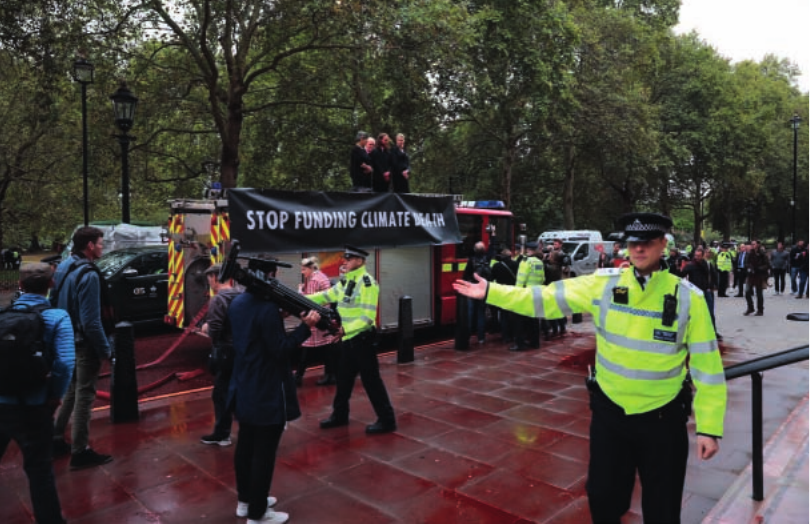
Direct action occurs when groups cannot convince government by other means. In 2019, the UK's Extinction Rebellion attempted to spray 1,800 litres of 'fake blood' on the UK Treasury building in Westminster to highlight the climate emergency.
Relative influence of pressure groups
US pressure groups are generally considered to have more influence than UK groups. The separation of powers allows them to target the executive, legislature and judiciary. The right to make unlimited independent expenditures in election campaigns gives wealthy groups significant power over members of the legislature and executive.
However, UK pressure groups can achieve considerable success if they convince government to support their cause. Strict restrictions on election spending make it easier for small or poorly funded groups to achieve objectives, particularly with public opinion support. The UK's Gurkha Justice Campaign gained national attention in 2008 through actress Joanna Lumley's support and successfully convinced Gordon Brown's government to allow Gurkha veterans to settle in the UK.
Note
Furthermore, parliamentary sovereignty means a pressure group convincing the UK government to change the law can achieve rapid and significant change that many US groups would envy.
Case study: gun control comparison
The contrasting experiences of gun control campaigns illustrate the different opportunities and constraints in each system.
Example
Worked Example: The Brady Campaign (USA)
The Brady Campaign is a prominent US gun control group that received more than $37 million funding in 2019. It began in 1974 but was renamed to reflect the contribution of James Brady, Ronald Reagan's press secretary who was shot along with the president during a 1981 assassination attempt.
The campaign convinced Congress to pass the Brady Handgun Violence Prevention Act in 1994, introducing federal background checks for gun purchases. However, gun deaths and school shootings have increased since the 1990s.
Gun control groups like the Brady Campaign have been unable to achieve substantive controls for several reasons:
- Gun rights are protected by the Second Amendment, and Congress cannot pass legislation infringing those rights - only a constitutional amendment could do so
- The Supreme Court has defined the Second Amendment as conferring an individual right to bear arms rather than a collective one (District of Columbia v Heller, 2008)
- The powerful NRA has successfully defended gun rights and made donations to many members of Congress
- Congress has been unwilling to pass even mild gun control legislation, including measures proposed by Obama after the 2012 Sandy Hook elementary school shooting
While a senator, Joe Biden supported the Brady Handgun Violence Prevention Act, and in his 2020 presidential campaign promised a plan to end the 'gun violence epidemic'.
Example
Worked Example: The Snowdrop Campaign (UK)
The UK's Snowdrop Campaign provides a striking contrast. It formed in 1996 responding to the massacre of 16 children aged 5 and 6, plus their teacher, at Dunblane Primary School in Scotland - the deadliest mass shooting in British history.
The campaign was set up by local people and supported by bereaved families. It lacked the huge funds, membership and complex organisation of US gun control groups, but achieved its objectives in just over a year. Its petition calling for a total ban on private handguns was signed by 700,000 people. Its advert, voiced by Sean Connery, was shown in around 1,000 UK cinemas. Group members travelled to London and met Prime Minister John Major and opposition leader Tony Blair.
The Conservative government was persuaded to introduce a ban on larger handguns. After Blair's Labour government was elected in 1997, this was extended to all handguns.
Having achieved its objectives, the Snowdrop Campaign disbanded in 1997 after being described by its coordinator as 'one of the most successful single-issue campaigns ever seen in the UK'.
Comparing relative influence
| Arguments for greater US pressure group influence | Arguments for greater UK pressure group influence |
|---|---|
| More access points exist due to the federal system, regular elections and separation of powers | A pressure group convincing a majority government to pass legislation can achieve objectives quickly |
| Weak party discipline encourages groups to target Congress | The lack of an entrenched constitution means groups can influence parliament to make sweeping law changes (e.g. same-sex marriage, gun control, abortion) |
| Groups can spend unlimited amounts on electoral campaigning | Tight electoral finance laws mean poorly funded groups are at less disadvantage than in the USA |
| 'Iron triangles' exist between government, Congress and powerful interest groups | Unions have considerable influence on Labour as the party's main financial supporters |
| Groups can use legal challenges to achieve landmark Supreme Court rulings | The professional lobbying industry is growing |
| Amicus curiae briefs are used to lobby the Supreme Court | The revolving door exists in the UK as well as the USA, and 'cash for access' scandals demonstrate that influence can be bought |
| Powerful 'K Street' professional lobbyists have influence with policy-makers | |
| Former lobbyists in Trump's government exemplify the 'revolving door' |
Summary
Key Points to Remember:
- US pressure groups have more access points due to federalism, separation of powers and more frequent elections, but UK groups can achieve faster change with government support due to parliamentary sovereignty
- Electoral finance rules differ dramatically: US groups can spend unlimited amounts through Super PACs, while UK groups face strict caps (£319,800 maximum in England) for general elections
- Trade unions have more influence in the UK, providing 93% of Labour Party donations in 2019, though union membership has declined by 50% since the 1970s in both countries
- US pressure groups use legal challenges more extensively because the Supreme Court can deliver landmark rulings changing constitutional interpretation, whereas UK judicial review is more limited
- The Snowdrop Campaign case study demonstrates how UK pressure groups can achieve rapid, comprehensive success (total handgun ban within a year), while US gun control groups struggle due to constitutional protections and NRA opposition