Theoretical Approaches to the Executives (AQA A-Level Politics): Revision Notes
📚Revision Notes
Theoretical Approaches to the Executives
When comparing the UK prime minister and US president, political scientists use three main theoretical frameworks to understand similarities and differences. These approaches—structural, rational, and cultural—each provide different insights into how these two executives operate and why they behave as they do.
Structural: The role of political institutions
The structural approach examines how the design and organisation of political institutions shape the power and behaviour of executives. The key institutional differences between the UK and USA create fundamentally different environments for their leaders.
Fusion versus separation of powers
The UK operates under a fusion of powers, where the prime minister and government ministers sit within parliament itself. This institutional design gives a prime minister with a parliamentary majority far greater ability to influence the legislature than the US president enjoys. The president, by contrast, works within a separation of powers system that intentionally limits executive control over Congress.
Note
This fundamental structural difference explains why a UK prime minister with a strong parliamentary majority can often achieve more legislative success than a US president, even when the president's party controls both chambers of Congress.
This structural difference manifests in several ways. The UK prime minister can rely on the payroll vote—MPs who hold government positions and are therefore expected to support the government. The US president has no equivalent. UK cabinet members come from the House of Commons and sometimes the House of Lords, meaning key parliamentarians take collective responsibility for government decisions. This increases the prime minister's influence over important individuals in parliament. In the USA, cabinet secretaries cannot be members of Congress.
Executive authority and cabinet systems
The USA has a singular executive where the president holds sole executive authority. The UK operates a system of cabinet government where the prime minister is considered 'first among equals' and all cabinet ministers share collective responsibility for government decisions. This structural difference means the prime minister must work within a collective framework, whilst the president can make executive decisions independently.
Important
The president's singular executive authority means they can act unilaterally in many areas, whilst the prime minister must maintain cabinet support and consensus to govern effectively.
The US president benefits from more extensive administrative support than the prime minister. The Executive Office of the President (EXOP) is much larger in scale and scope than the Prime Minister's Office and Cabinet Office combined.
Removal from office
Different institutional processes for removal from office give these executives varying levels of job security. It is extremely difficult for Congress to impeach and convict the president—a process requiring a two-thirds majority in the Senate. In contrast, the UK House of Commons can remove the prime minister with a simple majority vote. This structural feature makes it essential for the prime minister to retain parliamentary support, whereas a president who loses congressional backing will continue in office unless impeached and convicted.
Head of state role
The president serves as both chief executive and head of state, giving them a significant ceremonial role. The prime minister is head of the government but not head of state, as this role belongs to the monarch. This institutional difference affects how each leader is perceived and the breadth of their responsibilities.
Rational: The role of individuals acting out of self-interest
The rational approach analyses how individual leaders strategically respond to their political circumstances. Different executives have employed various tactics to govern effectively within the constraints they faced.
Responding to a weak legislative position: Barack Obama and David Cameron
Both Obama and Cameron lacked control of their legislatures for significant portions of their time in office, yet each responded rationally according to their institutional context.
Cameron's Conservatives lacked a parliamentary majority from 2010 to 2015, leading him to form a coalition government with the Liberal Democrats. Cameron's rational response was to focus heavily on cabinet decision-making, particularly through the Quad committee. This committee consisted of Cameron, his Chancellor of the Exchequer, and the two most senior Liberal Democrats in the coalition. Without agreement from both parties, the coalition would have collapsed, so Cameron's emphasis on collective decision-making represented a rational adaptation to the hung parliament.
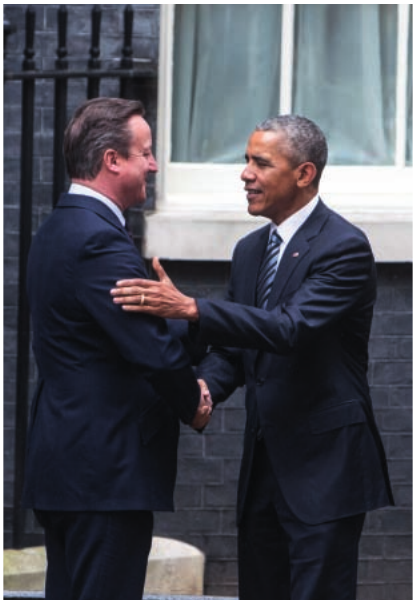
Obama faced similar legislative challenges after losing the House in the 2010 midterm elections, with Democrats losing the Senate in 2014. However, Obama's rational response differed markedly from Cameron's. Whilst Cameron could forge an alliance through coalition cabinet government, Obama's cabinet had no ability to control Congress. Therefore, Obama rarely met with his cabinet and instead relied on direct executive authority. His rational strategy involved using executive orders and executive agreements to avoid asking Congress to pass legislation or ratify treaties, as he knew these would face rejection.
Example
Contrasting Responses to Weak Legislative Position
Cameron's Strategy:
- Formed coalition government with Liberal Democrats
- Created Quad committee for collective decision-making
- Emphasised cabinet collaboration to maintain coalition stability
Obama's Strategy:
- Bypassed Congress through executive orders
- Used executive agreements instead of treaties requiring Senate ratification
- Minimised reliance on cabinet, maximised unilateral executive action
Both strategies were rational adaptations to their institutional contexts, but the structural differences between UK and US systems shaped fundamentally different approaches.
Responding to national emergency: George W. Bush and Tony Blair
The 9/11 terror attacks transformed the presidencies and premierships of both Bush and Blair, who both responded rationally to the national emergency by maximising their control during wartime.
Bush declared a 'war on terror' and ordered US invasions of Afghanistan (2001) and Iraq (2003). Blair believed the UK had a duty to support the USA and became Bush's closest ally. Both leaders understood that the public and politicians tolerate more assertive government and foreign policy during national emergencies.
 Bush used emergency powers to authorise the extraordinary rendition of terrorist suspects and their detention without trial. Blair was accused of adopting a 'presidential' style of government in which he ignored his cabinet—two ministers resigned in protest against the Iraq War. Cabinet meetings were criticised for resembling briefings rather than discussions, with key decisions made in smaller meetings—a process derided as 'sofa government'. Blair could dominate cabinet in this way because of his large parliamentary majority and strong Labour Party support.
Note
The concept of 'sofa government' refers to the informal decision-making process where Blair made key policy decisions in small, private meetings rather than through formal cabinet processes. This represented a significant departure from traditional cabinet government practices.
To justify the Iraq invasion, both leaders emphasised the threat from Iraqi dictator Saddam Hussein, though it later became clear that several of their key claims were based on faulty intelligence.
Responding to media criticism: Donald Trump and Boris Johnson
All leaders face media criticism, but Trump and Johnson adopted a distinctive rational strategy in response. Both leaders employed populist approaches to win elections—portraying themselves as champions of ordinary people against an established elite—and subsequently used their offices' informal power to bypass traditional media.
Note
Populist: A politician who portrays themselves as the true representative and champion of ordinary people. Populists often claim to be opposing an established 'elite' of existing politicians, media figures, and other public figures.
Trump used Twitter to control the political agenda directly, whilst Johnson answered 'People's PMQs' sent by Facebook users and gave statements to an in-house camera team rather than traditional media. This approach allowed both leaders to communicate directly with supporters without media filtering or criticism.

Trump pushed back against traditional media criticism, dismissing it as 'fake news'. His confrontational relationship with liberal news organisations led him to claim outlets were 'siding with China' against the USA. These tactics were rationally designed to bolster distrust among Trump supporters towards liberal media and defend him from attack.
Johnson similarly pursued a confrontational media relationship, famously refusing interview requests during the 2019 election campaign. After winning the election, his government discussed abolishing the BBC licence fee and, in February 2020, his aides prevented some news organisations from attending a briefing, leading to claims that Johnson was inspired by Trump, whose administration had revoked certain journalists' press passes.
Example
Populist Media Strategies
Trump's Approach:
- Used Twitter to bypass traditional media
- Dismissed critical coverage as 'fake news'
- Created direct communication channel with supporters
- Cultivated distrust of mainstream media among his base
Johnson's Approach:
- Refused traditional interview formats during campaigns
- Used Facebook for 'People's PMQs'
- Employed in-house camera teams for statements
- Restricted access for critical media organisations
Both strategies reflect rational calculations about how to maintain support whilst facing hostile media coverage.
Cultural: The role of shared ideas and culture
The cultural approach examines how different political cultures in the USA and UK shape expectations and behaviour of their executives.
Respect and presidential status
US political culture generally affords the president greater respect than the UK prime minister receives. As head of state and commander-in-chief of the armed forces, the president has an important ceremonial role reflected by the grandeur of the White House and Air Force One, the president's personal aircraft. When a president's term ends, they retain the title of president and retire with the highest possible status.
In contrast, when a prime minister resigns, they continue as a member of parliament. Many former prime ministers, including Theresa May and Gordon Brown, have chosen to return to the backbenches—the ordinary parliamentary life without ministerial responsibilities.
Note
The cultural difference in respect afforded to these offices reflects their different constitutional positions. The president's dual role as head of state and head of government elevates their status, whilst the UK prime minister remains fundamentally a member of parliament who happens to lead the government.
In recent years, respect for the presidency as an institution has been eroded by increasing political division within the USA. This was evident in the erroneous claims of the 'birther movement' that Obama had not been born in the USA, and Trump's 2020 State of the Union Address in which the Speaker of the House of Representatives publicly ripped up his speech.
Limited government versus parliamentary government
The USA was created as an alternative to British rule, so hostility towards overly powerful government is at the heart of its political culture. This cultural foundation of limited government creates expectations that the president's power should be constrained.
In contrast, the office of prime minister evolved in the context of parliamentary government. Parliament's sovereignty has been rooted in British culture since the English Civil War (1642–51) and allows the prime minister to exercise enormous power with little restraint, provided they maintain parliamentary support. Furthermore, within parliament only the House of Commons can fundamentally block the prime minister's plans, whereas in the USA the president can face opposition from two independent chambers: the House of Representatives and the Senate.
Important
These contrasting cultural foundations—American suspicion of concentrated power versus British acceptance of parliamentary sovereignty—fundamentally shape public expectations of executive behaviour in each country.
Imperial versus presidential criticism
These cultural differences create different expectations about how executives should behave. The US public expect their president to act independently of Congress and take executive action as required. The president is only likely to be criticised for acting in an 'imperial' fashion if they exceed the normal parameters of presidential authority.
In the UK, public expectations of the prime minister are very different. Prime ministers who do not follow a sufficiently collegiate approach with cabinet colleagues are portrayed as 'domineering' and, often, 'presidential'. The cultural expectation is that prime ministers work collaboratively with cabinet ministers and their party within parliament rather than acting independently.
Summary
Key Points to Remember:
Structural approach:
- Fusion of powers gives UK PM with a majority greater legislative influence than the US president under separation of powers
- The president has sole executive authority (singular executive) whilst the PM operates within cabinet government as 'first among equals'
- Different removal processes give the president greater job security than the PM
Rational approach:
- Leaders strategically adapt to circumstances: Cameron formed a coalition with focus on collective cabinet decision-making when lacking a majority; Obama used executive orders to bypass Congress
- Bush and Blair maximised control during the War on Terror, with Blair adopting 'sofa government' and Bush using emergency powers
- Trump and Johnson rationally responded to media criticism by adopting populist strategies and bypassing traditional media through social media and direct communication
Cultural approach:
- US political culture affords the president greater respect as head of state; UK prime ministers receive less reverence and often return to parliamentary backbenches after resignation
- American culture of limited government creates different expectations than British parliamentary sovereignty
- The US public expect presidential independence, whilst the UK public expect prime ministerial collegiality with cabinet
Key terms: fusion of powers, separation of powers, payroll vote, collective responsibility, singular executive, cabinet government, executive orders, populist, sofa government, extraordinary rendition, imperial presidency, limited government, parliamentary sovereignty