Suffrage in Britain Since 1832 (AQA A-Level Politics): Revision Notes
📚Revision Notes
Suffrage in Britain Since 1832
The origins of democracy in Britain
Although Parliament itself dates back to the thirteenth century and Magna Carta, democracy in Britain is a much more recent development. Before 1832, Britain operated as an oligarchy – a political system where political power rested exclusively with a small, privileged elite. Only wealthy male property owners who were members of the Church of England, often from the aristocracy, could vote. In 1832, just 2.7% of the population had voting rights.
Suffrage (the right to vote) developed gradually in Britain through evolutionary rather than revolutionary means. This process took approximately a century, from 1832 until nearly all adults gained the franchise. Once the expansion of voting rights began, momentum for political reform continued until virtually the entire adult population was enfranchised (given the right to vote).
Note
Key Terms:
- Suffrage: The right to vote. Universal suffrage effectively equates to democracy.
- Oligarchy: A political system in which power lies in the hands of a few, a privileged elite, not the great mass of the population.
- Enfranchised: Given the right to vote.
The transition from oligarchy to democracy was largely peaceful, though frequent incidents of popular protest occurred. Movements such as the working-class Chartists and the suffragettes sometimes led to violence and law-breaking. By the end of this process, nearly all adults except prisoners and peers had gained voting rights.
The expansion of the franchise: key reform acts
Between 1832 and 1969, six major legislative acts progressively expanded voting rights in Britain. Each act built upon previous reforms, gradually extending the franchise to different groups within society.
Great Reform Act 1832
The Whig government of Lord Grey passed this groundbreaking act, which marked the beginning of democratic reform in Britain. One in five male adults (5.6% of the total population) could now vote. The Act abolished rotten boroughs – constituencies like Old Sarum that had almost no voters but still elected two MPs every election. This represented the first step towards a more representative system.
Note
What were rotten boroughs?
Rotten boroughs were constituencies with very few voters that still returned MPs to Parliament. Old Sarum, for example, had virtually no inhabitants but elected two MPs at every election. The Great Reform Act abolished these anomalies, redistributing seats to growing industrial cities like Manchester and Birmingham.
Second Reform Act 1867
The Conservative government of Benjamin Disraeli passed this much more extensive reform. It allowed many working-class men in cities to vote, effectively doubling the electorate. Roughly one-third of all men could now vote. However, the Act maintained different franchises for urban areas (boroughs) and rural areas (counties), meaning voting qualifications varied by location.
Third Reform Act 1884
William Gladstone's Liberal government established a uniform franchise across the country for men. All working men who met a property qualification could now vote. Despite this progress, 40% of adult men remained excluded, mainly working-class men in rural counties who could not meet the property requirements.
Representation of the People Act 1918
This Act emerged from the social and political changes caused by the First World War. David Lloyd George's wartime coalition government extended voting rights dramatically. All men over 21 (or 19 for veterans) could now vote. Crucially, women over 30 who met the property qualification also gained the vote for the first time.
Important
Common Mistake: Women and the Vote in 1918
A common error is to state that women won the vote in 1918. In reality, only some women (those over 30 who met property qualifications) won the vote in 1918. The remainder had to wait until 1928 to receive equal voting rights with men. This distinction is crucial for understanding the gradual nature of women's enfranchisement.
Representation of the People Act 1928
Stanley Baldwin's Conservative government finally granted women the vote on equal terms to men. All men and women over 21 could now vote, and property qualifications were removed entirely. This represented the achievement of near-universal adult suffrage in Britain.
Representation of the People Act 1969
Harold Wilson's Labour government lowered the voting age to 18. This change reflected broader social changes rather than mounting public pressure, unlike earlier reforms.
Additional democratic measures
Extension of the franchise was accompanied by other measures enhancing democracy:
- Secret ballot introduced in 1872
- Direct bribery of voters banned in 1883
- Constituency boundaries redrawn to achieve more equal populations in 1885
Case study: extending the vote to 18-20 year olds
Unlike other franchise changes driven by public pressure and campaigning, extending the vote to 18-20 year olds responded primarily to social change. Since the Second World War, the status of this age group had been changing, with growing numbers attending university and seeking to marry or buy homes. However, the law still treated them as children.
Example
The Latey Committee (1965-1967)
The Latey Committee was established in 1965 to investigate lowering the age of majority (adulthood) from 21 to 18. Originally focused on marriage and property ownership, its 1967 report also recommended lowering the voting age.
The committee's findings noted that young people:
"are handicapped in their attempts to make the best use of their lives by the fact that so many of the people around them seem to expect the worst…It would be truer to say, that considering the temptations to which they are subject, they could fairly be astounded at their own moderation."
The government accepted these findings and changed the law in 1969, during a decade associated with social and political liberalisation in several areas, including abortion, homosexuality and capital punishment.
Chartists and the class dimension
Following the Great Reform Act 1832, which did virtually nothing to extend voting rights to the working class, the Chartists emerged as an early pressure group demanding major political reform. They campaigned for Parliament to adopt the Six Points of the People's Charter, which would have transformed Britain into a full democracy (at least for men) in one step.

The Six Points of the People's Charter
Important
The Six Points of the People's Charter:
- All men to have the vote irrespective of wealth or property ownership
- Voting by secret ballot
- Parliamentary elections every year, not once every 7 years
- Equally sized constituencies
- Members of Parliament to be paid
- Property qualification for becoming an MP abolished
These demands would have created a full democracy for men in one step. Over time, all but one (annual elections) were eventually achieved.
Chartist leaders and tactics
Key leaders included William Lovett, Francis Place and Feargus O'Connor. Although Chartists generally advocated votes for all men, some female Chartists such as Susanna Inge and Anne Walker campaigned for women's suffrage too.
The main Chartist tactic involved compiling and submitting three "monster petitions" to Parliament in 1839, 1842 and 1848, containing up to 6 million signatures. Some signatures were of dubious authenticity (Queen Victoria and Mr Punch appeared multiple times). Parliament, still dominated by the landed aristocracy, overwhelmingly rejected each petition. Several violent protests associated with the movement were violently suppressed by authorities.
The legacy of the Chartists
Although the movement collapsed after the 1848 petition's failure, over time all but one demand was achieved (annual elections being the exception). While a short-term failure, the Chartists' legacy proved significant, influencing other political movements such as the Reform League, which helped pressure the government to pass the Second Reform Act 1867.
Why did the working class demand reform?
The Chartists aimed to end aristocratic domination of politics by a small wealthy elite. They believed the wealthy ruled in their own selfish interests:
- No provision existed for the poor or unemployed beyond the horrors of the workhouse
- Tenants had few rights and faced easy eviction
- Housing conditions were often unsanitary and overcrowded
- Taxes on basic essentials like food were high, while taxes on property and income remained relatively low
Note
Only by gaining access to political power could ordinary working men hope to improve their circumstances. The Chartists saw reforms like the secret ballot and salaries for MPs as vital for genuine equal participation in politics. Without these measures, even if working men gained the vote, they would remain vulnerable to intimidation by wealthy landlords and employers.
Opposition from the wealthy elite
The wealthy elite opposed extending the vote to the working class for several reasons:
- They believed working-class men were too poorly educated to vote wisely and understand political issues
- They feared working-class voters might seize the wealth of the rich and privileged, inspired by the French Revolution
- They worried radical change might threaten Britain's global wealth and expanding trading empire
- Fundamentally, they feared losing their grip on power
Suffragists and suffragettes and the gender dimension
Once most men gained the vote, attention shifted largely to women. The women's suffrage movement originated in the 1860s with a simple demand: women should be treated equally to men in politics and other areas of life. Two main groups emerged: the suffragists and the suffragettes.
Important
Suffragists vs Suffragettes: Key Differences
- Suffragists (NUWSS): Used peaceful, constitutional methods (meetings, leaflets, petitions, marches)
- Suffragettes (WSPU): Adopted militant tactics and were prepared to break the law
Both groups shared the same goal of votes for women but disagreed fundamentally on tactics.
The suffragists (National Union of Women's Suffrage Societies)
Formed in 1897 from merging several suffrage groups, the suffragists focused on peaceful and constitutional methods:
- Meetings
- Handing out leaflets
- Petitions
- Marches (termed "pilgrimages")
- Lobbying politicians
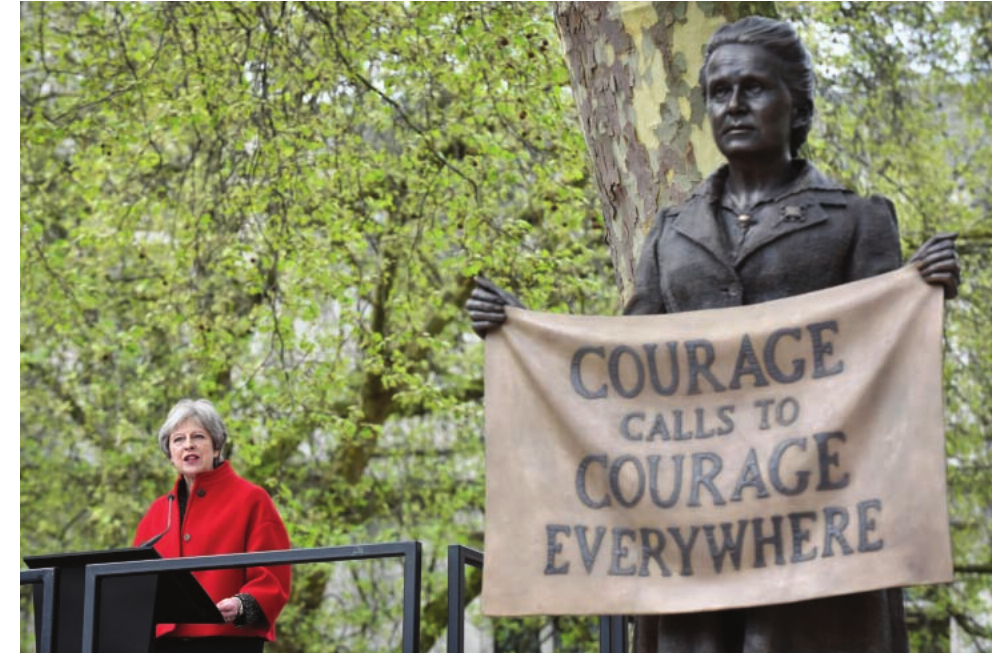
Their leader, Millicent Fawcett, described the movement as "like a glacier, slow-moving but unstoppable". By 1914, they had around 100,000 members.
The suffragettes (Women's Social and Political Union)
Formed in 1903, the suffragettes were led by Emmeline Pankhurst and her daughters Sylvia and Christabel. They adopted more militant tactics and prepared to break the law:
- Chaining themselves to railings
- Heckling and disrupting public meetings
- Criminal damage and arson
- Hunger strikes when imprisoned
Note
The government passed the Cat and Mouse Act enabling force-feeding to prevent suffragette deaths and avoid creating martyrs. This brutal practice involved forcing tubes down prisoners' throats to feed them against their will, causing significant physical and psychological trauma.
Emily Davison became the highest-profile example when she was trampled to death by the King's horse at the 1913 Epsom Derby. Historical consensus suggests she ran out to attach a suffragette banner to the horse but was accidentally trampled, rather than committing suicide.

Both groups suspended their campaigns in 1914 at the outbreak of the First World War.
Arguments for women's suffrage
Campaigners used several key arguments:
- Women are the intellectual equals of men
- Women paid equivalent taxes and obeyed the same laws as men
- Women could already vote in local elections, serve as mayors, and become doctors and teachers
- Their roles as wives and mothers made a vital contribution to the nation
- The franchise had already been extended to two-thirds of men
- Women could bring additional experience and insights to political debates, including on childcare and social reform
Arguments against women's suffrage
Opponents deployed various arguments:
- The concept of "separate spheres" held that politics and the military were naturally better suited to men
- Women were "too emotional" to cope with the tough and combative world of politics
- Politics would distract women from their "key roles" as wives and mothers
- Women could not make the ultimate sacrifice of serving and dying for their country in wartime
- The drastic actions of suffragettes proved women's unsuitability for political responsibility
- Women would outnumber men in the electorate and therefore "take over" politics
Success and legacy
The suffragists and suffragettes achieved success relatively quickly compared to the Chartists. Most women gained the vote in 1918, with the remainder in 1928. This success resulted from:
- Campaigning by both suffragettes and suffragists
- Women's invaluable contribution during the war, especially as munitions workers
- A change of prime minister
- The need to settle aspects of male suffrage by the war's end
Note
However, women took far longer to be elected as MPs in significant numbers. Nancy Astor, the first woman MP to take her seat, was elected in 1919. Margaret Thatcher became the first female prime minister in 1979, and only after 1997 did significant numbers of female MPs begin to be elected. Even today, women remain underrepresented at Westminster.
The debate over ethnicity, age and the vote
Ethnic minorities and voting
Unlike the USA, Britain has never had systematic or quasi-legal exclusion of minority ethnic groups from voting (such as Jim Crow laws). However, people from minority ethnic groups have been significantly and historically underrepresented in politics. The first people of colour were elected as MPs in a fully democratic UK in 1987.
The 2019 parliament was the most diverse yet, with around 10% of MPs from minority ethnic backgrounds. However, the Electoral Commission reported in November 2019 that 25% of black voters in Great Britain and 24% of Asian voters had not yet registered to vote. Pressure groups such as Operation Black Vote focus on ensuring minority ethnic groups register and turn out to vote, alongside promoting racial justice and equality throughout the UK.
The case for votes at 16
The issue of age has gained prominence recently, particularly since Scotland and Wales gave the vote to 16 and 17 year olds for local and devolved elections. Arguments for extending this nationwide focus on existing rights and responsibilities this age group already enjoys:
- Paying income tax and National Insurance
- Obtaining tax credits and welfare benefits in their own right
- Consenting to sexual relationships and getting married
- Becoming a company director
- Joining the armed forces
Suffrage as a human right
Only relatively recently has suffrage been considered a fundamental human right. Until the twentieth century, voting was regarded as a privilege to be earned primarily through land and property ownership, reserved exclusively for men.
Important
The UN Universal Declaration of Human Rights (1948)
The UN Universal Declaration of Human Rights (1948) proclaimed in Article 21 that everyone "has the right to take part in the government of his country, directly or through freely chosen representatives".
It stated that "The will of the people…shall be expressed in periodic and genuine elections which shall be by universal and equal suffrage and shall be held by secret vote or by equivalent free voting procedures."
The European Convention on Human Rights (ECHR) adopted this approach, establishing voting as a fundamental human right rather than a privilege.
Votes for all citizens has become a touchstone of global democracy. In the UK, this has largely been the situation since 1928. The main contemporary issues are votes for 16-17 year olds and the much-debated question of votes for prisoners.
The prisoner voting rights debate
Traditionally, prisoners lost the right to vote while incarcerated (unlike many US states where this right is removed permanently). A convicted prisoner, John Hirst, began a legal campaign supported by penal reform pressure groups including the Prison Reform Trust. The UK High Court dismissed Hirst's case in 2001, but this judgement was overturned in 2005 by the European Court of Human Rights (ECtHR) in Strasbourg.
In Hirst v UK, the Court ruled that the UK's blanket ban on prisoner voting was unlawful and violated Article 3 of the First Protocol of the ECHR.
Note
Following this ruling, successive UK governments sought to delay and avoid implementation. The issue aroused strong feeling and popular opposition. Prime Minister David Cameron stated the idea made him "physically sick". Finally in 2017, justice secretary David Lidington proposed granting the vote to prisoners on temporary licence, affecting around 100 prisoners at any time.
Summary
Remember!
Key Concepts:
- Suffrage means the right to vote. Universal suffrage effectively equates to democracy.
- Democracy in Britain developed gradually from 1832 onwards through six major reform acts.
The Chartists:
- Campaigned for the Six Points of political reform, including votes for all men and secret ballots
- Five of their six demands were eventually achieved (annual elections being the exception)
Women's Suffrage:
- Suffragists used peaceful, constitutional methods to campaign for women's votes
- Suffragettes adopted more militant, law-breaking tactics
- Key figures: Millicent Fawcett (suffragists), Emmeline Pankhurst (suffragettes), and Emily Davison (died at Epsom Derby 1913)
- Women over 30 with property gained the vote in 1918
- All women gained equal voting rights in 1928
Contemporary Debates:
- Focus on votes for 16-17 year olds, prisoner voting rights, and ethnic minority voter registration
- The ECtHR ruled in 2005 that the UK's blanket ban on prisoner voting was unlawful, though implementation remains limited