The Nature of Democracy (AQA A-Level Politics): Revision Notes
📚Revision Notes
The Nature of Democracy

Introduction to democracy
Democracy is a system of government in which the people hold ultimate power. The term comes from ancient Greek, combining demos (meaning "the people") and kratia (meaning "rule by"). This concept dates back to around the fifth century BC in Athens.
However, Athenian democracy was far from perfect by modern standards. The political process excluded enslaved people, women and foreign residents. Only 10-20% of Athens' inhabitants could participate - specifically free men. Throughout much of human history, democracy carried negative associations, often linked to mob rule and disorder. Only in the twentieth century did democracy become widely recognised as a desirable system and fundamental human right.
Note
The transformation of democracy from a term associated with chaos and mob rule to a universally valued principle took over two thousand years. This shift reflects changing attitudes about human rights, equality, and the relationship between government and citizens.
Winston Churchill captured democracy's paradoxical nature in 1947 when he observed that "democracy is the worst form of government except all those other forms that have been tried from time to time."
Forms of democracy in the UK
Democracy can take different forms. The UK primarily uses two types:
Representative democracy
Representative democracy is a system where people vote for elected representatives in local and general elections. These representatives then make decisions on behalf of the people they represent.
This is the most common form of democracy in the UK. For example, MPs are elected to represent constituencies in the House of Commons, where they debate and vote on legislation. Similarly, local councillors represent residents in local government decisions.
Note
Representative democracy balances the need for informed decision-making with public participation. While citizens cannot vote on every issue, they maintain control through regular elections and the ability to hold representatives accountable.
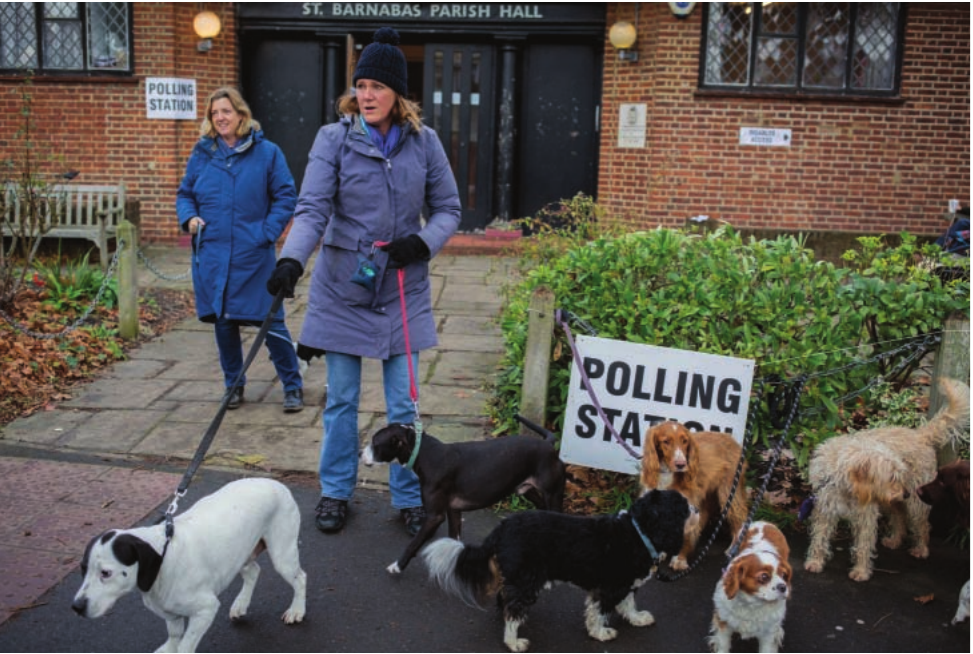
Direct democracy
Direct democracy is when people decide on policy initiatives directly, rather than through elected representatives. Votes take place on specific questions or issues.
The 2016 EU referendum provides a clear example of direct democracy in action. Rather than MPs deciding whether the UK should leave the European Union, the question was put directly to the British people through a nationwide vote.
Important
Direct democracy offers citizens the opportunity to decide on major constitutional questions themselves, but it also raises questions about the complexity of issues and whether simplified referendum questions can adequately capture nuanced policy debates.
Key features of democracy in the UK
Democracy encompasses several essential features. Understanding these features, alongside the challenges they face in the UK, is crucial for evaluating how democratic the British system really is.
Elections
Democratic elections should be free, fair and secret. Every citizen should have an equal say in selecting their representatives, regardless of gender, class, ethnicity or wealth.
Challenges in the UK:
- Turnout varies significantly, particularly by age group, with younger voters typically less likely to vote
- Debates continue about whether 16 and 17-year-olds should gain voting rights in general elections
- Questions persist about whether prisoners should be allowed to vote
Representation
Elected representatives must act in the best interests of citizens in their area and represent their views effectively. Citizens must also be able to communicate their opinions to representatives.
Important
Key Challenge: Most elected representatives belong to political parties and primarily represent their party's views. This creates tension between party loyalty and constituent interests, especially when local opinions conflict with party policy.
Challenges in the UK:
- Questions arise about how far MPs listen to constituents who didn't vote for them or who disagree with them on key issues
- Party discipline can conflict with representing local interests
Legitimacy
Legitimacy refers to the legal authority governments and legislatures possess because they have been fairly chosen by the people in elections.
Challenges in the UK:
- The first-past-the-post (FPTP) electoral system distorts party representation at Westminster
- No recent UK government has won support from over 50% of those who voted, let alone a majority of the entire electorate
- This raises questions about whether voting should be made compulsory or whether the electoral system should be reformed
Note
Electoral legitimacy is a cornerstone of democratic government. When governments lack majority support, their authority to implement controversial policies becomes more questionable, even if they have won according to existing electoral rules.
Participation
Participation encompasses the various ways people can get involved in politics and policy-making. These range from standing for elected office to signing e-petitions, with voting in elections being the most central form.
Challenges in the UK:
- Different forms of participation require vastly different levels of commitment
- Higher levels of participation, such as standing as an MP, may not be equally accessible to everyone
- People with demanding full-time jobs may lack the time needed to campaign effectively
Accountability
Those elected to government or local councils must be held accountable for their actions, which should be transparent, open and free from corruption.
Important
Critical Issue: Frequent complaints emerge about government and public bodies attempting to cover up mistakes, alongside allegations of cronyism and partisan favouritism in many areas of government.
Challenges in the UK:
- Questions persist about whether more independent scrutiny of government is needed
Rule of law
Laws must apply equally to everyone, including the government and elected officials. Anyone who breaks the law should face punishment.
Challenges in the UK:
- Critics argue that politicians and elected officials sometimes see themselves as above or exempt from laws everyone else must follow
- Debates continue about whether we expect too much of politicians or whether double standards exist when they fail to follow rules they set for others
Smooth transition of power
A formal process exists for transferring power from one government to the next. This should occur peacefully, without violence or mass protests.
Challenges in the UK:
- Generally, elections and government handovers proceed calmly and peacefully
- The prolonged parliamentary debate over a Brexit deal was viewed by many Leave supporters as an attempt to thwart the will of the people
- Questions arise about whether a more transparent system is needed for forming governments when no single party commands an overall Commons majority
Civil rights
The rights of the people must be protected and defended by law and through the courts.
Important
Significant Concern: The UK lacks an embedded set of civil rights, relying largely on parliamentary statutes that can theoretically be repealed. This makes civil rights more vulnerable to change compared to countries with written constitutions.
Challenges in the UK:
- Access to justice can be prohibitively expensive for many people
- Comparisons with other Western democracies raise questions about how well the UK protects civil rights
Education and information
The public should be well educated politically and have access to accurate information from trustworthy sources. This enables effective and informed participation in the political process.
Challenges in the UK:
- Many news sources are biased and one-sided, including newspapers and social media content
- Unfounded rumours spread rapidly on social media
- Election campaigns often rely on highly simplified messages that can be very misleading
- Debates continue about whether greater regulation of the press and social media is necessary to combat "fake news" and baseless conspiracy theories
Note
Access to reliable information is fundamental to democratic participation. In the digital age, the challenge has shifted from lack of information to difficulty in distinguishing accurate, trustworthy sources from misleading or false content.
Remember!
Summary
Key Points to Remember:
-
Democracy means "rule by the people" and originated in ancient Athens, though it excluded most inhabitants from participation
-
The UK uses two main forms of democracy: representative democracy (where people elect representatives to make decisions) and direct democracy (where people vote directly on specific issues)
-
Key features of democracy include free and fair elections, effective representation, legitimacy, participation, accountability, rule of law, peaceful transitions of power, protection of civil rights, and access to accurate information
-
Each democratic feature faces specific challenges in the UK, from low youth turnout to concerns about media bias and the FPTP electoral system
-
Winston Churchill described democracy as "the worst form of government except all those other forms that have been tried"