Key Elections: 2019 (AQA A-Level Politics): Revision Notes
📚Revision Notes
Key Elections: 2019
Context and background
The December 2019 general election marked a significant turning point in British politics. It brought an end to 9 years of coalition government, slim majorities, and minority Conservative governments that had dominated since 2010. The election delivered a decisive 80-seat majority to Boris Johnson's Conservatives, seemingly breaking the political deadlock over Brexit that had paralysed Westminster since the 2016 referendum.
Johnson had become prime minister in July 2019 after Theresa May's resignation. However, like his predecessor, he struggled to build unity within his party or Parliament over a post-Brexit deal. Calling the election proved challenging due to the Fixed-term Parliaments Act 2011, which had removed the prime minister's traditional power to call snap elections.
Note
The Fixed-term Parliaments Act 2011 was a significant constitutional change that transferred the power to call general elections from the prime minister to Parliament itself. Under this act, elections were scheduled to occur every five years, and early elections could only be triggered by a two-thirds majority vote in the House of Commons or a vote of no confidence. This constitutional barrier was eventually overcome through the passage of the Early Parliamentary General Election Act 2019.
The Brexit election
Brexit dominated the 2019 campaign more completely than any single issue had dominated a British election in decades. After the 2016 referendum vote to leave the EU, MPs had spent three largely unproductive years attempting to determine what form Brexit should take. This election was different from previous landmark elections in important ways.
Unlike 1983, this was not an election called early by a confident prime minister seeking to increase their majority when polls looked favourable. Nor was it like 1997, where a governing party had exhausted its mandate and faced inevitable defeat. Instead, the 2019 election centred entirely on Brexit and determining the way forward. There was palpable frustration and anger among many voters who wanted the political stalemate broken and effective government restored.
Important
This election differed fundamentally from previous landmark elections in that it was driven by a single, all-consuming issue rather than multiple policy considerations. The Brexit deadlock had created unprecedented political paralysis, making the election primarily a referendum on how to resolve the constitutional crisis rather than a traditional policy choice between parties.
Voters were presented with three options, though Labour's position proved particularly confusing. A strong sense existed that the country needed to move past the Brexit impasse and return to functional governance.
Election results
| Party | Votes | Seats | Change | UK vote share | Vote share compared with 2017 |
|---|---|---|---|---|---|
| Conservative | 13,966,451 | 365 | +47 | 43.6% | +1.2% |
| Labour | 10,295,912 | 203 | -59 | 32.2% | -7.8% |
| Liberal Democrats | 3,696,419 | 11 | -1 | 11.5% | +4.2% |
| SNP | 1,242,380 | 48 | +13 | 3.9% | +0.8% |
| Green | 865,707 | 1 | — | 2.7% | +1.1% |
| Brexit | 644,257 | 0 | — | 2% | N/A |
| Others | 1,302,984 | 23 | — | 4.1% | -1.5% |
The Conservative victory saw substantial numbers of seats change hands. Most significantly, Labour's "red wall" collapsed. These were traditional working-class seats in the Midlands and northern England that had been Labour strongholds for generations. Historic constituencies fell to the Conservatives, including Bolsover (held by Dennis Skinner for decades), Blyth Valley, and even Tony Blair's former seat of Sedgefield.
Note
The "red wall" refers to a cluster of constituencies across the Midlands and northern England that had traditionally voted Labour for decades, often since the party's formation. These were primarily working-class, post-industrial areas with strong Labour loyalties. The collapse of this red wall represented one of the most significant realignments in British electoral geography in modern history.
However, the Conservative advance was not uniform across the country. Areas with younger populations and diverse ethnic communities, particularly in major cities and London, remained largely loyal to Labour. The Conservatives actually lost two seats in London, including Putney. The SNP made significant gains in Scotland, taking 7 seats from the Conservatives.
Many constituency results directly reflected their 2016 referendum position. The biggest swing of the night was an extraordinary 18% from Labour to Conservative in Bassetlaw, Nottinghamshire, where 68% had voted Leave. Conversely, the Conservatives came close to losing strongly pro-Remain seats in southern England, such as Winchester.
Voting behaviour patterns
Age as the dominant factor
Age, not class or gender, proved the most reliable predictor of voting behaviour in 2019. The polling organisation YouGov calculated that for every 10 years older a voter was, their likelihood of voting Conservative increased by approximately nine percentage points, while their likelihood of voting Labour decreased by eight percentage points.
Example
Age and Voting Patterns: The YouGov Analysis
YouGov's analysis revealed a striking linear relationship between age and voting behaviour:
- For every 10 years increase in a voter's age:
- Their likelihood of voting Conservative increased by ~9 percentage points
- Their likelihood of voting Labour decreased by ~8 percentage points
This meant that a 30-year-old voter and a 70-year-old voter (40 years apart) would show approximately a 36 percentage point difference in their likelihood of voting Conservative, demonstrating how age had become the single most powerful predictor of voting behaviour.
Class dealignment
The election provided further evidence of class dealignment – the declining importance of social class in determining voting behaviour. The Conservatives outperformed Labour across all social classes, including among working-class voters. In fact, the Conservatives secured 48% support among C2DE (working class) voters compared to just 43% among ABC1 (middle class) voters.
Important
The 2019 election demonstrated a remarkable reversal of traditional voting patterns. For the first time in modern electoral history, the Conservative Party performed better among working-class voters than middle-class voters, representing a complete inversion of the class-based voting that had dominated British politics for most of the 20th century.
This pattern partly reflected differing attitudes towards Brexit across social classes. While AB social groups voted 57%-43% for Remain, DE groups backed Leave by 64%-35%.
Gender differences
Gender played a much smaller role than age or Brexit attitudes. The Conservatives secured 46% support among men and 44% among women, while Labour received 31% from men and 35% from women.
The defeat of the defectors
The election witnessed what has been called the "defeat of the defectors", similar to what occurred in 1983. Eleven MPs (eight Labour and three Conservative), including Anna Soubry and Chuka Umunna, had quit their parties to form the short-lived Independent Group (Change UK) party. By election time, some had defected to the Liberal Democrats. Regardless of which party label they campaigned under, all these MPs lost their seats.
Note
This outcome demonstrated how small an individual MP's personal vote typically is, and confirmed that party affiliation remains central to voting behaviour. Voters tend to support parties rather than individual candidates, and breaking with one's party—even for principled reasons—almost inevitably results in electoral defeat under Britain's party-dominated system.
Similar fates befell former Labour and Conservative MPs who chose to stand as independents, including Frank Field and Dominic Grieve.
Limited tactical voting
Despite an electoral pact between the Green Party, Plaid Cymru, and the Liberal Democrats not to field candidates against each other in 60 seats, tactical voting remained limited. This agreement aimed to avoid splitting the Remain vote. However, the three parties failed to secure additional seats as a direct result of this strategy.
Role of the media
Traditional press
The traditional press largely supported the Conservatives as expected. The Daily Express, Daily Mail, and The Sun all heavily backed Johnson's campaign. However, the media landscape in 2019 was more complex than in previous elections, with social media playing an unprecedented role.
Social media dominance
Advertising on social media platforms became routine, with Facebook and YouTube the main beneficiaries. Conservative banner advertisements linked to short videos designed to auto-play, reaching millions of viewers. A single Conservative video received at least 30 seconds of viewing from approximately 3.5 million people on its first day alone. Labour focused more heavily on Facebook advertising.
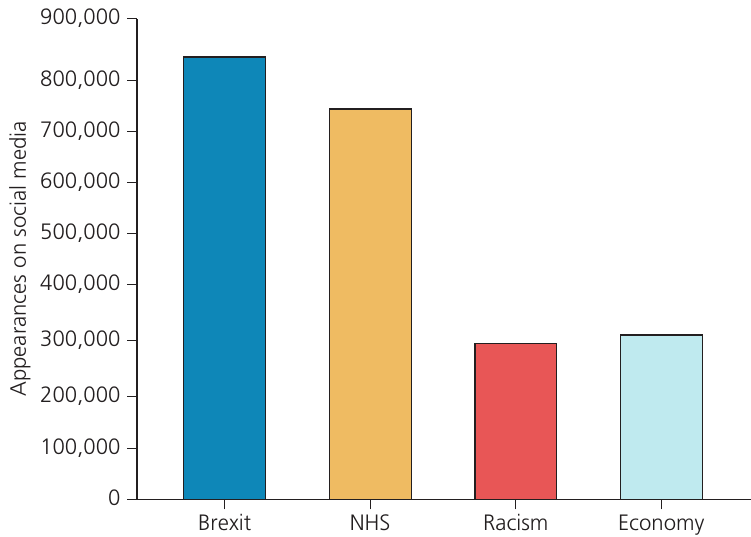
Brexit dominated social media discussion even more than traditional media coverage, with NHS issues also generating significant online engagement.
The social media paradox
Analysis of online engagement revealed higher interaction levels with Jeremy Corbyn's content compared to Boris Johnson's. Labour outspent the Conservatives on social media by approximately \£1.4 million to \£900,000, with the Liberal Democrats spending almost as much as the Conservatives.
Important
The Social Media Paradox
Despite "winning" the social media war in terms of engagement and spending, Labour suffered a decisive defeat. This revealed an important demographic divide: younger, more pro-Labour voters were most likely to engage with social media and respond to online political advertising. Older voters, who leaned Conservative, remained more likely to consume news from traditional sources like newspapers and television.
This demonstrates that high social media engagement does not necessarily translate to electoral success, particularly when the most engaged demographic may not reflect the broader electorate.
Lack of regulation
Unlike television broadcasting, online political advertising faced minimal control or regulation. This created opportunities for misleading content. One study found that 88% of Conservative advertisements featured questionable claims, though Labour advertisements also faced similar accusations.
Leaders' debates
The 2019 campaign featured multiple televised debates in various formats. The Conservatives and Labour initially collaborated to exclude the Liberal Democrats and SNP from the main ITV leaders' debate on 19 November. Subsequent debates included wider ranges of parties, and separate debates occurred in devolved regions.
Boris Johnson received substantial criticism for declining a one-to-one primetime interview with veteran political broadcaster Andrew Neil. Conservative strategists apparently calculated that a challenging interview with Neil posed greater risks than negative stories about avoiding the programme. This approach appeared successful, demonstrating how party leaders now held more power to control their media appearances than television channels, which had traditionally called the shots.
Party policies and manifestos
Conservatives
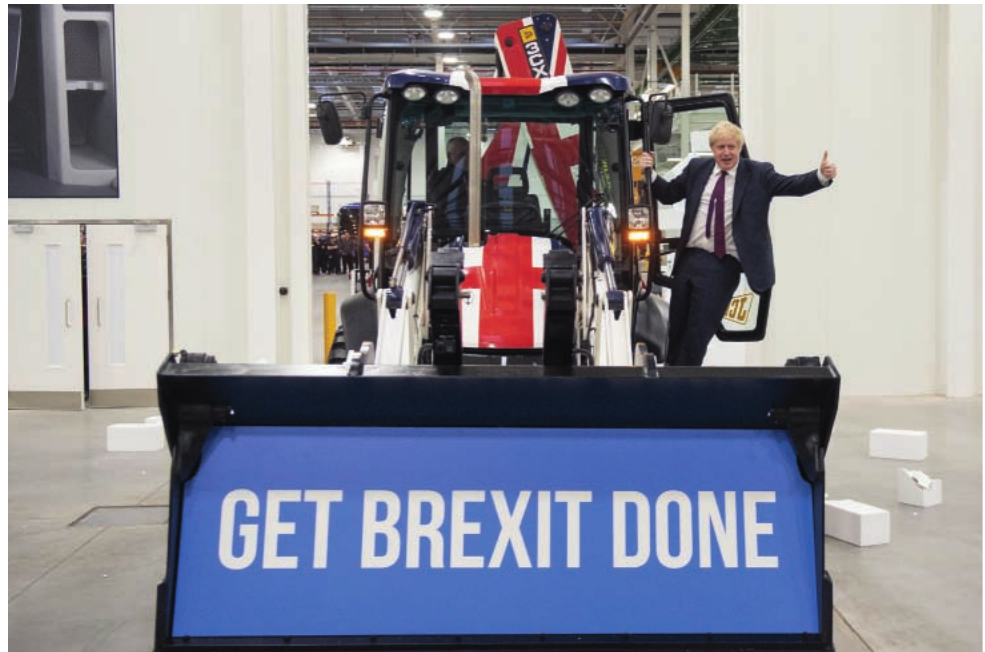
The Conservative campaign centred on the slogan "Get Brexit Done, Unleash Britain's Potential", directly addressing voter frustration with 3 years of political gridlock. This message overshadowed other manifesto pledges, though these included 50,000 new nurses and commitments not to raise income tax, VAT, or National Insurance.
Note
The manifesto also promised to cut emissions to virtually zero by 2050, representing a nod to environmental concerns. Another significant pledge guaranteed that no one would need to sell their house to pay for adult social care, shoring up support among older voters and avoiding the "dementia tax" controversy that damaged May's 2017 campaign.
Labour
Labour's Brexit policy proved more complicated and arguably unclear. The party promised a second referendum within 6 months following renegotiation of a Brexit deal, with voters choosing between that deal or Remain. The slogan "The Final Say on Brexit" was less straightforward than rival offerings, particularly as many voters believed the "final say" had already occurred in 2016.
Important
Labour's Brexit confusion proved fatal to their campaign. While other policies included annual health spending increases of 4.3% and raising the national minimum wage to \£10 per hour, these became overshadowed by the Brexit muddle. More radical socialist policies, such as ending charitable status for private schools and nationalising the Big Six energy companies and Royal Mail, provided easy targets for Conservative attacks on fiscal responsibility.
As defeated Labour MP Caroline Flint observed: "It was Brexit that cemented Labour's undoing."
Liberal Democrats
Under new leader Jo Swinson, the Liberal Democrats made a bold play for the core Remain vote with their slogan "Stop Brexit, build a Brighter Future". They promised to revoke Article 50 and rejoin the EU. While this stance appealed to committed Remainers, it implied disregarding the 2016 referendum result, which alienated many voters.
Other Liberal Democrat policies, including 35 hours of free childcare from 9 months old and an extra \£10 billion for schools by 2024/25, went largely unnoticed. The manifesto neither repelled voters nor attracted them in significant numbers.
Leadership and campaign impact
Corbyn's struggles
Jeremy Corbyn, who had exceeded expectations in 2017, failed to replicate that performance. Many voters perceived him as too "metropolitan" and disconnected from ordinary concerns. Former cabinet minister Alan Johnson complained that Corbyn "couldn't lead the working class out of a paper bag". Many voters in traditional Labour working-class seats cited personal dislike of Corbyn as their reason for switching votes.
Corbyn's allies blamed the party's Brexit stance rather than leadership, noting that Labour's losses were greatest in Leave-supporting constituencies. Party chair Ian Lavery stated: "Ignore democracy and to be quite honest the consequences will come back and bite you up the backside."
Note
Strategic errors also emerged, such as deploying hundreds of activists to Johnson's Uxbridge seat (considered potentially vulnerable), frustrating Labour MPs in marginal constituencies who felt starved of support. Johnson substantially increased his personal majority, adding insult to Labour's injury.
Johnson's successful campaign
Boris Johnson ran an effective campaign managed by Isaac Levido. His populist style, while avoiding extreme rhetoric, resonated well with Brexit supporters. The campaign maintained discipline with candidates staying "on message". The Conservative strategy was clear and simple: remain focused on "Get Brexit Done".
Lessons had been learned from 2017's mistakes, which included confused messaging, an overcomplicated manifesto, and poor digital operations. Several publicity stunts reinforced the central message.
Liberal Democrat miscalculation
The Liberal Democrats' bold gambit to reverse Brexit failed to gain traction. While it appealed to committed Remainers, many felt it undermined democracy. The concept of a "People's Vote" and second referendum did not resonate with many voters. During the campaign, the party shifted its main message to urging voters to deny Johnson a majority, but this defensive approach proved unsuccessful.
Impact on policy-making
The decisive victory gave Johnson a clear mandate to pursue his preferred Brexit deal, with "no deal" remaining as a last resort. Unlike May, Johnson faced less concern about backbench loyalty on Brexit, with one exception being autumn 2020 disquiet over the Internal Markets Bill, which potentially breached the EU Withdrawal Agreement and international law.
Important
The Unexpected Turn: COVID-19's Impact
However, anticipated political calm quickly evaporated with the unprecedented COVID-19 pandemic. Policy-making shifted abruptly to crisis management. The government embarked on extraordinary measures unforeseeable to December 2019 voters, including:
- Unprecedented borrowing programmes
- Job retention schemes
- The "Eat Out to Help Out" scheme for hospitality
- Temporary Universal Credit payment increases
Brexit temporarily moved to the political sidelines. This demonstrated how even governments with strong majorities and clear agendas can be forced to improvise policies in response to unforeseen events.
The electoral system's impact
First Past the Post again over-rewarded the winning party and parties with concentrated regional support. The seat-to-vote ratio varied dramatically:
| Party | Vote share | Share of MPs | Discrepancy |
|---|---|---|---|
| Conservative | 43.6% | 56.2% | +12.6% |
| Labour | 32.2% | 31.1% | -1% |
| Liberal Democrats | 11.5% | 1.7% | -9.8% |
| SNP | 45% (Scotland only) | 81% (of Scottish seats) | +36% |
| Green | 2.7% | 0.2% | -2.5% |
Example
Votes Per Seat: Stark Disparities Under FPTP
The votes needed to elect one MP varied enormously, demonstrating FPTP's disproportionate effects:
- Conservatives: one seat per 38,264 votes
- Labour: one seat per 50,837 votes
- Liberal Democrats: one seat per 336,038 votes (nearly 9 times more than Conservatives!)
- Green: one seat per 866,435 votes (more than 22 times more than Conservatives!)
- SNP: one seat per just 25,883 votes (the most efficient conversion rate)
This means a Green voter's ballot was worth approximately 1/22nd the value of an SNP voter's ballot in terms of translating votes into parliamentary representation.
The 2019 election highlighted FPTP's lack of proportionality while simultaneously demonstrating one core argument for its retention: the ability to deliver strong governments capable of implementing policies. This argument had been weakened by the 2010 and 2017 results. After 3 years of parliamentary paralysis over Brexit, FPTP supporters could argue the system had functioned effectively in delivering a result allowing the victorious government to govern.
Note
The election highlighted the fundamental electoral reform question: which matters more – strong government or direct proportionality between votes and seats? The 2019 result provided ammunition for both sides of this long-running constitutional debate.
Key conclusions
The 2019 election produced a clear victory with many seats changing hands, similar to 1983 and 1997. Personalities and policies, particularly Brexit, played crucial roles. However, this campaign differed from earlier landmark elections by occurring across multiple fronts: traditional battle buses, televised debates, and the expanding arena of social media.
FPTP again exaggerated the winner's margin. Age rather than class dominated voting behaviour. The election ultimately represented a victory for policy clarity and campaign discipline over mixed messages and internal party divisions over tactics and strategy.
Note
Exam tip: When analysing the 2019 election, always connect specific features (like voting patterns or media influence) to the broader theme of Brexit's dominance. Consider how this single issue election differs from more multi-faceted campaigns like 1997.
Remember!
Summary
Key Points to Remember:
-
The 2019 election delivered an 80-seat Conservative majority, ending years of political deadlock over Brexit
-
Brexit dominated the campaign more completely than any issue had dominated a British election in modern times
-
Age, not class, proved the most reliable predictor of voting behaviour, with older voters strongly favouring Conservatives
-
Labour's "red wall" of traditional working-class seats in the Midlands and northern England collapsed to the Conservatives
-
Social media played an unprecedented role, though Labour's dominance online did not translate to electoral success
-
The Conservative slogan "Get Brexit Done" proved far more effective than Labour's confusing position on a second referendum
-
FPTP over-rewarded the winners dramatically, particularly the SNP in Scotland, while punishing parties with dispersed support like the Liberal Democrats
-
Class dealignment continued, with Conservatives performing better among working-class than middle-class voters