The Main UK Political Parties (AQA A-Level Politics): Revision Notes
📚Revision Notes
The Main UK Political Parties
Political parties are essential to modern democratic politics. In the UK's parliamentary system, parties and their leadership are particularly important. The party that leads the majority in the Commons, or can form a majority government, automatically has its leader become prime minister.
The three main UK political parties each hold distinct sets of beliefs that translate into specific policies. While their core values and ideologies have remained relatively consistent over time, policies must be continually updated and reinterpreted to remain relevant.
Note
Understanding Party Functions and Ideology
Political parties serve crucial roles in democratic systems beyond simply winning elections. They organize political debate, represent diverse viewpoints, and provide a structure for governance. In the UK context, the ideological traditions of parties have historically been stronger than in systems like the United States, where parties tend to be more pragmatic coalitions.
Key concepts
Party functions: A political party's key roles, primarily contesting elections and seeking to hold power.
Ideology: The core beliefs and ideas of political parties. UK parties have traditionally been seen as more ideological than their American equivalents.
The Conservative Party
The modern Conservative Party dates from 1834 and has proved the most successful of British political parties, holding the office of prime minister for approximately two-thirds of the period since 1900. Despite originally drawing core support from the landed aristocracy and defending Church of England privileges, the party has evolved considerably. Its development can be broken down into four main strands, each leaving an imprint on the party of the 2020s.
One-nation conservatism
Most commonly associated with Victorian prime minister Benjamin Disraeli, one-nation conservatism focused on the duty of those with power and privilege to use it wisely. The aim was to unite the nation through moderate social reforms and patriotism. This represented a form of pragmatic, self-interested paternalism, summed up by Disraeli himself: 'The palace is not safe when the cottage is not happy.'
Modern echoes can be seen in David Cameron's 'Big Society' concept and Boris Johnson's 2019 victory speech mentioning 'members of our new one-nation government, a people's government'. This stance embraces the state protecting the vulnerable through public services, without penalising the rich with high income tax rates or seeking to dismantle free-market capitalism significantly. In essence, privilege and wealth inequality are considered acceptable, but they come with duty and responsibility.
Butskellite pragmatism and consensus
Butskellite: Term describing the postwar consensus between Labour and the Conservatives that endured until the 1970s. Named after Rab Butler (a leading Conservative politician in the 1950s) and Hugh Gaitskell (Labour leader from 1955 to 1963).
Following Labour's 1945 landslide victory and establishment of the Welfare State (including the NHS), the Conservative Party shifted towards the centre and accepted the bulk of Labour's social reforms. Throughout the 1950s and into the 1960s, large areas of consensus existed between the two parties on key policy areas.
Note
The Pro-European Conservative Party
This form of conservatism was also pro-European. Surprisingly by today's standards, Conservative prime minister Edward Heath led the UK into the European Economic Community (EEC, later the EU) in 1973, whilst Eurosceptics were more commonly found on Labour benches at that time. This represents a stark contrast to the Conservative Party's position in the 2010s and 2020s.
Traditional values
This strand of conservatism reflects the party's ongoing support for the traditional nuclear family and the institution of marriage, whilst maintaining a firm line on immigration policy. Examples include:
- John Major's 'Back to Basics' campaign (1993), calling for 'self-discipline and respect for the law, consideration for others, accepting responsibility for yourself and your family'
- Section 28 (1988), which banned the promotion of homosexuality in schools
- Theresa May's promise to create a 'hostile environment' for illegal immigrants
- Conservative MPs' opposition to Sunday trading extensions (a backbench revolt in 2016 derailed relaxation attempts)
Important
Controversial Aspects of Traditional Values Conservatism
In its more controversial form, critics have linked this conservatism to elements of racism, exemplified by Enoch Powell's 1968 'Rivers of Blood' speech. This remains one of the most divisive moments in modern Conservative Party history and continues to provoke debate about the boundaries between legitimate immigration policy concerns and discriminatory rhetoric.
Thatcherism
Unlike the party's traditionally pragmatic principles, Thatcherism was far more ideological and dominated the party's thinking throughout the 1980s and into the 1990s. Associated with Margaret Thatcher (Conservative leader 1975-1990), it represented conviction over compromise.
Thatcher aimed to promote individual freedom (especially economic), break the power of overly strong trade unions, and emphasise self-help and personal responsibility. Key objectives included:
- 'Rolling back the frontiers of the state'
- Denationalising government-owned industries
- Encouraging council tenants to buy homes
- Lower taxes, especially on income
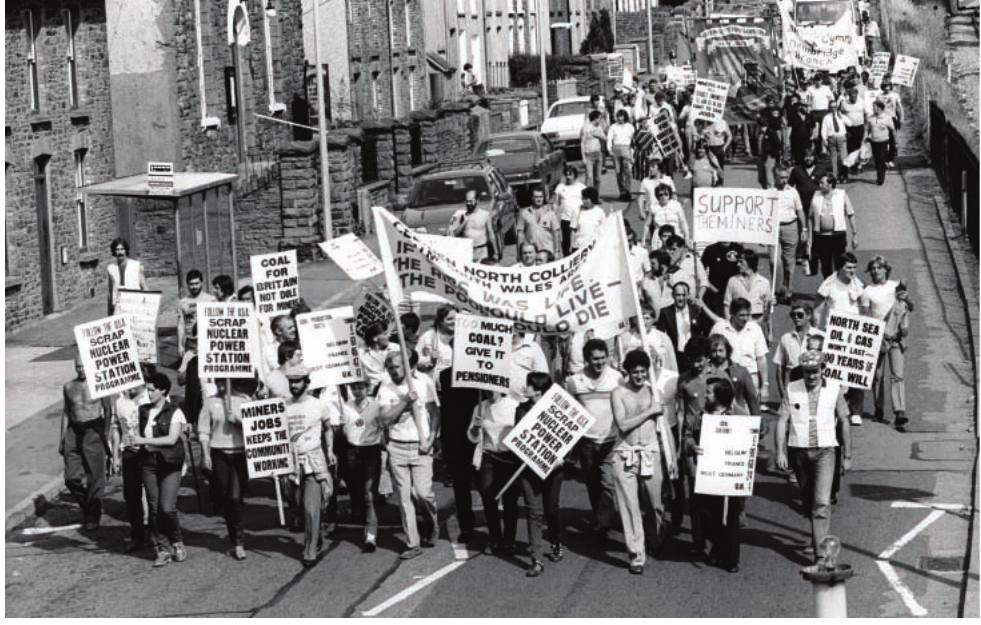
The prolonged 1984-85 miners' strike saw Thatcher's government break the power of the National Union of Mineworkers (NUM), a feat that had eluded previous prime ministers including Edward Heath. Thatcher also embraced a confident, assertive foreign policy, overseeing the Falklands victory (1982) and working closely with US President Ronald Reagan during the Cold War.

She won a hard-fought financial rebate from the EU whilst sowing seeds of Tory Euroscepticism. Her famous 1988 Bruges speech stated: 'We have not successfully rolled back the frontiers of the state in Britain, only to see them re-imposed at a European level with a European super-state exercising a new dominance from Brussels.' However, she strongly advocated for the European single market. The Iron Lady's legacy continues to both haunt and inspire many contemporary Conservative politicians.
The policies and principles of the Conservative Party today
Today's Conservative Party, led successively by Cameron, May and Johnson, contains elements of all four strands of conservatism. The 2019 election manifesto, 'Get Brexit Done — Unleash Britain's Potential', reflected this blend:
| Policy pledge | Strand of conservatism |
|---|---|
| Extra funding for the NHS, with 50,000 more nurses and 50 million more GP surgery appointments a year | Butskellite consensus — acceptance and expansion of a key plank of the Welfare State |
| 20,000 additional police officers and tougher sentencing for criminals | Traditional values |
| An Australian-style points-based system to control immigration | Traditional values |
| A promise not to raise the rate of income tax, VAT or National Insurance | Thatcherism |
| Get Brexit done, and remove the influence and power of institutions such as the European Court of Justice | One-nation conservatism/Thatcherism — a strong emphasis on the sovereignty of the nation-state |
| Maintain the 'triple lock' on pensions | One-nation conservatism |
| Make Britain a world leader in tackling plastics pollution, and creating an independent Office for Environmental Protection | Arguably a mixture of Butskellite consensus and one-nation conservatism |
| Keep the minimum voting age at 18 | Traditional values |
| Everyone who can work, should work, continue the rollout of Universal Credit, and crack down on benefit fraud | Thatcherism — belief in self-help, reducing the 'welfare dependency culture' |
Divisions within the Conservative Party
Until the 2019 election, Europe (specifically the European Union) was the main fracture line in the party. Successive Tory leaders were plagued by divisions between Leavers and Remainers, Eurosceptics and Europhiles. David Cameron's 2016 referendum on EU membership, intended to settle the matter, instead confirmed divisions ran deeper. Opposing factions squabbled over negotiated deal terms. Theresa May tried to placate both wings, but her deals were rejected repeatedly in the Commons and she suffered a record number of ministerial resignations. Boris Johnson's emphatic December 2019 victory heralded at least the beginning of the end to this ongoing fissure.
Note
Social Issue Divisions
Conservatives have also been divided over social issues. A majority of Conservative MPs rejected Cameron's 2013 bill to legalise same-sex marriage; the measure only passed due to opposition party support. This highlights how traditional values conservatism can conflict with more socially liberal one-nation conservatism.
The Labour Party
The Labour Party traces its origins to the Farringdon Street conference of 1900. From the beginning, the party was an alliance between members of the trade union movement and various socialist groups. Its initial aim was the independent representation in parliament of the working man (women didn't receive the vote until 1918).
The party formally assumed a socialist position in 1918 with the adoption of Clause IV into its constitution. Clause IV represented the party's aspiration to abolish capitalism, alongside nationalisation and inevitable wealth redistribution. Although this mirrored communist revolutionary language, the Labour Party has always been a parliamentary and constitutional political movement, never advocating violent revolution but rather change from within existing political structures. Like the Conservatives, the modern Labour Party is the sum of several principles and values, with inevitable internal tensions and factionalism.
Economic socialism
A commitment to core socialist strands can be observed in Labour's actions and promises over decades. The clearest examples appear in the postwar Attlee government, the first majority Labour government. Most famous for establishing the Welfare State, it also took many core industries into state ownership including coal mining, iron and steel, and even the former travel agent Thomas Cook. Subsequent Labour governments nationalised several other industries including major parts of shipbuilding and aerospace (1977).
The Thatcher years saw the sale of nearly all these industries, though the Blair/Brown Labour governments chose not to renationalise them. However, under Jeremy Corbyn, Labour's 2017 and 2019 manifestos pledged some partial renationalisation. The commitment to nationalisation reflects Labour's historic pledge to redistribute wealth 'for the many not the few', and to put people before private profit. Corbyn's election as leader marked a clear shift towards this more left-wing position, though Sir Keir Starmer's 2020 election saw a shift back to the centre.
Trade unionism
Labour's historic ties with the trade union movement date back to its foundation. Many unions have looked to Labour to protect and advance workers' rights, including the right to strike and trade union recognition in the workplace. Trade unions have traditionally supplied the bulk of Labour's funding, sponsored some MPs, and held seats on the ruling national executive.
However, union influence waned in the 1980s and 1990s, partly through deindustrialisation and the economy's shift from manufacturing to the far less unionised service sector. Their power was considerably weakened by Conservative reforms in the 1980s, designed to make unions more democratic and industrial action harder. The Blair/Brown governments (1997-2010) did not reverse these reforms.
Under Corbyn, trade unions enjoyed increased influence and leadership access. Unite's general secretary, Len McCluskey, was particularly close to Corbyn, though union influence has been reduced under Starmer's leadership.
Note
Trade Union Affiliation to Labour
Many major trade unions, such as the National Education Union (NEU), the UK's largest teachers' union, are not affiliated to Labour and play no part in its funding or policy-making. Just 12 unions were affiliated with Labour in 2020. This is a common misconception about the Labour-union relationship.
Globalist internationalism
A strong strand of Labour's policies has been a commitment to peace and disarmament, alongside resisting fascism and racism worldwide. Labour's first prime minister, Ramsey MacDonald, remained a pacifist during the First World War. A strong body within the grassroots Labour movement has opposed nuclear weapons and advocated for unilateral nuclear disarmament. Indeed, Labour has at certain times briefly embraced this policy officially.
Many MPs and activists have long fought against right-wing dictatorships, whether fighting alongside the Republicans in the Spanish Civil War (1936-39) or campaigning against apartheid in South Africa. This internationalism partly reflects socialism's emphasis on workers showing solidarity across national boundaries. Socialists view nationalism as a pretext for preserving the capitalist status quo and distracting the masses from revolutionary consciousness.
Many in the modern Labour movement have revised this attitude into support for European integration, with strong emphasis on protecting workers' rights across the EU. During the Blair years, this strand was arguably weakened by Blair's close relationship with conservative Republican President George W. Bush and his support for the 'war on terror' with accompanying military campaigns in Iraq and Afghanistan. This produced deep party divisions and large-scale backbench rebellions. Ironically for a Labour prime minister, Blair was denounced as a warmonger by many on the left.
Important
The Impact of Iraq on Labour
Disenchantment with Blair's 'Third Way socialism' was reflected in the swing to the left with Corbyn's election as leader in 2015 and the adoption of more left-wing politics. The Iraq War remains one of the most divisive issues in modern Labour Party history, fundamentally damaging trust in Blair's leadership and contributing to internal party tensions that persist today.
Whilst this served Labour well in the 2017 election (gaining votes and seats), the party's 2019 defeat led to Corbyn's resignation and Starmer's 2020 election as a more mainstream Labour figure.
New Labour/Third Way socialism
If Thatcherism was the revolutionary creed that both helped then hindered the Conservative Party electorally, Blair's New Labour project (1997-2010) did the same for Labour. Blair's intention was to modernise and update Labour, moving it to the centre ground of electability following its lurch to the left in the early 1980s under Michael Foot.
The emphasis was on triangulation: repositioning Labour on the centre ground, accepting many Thatcherite economic policies but retaining Labour's social values such as justice and fairness for all. There was less concern about who owned industry and far more emphasis on how profits could be put to good use achieving social justice goals.
More money was pumped into the NHS and education — indeed, Blair's mantra was 'Education, education, education'. In something of a reversal of traditional Labour education policy, Blair's governments oversaw the demise of what his key adviser, Alastair Campbell, called the 'bog-standard comprehensive'. Instead, the party focused on specialist schools and colleges often outside local authority direct control. New Labour also focused on eliminating child poverty.
For some in the Labour Party, this amounted to pragmatic common sense and electoral success — Blair won three consecutive general elections on the back of New Labour policies, unprecedented for a Labour leader. To others, the Third Way was a sell-out and betrayal — one of Blair's chief critics and most frequent backbench rebels was Jeremy Corbyn.
Case study: The Labour Party and Clause IV
Clause IV and its subsequent revision by Blair in 1995 says much about the party's original principles and the rebranding that took place in the 1990s as part of the New Labour project. The original clause reflected classic socialist goals and used much of Karl Marx's language, involving a commitment to large-scale nationalisation:
Example
Example: The Original Clause IV (1918)
'To secure for the workers by hand or by brain the full fruits of their industry and the most equitable distribution thereof that may be possible upon the basis of the common ownership of the means of production, distribution and exchange, and the best obtainable system of popular administration and control of each industry or service.'
This wording directly echoed Marxist ideology, committing Labour to fundamental transformation of the economic system through public ownership of all major industries and services.
However, the wholesale privatisation programme of the Thatcher and Major years left Labour with a dilemma: should it commit to renationalise (at huge expense) or should it pragmatically rephrase its statement of intent?
In 1995, a vote was held at Methodist Central Hall, Westminster (where the original clause had been adopted in 1918) to determine whether Clause IV should be amended. The party voted to amend. The newly modified Clause IV read:
Example
Example: The Revised Clause IV (1995)
'A dynamic economy, serving the public interest, in which the enterprise of the market and the rigour of competition are joined with the forces of partnership and co-operation to produce the wealth the nation needs.'
This new version embraced market economics while maintaining Labour's commitment to cooperation and the public interest — a clear example of Third Way triangulation.
It had been a significant gamble for Labour leader Blair, but by winning the vote he was given the green light to proceed with his party modernisation plans. After 18 years in the political wilderness, Labour went on to win a landslide victory in 1997. Blair's pragmatism and modernisation programme had paid off.
The policies and principles of the Labour Party today
Labour's 2019 manifesto, 'It's Time For Real Change', contained policy promises from all of Labour's previous main strands. Overall, however, it contained far more authentic socialism than Blairism:
| Policy pledge | The strand of Labour most reflected |
|---|---|
| To hold a second referendum on Brexit following a renegotiation of a new Brexit deal within 3 months. The choice would be the renegotiated deal or Remain and be held within 6 months | Arguably slightly Blairite, with a clear desire to remain closely aligned with the EU or indeed remain in the EU |
| Raise the minimum wage from £8.21 to £10 an hour | Again, somewhat Blairite with its emphasis on making capitalism fairer and promoting social justice |
| Increase the health budget by 4.3% and cut private provision in the NHS | Economic socialism — whilst all Labour supporters strongly back the NHS, many on the Blairite wing were ready to accept some private sector involvement in service delivery where this made economic sense |
| Bring forward the net-zero target on carbon emissions, putting the UK on track for a net-zero carbon energy system within the 2030s | Globalist internationalism — the emphasis on caring for the planet is arguably a modern version of international cooperation and all nations working together for a better future |
| Renationalise the so-called big six energy firms, National Grid, the water industry, Royal Mail, railways and the broadband arm of BT | Economic socialism — one of the most radical pledges in the 2019 manifesto. Also strongly supported by much of the trade union movement |
| Abolish private schools' charitable status, alongside plans to scrap tuition fees and bring back maintenance grants for the poorest students | Economic socialism — Labour's left wing has long dreamed of abolishing private schools, seeing them as elitist and perpetuating social and economic inequality. The tuition fees policy marked a departure from the Blair years, since university fees were first initiated under his watch |
| Remove unfair and unnecessary restrictions on trade unions, allowing people to come together and speak up on issues affecting them at work. Strengthen and enforce trade unions' right of entry to workplaces. Strengthen protection of trade union representatives against unfair dismissal and union members from intimidation and blacklisting. Repeal anti-trade union legislation including the Trade Union Act 2016 | Trade unionism — these extensive pledges marked a shift from the Blair years, when Tory anti-union laws were largely untouched |
| On immigration and refugees, a promise that the system would be built on human rights and meet skills and labour shortages in the economy and public services. Asylum seekers would have the right to work, access to public services and be treated humanely by government at all levels | Globalist internationalism — this reflects Labour's traditional emphasis on human rights and welcoming the positive aspects of immigration |
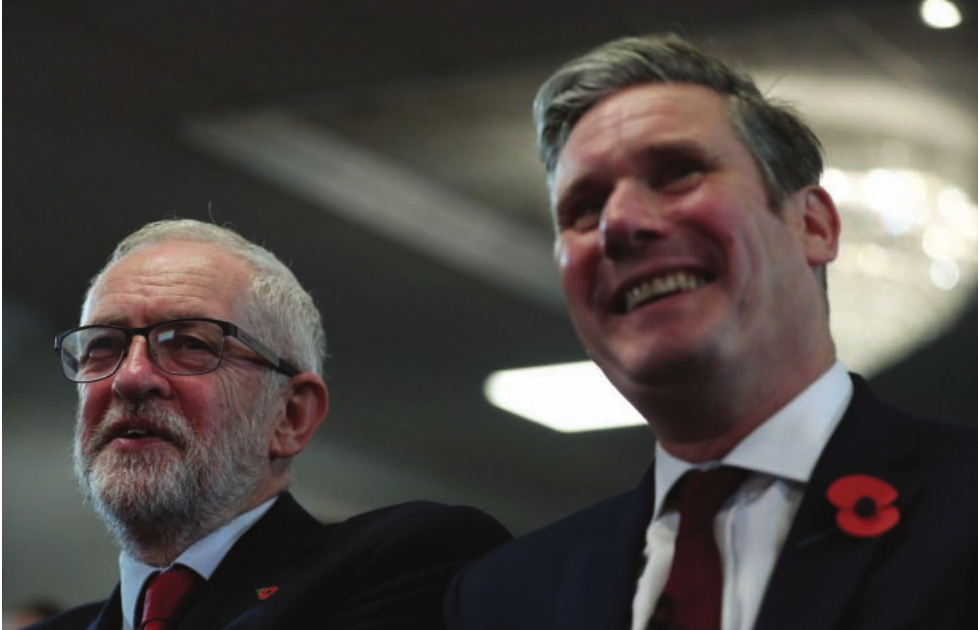
Along with the 2017 manifesto, this 2019 manifesto represented a clear and consistently left-wing programme. Unlike in 2017, however, the electorate decisively rejected the policies and Labour's vote share fell from 40% to 32%. Opinion is divided over how far this resulted from the overall programme being seen as too extreme (reminiscent of the 'longest suicide note in history' jibe against Labour's 1983 manifesto, also seen as too left-wing). Others argued the fault primarily lay with Labour's stance on Brexit, which failed to resonate with most voters.
Important
Understanding Labour's 2019 Defeat
The 2019 election result showed a particular collapse in the Labour vote in some traditional Midlands and northeastern strongholds that had firmly backed Brexit in the referendum. Many Labour voters also viewed Corbyn negatively. This suggests that both policy positioning and leadership perception played crucial roles in the electoral outcome.
The Liberal Democrats
The Liberal Democrats have a slightly more chequered history than either the Conservatives or Labour. Until the 1920s, their predecessor, the Liberal Party, was the Conservative Party's main rival. The nineteenth-century Liberal Party, epitomised by four-time prime minister William Gladstone, stood for free trade, religious toleration, self-help and a more ethical foreign policy. It was less overtly supportive of the Empire from the 1860s onwards and favoured home rule for Ireland.
Traditional supporters included Christian nonconformists, many in the skilled working class, and industrialists who had made their fortunes from scratch. However, the party suffered a serious split over Irish Home Rule in 1885/6 and further divisions during wartime coalition government. More seriously, the emergence and rise of the Labour Party attracted many working-class voters, whilst the Conservatives drew away many middle-class supporters by playing on their fears of socialism and revolution. As a result of this political pincer movement, by the 1930s the Liberal Party was permanently relegated to third-party status in UK politics.
Note
The Liberal Democrats' Path to Formation
The party adopted its present name in 1988, after a merger of the Liberal Party and the Social Democratic Party (SDP). The SDP was founded in 1981 by several centrist Labour politicians (and a sole Conservative MP) concerned by how far left their party had drifted. The SDP was particularly wary of Labour's commitment to unilateral nuclear disarmament and withdrawal from the EEC. Having agreed an electoral pact with the Liberals for the 1983 and 1987 elections, the two parties finally merged in 1988.
Despite sporadic signals that the Liberal Democrats might usurp one of the two dominant parties, and sharing power in the 2010-15 coalition government when leader Nick Clegg served as deputy prime minister, it still retains third-party status today.
Today, the Liberal Democrats are fundamentally a progressive centrist party with strong commitment to Europe and the EU, concern for constitutional reform (especially electoral system reform), and emphasis on human rights and freedoms. Members have also prided themselves on pursuing green environmental policies. Whilst they have a strong and consistent body of support, they have also traditionally been a receptacle for 'protest votes' from voters disillusioned with both main parties.
Key Liberal Democrat policies and principles
The party's core values were reflected in many 2019 manifesto promises:
| 2019 manifesto pledges | Liberal Democrat values and principles |
|---|---|
| To stop the Brexit process completely, not pursuing a renegotiated Brexit deal or second referendum. Their strategy was to attract angry Remainers from across the political fold, put off by the Conservatives' pro-Brexit stance and Labour's more equivocal position of renegotiation followed by a second referendum | Europe — the Liberal Democrats are unashamedly the most pro-EU English party. Their leaders energetically campaigned for Remain in the 2016 referendum and subsequently were strongly opposed to a 'no-deal' Brexit. They believed the UK was always better off in the EU |
| To defend the Human Rights Act 1998, resist any attempt to withdraw from the European Convention on Human Rights and oppose any laws that unnecessarily erode civil liberties. To halt the use of facial recognition surveillance by police and end the bulk collection of communications data and internet connection records | Civil liberties — the Liberal Democrats have long been wedded to protecting civil liberties and are suspicious of an overarching security state. They were strongly opposed, for example, to compulsory ID cards, an idea first proposed by Labour following the 9/11 attacks. As part of the 2010 Coalition Agreement, the plan was scrapped |
| Put an end to wasted votes by introducing proportional representation through the single transferable vote (STV) for electing MPs and local councillors in England. Give 16- and 17-year-olds the right to vote in elections and referendums. Scrap plans to require voters to bring identification to vote. Reform the House of Lords with a proper democratic mandate | Political reform — the Liberal Democrats have long championed reforming the political system to make it fairer and more representative. They have particularly prioritised electoral system reform and abolishing FPTP, a system that certainly works against them in terms of Commons seats. When in coalition, they secured a national referendum on replacing FPTP with the alternative vote. The proposal was rejected by voters |
| Champion a federal future for the UK by introducing/extending devolution for each of the nations of a strong, federal and united UK | Federalism — Liberal Democrats have long supported a more federal system of government and opposed excessive centralisation of power in Westminster |
| Set a new legally binding target to reduce net greenhouse gas emissions to zero by 2045 at the latest, and implement a comprehensive climate action plan, cutting emissions across all sectors. Establish a Department for Climate Change and Natural Resources, and appoint a cabinet-level chief secretary for sustainability in the Treasury | Environment — a policy long associated with the party, arguably long before it became more mainstream. The Liberal Democrats enthusiastically back sustainability and renewable energy |
| Taxing big business more heavily including a promise to restore corporation tax to 20% — thereby reversing the previous cut to 17%. Taking tough action against corporate tax evasion and avoidance especially by international tech giants and large monopolies | Taxation — arguably the party has adopted more of a left-wing position and embraced the need for higher taxes on the wealthiest to pay for better public services and a greener economy |
| Reinstate maintenance grants for the poorest students, ensuring living costs are not a barrier to disadvantaged young people studying at university. Regarding tuition fees, the promise was more nuanced with a pledge to establish a review of higher education finance to consider any necessary reforms in light of latest evidence | Education — a key plank of recent Liberal Democrat policy has been emphasis on far more investment in all education sectors, and also the abolition of student tuition fees. The party has often done well in student cities such as Oxford and Edinburgh, and constituencies with a high proportion of graduates including Richmond Park and Sheffield Hallam |
The current state of the Liberal Democrats
Although the coalition government was stable and the imprint of Liberal Democrat influence could be seen in some policies, the party was heavily punished at the polls in the 2015 election. In 2010, it won a very respectable 57 seats whereas in 2015 it crashed to just eight, only recovering very slightly to 12 in 2017 and dropping slightly again to 11 in 2019 when then party leader Jo Swinson narrowly lost her East Dunbartonshire seat. This was despite the defections to the party of several MPs following the creation but subsequent swift demise of the Change UK Party, when several of Change UK's leading MPs switched to the Liberal Democrats. The party's overall vote share did, however, increase.
Important
FPTP and the Liberal Democrats
The net loss of one seat in 2019 for the Liberal Democrats, despite a significant rise in their share of vote from 7.4% to 11.5%, is a good example of how FPTP can produce distorted election results. This disparity between vote share and seat allocation remains a central argument in the Liberal Democrats' campaign for electoral reform.
Recent electoral woes have partly resulted from opposition to the Conservative coalition from 2010 to 2015, which resulted in the abandonment of several key policies, such as the abolition of student tuition fees. Some critics also blamed the campaigning shortcomings of former leader Jo Swinson, one comment being, 'It feels like she's running a presidential campaign when no one really knows her.' Unlike in the early 1980s, the Liberal Democrats proved unable to benefit from Labour's lunge to the left or from the Tories' adoption of a more emphatically pro-Brexit position by the time of the 2019 election.
Remember!
Summary
Key Points to Remember:
The Conservative Party contains four main strands:
- One-nation conservatism (paternalistic duty of the privileged)
- Butskellite pragmatism (postwar consensus and acceptance of the Welfare State)
- Traditional values (family, marriage, firm immigration policy)
- Thatcherism (free-market economics, self-help, rolling back the state)
The Labour Party's main strands include:
- Economic socialism (nationalisation and wealth redistribution)
- Trade unionism (protecting workers' rights)
- Globalist internationalism (peace, disarmament, resisting fascism)
- New Labour/Third Way socialism (centre-ground triangulation accepting free-market economics whilst maintaining social justice values)
Clause IV was Labour's original socialist commitment to 'common ownership of the means of production', revised by Tony Blair in 1995 to embrace market economics alongside cooperation, symbolising the party's modernisation.
The Liberal Democrats are a progressive centrist party strongly committed to:
- The EU and European integration
- Civil liberties and human rights
- Constitutional reform (especially proportional representation)
- Federalism and devolution
- Environmental protection
2019 Manifestos reflected core values:
- Conservatives mixed all four strands with emphasis on Brexit and traditional values
- Labour offered radical left-wing policies including extensive nationalisation
- Liberal Democrats focused on stopping Brexit and political reform