The Impact of Pressure Groups on Democracy (AQA A-Level Politics): Revision Notes
📚Revision Notes
The Impact of Pressure Groups on Democracy
One of the central debates surrounding pressure groups is whether they enhance or undermine democracy. This question is explored through two key theoretical frameworks: elitism and pluralism.
Elitist vs pluralist debate
Note
The relationship between pressure groups and democracy can be analysed through two competing perspectives that offer contrasting interpretations of how power operates in society.
The elitist argument
The elitist perspective suggests that pressure groups fundamentally weaken democracy. This argument rests on the observation that groups with the greatest resources and strongest connections to those in power exercise disproportionate influence. These privileged groups typically possess insider status, meaning they have regular, direct access to government decision-makers.
According to elitist theory, powerful sections of society dominate the pressure group landscape. Wealthy and well-connected organisations can afford professional lobbyists, fund extensive research, and maintain constant dialogue with ministers and civil servants. Meanwhile, groups representing weaker and more marginalised communities are effectively excluded from having a meaningful voice in policy-making.
Important
A key concern is that insider groups often claim a monopoly of expertise in their field. For example, when governments consider legal reforms, they rely heavily on advice from legal professional bodies like the Law Society or Bar Council. These groups naturally argue for positions that protect their own interests, whilst the views of ordinary citizens who use the legal system receive less attention.
The pluralist argument
In contrast, the pluralist viewpoint argues that pressure groups strengthen democracy by creating opportunities for all groups to campaign and be heard on a roughly equal basis. Those groups that succeed often represent causes that align with public opinion and the current political mood.
Note
Pluralism can be defined as the concept that democratic politics involves numerous groups all competing for power and influence on a level playing field. No single group or interest has overwhelming advantages, resulting in a wide dispersal of power across society. This framework promotes a forum for debate and scrutiny between competing groups.
Advocates of pluralism point to several democratising developments. Social media has enabled groups with limited financial resources to communicate their message to large audiences. Governments remain conscious of public opinion and wary of appearing too close to narrow elites. Select committees routinely take evidence from diverse groups when conducting inquiries. Recent government initiatives on climate change demonstrate willingness to challenge powerful vested interests in fossil fuel industries.
Furthermore, many newer pressure groups, such as Extinction Rebellion and Black Lives Matter, operate with largely non-hierarchical and loosely structured organisations, suggesting a more democratic form of activism.
Evaluating the theories
Important
The reality likely exists somewhere between these two extremes. Whilst some groups clearly possess greater resources and access, democracy provides mechanisms through which even traditionally powerful interests can be challenged.
For instance, the British Medical Association (BMA) resorted to strike action in response to government health service reforms, suggesting that traditional lobbying had failed. Similarly, parts of the legal profession struck in 2015 over legal aid cuts, indicating that even insider groups cannot always influence policy through conventional channels.
How pressure groups affect democracy
Beyond the elitist-pluralist debate, pressure groups impact democracy through three key dimensions: representation, participation, and accountability.
Arguments that pressure groups help democracy
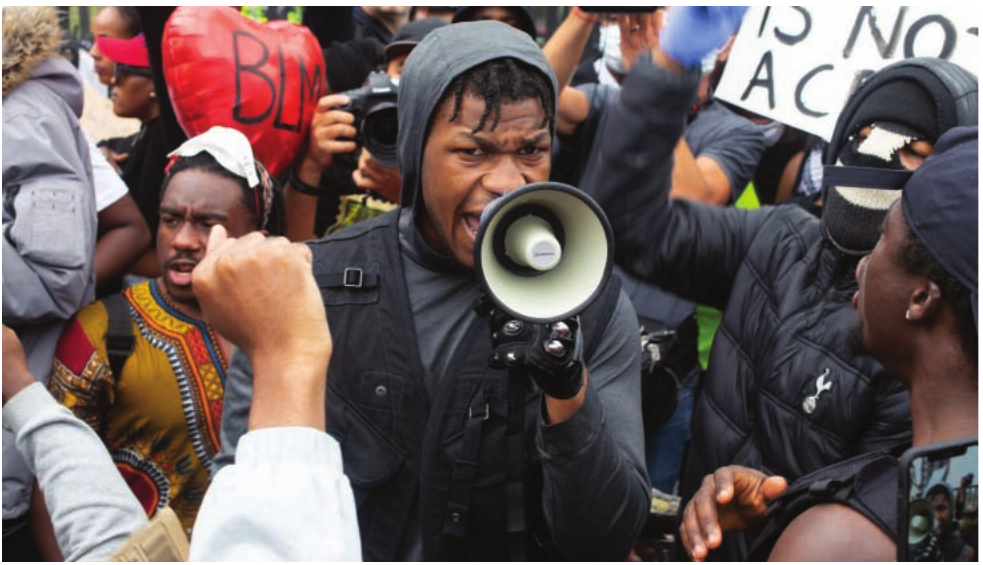
Promoting participation: Pressure groups provide popular forums for active political engagement. The Stop the War Coalition organised mass rallies in 2003 against the Iraq War, with approximately 1 million people attending the main London demonstration—the largest political protest in UK history. Similarly, large crowds attended Black Lives Matter protests across the UK during summer 2020, demonstrating sustained public engagement with political issues.
Enhancing representation: Virtually every group and viewpoint in society has some form of pressure group representation. Many issues addressed by pressure groups, such as mental health or human rights, cut across traditional party-political divisions. Given that many groups have memberships larger than political parties, they arguably offer better representation of voter concerns.
Pressure groups enable representation between elections through continuous lobbying and campaigning. They ensure debates continue outside election periods and amplify the voices of marginalised groups, including prisoners and asylum seekers.
Example
Worked Example: Effective Parliamentary Scrutiny
Pressure groups utilise a wide range of democratic institutions to advance their causes, including Westminster, local councils, and devolved assemblies. They bring scrutiny to less democratic parts of the state, such as unelected quangos and government departments where civil servants make many decisions without direct ministerial involvement.
This demonstrates how pressure groups can increase accountability by monitoring and challenging decisions made by unelected officials.
Internal democracy: Many pressure groups have transparent, internally democratic structures. Trade unions, following 1980s reforms, now conduct regulated secret ballots for internal positions and industrial action. Groups registered as charities face regulation by the Charity Commission, which investigates financial irregularities and conflicts of interest.
Political education: Pressure groups contribute positively to public awareness and understanding of specific issues. They promote political education and debate, enabling both voters and policy-makers to be better informed. Their specialist input helps create better and fairer laws and regulations.
Arguments that pressure groups hinder democracy
Limited participation: Large-scale involvement in campaigns and protests is exceptional rather than normal. Many members are passive 'chequebook members' who join for personal benefits rather than principled conviction. For many, participation extends no further than signing electronic petitions or sending pre-formatted emails to MPs.
Unrepresentative membership: Many pressure groups have small, unrepresentative memberships that may not reflect broader public opinion. Those who 'shout loudest' do not necessarily speak for the majority. Political parties, which must balance competing demands and prioritise policies, are arguably better positioned to assess competing claims for resources and policy direction.
Lack of democratic mandate: Unlike elected representatives such as MPs and local councillors, pressure groups possess no direct democratic mandate from voters. This raises questions about their political legitimacy and their right to influence policy-making.
Limited accountability: Whilst groups utilise various access points in the political system, this does not automatically benefit democracy. They may be no more democratically representative than the unelected officials they seek to persuade.
Note
Internal undemocratic structures: Not all groups operate transparently or democratically. Some are dominated by powerful or charismatic individuals. Disagreements and personality clashes can lead to splits, as seen with Extinction Rebellion and the formation of the Beyond Politics party in 2020. Environmental group Greenpeace has faced accusations of being dominated by internal elites.
Biased information: Information disseminated by pressure groups is inevitably one-sided and selective. Groups emphasise positive aspects of their position whilst refuting or ignoring alternative viewpoints. This is particularly problematic on divisive and emotional issues such as immigration and abortion.
Vested interests: When consulted on new laws and regulations, groups tend to argue their own case and propose changes that benefit their particular interests rather than the wider public good.
Key case studies
Example
Stop the War Coalition (2003): Organised the largest political demonstration in UK history with approximately 1 million attendees at the London march against the Iraq War, demonstrating pressure groups' capacity to mobilise mass participation.
Example
Black Lives Matter (2020): Large protests across the UK during summer 2020 showed sustained engagement with social justice issues. Research indicated BLM protests had minimal impact on COVID-19 transmission, contradicting some criticisms of the demonstrations.
Example
Extinction Rebellion: A newer pressure group characterised by non-hierarchical, loosely structured organisation. Despite being an outsider group, XR has given evidence to parliamentary committees, demonstrating that outsider groups do not always seek confrontation and may engage constructively with policy-makers.
Example
British Medical Association (BMA): Traditionally an insider group, the BMA resorted to strike action over health service reforms and doctors' pay, suggesting even powerful insider groups cannot always achieve objectives through conventional lobbying.
Example
Criminal Bar Association: The legal profession's strike action in 2015 over legal aid budget cuts demonstrated that traditional lobbying by insider groups had failed, showing that no group is entirely beyond challenge in a democracy.
Exam guidance
Important
When evaluating pressure groups' impact on democracy:
- Consider both theoretical frameworks (elitism and pluralism) and their strengths and limitations
- Use specific case studies to support arguments on both sides
- Remember that outsider groups like Extinction Rebellion often have elements of insider access, such as giving evidence to parliamentary committees
- Address multiple dimensions: representation, participation, and accountability
- Acknowledge that the reality lies somewhere between the extremes of the debate
- Consider how context and specific policy areas affect pressure group influence
Remember!
Summary
Key Points to Remember:
- Pluralism suggests democratic politics involves multiple groups competing for influence on a roughly equal basis with wide dispersal of power.
- Elitism argues that power is distributed unequally, with well-resourced insider groups wielding disproportionate influence over policy-making.
- Pressure groups enhance democracy through promoting participation, improving representation between elections, and increasing accountability of decision-makers.
- However, they may undermine democracy through limited active participation, lack of democratic mandate, biased information, and pursuit of vested interests.
- Key case studies demonstrate both successes (Stop the War Coalition, Black Lives Matter) and limitations (BMA strike action, Extinction Rebellion splits) of pressure group influence.