The Aims of the EU (AQA A-Level Politics): Revision Notes
📚Revision Notes
The Aims of the EU
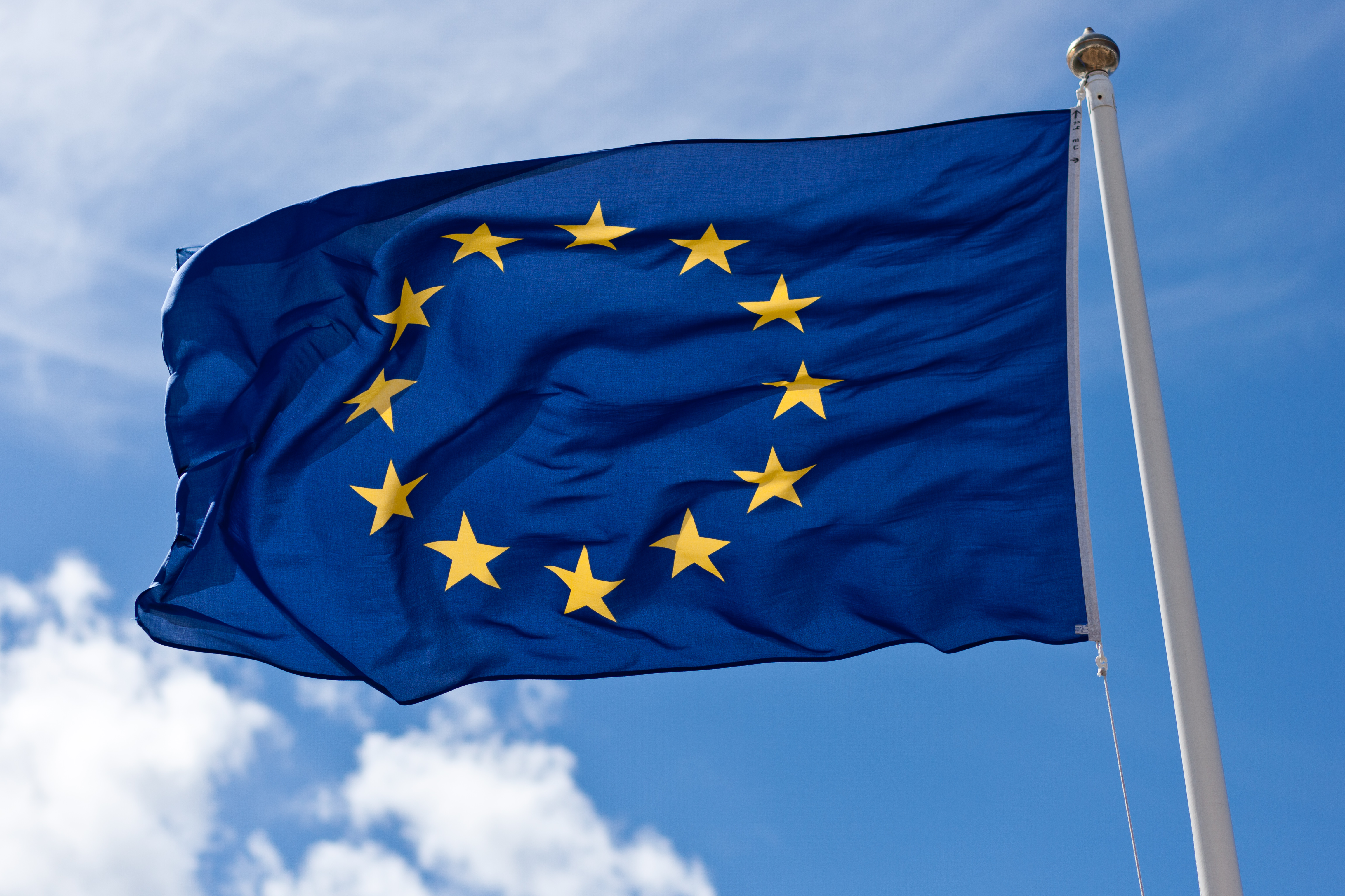
The European Union emerged from the devastation of two world wars in the twentieth century. The desire to prevent further conflict, particularly between historical rivals France and Germany, drove the creation of what would become the EU. From its inception, the European project aimed to achieve more than simple economic cooperation - it sought to promote shared values, strengthen democratic principles, and build political unity across western Europe.
Understanding the European project's origins
The founding vision of the EU was shaped by leaders who believed that European integration should be gradual and practical. Robert Schuman, one of the EU's founding fathers, articulated this approach:
"Europe will not be made all at once, or according to a single plan. It will be built through concrete achievements which first create a de facto solidarity."
Note
This philosophy reveals an important characteristic of the EU - it is not a static institution but rather an evolving concept working towards an "ever closer union". The gradual, step-by-step approach has defined European integration from the beginning, focusing on practical achievements that build solidarity over time.
The changing names of the organisation reflect this gradual evolution:
- European Coal and Steel Community (ECSC) - established 1952
- European Economic Community (EEC) - from 1958
- European Community - from 1967
- European Union - from 1993
The original aims
When the European project began, three core aims were identified:
Important
Economic recovery and prosperity - Rebuilding western Europe's economy after the Second World War required cooperation and the removal of trade barriers.
Embedding democratic values and human rights - The continent had witnessed the horrors of Nazi authoritarianism and racism. The new European institutions aimed to reinforce democracy and protect fundamental rights.
Achieving reconciliation and lasting peace - Particularly between France and Germany, the European project sought to make future wars unthinkable by creating economic and political interdependence.
Key milestones in EU development
The EU has evolved through major treaties and enlargements. Understanding this development helps explain how the organisation's aims expanded over time.
Early foundations (1951-1973)
The Treaty of Paris (1951) established the ECSC with six founding members: France, West Germany, Italy, Belgium, the Netherlands and Luxembourg. This created a common market for coal and steel, industries crucial for both economic recovery and warfare.
The Treaty of Rome (1957) expanded cooperation by establishing the EEC and creating a wider common market. This treaty laid the foundations for closer union and extended cooperation into areas like agriculture and common tariffs.
The first enlargement (1973) saw Denmark, Ireland and the UK join, followed by Greece (1981), Spain and Portugal (1986).
Deepening integration (1985-1997)
The Single European Act (1985) created a genuine single European market and introduced qualified majority voting (QMV) for single market legislation. QMV requires 55% of member states (representing at least 65% of the EU population) to approve proposals, making decision-making more efficient but reducing individual nations' veto power.
Note
The introduction of QMV marked a significant shift in EU decision-making. By moving away from requiring unanimous consent, the EU could act more decisively on single market issues. However, this came at the cost of individual member states losing their ability to block legislation they opposed.
The Schengen Agreement (1985) removed internal border controls, creating a single travel area. Notably, the UK and Ireland secured opt-outs from this agreement.
The Maastricht Treaty (1992) formally created the European Union and established a timetable for economic and monetary union. It also increased cooperation on foreign and security policy.
Austria, Finland and Sweden joined in the second enlargement (1995).
The Amsterdam Treaty (1997) extended EU competences into immigration and security matters. Its updated integration clause emphasised taking decisions "as openly as possible and as closely as possible to the citizen."
Recent developments (1999-2020)
The Eurozone (1999) saw eleven countries adopt the euro, transferring monetary policy control to the European Central Bank. The UK secured an opt-out. Eight more EU countries have since joined the eurozone.
The 2004 enlargement marked the largest single expansion, with mainly eastern European countries joining after the Cold War ended. This brought in Cyprus, Czech Republic, Estonia, Hungary, Latvia, Lithuania, Malta, Poland, Slovakia and Slovenia, followed by Bulgaria and Romania (2007) and Croatia (2013).
The Lisbon Treaty (2007) reformed EU institutions, extended QMV to over 45 policy areas, and created the posts of President of the European Council and High Representative for Foreign Affairs.
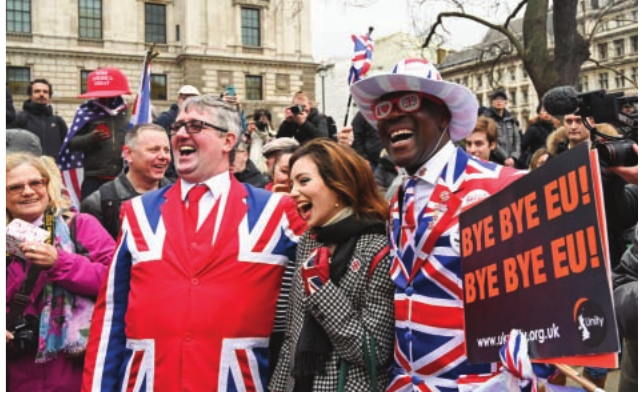
Brexit (2016-2020) - The UK became the first member state to leave the EU following a referendum where 52% voted to leave. This left the EU with 27 members.
The four freedoms
The fundamental aims of the EU are often summarised as the "four freedoms", which form the cornerstones of the European Single Market:
Important
Freedom of movement of people - EU citizens have the right to live and work in any member country and access public services on equal terms with nationals. This creates a mobile workforce across the entire EU.
Freedom of movement of services - Professionals, businesses and self-employed individuals have their qualifications recognised across all EU states. A nurse qualified in Spain could work in the NHS, and vice versa (until Brexit).
Freedom of movement of capital - Money and capital can move around the EU without significant restrictions, facilitating investment and business operations across borders.
Freedom of movement of goods - Products can be bought and sold across the EU without border checks, import duties or additional national standards. Countries cannot protect domestic industries through tariffs or excessive regulatory requirements.
These freedoms strengthen intra-EU trade significantly. Approximately two-thirds of all goods produced in the EU are exported to another EU country, demonstrating the success of market integration.
Broader aims of the EU
Beyond the four freedoms, the EU pursues wider political and social objectives:
Peace and stability
The EU has achieved considerable success in promoting peace and stability across Europe. The historic animosity between France and Germany has been resolved through economic and political interdependence. Perhaps more impressively, the EU facilitated stability during a potentially volatile period - the collapse of the USSR and dismantling of the Iron Curtain (1989-90).
Note
The EU provided substantial investment in infrastructure and supported emerging democratic institutions in eastern Europe. This helped achieve peaceful transitions to democracy, contrasting sharply with the chaos often seen when autocratic systems collapse, such as in parts of the Middle East.
The EU continues this approach in former Yugoslavia, where civil wars raged from 1991 to 2001. Slovenia and Croatia have already joined the EU, while other Balkan states are at various stages of the membership process.
Promotion of economic growth
The EU's record on promoting economic growth presents a mixed picture. Some previously impoverished nations, particularly Ireland and eastern European countries, have experienced substantial growth and prosperity through single market participation and EU grants for infrastructure projects.
The single market has created millions of jobs and increased GDP by approximately 15% since its creation. However, significant challenges remain:
Important
Economic disparities persist - In 2019, Germany's GDP per capita was over five times that of Bulgaria, showing that wealth gaps between member states remain substantial.
Wealth inequality has increased - Since the mid-1980s, income distribution across Europe has become more unequal. By the late 2000s, Europe was more unequal than the average developed (OECD) country, though less so than the USA.
Financial crisis impact - Poorer countries like Greece and Italy were severely affected by the 2007-08 global financial crisis. They required bailouts from the EU and International Monetary Fund, forcing them to implement harsh austerity measures. Critics argued the EU was partly responsible for allowing these countries to join the eurozone when their economies were not "convergent" with wealthier nations, and for permitting them to run large budget deficits.
Regulatory burden - Many smaller businesses find EU regulations complex and expensive to implement. Uniform standards for product safety, while necessary for a single market, can be particularly costly for small firms.
Individual rights and freedoms
The EU's promotion of individual rights and freedoms has achieved mixed results:
Positive impacts:
- Freedom of movement has enabled citizens to seek better employment opportunities across borders
- EU citizens enjoy easier travel within the union
- Reciprocal healthcare arrangements (via the EHIC card)
- Erasmus grants support studying abroad
- Enhanced worker protections, such as the Working Time Directive (2003), which limits average working time to 48 hours per week including overtime
Challenges and controversies:
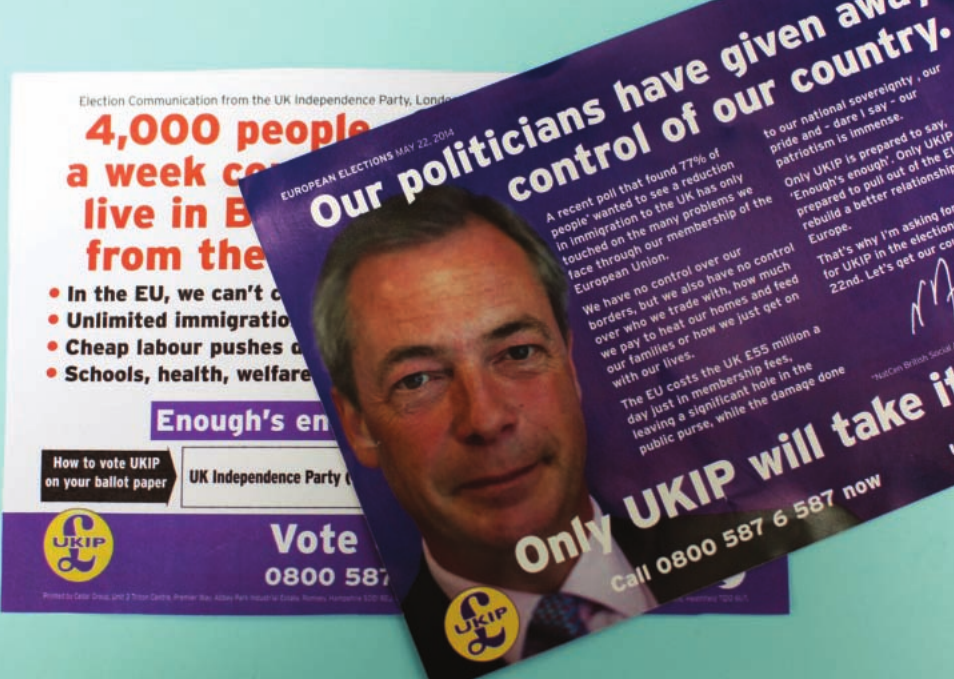
High levels of immigration, especially from eastern Europe, created tensions in destination countries like the UK. These concerns about immigration numbers played a significant role in growing support for Brexit.
Note
The 2015 refugee and migrant crisis
Approximately 1.8 million people arrived in Europe in 2015 alone, many fleeing the Syrian civil war. This exposed divisions among member states:
- Southern Mediterranean countries like Greece and Italy bore the heaviest burden of processing asylum applications
- Germany offered asylum to over 1 million people
- Hungary proved much more reluctant, temporarily closing its border with Croatia
- Other EU countries showed varying willingness to accept asylum seekers
Critics argued the EU failed to respond to the crisis in a coordinated and effective manner. Supporters believed this highlighted the need for more centralised EU power to override individual states' wishes, while opponents argued it demonstrated why countries must retain control over their own borders and asylum policies.
Integration and an "ever closer union"
The EU has achieved considerable integration in many policy areas. Competences (areas where the EU has authority) have expanded through successive treaties. The creation of the eurozone and single market, extension of QMV, and structural changes (such as creating a European Council presidency, adopting a flag and anthem, and establishing EU citizenship) all suggest growing unity.
However, significant challenges to integration persist:
Important
Growth of populism - Eurosceptic movements have gained strength across Europe, including the Northern League in Italy and National Rally (formerly Front National) in France. These movements suggest widespread discontent with EU institutions.
Economic tensions - Poorer countries often felt ignored or dictated to by EU institutions. Wealthier countries like Germany and the Netherlands, proud of their fiscal discipline, resented taking on the debts of nations they viewed as financially irresponsible.
Differentiated integration - Not all member states participate equally in EU initiatives. Denmark remains outside the eurozone, and various countries have secured opt-outs from policies they consider detrimental to national interests.
Democratic backsliding - Some member states, notably Hungary and Poland, have been accused of undemocratic policies such as restricting press freedoms and politicising courts, challenging the EU's commitment to democratic values.
Case study: the EU's response to COVID-19
Example
Case Study: The COVID-19 Pandemic and EU Unity
The COVID-19 pandemic in 2020 presented one of the greatest challenges to EU unity and revealed both weaknesses and strengths in the organisation's ability to coordinate responses.
Initial fragmentation - The pandemic's early stages saw temporary reimposition of internal border controls, inconsistent lockdown approaches, and disputes over personal protective equipment (PPE) sales. France, Germany and several other countries rejected EU attempts to lift controls on protective medical gear exports. Italy, among the worst-hit countries, complained that less affected nations denied help and supplies. This created a poor public image of European unity.
Coordinated recovery - However, the pandemic also prompted unprecedented intervention. In April 2020, EU finance ministers agreed a €500 billion rescue package for countries hit hard by coronavirus. The European Central Bank took extraordinary measures to support economies.
In May 2020, European Commission President Ursula von der Leyen proposed a €750 billion recovery plan, stating: "The crisis has huge externalities and spill overs across all countries and none of that can be fixed by any single country alone."
Overall, the pandemic ultimately pulled member countries' economies and public finances closer together, demonstrating that coordination was possible when political will existed.
Has the EU achieved its aims?
Arguments supporting achievement of aims:
Economic success - The single market, with 500 million consumers, has promoted growth and boosted trade. Previously poor nations like Ireland and eastern European countries have particularly benefited.
Crisis response - The EU provided coordinated large-scale support during the COVID-19 pandemic and 2008-09 global financial crisis.
Individual benefits - Workers' rights and freedom of movement have benefited ordinary people through employment opportunities and enhanced protections.
Security coordination - Measures like the European Arrest Warrant have improved policing and security cooperation.
Democracy promotion - Democracy has been cemented in countries emerging from authoritarian rule, especially in eastern Europe.
Increased integration - Europe is closer and more united across many areas, evidenced by the eurozone's creation and expansion of EU competences.
Foreign policy coordination - The EU has adopted a more unified approach to foreign policy, particularly after creating the post of High Representative for Foreign Affairs.
Arguments against achievement of aims:
Overregulation and disparities - The single market is overregulated, and significant wealth disparities between nations persist.
Inadequate crisis responses - Many have criticised the EU's responses to both financial and humanitarian crises as insufficient.
Controversial freedom of movement - This principle has proved divisive, with some viewing the EU labour market as too rigid and inflexible.
Security alternatives - Security enhancement has occurred through separate agreements independent of the EU. Interpol, an international body separate from the EU, plays a significant role.
Democratic accountability concerns - Many EU institutions lack full democratic accountability.
Differentiated integration - Some countries participate more fully than others. Denmark remains outside the eurozone, and many countries have secured opt-outs from policies they oppose.
Limited foreign policy unity - National governments still lead on foreign affairs, shown by different approaches to Middle East interventions. There is no European Army, and NATO plays a more significant role in common defence.
Democratic backsliding - Hungary and Poland have been accused of adopting undemocratic policies, undermining the EU's democratic credentials.
Remember!
Summary
Key Points to Remember:
-
The EU's three original aims were economic recovery, embedding democratic values, and achieving peace and reconciliation - particularly between France and Germany
-
The four freedoms (movement of people, services, capital and goods) form the cornerstones of the European Single Market and are central to EU aims
-
The EU has achieved notable success in promoting peace and stability, especially in facilitating peaceful democratic transitions in eastern Europe after the Cold War
-
Economic achievements are mixed - while some nations have prospered, significant wealth disparities persist between member states, and the 2007-08 financial crisis revealed vulnerabilities in EU economic coordination
-
The concept of "ever closer union" reflects the EU's dynamic, evolving nature, though challenges from populism, economic tensions and differentiated integration suggest limits to further integration